-
ARCHITECTURAL TEAM | John Sparano, Anne Mooney, Ludwing Juarez, Jorge Beltran, Morgan Bennett, Kenji Moss, Jack Somers, Alvin Wang
CIVIL + STRUCTURAL | VCA Engineers
MECHANICAL + PLUMBING | Maroko & Shwe
ELECTRICAL | Silver, Roth & Associates
FIRE PROTECTION | Jensen Hughes
LANDSCAPE ARCHITECT | Cornerstone Studios
SPECIFICATIONS | AWC West
COST ESTIMATING | Capstone
BUILDER | Walton Construction
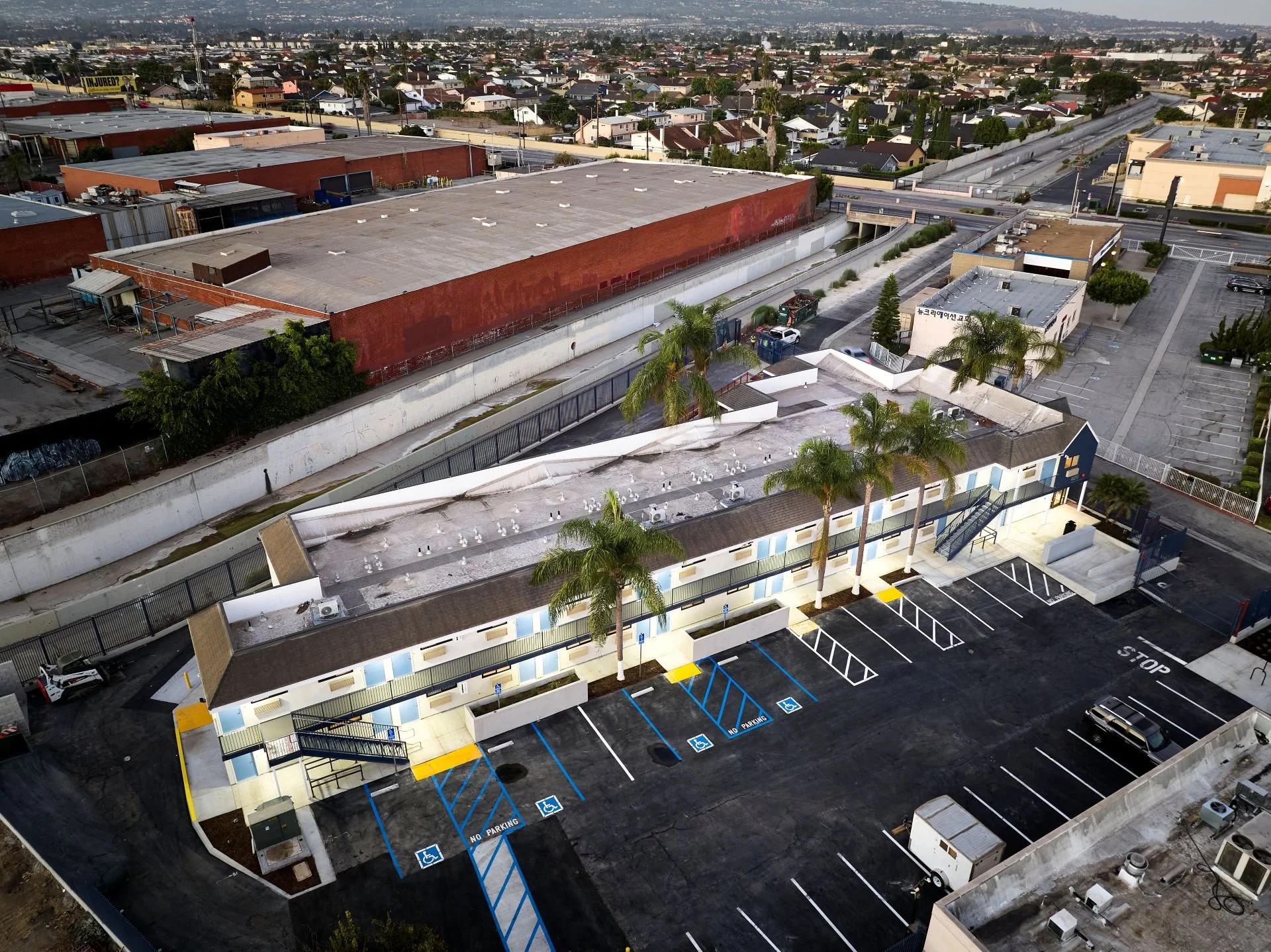
Sparano + Mooney Architecture provided full design services as the prime consultant for the 13,850 SF Homekey Harbor City project, the adaptive reuse of a former Motel 6 into permanent supportive and transitional housing in Los Angeles County. Delivered as part of Project Homekey, a County-led multi-agency initiative, the project supports long-term housing for individuals experiencing homelessness. The design retained the existing layout to expedite delivery while implementing targeted upgrades, including ADA-compliant units and site improvements.
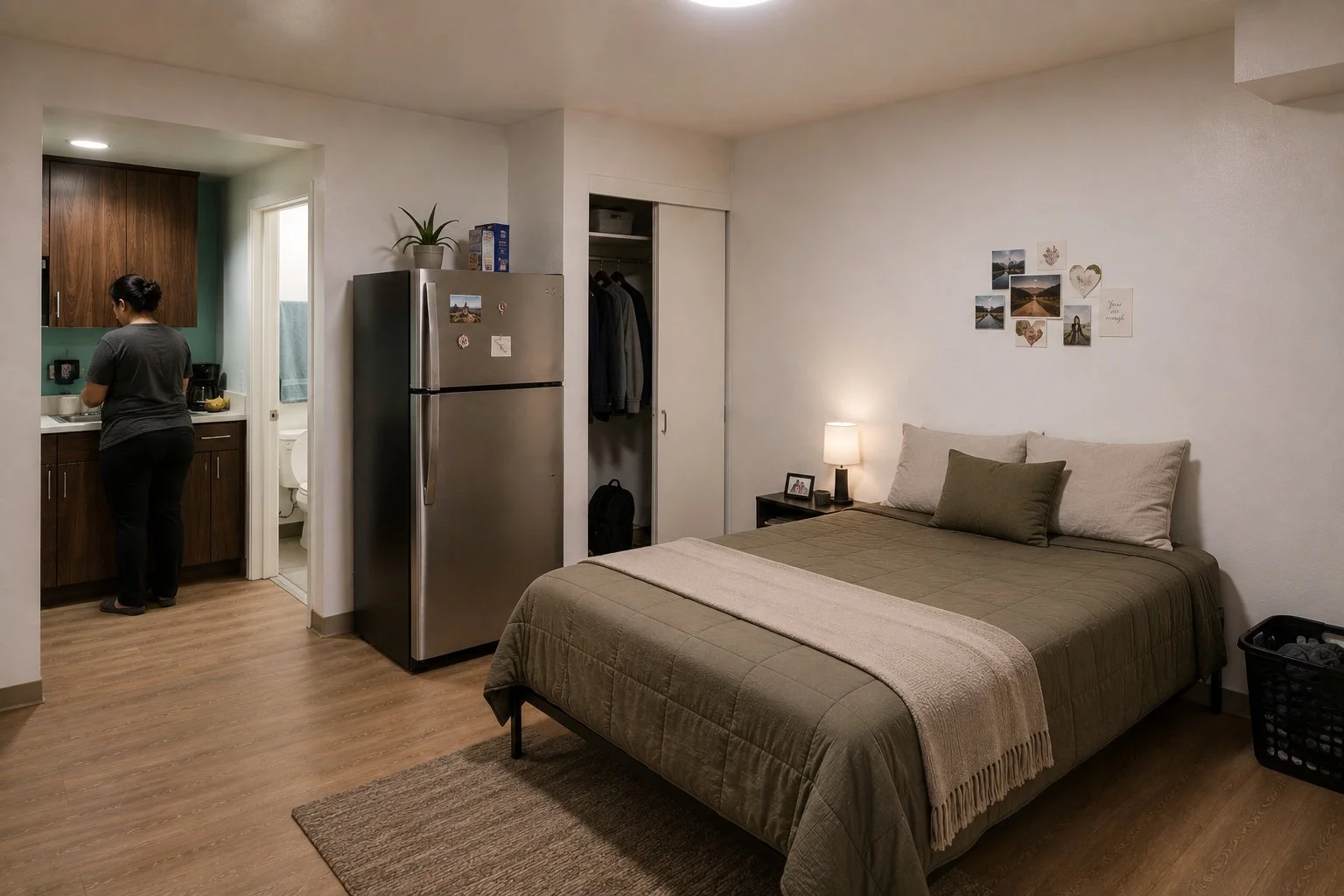
The project converts the motel into 50 residential units, including 49 units for individuals experiencing or at risk of homelessness, and one manager’s unit. Each unit includes a kitchenette, private bathroom and updated living space. Shared amenities include a community room, service offices, laundry, bike storage, parking and an outdoor courtyard. The project involved a comprehensive modernization of the existing building, including new kitchens, bathrooms, and flooring throughout, along with complete replacement of the plumbing, HVAC, and electrical systems.
All project imagery courtesy Walton Construction Inc.
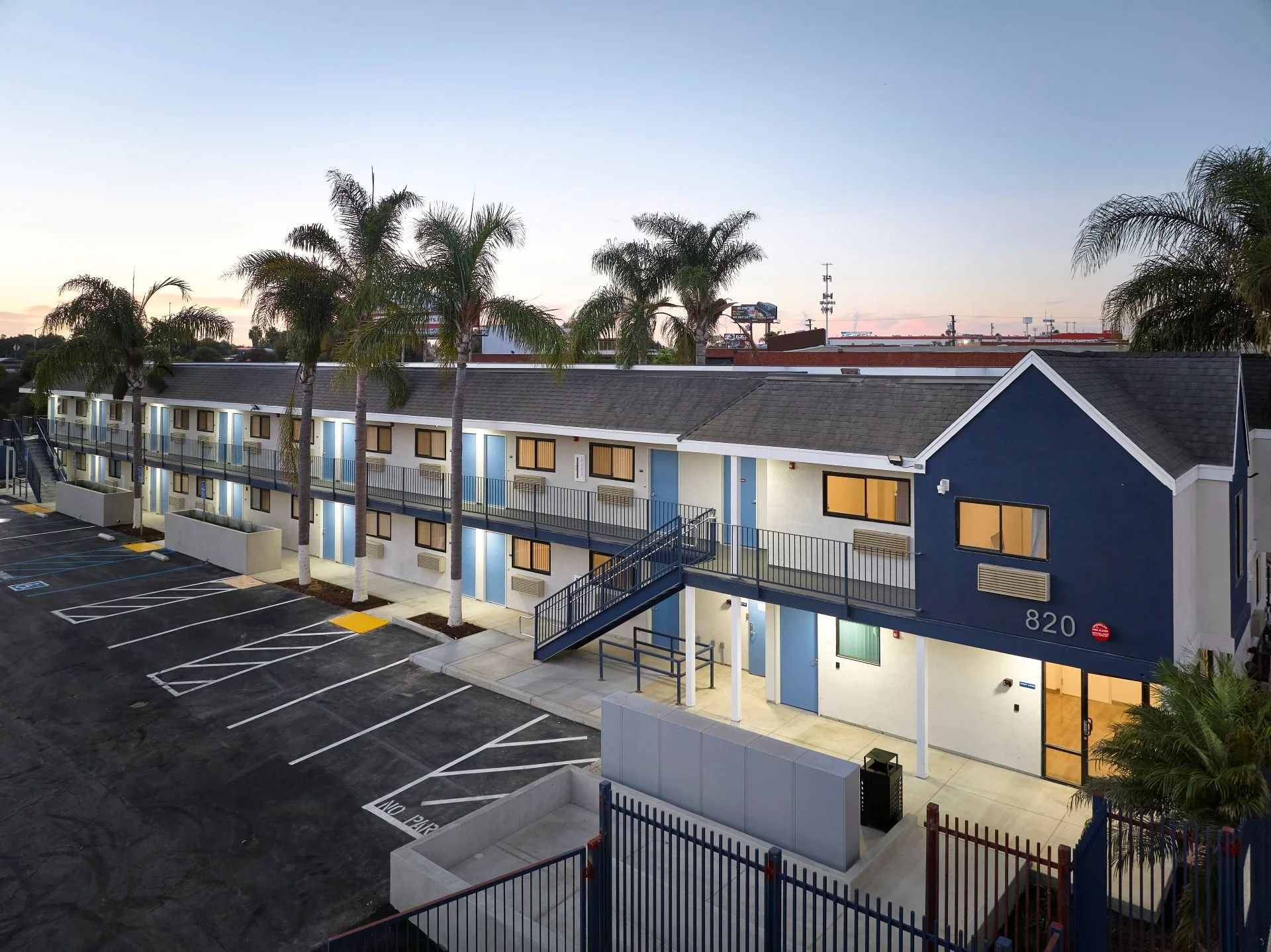
Exterior improvements included new paint, window retrofits, enhanced egress, and resurfacing of the parking area, while energy-efficient upgrades were incorporated to improve long-term building performance and reduce operating costs. The renovation was funded through a combination of the California Homekey Program, the County of Los Angeles, and the California Department of Housing and Community Development (HCD).
Developed in coordination with the County, nonprofit partner Brilliant Corners, and service providers, the project required collaboration to align design, funding and operations. The adaptive reuse approach reduced construction time and cost, supporting expedited delivery. The project integrates on-site support services, including mental health support, case management, addiction recovery and job placement.
