-
ARCHITECTURAL TEAM | John Sparano, Anne Mooney, Seth Striefel
CIVIL | Cache Landmark
STRUCTURAL | Calder Richards
MECHANICAL + PLUMBING | VBFA (Resolut Group)
ELECTRICAL | Spectrum
LANDSCAPE ARCHITECT | Landmark Design
SPECIFICATIONS | iBIM
ENERGY CONSULTING| Wasatch Enverdigris
-
MOBILE COMPACT ART STORAGE | Spacesaver Intermountain
BUILT-IN ART EASEL SYSTEM | Delta Design LTD
CLADDING | VM Zinc
EXTERIOR COLOR | Sherwin Williams; a high-performance coating over colored steel louvers and plate steel window surrounds, designed by Sparano + Mooney Architecture
-
2026 | AIA Utah Design Honor Award
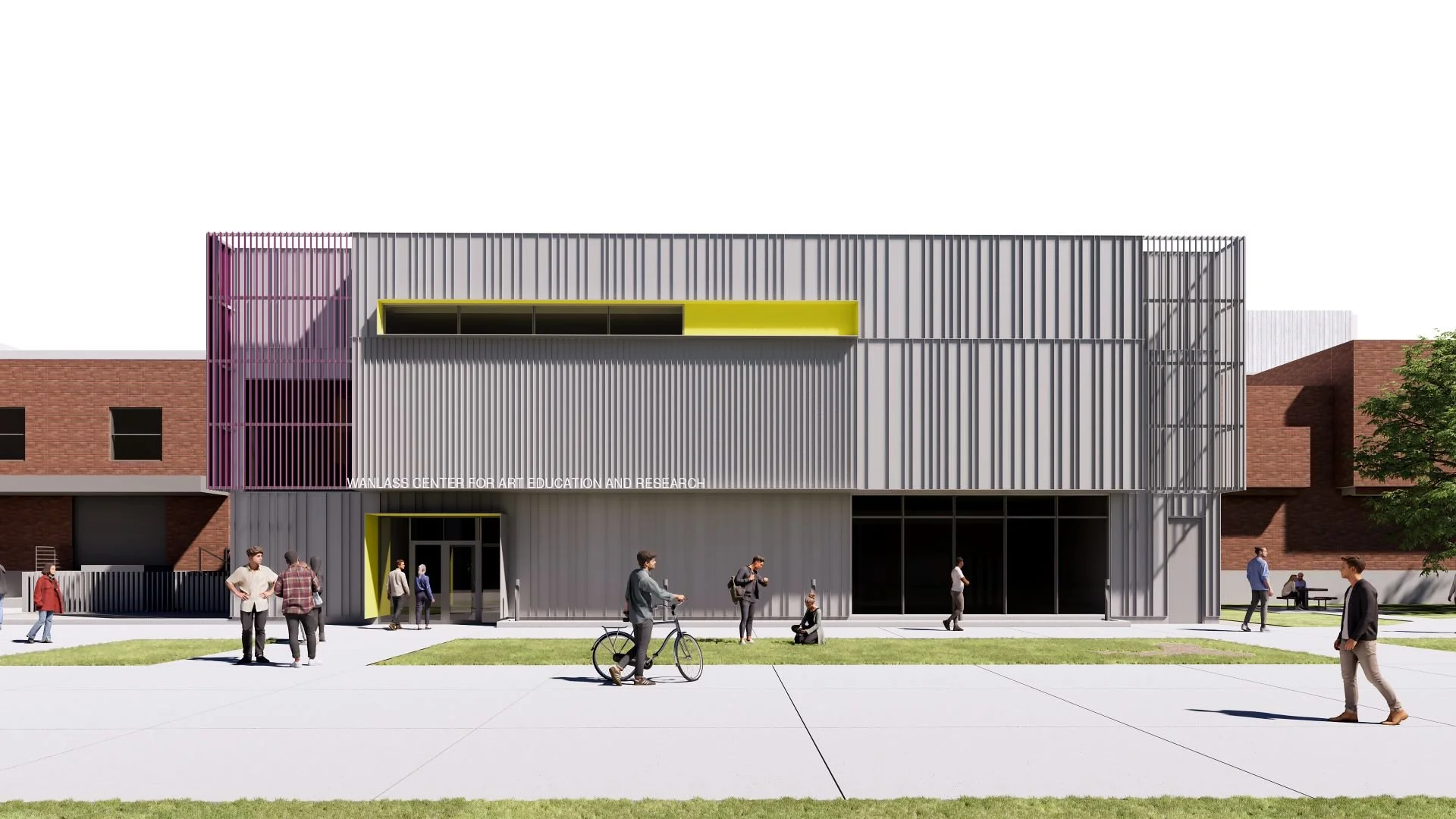
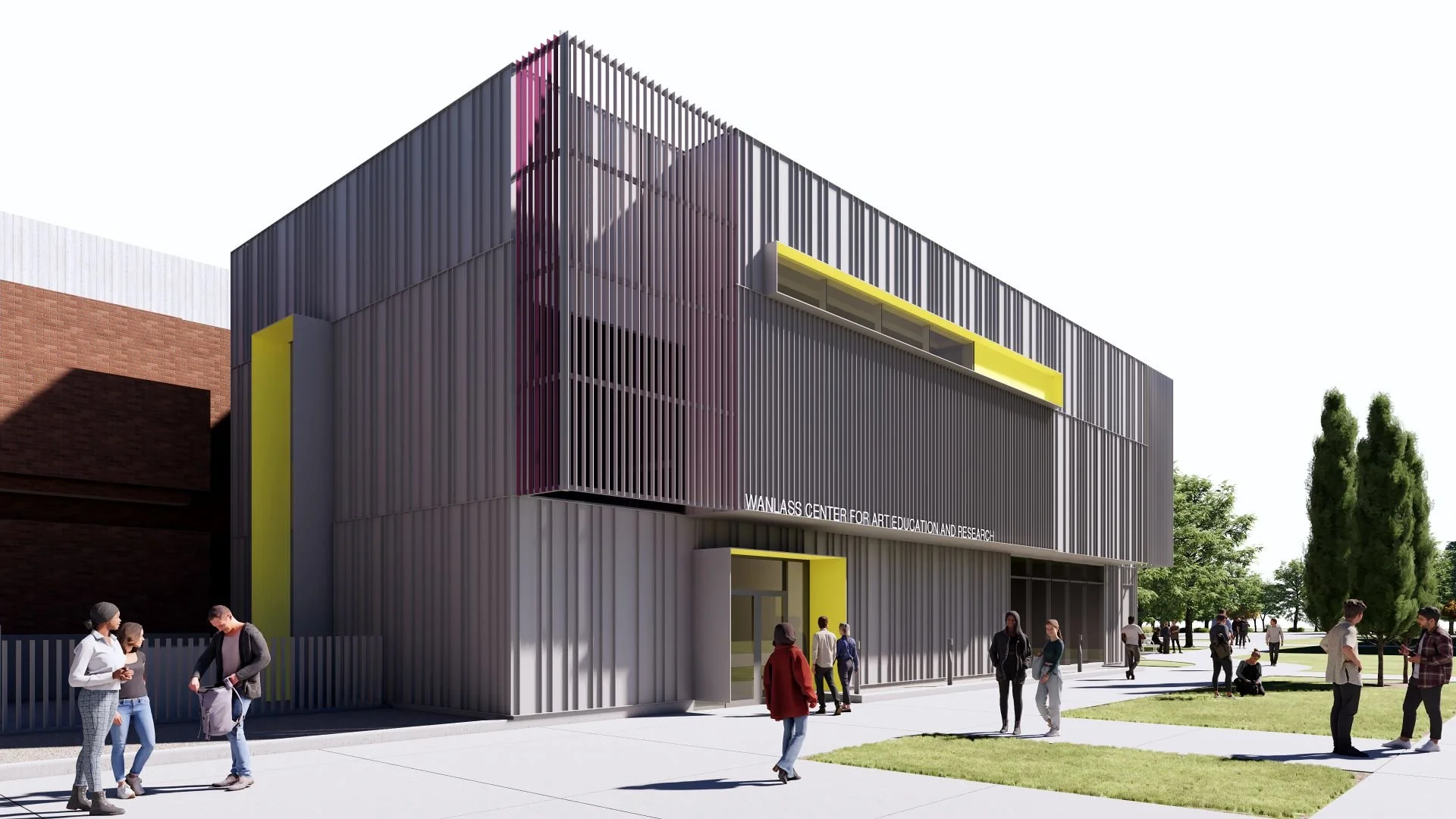
Sparano + Mooney Architecture provided full design services, from feasibility through construction administration, for the Wanlass Center for Art Education + Research, a 10,000 SF, 3-story cultural facility at Utah State University. Located adjacent to and functioning as a companion facility to NEHMA within the Fine Arts Complex, the center was designed to provide insight and visibility into the research center’s significant collection of modern and contemporary art of the American West, including a newly-donated private collection of more than 600 works.
A primary goal was to create spaces that support meaningful engagement with art by students, scholars and the broader community in ways that complement the museum’s existing offerings. The design vision emphasizes access and interaction through a range of learning environments, including visible, secure collection storage, interactive study spaces, new classrooms with integrated easels and a research library with artist archives.
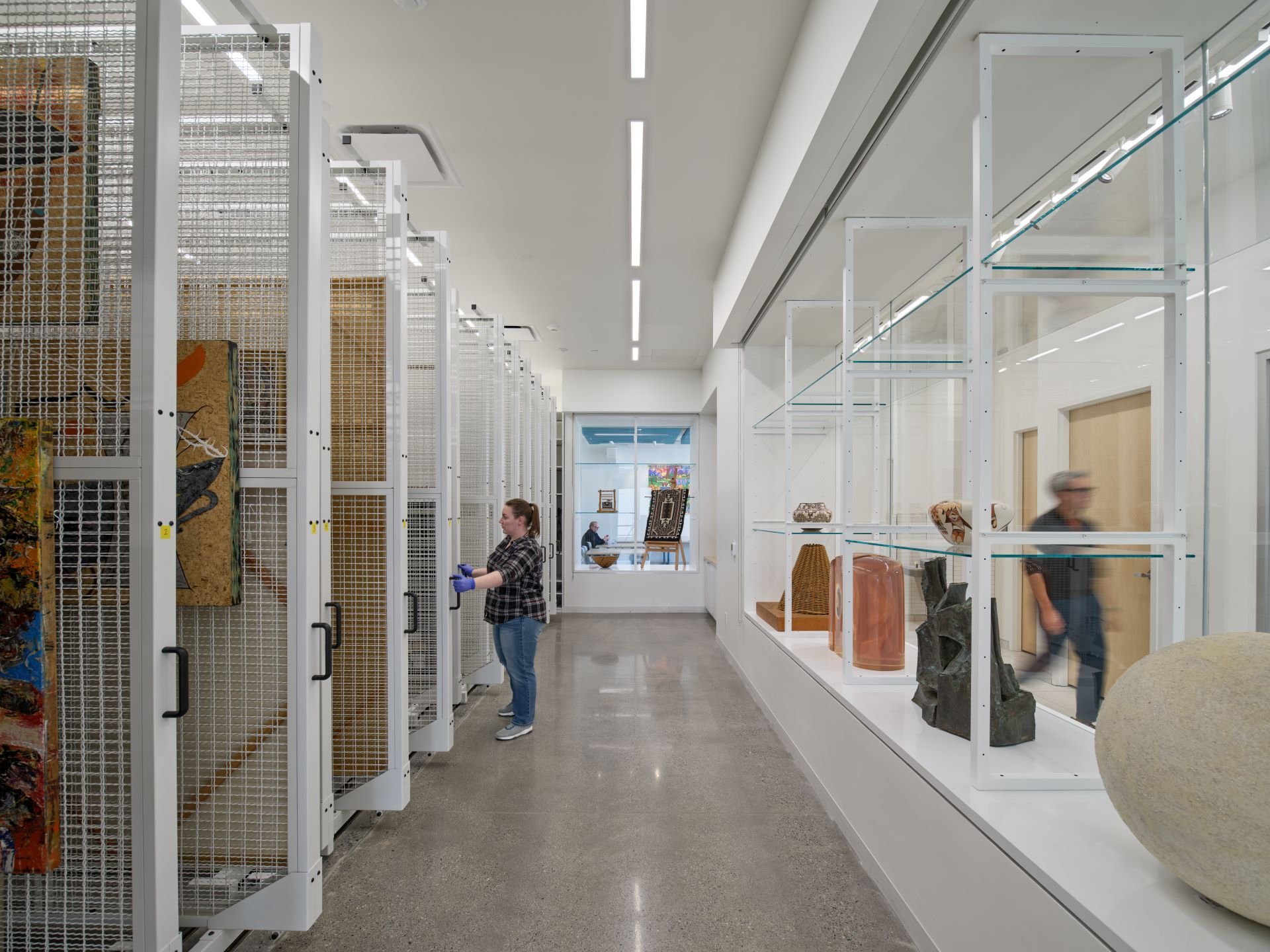
Large glazed panels provide visual access into the collection storage areas, showcasing mobile systems such as textile racking, modular art racks for framed works and shelving for 2D and 3D pieces. A dedicated study room located adjacent to secure storage allows curated artworks to be displayed on integrated easels, creating a direct user-to-art interface. The art classroom offers an additional curated learning environment and supports K-12 programming.
The project responds directly to the donor’s stipulation that the collection be accessible and visible in an innovative, thoughtful and meaningful way. As a result, the team conducted extensive research into museum storage best practices, technologies and precedent facilities, and worked closely with museum staff to select storage solutions tailored to the specific conservation and access needs of the collection.
