Saint Joseph The Worker Church
-
ARCHITECTURAL TEAM | John Sparano, Anne Mooney, Ludwing Juarez, Nate King, Seth Striefel, Soonju Kwon, Matt Hintze
ELECTRICAL | Electrical Consulting Engineers Inc.
LANDSCAPE | Landmark Design
MECHANICAL | Colvin Engineering Associates Inc.
PLUMBING | Colvin Engineering Associates Inc.
STRUCTURAL | Structural Design Studio
-
2023 | Saint Joseph the Worker Catholic Church: The Architecture of Prayer, Calvin University, Grand Rapids (exhibition)
2022 | North American Copper in Architecture Award
2022 | “St. Joseph the Worker Catholic Church”, Architect Magazine, July 2022
2020 | “Our Top Ten Favorite Buildings in SLC,” cityhomeCOLLECTIVE, February 2020
2019 | “St. Joseph the Worker Church,” Archello, 2019
2018 | “Saint Joseph the Worker Church,” Archilovers, November 2018
2018 | “An Energy-Efficient Modern Church References Utah’s Mining History,” Inhabitat, October 2018
2018 | “Saint Joseph the Worker Church by Sparano + Mooney Architecture,” Gooood, September 2018
2018 | “Saint Joseph the Worker Church in West Valley City, Utah,” e-architect, September 2018
2015 | National AIA Faith and Form Religious Architecture Award (New Building Design)
2014 | "Amazing Grace: Saint Joseph The Worker Catholic Church", Utah Style + Design, April 2014
2014 | "Place of Worship: Saint Joseph", cityhomeCOLLECTIVE, March 2014
2013 | UFCA + AIA-Sponsored Architecture Week (exhibition)
2013 | Utah Arts Council, DesignArts ‘13
2013 | “Sparano + Mooney: Church”, Domus (Italy), May 2013
2013 | "Divine Design", Design Bureau, May 2013
2013 | “Local Architects Continue Award-Winning Ways”, Intermountain Catholic, January 2013
2013 | "DesignArts ‘13: St. Joseph the Worker Catholic Church", Exhibition Catalog, September 2013
2013 | “St. Joseph the Worker Church”, Phaidon Atlas of Contemporary World Architecture, published by Phaidon Press Ltd.: New York, 2013
2013 | Rio Gallery, Salt Lake City (exhibition)
2011 | “Sparano + Mooney: St. Joseph the Worker Catholic Church”, Grassroots Modern, June 2011
This new worship project began with community outreach, programming and master planning phases led by Sparano + Mooney Architecture to help determine a vision for the replacement of an existing 1960s church and rectory building. The program document developed by the architects included a new church with seating for 800, indoor and outdoor gathering spaces, offices, a chapel for daily worship, a modern parish rectory and a long-term master plan with improved site circulation and a revised parking layout.
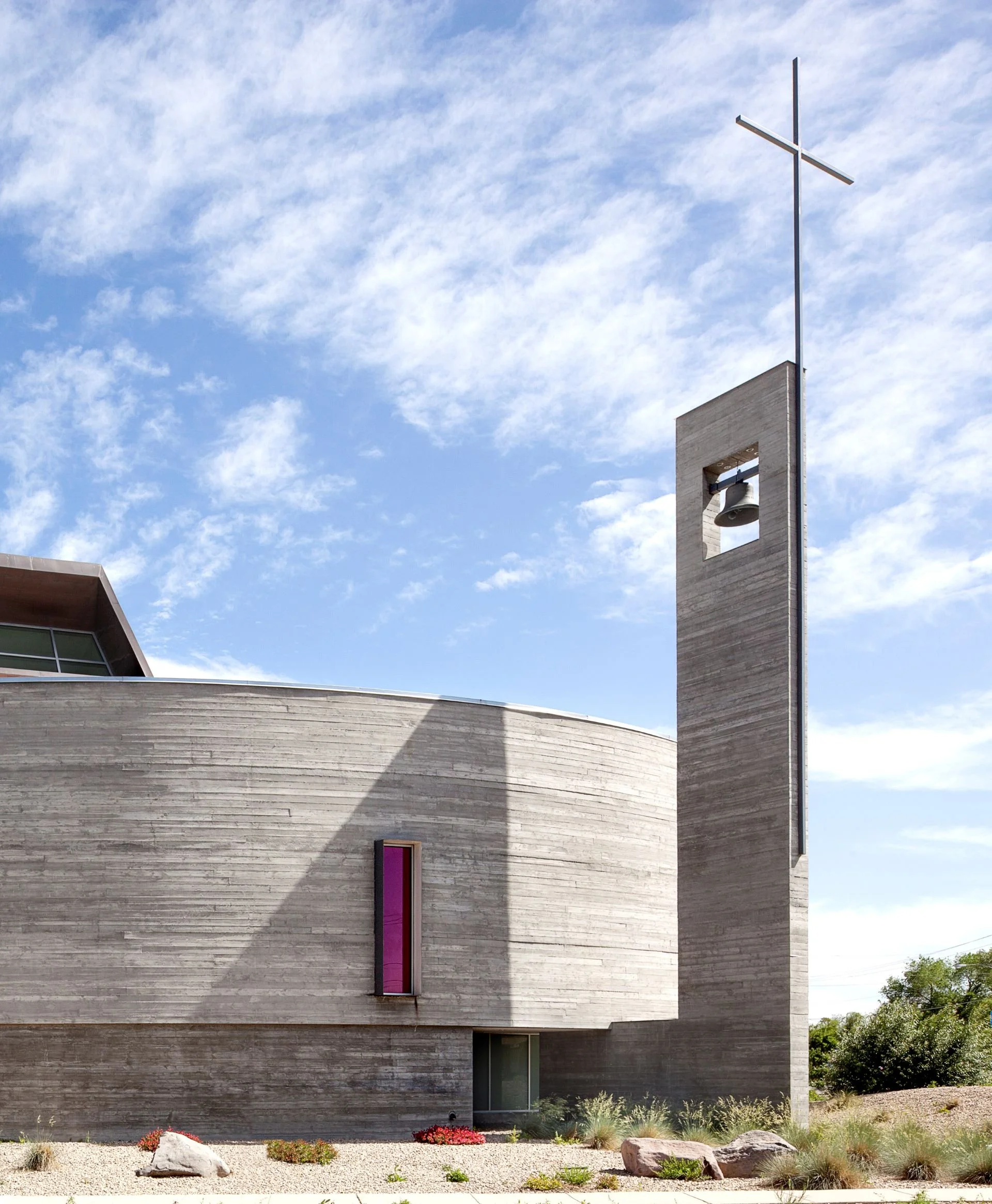
The design of the award-winning Saint Joseph the Worker Catholic Church was inspired by its namesake, the patron saint of laborers and craftspeople who is often depicted with carpenter’s tools, and like many of the founding parishioners, worked with his hands. In the early 20th century, a population of Catholic immigrants moved to this part of northern Utah to work in the mines or on the railroad and permanently settled. The design of the church and Day Chapel therefore incorporates humble materials to express a sense of craft and the lingering presence of those who originally labored here.
The worker or craftsperson transforms these natural resources from the raw material into a tangible product, which emphasizes that the materials have been tooled or in some way manipulated by a human’s hand. The concrete for the project is formed using rough-sawn lumber, a process by which saw marks, wood grain, nail holes, knots and imperfections are left visible in the finish. The copper panels, chosen because of the parish’s relationship with the local copper mine, are cut and bent on site, versus factory fabricated.
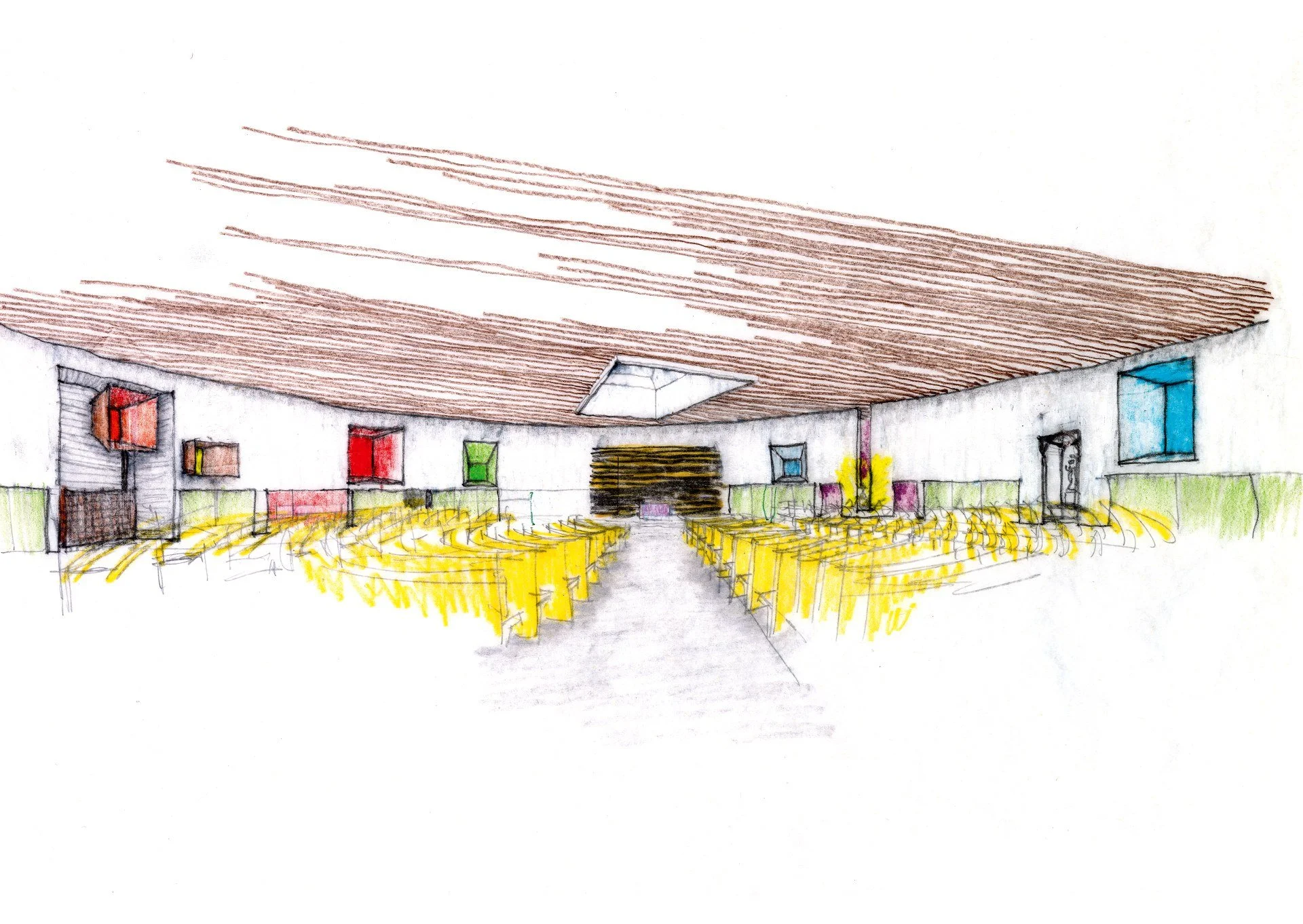
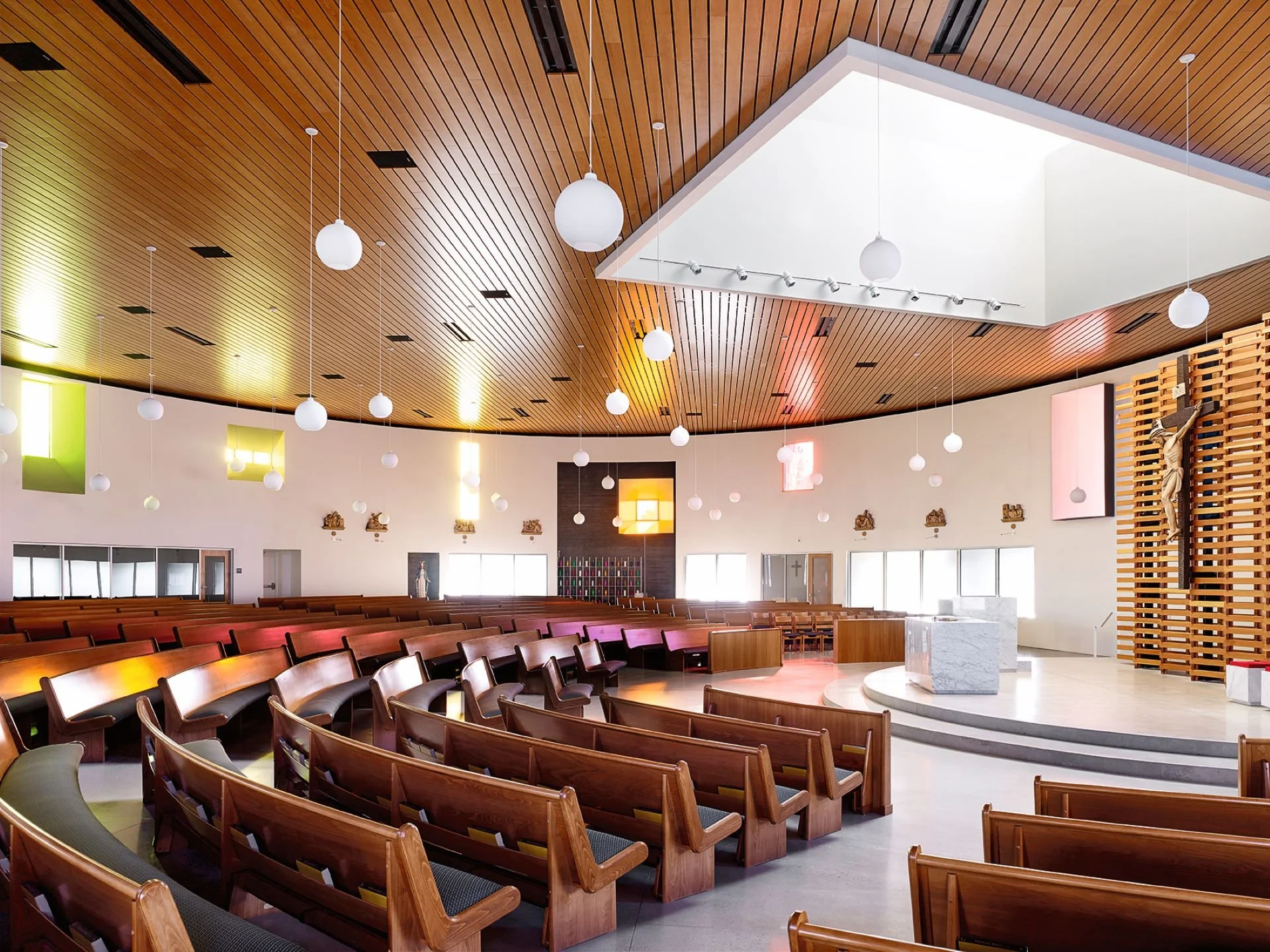
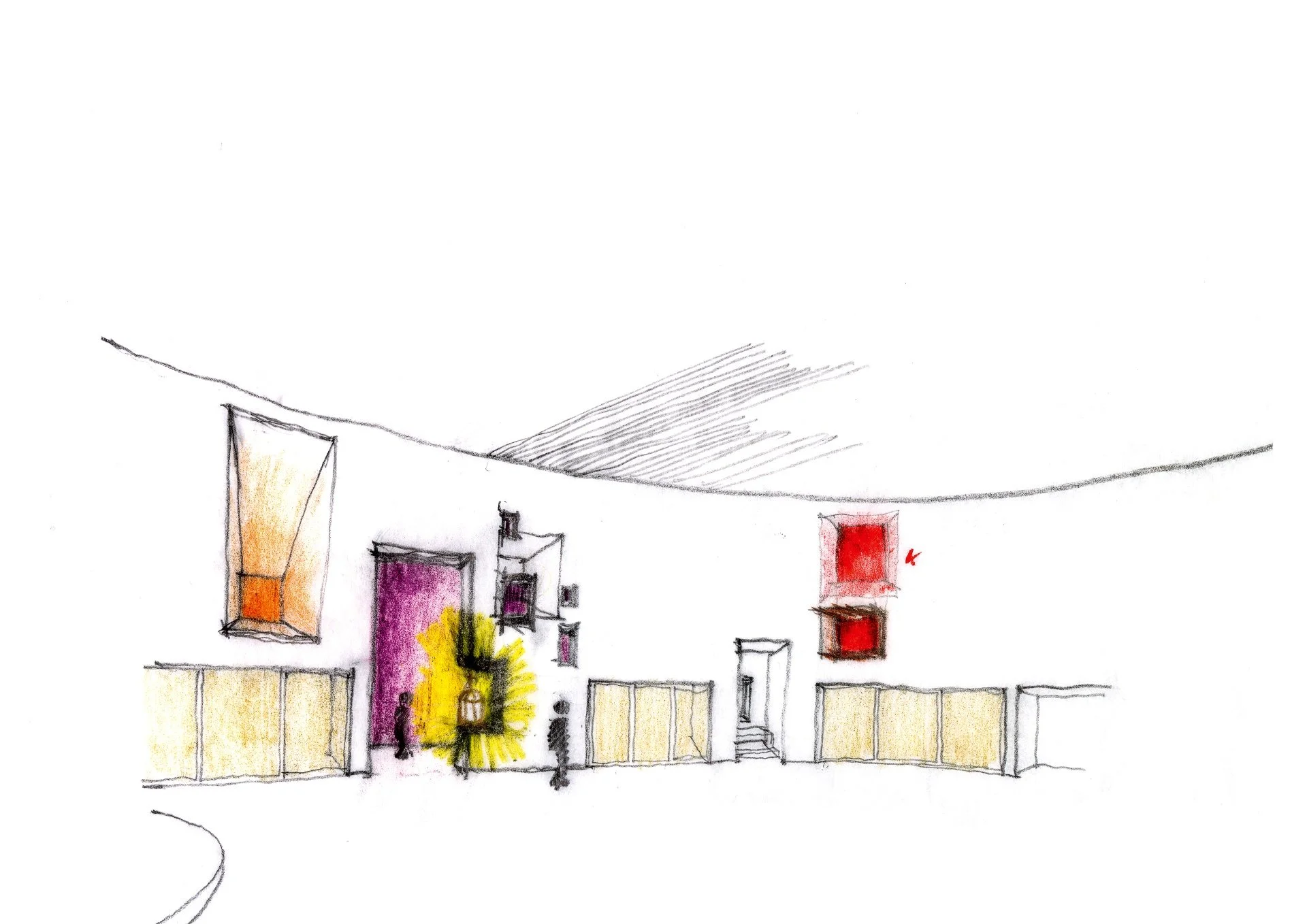
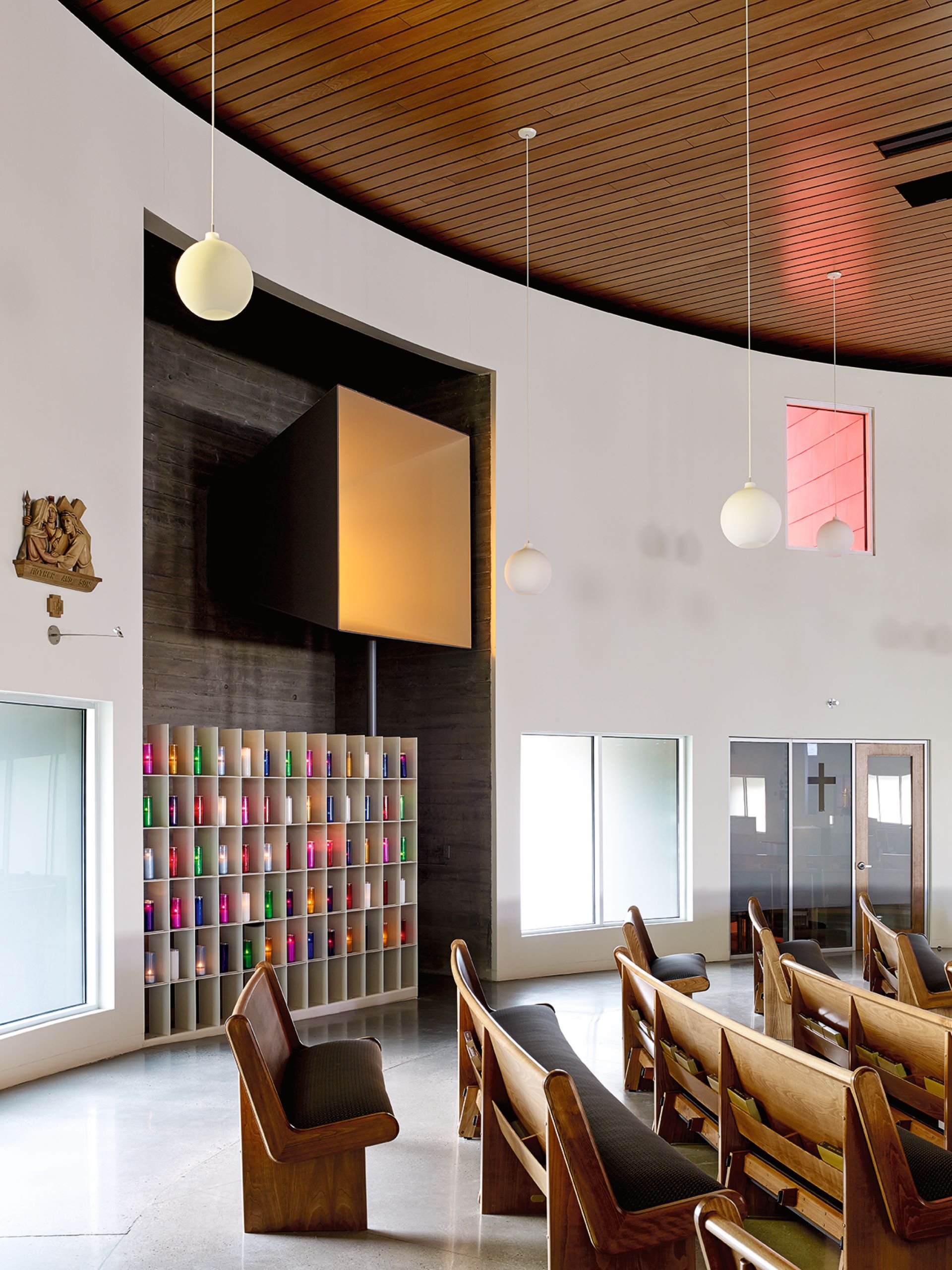
Light is brought into the sanctuary through a sandblasted, glazed band forming the base of the building, and through a large north-facing aperture (lantern) over the altar area. The upper portion of the ellipse contains 11 clerestory windows each relating in form, location and/or color to the 12 Apostles. The twelfth opening is a skylight aperture over the baptismal font. The windows are all of colored, glazed panels, an affordable alternative and abstracted expression of traditional stained glass.
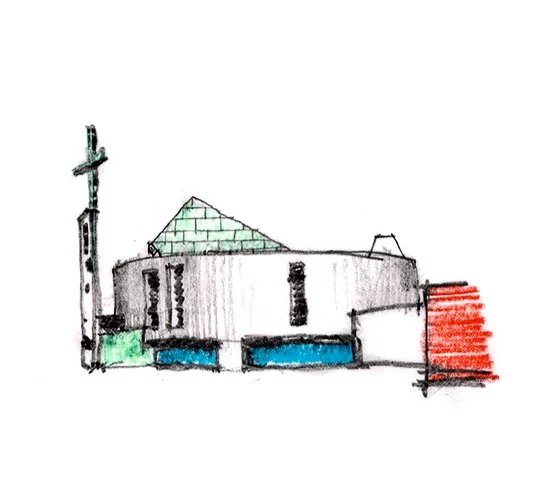
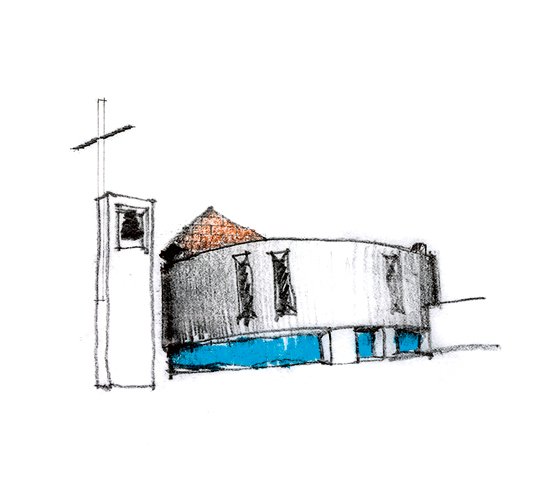
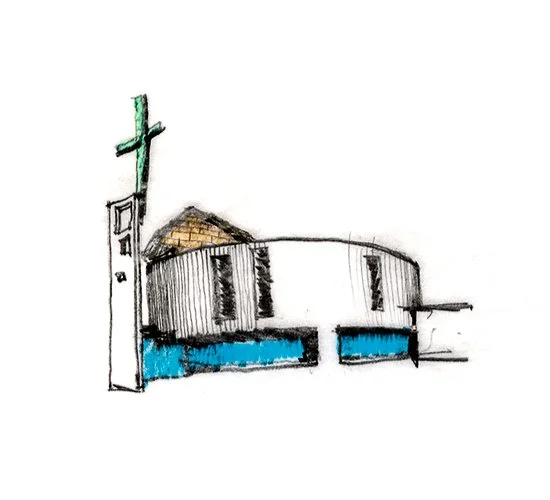
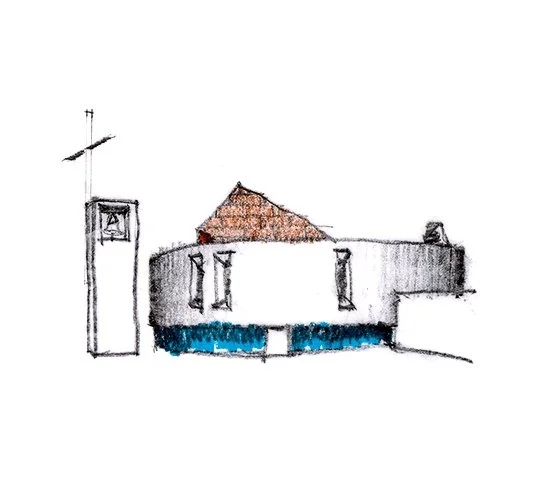
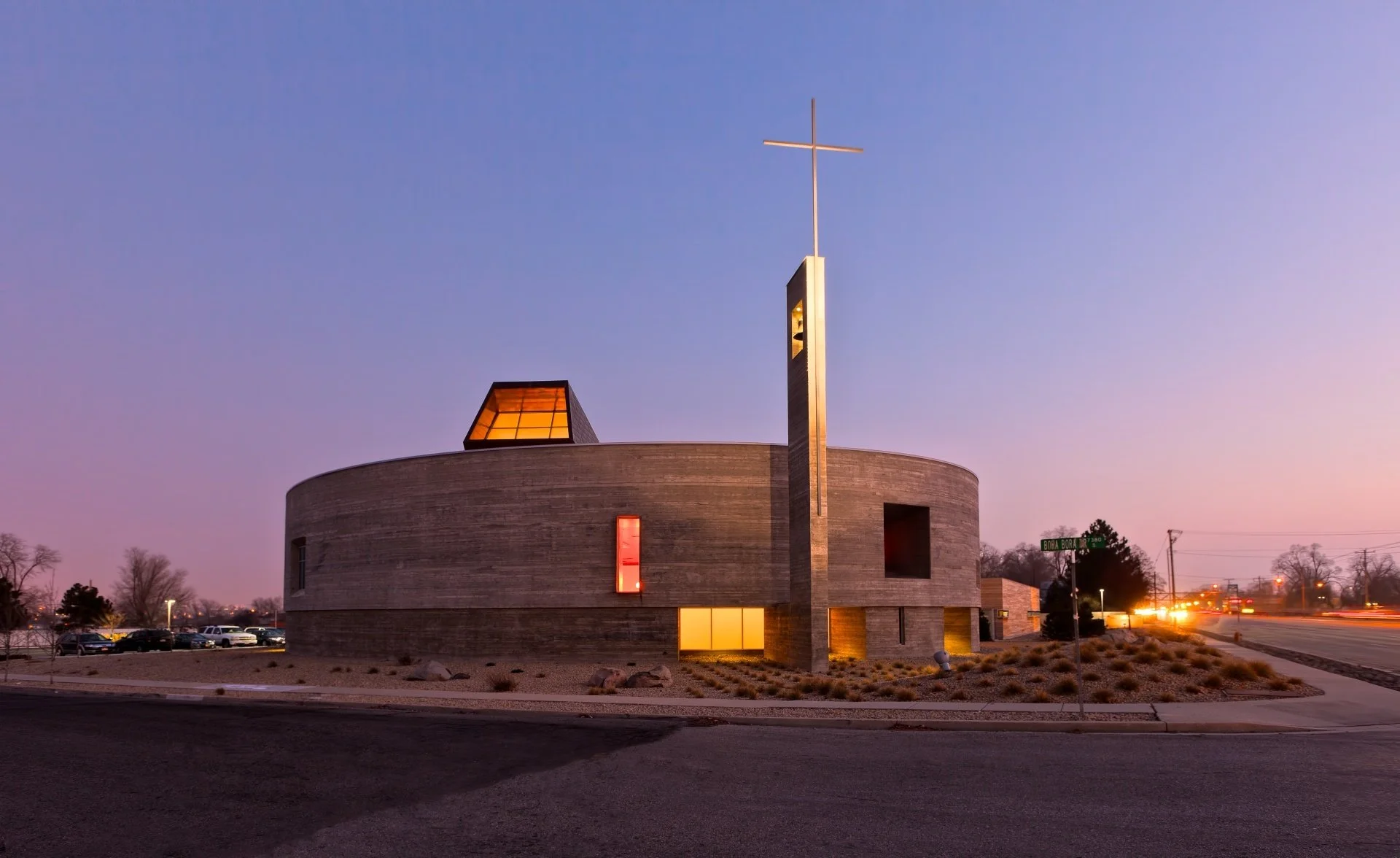
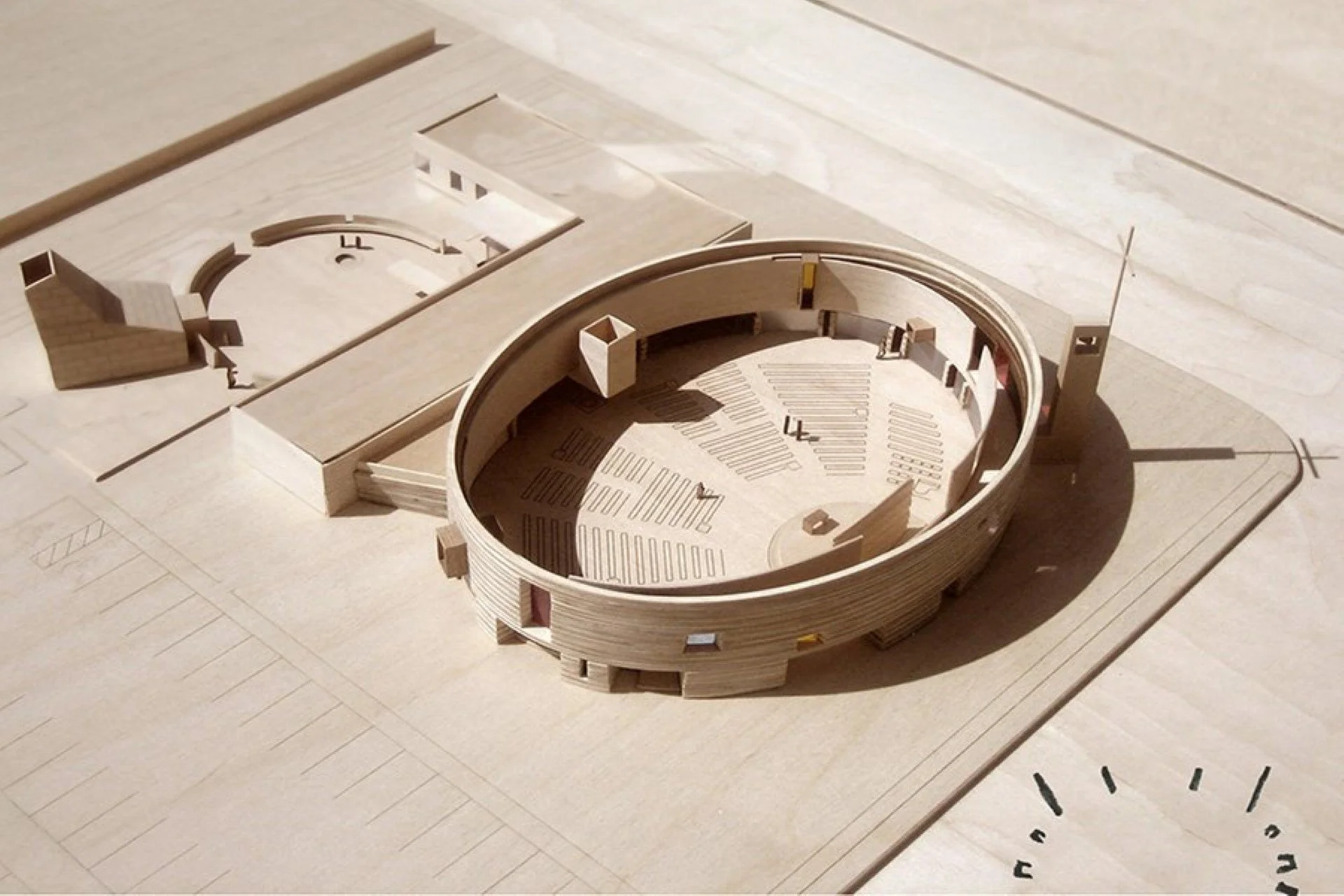
A central outdoor courtyard, surrounded by a 5’ high, board-formed concrete wall and integral bench, offers a welcoming space that encourages parishioners to gather outdoors and connect with nature. Outside the courtyard walls, a series of trees provides privacy, shade and a serene environment for contemplation and spiritual renewal. The entry procession leads from parking to the central courtyard, from which one can access the Day Chapel, main gathering space, or administrative functions through three separate and distinct entries.
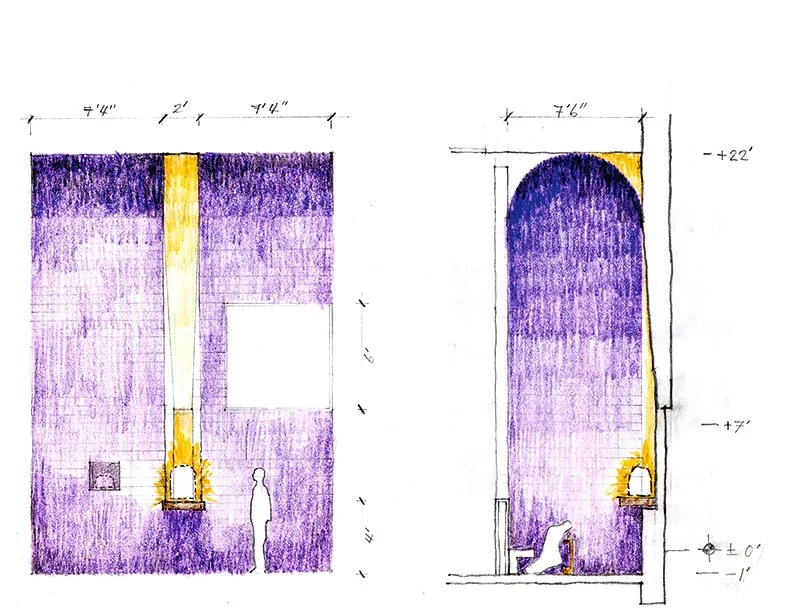
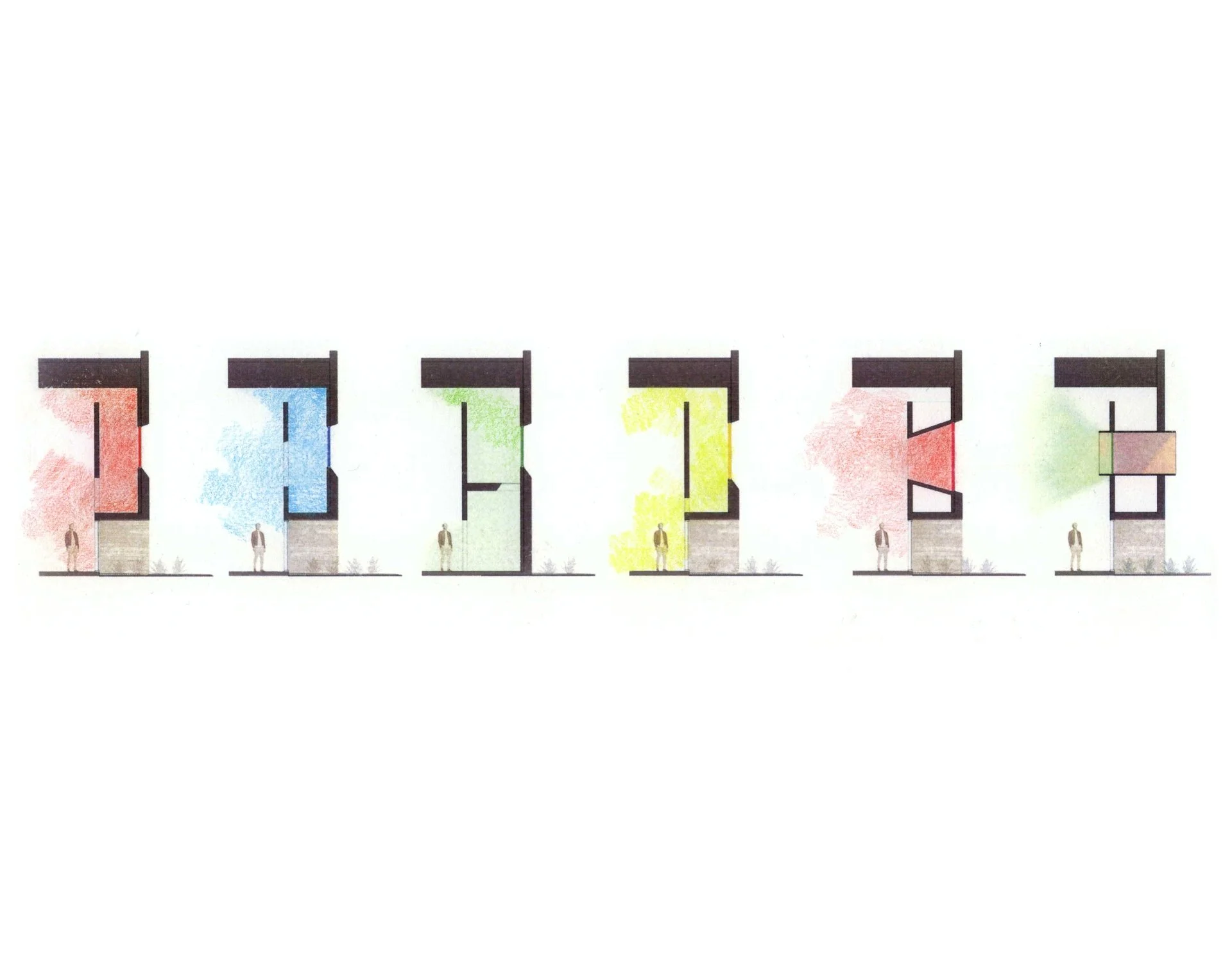
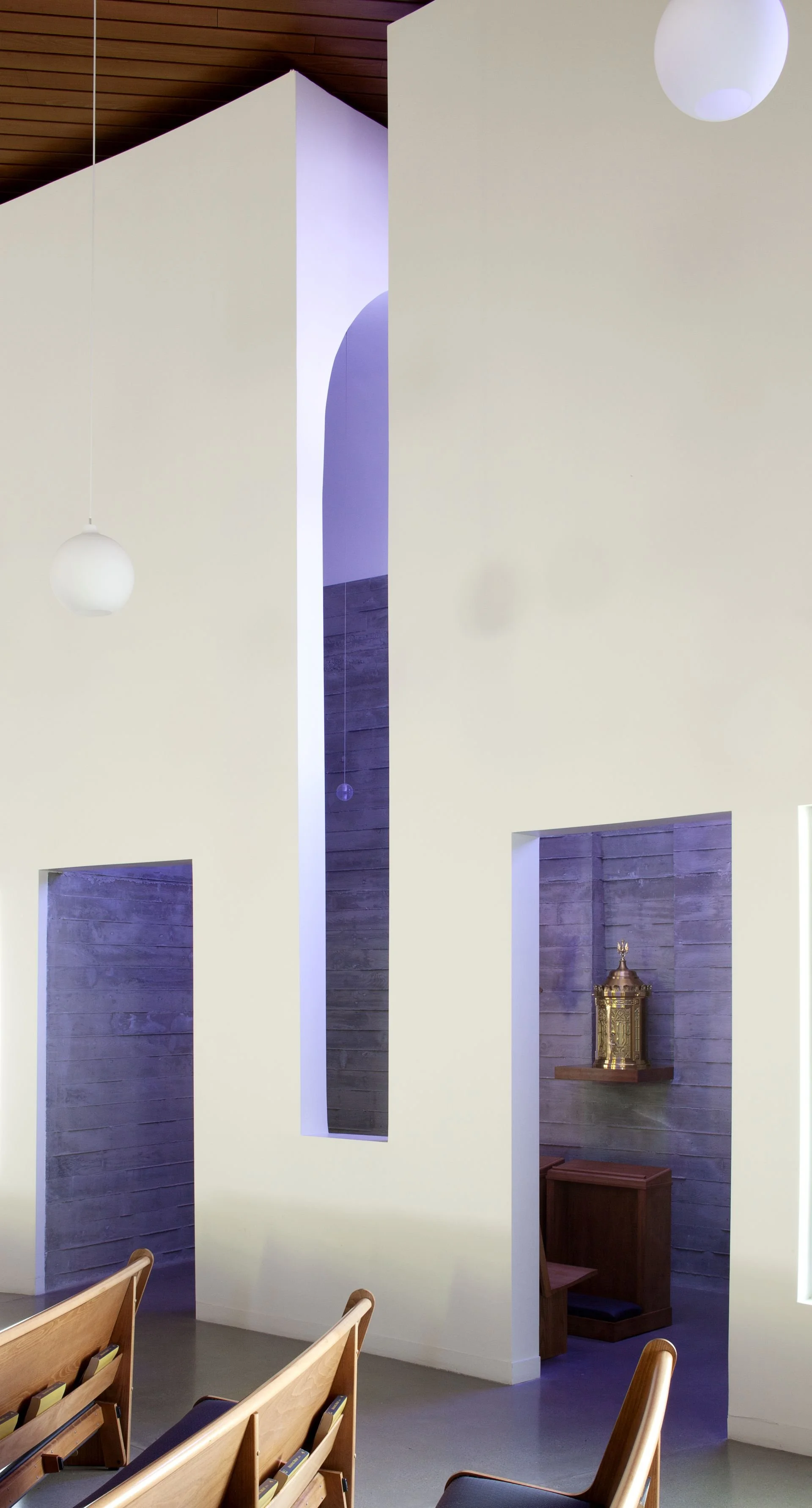
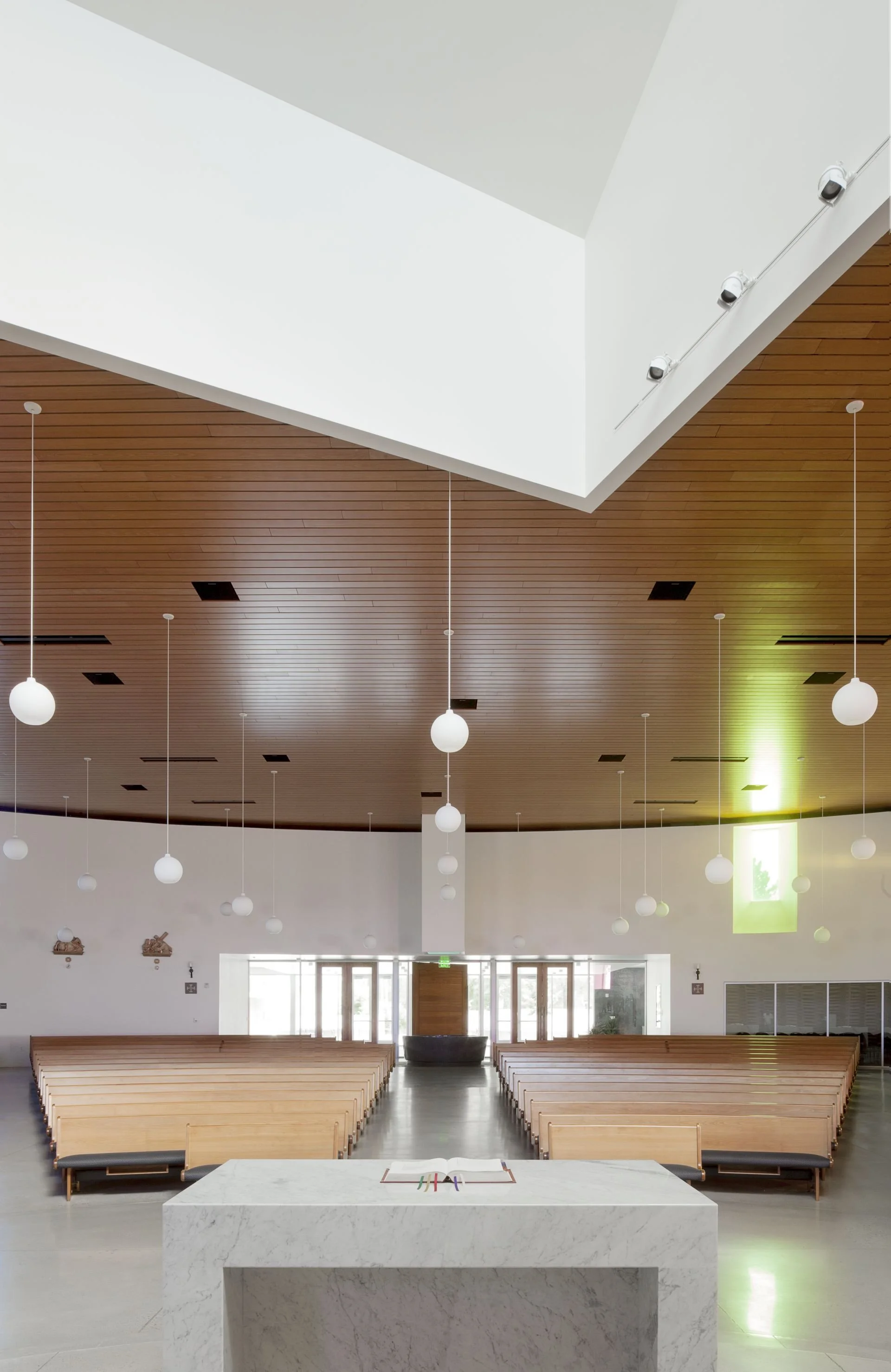
The formal organization of the main worship space is based on two offset ellipses. The poché space between the ellipses creates a liturgical function zone housing the Chapel of the Blessed Sacrament, a reconciliation room, sacristy and prayer niches for statuary and religious art. The church’s elliptical form was conceived of as a true gathering geometry without corners, facilitating active participation from the community that will congregate there. The new church architecture includes a sanctuary with sloping floors, fixed pews and a centralized altar and ambo, baptismal font at the entrance, Reconciliation Chapel and Chapel of Reservation. The church incorporates sustainable design elements throughout and is powered by the renewable energy of solar panels.
