ARCHITECTURE WITH PURPOSE
Architecture with Purpose: Designing Supportive Housing + Tiny Home Villages that Change Lives
July 30, 2026
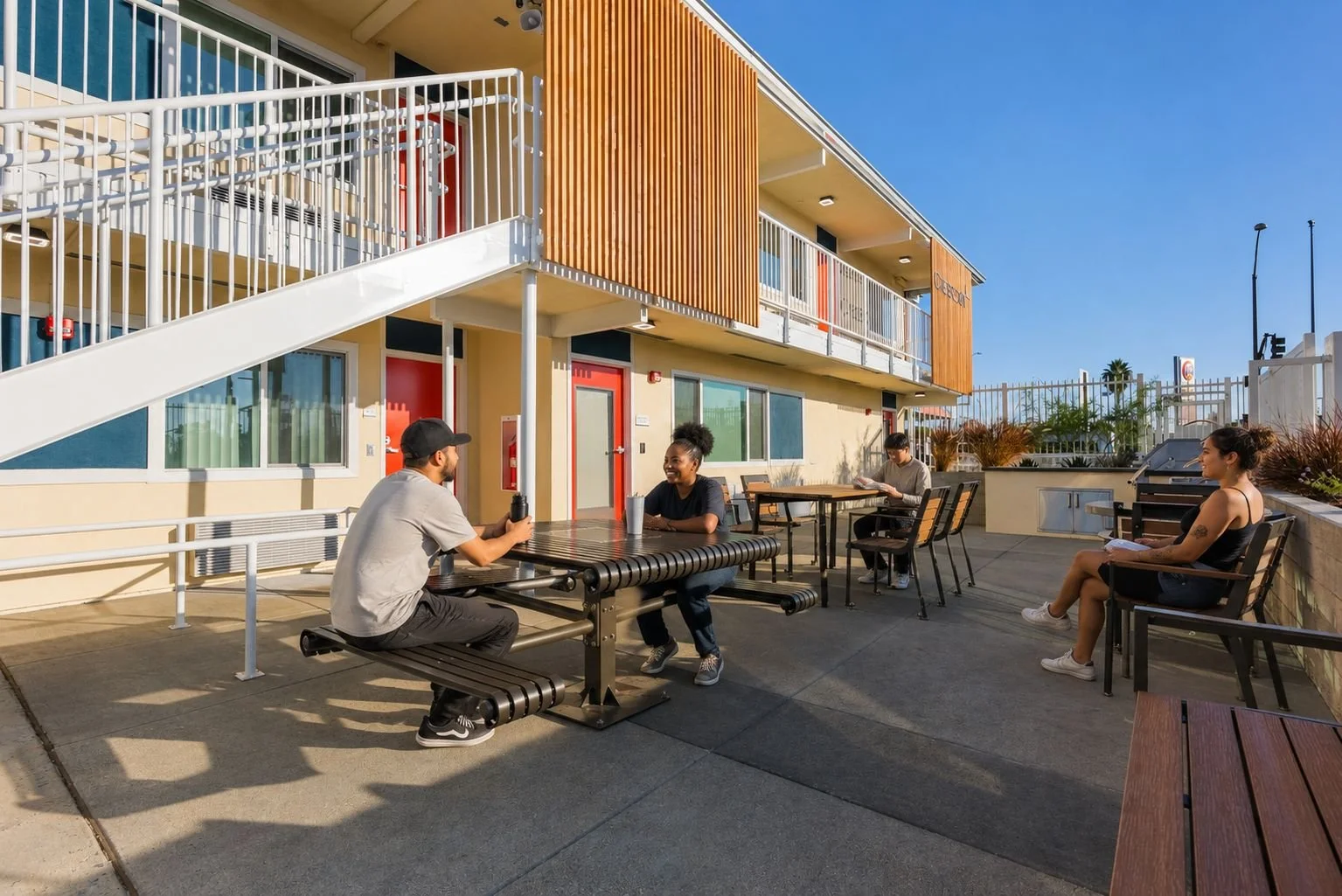
Project Homekey / Linc Housing - Crescent supportive housing; photo courtesy Imperial Contracting
Few challenges facing American cities today are as urgent (or as visible) as homelessness. In Los Angeles County alone, tens of thousands of people experience homelessness on any given night, while cities across the country continue to grapple with rising housing costs, economic instability, behavioral health challenges and a shortage of affordable homes. Solving this crisis requires coordinated public policy, social services, healthcare and sustained investment. It also requires thoughtful design.
At Sparano + Mooney Architecture, we believe design has an essential role to play in addressing homelessness. Over the past several years, we have worked with nonprofit organizations, municipalities and housing providers throughout Southern California – including the County of Los Angeles, City of Los Angeles, Brilliant Corners and Linc Housing – to transform underutilized properties into supportive housing and to create thoughtfully-designed tiny home villages that provide safe, dignified places for people to rebuild their lives.
While no single project can solve homelessness, every well-designed community creates opportunities for stability, recovery and hope.
More Than Shelter
Supportive housing is fundamentally different from emergency shelter. It combines permanent or transitional housing with wraparound services such as case management, mental health support, employment assistance, healthcare and life-skills training. The goal is not simply to provide a roof overhead but also to create the foundation for long-term success.
Architecture directly influences how successful these communities become. A well-designed project can foster safety, encourage social connection, preserve privacy, reduce operational costs and help residents regain a sense of ownership over their lives. Design decisions that may seem small – from natural daylight and outdoor gathering spaces to intuitive circulation and durable materials – can have profound effects on residents' physical and emotional well-being.
For individuals emerging from chronic homelessness, the built environment often represents their first opportunity in years to experience stability, dignity and permanence.
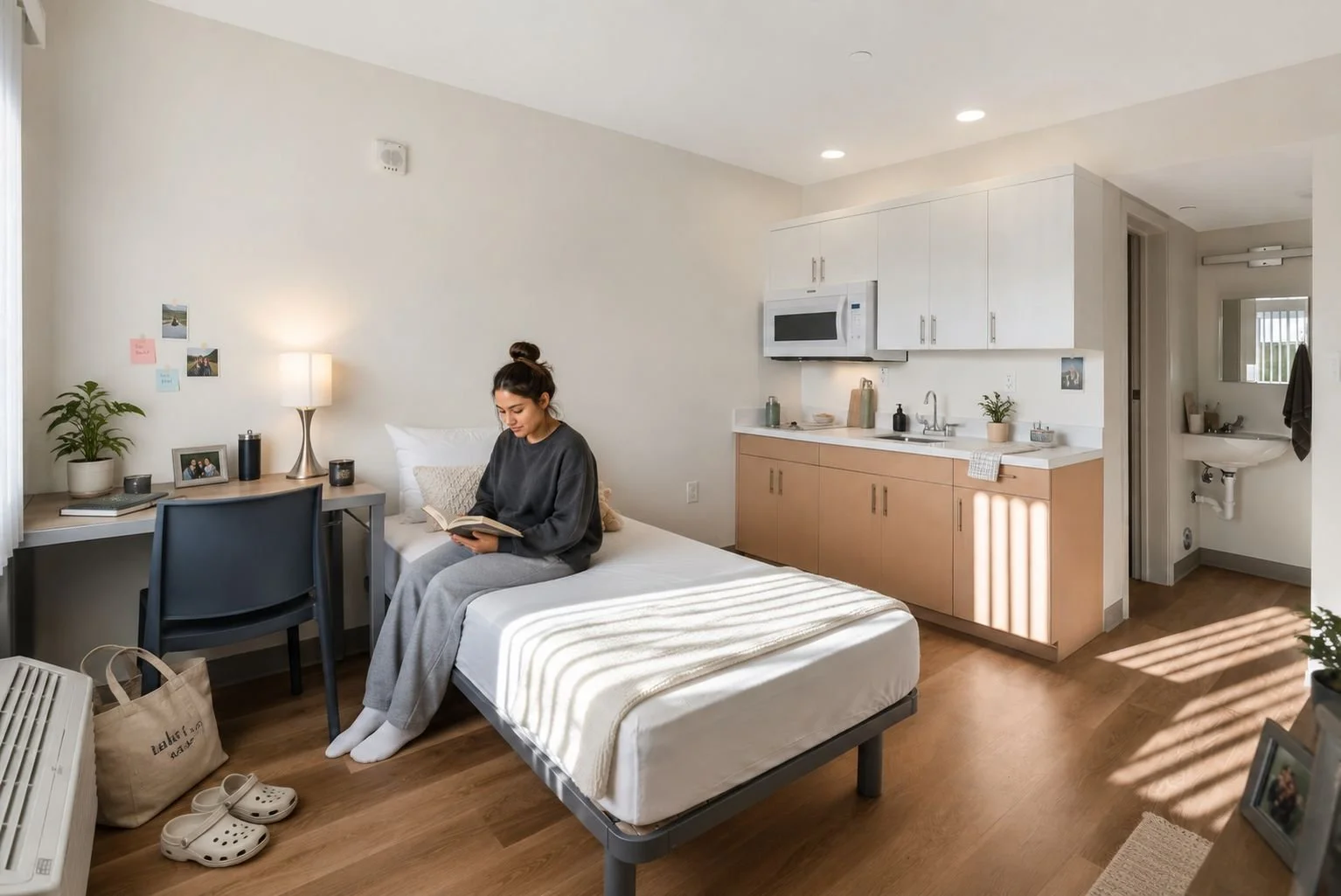
Project Homekey / Linc Housing - Crescent supportive housing; photo courtesy Imperial Contracting
Reimagining Existing Buildings
One of the most effective strategies for addressing the housing shortage is adaptive reuse. Rather than waiting years to construct new housing from the ground-up, many communities are converting existing hotels and motels into supportive housing, allowing residents to move in far more quickly while recycling existing infrastructure in a sustainable approach.
Our team has worked extensively on these complex renovation projects, transforming aging hospitality buildings into modern residential communities that meet current accessibility standards while providing comfortable, functional homes. These projects require careful coordination among architecture, engineering, accessibility specialists and service providers to create environments that support residents while making efficient use of limited public funding and resources.
Converting a motel into housing is far more involved than simply renovating guest rooms. Units must be redesigned for long-term living, kitchens added, building systems upgraded, accessibility barriers removed and common spaces reimagined to support counseling, community gathering and resident services (including amenities such as pet relief areas, bicycle storage and communal gardens).
The result is housing that is delivered more rapidly, more sustainably and often at a significantly lower cost than entirely new construction.
Tiny Home Villages as Transitional Communities
Tiny home villages have become another important tool in addressing homelessness, particularly for individuals transitioning from encampments or emergency shelters into permanent housing.
These communities provide private, secure sleeping accommodations while sharing communal kitchens, bathrooms, laundry facilities, outdoor spaces and support services. More importantly, they create neighborhoods rather than camps.
Successful tiny home villages depend on thoughtful planning. Site layout influences security and visibility. Shared outdoor spaces encourage community interaction without sacrificing privacy. Clear circulation improves accessibility and operations. Durable materials reduce maintenance costs while creating environments that residents can take pride in.
Our work has focused on balancing these operational requirements with the human experience, recognizing that every design decision contributes to residents' sense of belonging and safety.
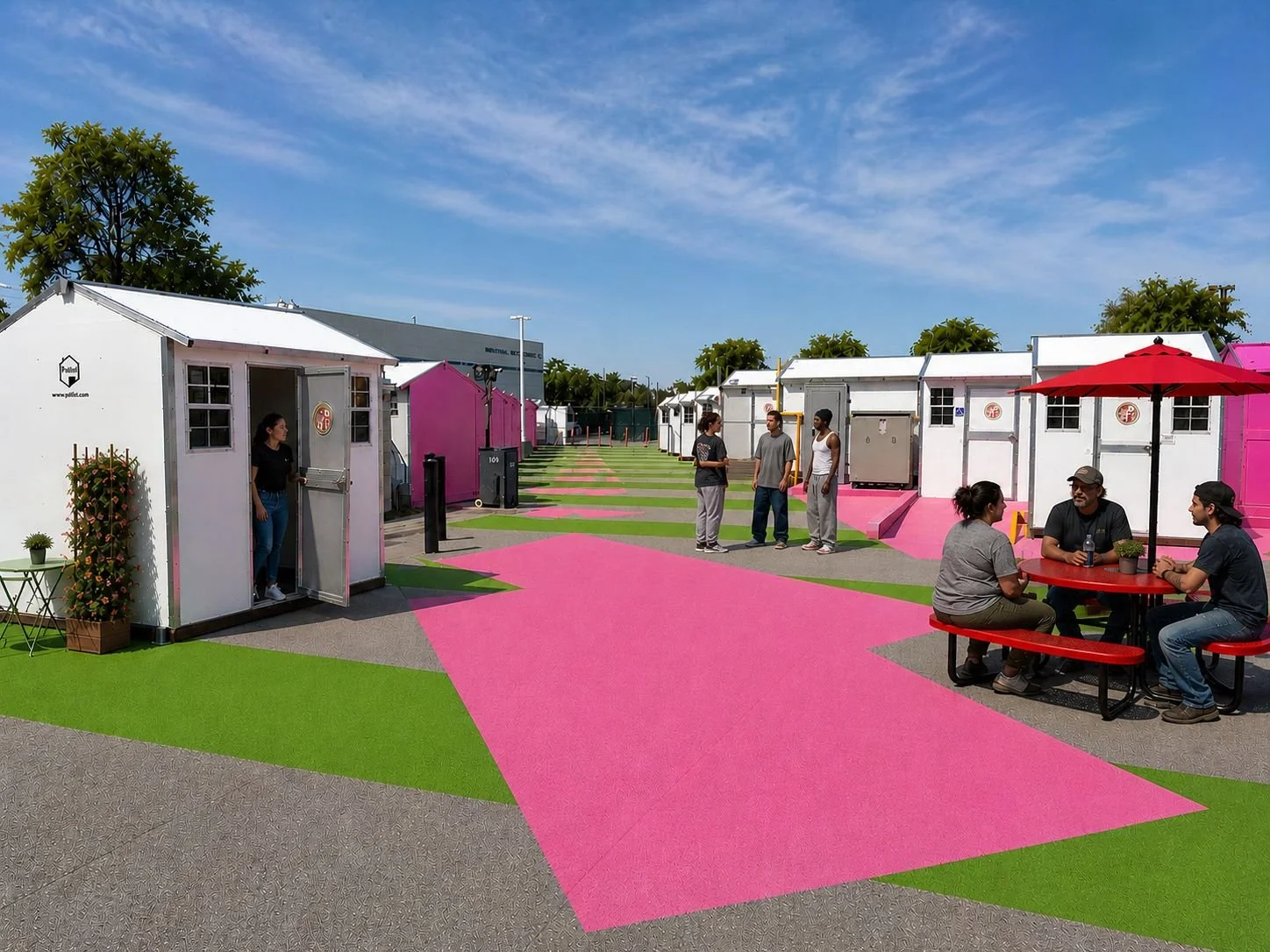
City of Los Angeles CD6 Sun Valley Metrolink Tiny Home Village
Designing with Dignity
People experiencing homelessness deserve the same quality of architecture as anyone else. Too often, affordable or supportive housing has historically been treated as purely functional infrastructure, where design quality becomes secondary to cost. We believe these goals are not mutually exclusive.
Thoughtful architecture can be both economical and inspiring. Natural light, carefully-scaled buildings, welcoming entries, resilient materials, landscaped outdoor spaces and intuitive wayfinding all contribute to healthier communities. These elements improve quality of life while also supporting the organizations responsible for operating and maintaining these facilities over the long term.
Equally important is universal accessibility. Many residents have mobility challenges, chronic health conditions and/or disabilities. Designing inclusive environments from the outset ensures that housing remains usable, welcoming and adaptable for everyone.
Building Stronger Communities
Supportive housing benefits entire communities, not just its residents. Research consistently demonstrates that stable housing reduces emergency room visits, decreases interactions with the criminal justice system, improves health outcomes and increases opportunities for employment and long-term independence. These outcomes translate into meaningful social and economic benefits for cities while improving neighborhood stability.
Architecture cannot replace social services, but it can amplify their effectiveness by creating environments specifically designed to support healing, connection and independence.
As architects, we have a responsibility to think beyond buildings. Every project should contribute positively to the larger community and reflect the values of inclusion, resilience and human dignity.
Looking Forward
The homelessness crisis did not develop overnight, and it will not be solved through any single strategy. It will require collaboration among public agencies, nonprofit organizations, developers, healthcare providers, community members and design professionals.
At Sparano + Mooney Architecture, we are proud to contribute our expertise to this effort. Whether transforming existing buildings into supportive housing or planning new tiny home communities, we approach every project with the understanding that architecture can do more than provide shelter: it can create opportunity.
Every resident deserves a safe place to call home; every neighborhood deserves thoughtful design; and every community benefits when architecture becomes part of the solution. By designing places that foster dignity, stability and belonging, we help create communities where people are not simply housed but are also given the opportunity to thrive.
EATON CANYON NATURE CENTER
Resilience + Renewal at the Urban-Wildland Interface: The Eaton Canyon Nature Center
May 29, 2026
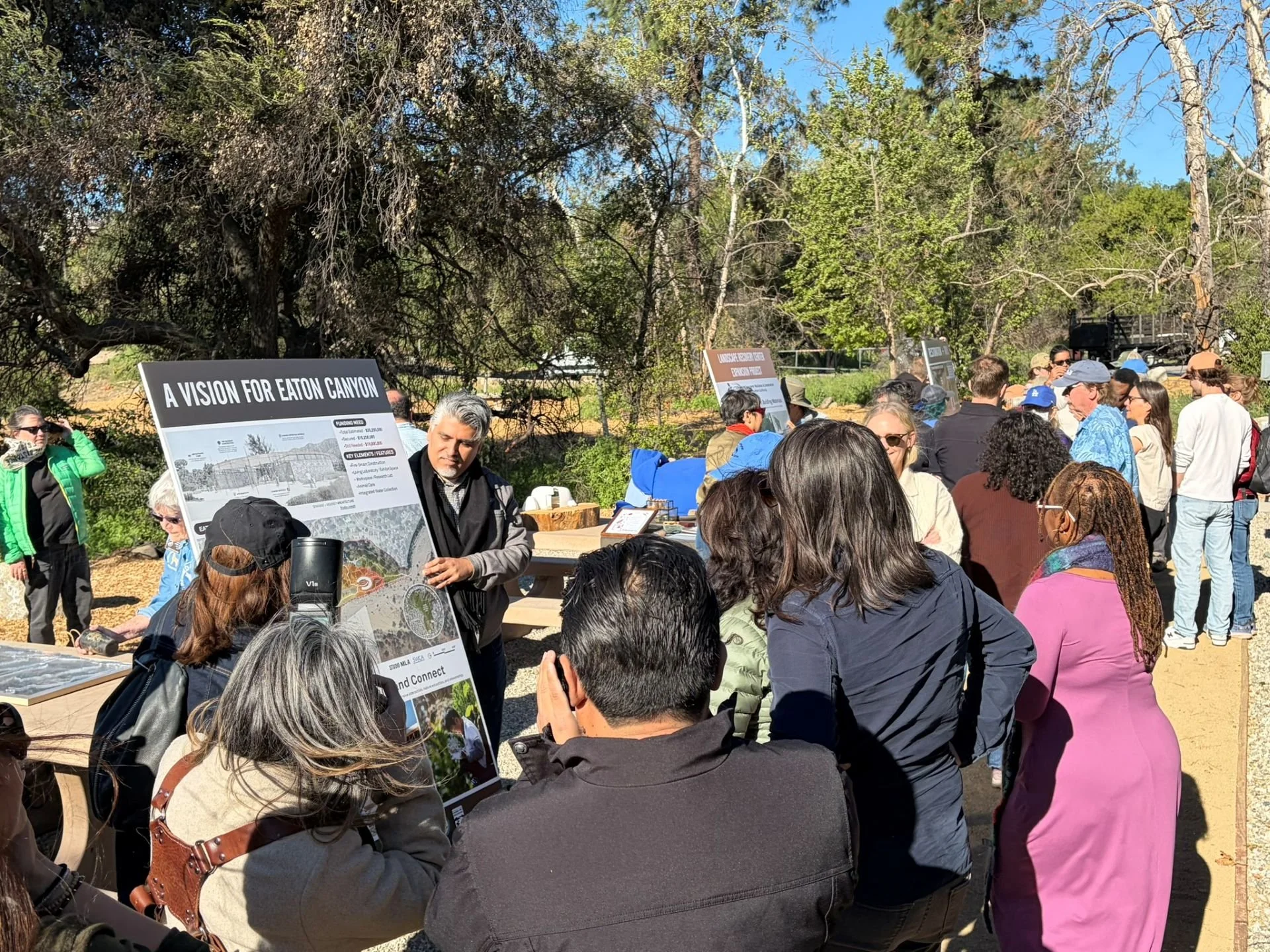
Community outreach for the Eaton Canyon Nature Center Re-Build Project
Designing at the urban-wildland interface requires a careful balance of human presence and ecological stewardship. At the Eaton Canyon site, recently impacted by the January 2025 wildfires, Sparano + Mooney Architecture has embraced this challenge, creating a Nature Center that responds to both the volatility and the enduring beauty of the landscape. The project demonstrates how architecture can not only coexist with wildfire-prone environments but also actively embody resilience, education and community engagement.
The design is centered around a vibrant outdoor courtyard, conceived as the heart of the site. This space introduces visitors to the Nature Center and surrounding trail system while fostering social interaction, serving as both a gathering place and an experiential corridor. The courtyard seamlessly connects indoor and outdoor programs, emphasizing circulation that is both unconditioned and sheltered, and allowing exhibits to extend into exterior pathways. Building masses are carefully separated by function, with openings and covered outdoor spaces providing controlled views while encouraging fluid engagement with the landscape.
Sparano + Mooney Architecture’s approach prioritizes fire resilience at both the architectural and landscape scale. Massing strategies, defensible zones and site-oriented design reduce combustible exposures, while 5,000-gallon water tanks and integrated fire suppression systems reinforce preparedness. Material choices are equally deliberate: locally-sourced stone and board-formed concrete are being considered, which offer durability, high thermal mass and fire resistance, grounding the building in its context while providing a textural, monolithic aesthetic that echoes the canyon’s natural features and presence.
Conceptually, the design draws inspiration from the resilience of live oak and sycamore trees, which have survived repeated wildfire cycles in Eaton Canyon. These species endure fire through a combination of protective bark, deep roots, water-conserving foliage and self-shedding branches that reduce ignition risk. The cyclical and persistent nature of these trees informs both the conceptual framework and the programmatic layout; similarly, the Nature Center’s architecture seeks to adapt rather than resist, employing strategies such as non-combustible materials, ember-resistant base elevations, protective shutters and building humidification to mitigate wildfire exposure. Like the trees that inspired the architecture, the Nature Center’s spaces are flexible and adaptable. They are also capable of supporting education, events and emergency preparedness.
Functionality and community engagement are equally central to the project. A well-defined entry vestibule keeps interior spaces free of debris, while classrooms and multipurpose spaces accommodate up to 40 participants and provide storage and display for educational materials. A designated area for the Altadena Mountain Rescue Group, along with animal care facilities, staff workstations and flexible event spaces, ensures that the Nature Center operates as both a hub for civic engagement and a site for learning and stewardship.
In the Eaton Canyon Nature Center, architecture becomes a vessel for memory and renewal. Every form, material choice and spatial connection reflects an understanding of fire ecology, a respect for community needs and a commitment to resilience. Sparano + Mooney Architecture demonstrates that designing within the urban-wildland interface is more than a technical challenge: it is a practice of adaptation, education and reverence for the cycles of nature.
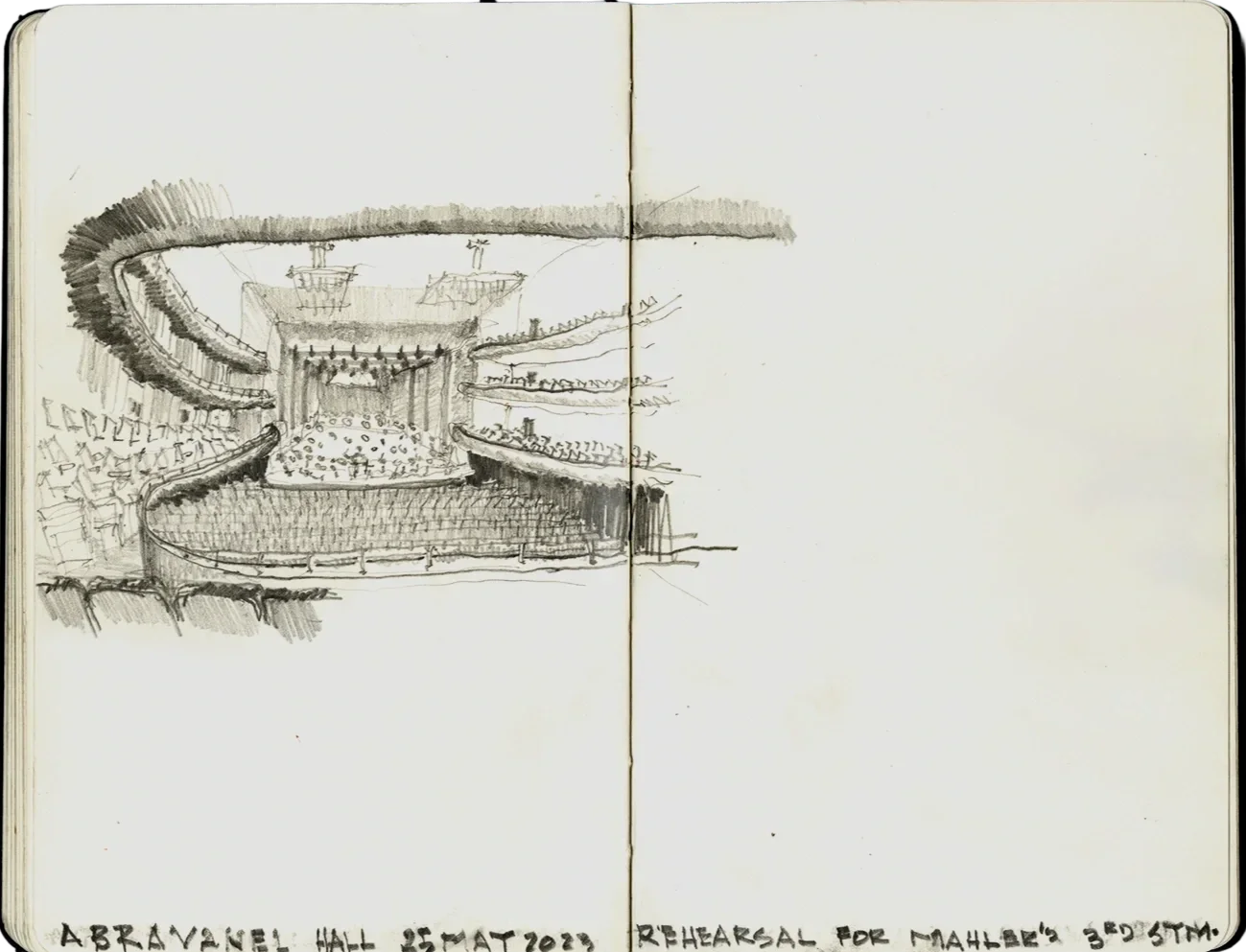
ABRAVANEL HALL VISIONING
SETTING THE STAGE: Abravanel Hall Master Plan and Visioning by Sparano + Mooney Architecture
MAY 08, 2025
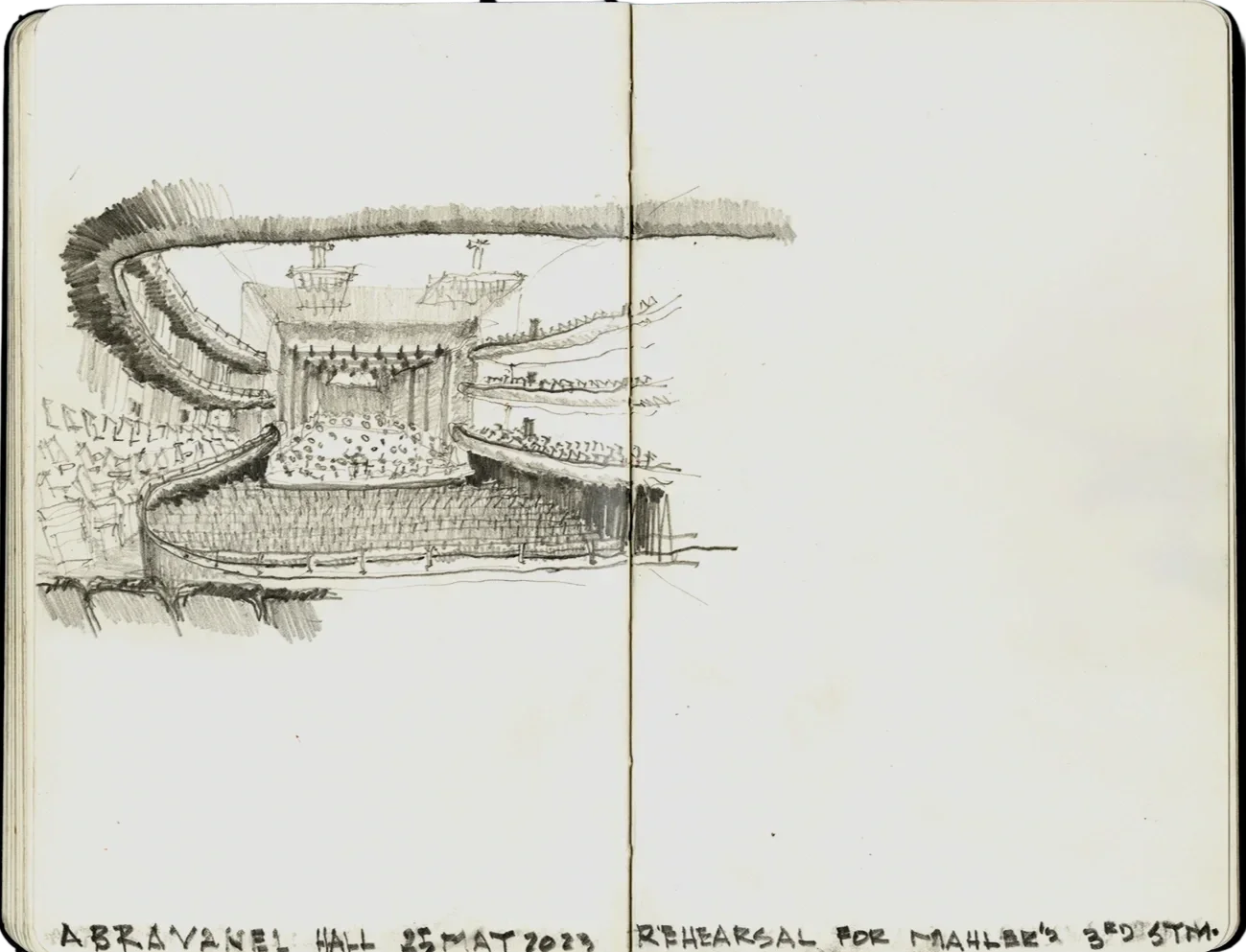
When an architect is invited into the earliest master planning stages of a project, something important happens: a space opens up - not just physically, but also creatively and strategically. This is the moment when vision meets experience, when ideas begin to take shape through the lens of design thinking, long before materials are chosen or forms take final shape. For owners and institutions with a bold sense of purpose but a need for clarity, the master plan is where possibilities are tested, priorities are clarified, and the built environment starts to align with long-term goals.
At its best, a master plan is not just a technical roadmap - it’s a shared language between owner and architect, a framework that allows both parties to step back and look forward. It’s where our expertise in site, sustainability, and spatial flow meets the client’s aspirations for impact, legacy, and use. Whether guiding the development of a campus, a cultural institution, or a community space, the master planning process is our opportunity to ask essential questions, consider time and change, and chart a course that is both practical and visionary.
When Salt Lake County engaged Salt Lake City-based performing arts architects Sparano + Mooney Architecture to update the master plan for Maurice Abravanel Hall, we stepped into a complex and beloved cultural context, one that demanded both reverence for its history and clarity about its future. The Hall, home to the Utah Symphony and a landmark in downtown Salt Lake City, is more than a performance venue; it is a civic icon. Yet, like many legacy buildings, it faces evolving expectations around access, patron experience, user demands and urban connectivity. The task facing our Salt Lake City performing arts architects was not simply to envision a better building, but also to frame a future that responds to the changing rhythms of the surrounding city as well as to craft a cultural landscape that views a “Symphony Hall” with trepidation.
So first, Sparano + Mooney Architecture and our team of theater designers (including Theatre Projects), engineers and performing arts architects in Utah listened. The Utah Symphony | Utah Opera staff, musicians and board members, the Salt Lake County Arts & Culture Division, Abravanel Hall’s civic neighbors, and regular and potential users of Abravanel Hall were all invited to participate. We held in-person focus groups, interviews, venue and acoustical tours, and virtual listening sessions designed to gather vital insights from the key stakeholders. Comprehensive online surveys were conducted with those who were unable to attend in-person sessions. At each meeting we conducted Strength, Weakness, Threats and Opportunity assessments to build a baseline understanding, and ensuing discussions focused on both the presenter and patron experience and inside the hall.
And then Sparano + Mooney Architecture and our Utah performing arts architects began to look at Abravanel Hall; we dug through the storage rooms, climbed every staircase, crawled around in the fly loft, traversed the catwalks, and sat quietly in the lobby. The team reviewed existing building systems, technology, and front- and back-of-house spaces; studied previous masterplans and project plans and conducted extensive acoustic measurements.
Getting the acoustics right was a critical part Sparano + Mooney Architecture’s evaluation of Maurice Abravanel Hall. Originally designed by FFKR with acoustics by the renowned Dr. Cyril Harris, the hall has long been celebrated for its sonic qualities. During our listening sessions, we heard overwhelmingly positive feedback from patrons and regular users of the space. But the musicians - those most intimately attuned to the hall’s nuances - offered a more layered perspective. They could identify specific moments where the built reality of the hall didn’t fully match the original design aspirations, often pointing to subtle shortcomings that only become apparent through deep familiarity and repeated performance.
To better understand these nuances of Abravanel Hall, Sparano + Mooney Architecture worked with our consulting acoustician, Kirkegaard, to conduct a thorough acoustic assessment. This process combined traditional techniques with advanced instrumentation to analyze how sound behaves in the hall today. We began with the classic “red balloon test,” popping balloons in different areas to capture a raw, immediate sense of how sound reflects and decays. From there, Kirkegaard introduced a more precise method using an impulse sound source—a small, half-sphere device that emits controlled bursts of broadband noise. With microphones placed throughout the hall, we collected data on reverberation time, clarity, and spatial diffusion. These measurements allowed us to create a detailed acoustic profile of the space, highlighting both its strengths and opportunities for enhancement. In doing so, we laid the groundwork for improvements that respect the hall’s legacy while supporting its future as a world-class performance venue.
With the community outreach and facility analysis completed, Sparano + Mooney Architecture and our Salt Lake City performing arts architects turned our attention to synthesizing what we heard and observed in Abravanel Hall; distilling the mountains of data into seven key themes that would guide the masterplan from then on. Discussed by Sparano + Mooney Architecture in greater detail in the final Abravanel Hall Master Plan and Visioning document, the seven themes were: Acoustics, Location, Perception + Inclusion, Accessibility + Infrastructure, Technology, Support Spaces, and Wayfinding + Plaza Use.
As our Salt Lake City theater design team looks ahead, the master plan for Maurice Abravanel Hall stands as both a reflection of its legacy and a blueprint for its evolution. Through deep listening, rigorous analysis, and meaningful collaboration, our Utah performing arts architects charted a course that honors Abravanel Hall’s cultural significance while preparing it to serve new generations of artists, audiences, and community members. This process is more than a study of space - it’s a commitment to ensuring that Abravanel Hall continues to resonate, not just acoustically, but civically, for decades to come.
Whether through performing arts facility assessments, performing arts feasibility studies, performing arts venue programming, performing arts master plans or performing arts renovations and performing arts new design for landmark cultural facilities, Sparano + Mooney Architecture and our performing arts architects in Salt Lake City, Utah performing arts designers, Los Angeles performing arts architects, Mountain West performing arts architects and West Coast performing arts architects are here to help our clients set the (next) stage of their venues!

CONCERT HALL DESIGN
THE (PERFORMING) ARTS OF CONCERT HALL PLANNING + DESIGN
AUGUST 23, 2024

America First Performing Arts Center; Utah Tech University; rendering by Sparano Mooney Architecture
At Sparano + Mooney Architecture, our Los Angeles architects, Salt Lake City architects, and Western Mountain Region architects prioritize and specialize in the development and advancement of innovative concert hall design and performing arts architecture. Whether designing a new facility from the ground-up or renovating an existing venue, we eagerly and thoughtfully design performing arts centers that balance the beauty of a hall with the incomparable acoustics of these timeless spaces
For example, John Sparano, FAIA, has discussed the Newel + Jean Daines Concert Hall Renovation Project designed by Sparano + Mooney Architecture for Utah State University, which reflects the firm’s sophisticated yet delicate approach to form and function: For instance, the use of high-quality materials like birch wood paneling, which can help with sound absorption, and innovative technologies for acoustic tuning, which have been crucial to the success of this renovated performing arts venue. Our Utah concert hall architects have also focused on visual appeal, incorporating elegant façades as well as welcoming lobby spaces that reach past this threshold to the street – attempting to mediate and optimize the experience between passersby and the users within a concert hall space. The integration of balconies, grand glazing, and plazas creates further opportunities to integrate users and patrons, visually blur the boundaries between exterior and interior spaces, and create inclusive cultural spaces for the public.
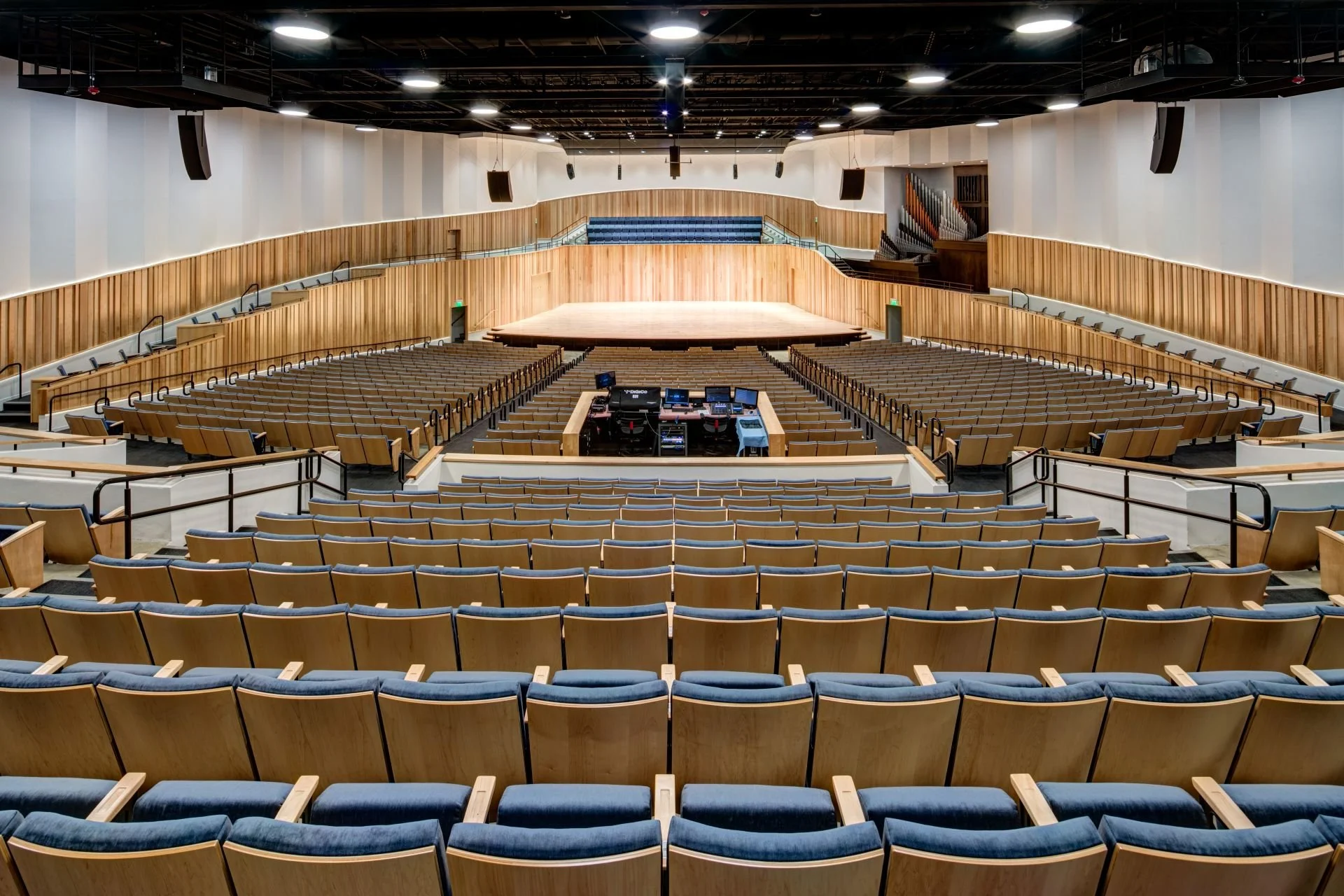
While concert hall new-builds certainly remain critical to the longevity of the arts, perhaps more importantly concert hall remodels and performing arts center renovations are increasingly necessary to address evolving performer and patron needs, maintain a venue’s iconic relevance and functionality over time, and remain sensitive to the economic impact of a large-scale building project on an arts-sector client (and, therefore, performing arts audiences). As musical performance standards, audience expectations, and acoustic, theater and audio-visual technologies advance, older concert halls may require significant updates to enhance sound quality, seating comfort, patron amenities, and overall accessibility, as well as to accommodate different performance types such as pop concerts, spoken word and film. The historical value of performing arts venues such as Utah’s Abravanel Hall holds gravitas with most patrons. However, there is a responsibility to preserve cultural and historical significance while also adapting to the requirements of modern concert hall spaces and welcoming new audiences to the performing arts.
Concert halls and their associated cultural programming were once characterized by a sense of exclusivity, formality and a projected sophistication – an appeal only to the “high-brow.” For decades, an equally-limited formula existed for how a concert hall should be configured, both technically and aesthetically: “The conventional wisdom for creating a great acoustical hall was a narrow, high, rectangular ‘shoebox’ model with a maximum of 2,500 or so seats.” However, contemporary architects view the year 1963 as pivotal in the shift toward the democratization of concert hall design, during which Hans Scharoun designed the 2,440-seat Berlin Philharmonie in “an aggressive attempt to tear down the traditional social hierarchies of the classical music world.” Recently, and as a response to the need to engage new audiences, there has been an even greater move than in the 60s toward breaking down that formality as part of a more foundational effort to engage a wider, more diverse audience. In survey after survey, respondents (especially those from a younger demographic) have voiced an opinion that this fundamental change includes a re-thinking of aspects such as: the types of music offered; the implied dress code; the cost of admittance; the time of day of performances; addressing barriers to entry; and even ticketing and seat reservation systems. The attempt to design spaces that reject class-based ideals behind performance-based art (and architecture) has therefore become critical in the modern architectural process of conceptualizing and realizing concert halls and performing arts architecture.
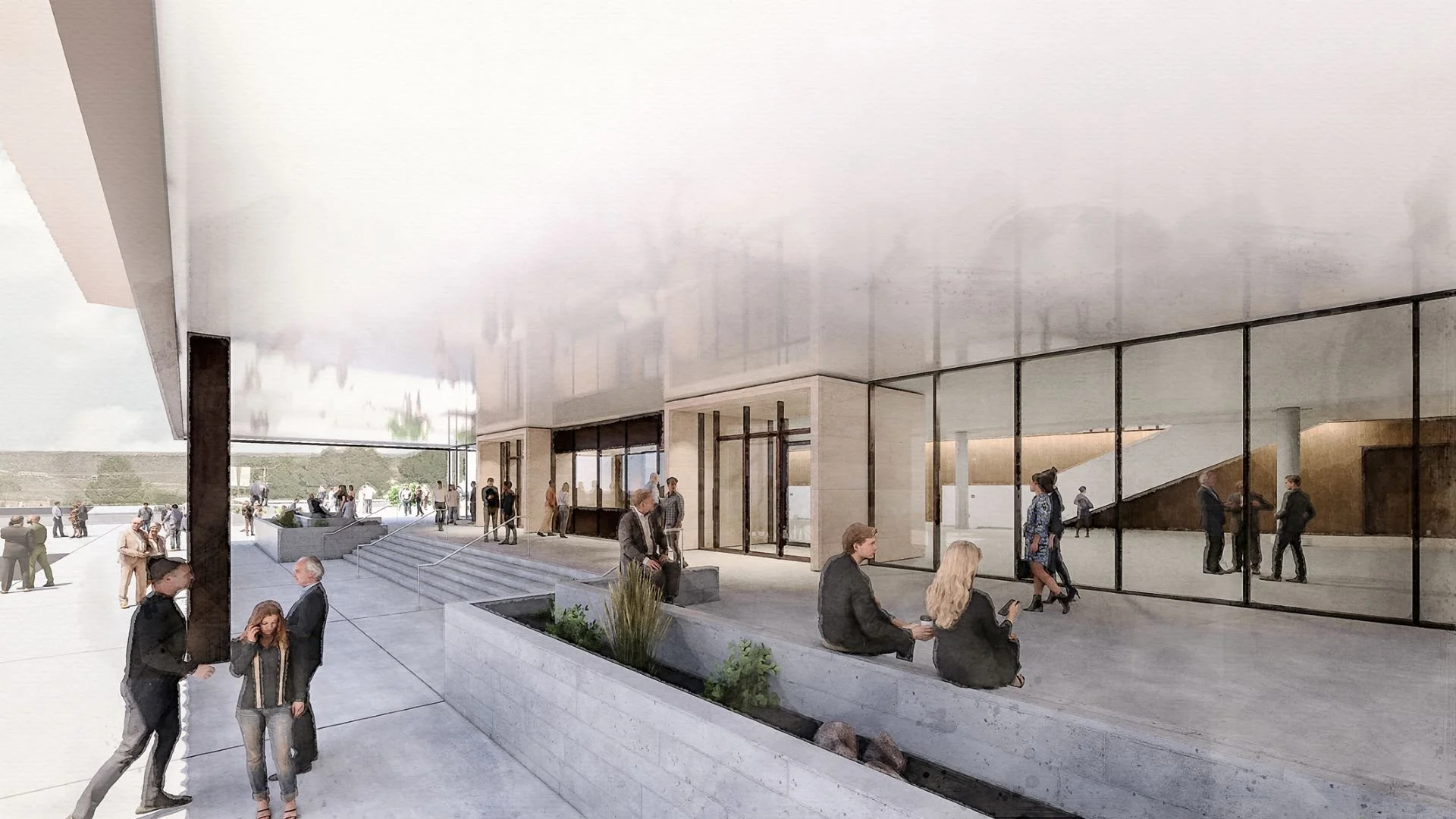
America First Performing Arts Center, Utah Tech University; rendering by Sparano + Mooney Architecture
For instance, Sparano + Mooney Architecture team member Dan Gasser, AIA, notes our recent concert hall feasibility study, concert hall master planning and concert hall renovation of Abravanel Hall, the internationally-acclaimed performing arts venue in downtown Salt Lake City, Utah, as well as our concert hall design for the America First Performing Arts Center on the campus of Utah Tech University in St. George: He explains the importance of creating inviting glass lobbies for both venues in close proximity to the street that will draw in visitors and encourage participation in the arts. The lobby space has historically been a closed-off realm within performing arts venues – open only to those who had the cultural capital to step through the venue doors – but with careful planning and design, the lobby can become a vibrant and versatile space that adds value to the overall performance experience.
Through our concert hall renovation design and performing arts architecture, Sparano + Mooney Architecture has emphasized the potential of transparent concert hall spaces to make them more inviting and accessible for all users, as well as familiar to long-time patrons. It is our intent that implementing these improvements will increase the appeal of the performing arts and of performing arts architecture to new visitors and enhance both their current and future experiences with these important concert hall venues in our cities.
SOURCES
“The Best Buildings You’ll Ever Hear,” by Nicolai Ouroussoff, The New York Times, June 3, 2007 (accessed August 15, 2024)
PRE-FABRICATED HOMES
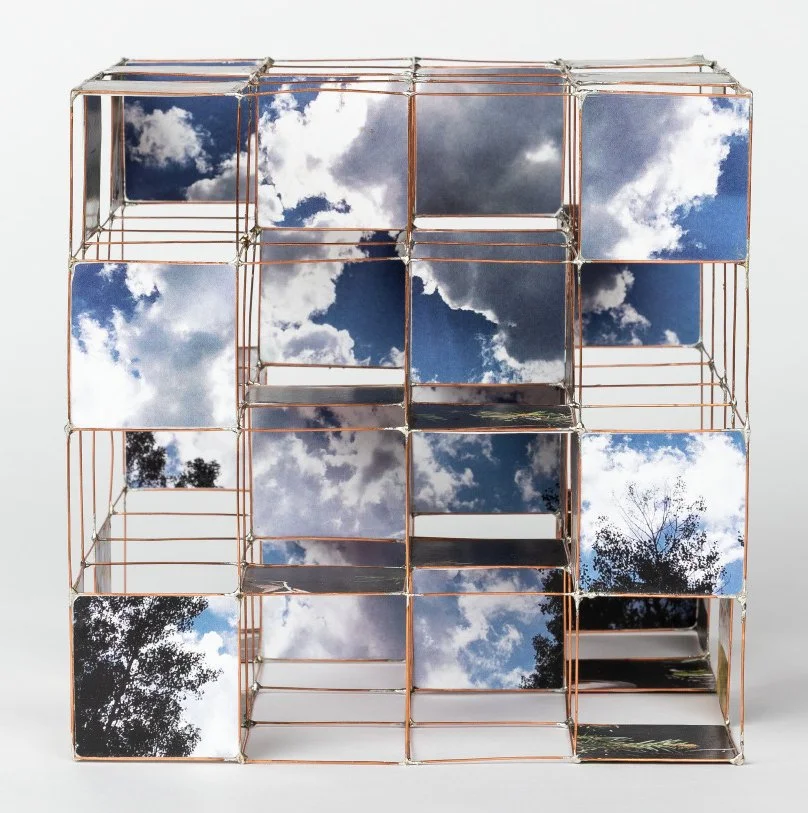
BUILDING THE AMERICAN DREAM: A Brief History of Pre-Fabricated Homes
JANUARY 19, 2024
Sparano + Mooney Architecture strives to create one-of-a-kind architectural designs that result in timeless, contemporary and sustainable homes for our clients. The uniqueness of the custom residences we design matches the singularity of our clients, and it is this inimitable quality of both that continues to drive our practice.
The homes we design are bespoke and cutting-edge, and require complex engineering to execute. However, in the late 19th and early 20th centuries the practice of architecture was at times a wholly different affair that utilized the emerging modern manufacturing technique of pre-fabrication, which helped democratize housing design for growing populations across North America.
COOKIE-CUTTER FROM A CATALOG
Though pre-fabricated homes – also known as “pre-cut,” “kit” or “mail-order” homes – varied in aesthetics throughout their popularity, their raison d'être remained largely the same: to provide access to affordable housing stock that would suit the need for comfortable, climate-appropriate shelter, and that could be constructed simply and quickly. Manufacturers sold homes in varying sizes and styles, but provided at fixed cost all materials to construct the house (typically excluding concrete and masonry, which would need to be arranged by the customer). D.N Skillings and D.B. Flint published their catalog Sectional Portable Houses in 1861, marketing their buildings’ ease of construction as “so simple that two or three men without mechanical knowledge, or experience in building, can set up one of them in less than three hours.” Their designs were not only for home design: they also offered architectural plans for schools, offices, warehouses, and chapels. In 1883, L. Forest & Co. claimed their structures offered the “cheapest, strongest, and warmest portable houses on the market” to clients including immigrant settlers of the upper Midwest region, known for its harsh climate.
MODERN + MANUFACTURED
At the turn of the 20th century, the purpose of these buildings was honed and a plethora of designs for pre-fabricated residences was available to eager homeowners. Companies manufacturing these affordable pre-cut homes proliferated: Aladdin Houses and Liberty Ready-Cut Homes of Bay City, Michigan; Hodgson Portable Houses of Boston, Massachusetts; and “Presto-Up” Patented Bolt-Together Cottages of Chicago, Illinois all promised customers efficient residential designs that would be shipped direct-to-consumer then assembled on-site either by the homeowner or a local contractor. Prices varied – for example, the Sears Hamilton home cost $1,379 in 1916 ($40,673 with 2023/4 price-adjusted inflation), while the Sears Martha Washington model sold for up to $3,727 in 1921 (or approximately $60,170 today).
Sears is perhaps the most well-known producer of mail-order homes, and launched its Sears Modern Homes catalog in 1908. These kits provided all the materials and blueprints required for construction of Sears’ various models, and all the trimmings were included: light fixtures, cabinetry, hardware, gutters and garage doors. The guess-work (and, arguably, any individuality) was removed from the homebuying and building process. Customization was not unheard-of, but was largely left to the homeowner to tackle with their choice of interior furnishings and decorations. Homeowners did not seem deterred by a lack of agency – by the time the Sears catalog ceased publication in 1940, it is estimated that the company had sold up to 75,000 of these homes.
POST-WAR PRE-FABRICATED PERFECTION
These homes were popular especially in the post-war period, largely because returning GIs were able and eager to buy a home for their families but were simply unable to find the stock from which to purchase. In the aftermath of World War II, the private housing market was ill-equipped to provide homes to meet soaring demand. Many of the resulting pre-fab dwellings were modest, one-story models that offered the creature comforts that wartime austerity had stripped from the notion of “home.” These catalogs were not simply selling shelters; they were selling the American Dream.
One of the most striking examples of the post-war kit home is the Lustron, which capitalized on the boom in demilitarized manufacturing as well as government funding for construction companies able to deliver housing. Founded in 1947, Lustron sought to innovate and rationalize affordable housing by introducing mass-production techniques into the construction industry. The homes were assembled from pre-fabricated, enameled-steel components and assembled on-site by a local crew with the help of an accompanying manual. The brand was the subject of a nationwide marketing campaign promoting the Lustron’s modernity and affordability. Unfortunately, the cost of raw materials, difficulties with manufacturing and shipping infrastructure, and tenuous relationships with distributors, lenders and frustrated consumers bankrupted the company by 1951. Only 2,680 of these homes were ever built, and only an estimated 1,500 remain as icons of post-war architectural home economics.
After almost a century of immense popularity, the modern kit home’s appeal declined in the mid-20th century in favor of suburban tract house subdivisions, a form of inexpensive and abundant housing built in bulk by developers. As Utah and California architects who care deeply about the history of building design, as well as the history of American vernacular architecture, we are fascinated by the concept of the kit home. Though we specialize in designing sophisticated heritage homes and mountain-modern architecture in the American West, we are nevertheless indebted to the humble essence of architecture as a service that provides a basic human need – shelter. For this reason, our Salt Lake City architects and Los Angeles architects produce a wide range of sustainable residential architecture solutions that are carefully-crafted at multiple scales and that will serve generations to come on complex sites throughout the western mountain region.
“To Build a Lego House”, by Jeremy Pi, The Harvard Urban Review online, April 12, 2018
“Why do Cookie-Cutter Neighborhoods Exist?”, by Kate Kershner, HowStuffWorks online, May 2, 2012
“Lustron”, The Ohio History Connection
“Where Art Thou Hamilton?”, by Rose Thornton for Searshomes.org, accessed October 28, 2021

SUSTAINABLE DESIGN FOR ARTS + CULTURE
SUSTAINABLE DESIGN FOR ARTS + CULTURAL INSTITUTIONS
APRIL 26, 2023
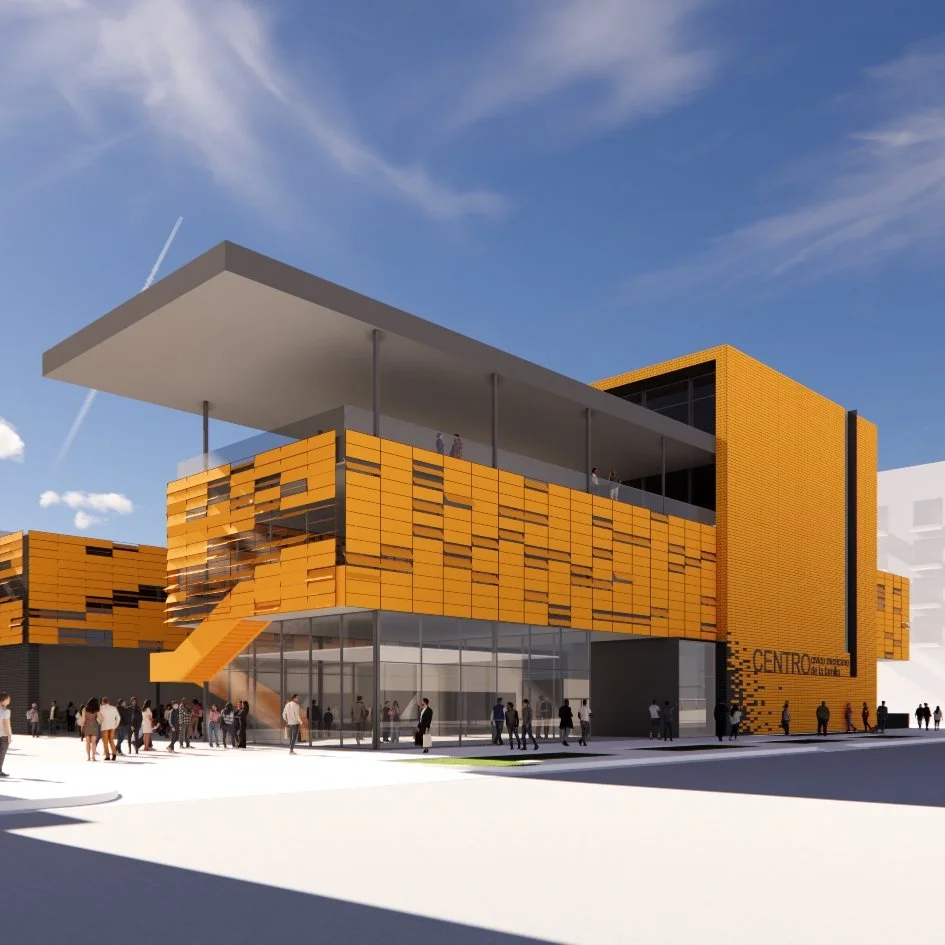
As architects, we have a responsibility to design architecture that not only meets the needs of the present but also ensures a sustainable future. This aspect of our profession is particularly important when designing for arts and cultural institutions, which play a significant role in shaping the way people experience and appreciate their communities as well as the arts, history, culture and heritage.
Incorporating passive design and sustainable design strategies in the architectural design of arts and cultural institutions can help reduce a facility’s environmental impact, generate lower operating costs, and enhance the visitor experience. These objectives are frequently aligned with the mission of arts and cultural entities, and the architecture therefore can serve to reflect the values of these institutions.
Below are some key strategies that Sparano + Mooney Architecture considers as we design museums, art galleries, performing arts venues, community centers and other cultural projects:
PASSIVE DESIGN STRATEGIES
Passive design refers to designing architecture that takes advantage of natural resources such as sunlight, wind, and shading to minimize energy consumption. Cultural institutions can benefit from the following passive design strategies:
Orientation: Proper positioning of the building on its site with an optimal passive solar orientation can reduce energy consumption by maximizing natural light and minimizing solar gain.
Shading: The use of architectural shading devices such as overhangs, awnings, and louvers can reduce direct sunlight and minimize heat gain.
Ventilation: Designs that incorporate natural ventilation systems such as operable windows, stack ventilation, and cross-ventilation serve to improve indoor air quality and reduce the need for mechanical cooling.
Thermal Mass: The use of materials with high thermal mass such as concrete, stone, and brick to absorb and store heat can reduce temperature fluctuations and the need for heating and cooling.
SUSTAINABLE DESIGN STRATEGIES
Sustainable design refers to architectural design solutions that use resources efficiently, minimize waste, and reduce environmental impact. Arts and cultural institutions can benefit from the following sustainable design strategies:
Energy Efficiency: The use of energy-efficient lighting, heating, and cooling systems can reduce energy consumption and lower ongoing operating costs.
Water Conservation: The incorporation of water-efficient fixtures such as low-flow toilets, faucets, and showers can reduce water consumption. We also take care to design landscapes that are integral to the architecture and incorporate native, drought-tolerant species with low water and maintenance needs.
Renewable Energy: Consider incorporating renewable energy sources such as solar panels or wind turbines to generate electricity on-site.
Material Selection: The use of sustainable materials such as reclaimed wood, recycled steel, and low-emitting finishes can reduce the environmental impact of the building. Arts and cultural buildings have great potential for expressing their values and mission through materials and detailing.
Waste Reduction: The design for waste reduction by incorporating recycling and composting facilities, and choosing durable materials that can be reused or recycled, can reduce the use of disposable products.
Incorporating passive design and sustainable design strategies in the architectural design of cultural institutions not only benefits the environment but also enhances the visitor experience. By designing buildings that maximize natural light, improve indoor air quality, and reduce noise pollution, we can create spaces that are welcoming, comfortable, and inspiring.
As architects in Los Angeles and Salt Lake City, we have the power to shape the way people experience and appreciate cultural institutions throughout the American West. By incorporating passive design and sustainable design strategies in the designs produced by the Sparano + Mooney Architecture team, we can create buildings that not only serve their intended purpose for our cultural clients, but also contribute to a shared sustainable future.

ANNE MOONEY: COLLEGE OF FELLOWS
ANNE MOONEY IS ELECTED TO THE AIA COLLEGE OF FELLOWS 2023!
MARCH 08, 2023
To mark International Women’s Day, which celebrates the social, economic, cultural, and political achievements of women, Sparano + Mooney Architecture is thrilled to share that principal and co-founder Anne Mooney has been elected to the American Institute of Architects College of Fellows 2023!
Anne received the honor of FAIA status in the category of “Design” for her body of work that promotes the aesthetic, scientific, and practical efficiency of the architecture profession. Fellowship in this category is granted to architects who have produced extensive bodies of distinguished work that has been broadly recognized for its design excellence through design, urban design, or preservation. Anne was the only Utah architect to be elevated to Fellowship in 2023.
The AIA College of Fellows seeks to stimulate a sharing of interests among Fellows, promote the purposes of the Institute, advance the profession of architecture, mentor young architects, and be of ever-increasing service to society. AIA Fellows are recognized with the AIA’s highest membership honor for their exceptional work and contributions to architecture and society. Architects who have made significant contributions to the profession and society and who exemplify architectural excellence can become a member of the AIA College of Fellows. Significantly, only 3% of the AIA members have this distinction.
Anne has been recognized for creating compelling spaces that connect people with their communities and landscape. Over the past 25 years, she has helped Sparano + Mooney Architecture build a reputation for delivering landmark architectural designs for arts and cultural facilities, such as Utah museums, Utah concert halls, Utah and Los Angeles film and theater projects, and Utah and Los Angeles cultural centers for civic agencies and non-profit institutions, as well as mountain modern residential homes set in unique landscapes, including architecture in Park City, Utah; Deer Valley, Utah; and Sun Valley, Idaho. The firm’s first monograph, Sparano + Mooney Architecture: A Way of Working, was published by Hatje Cantz in 2022.
Together, Anne and Sparano + Mooney Architecture have have been consistently recognized for design excellence and have received more than 50 design and honor awards, including the 2017 AIA Western Mountain Region Architectural Firm of the Year and the 2013 AIA Utah Architectural Firm of the Year. Anne Mooney, FAIA, LEED AP, and John Sparano, FAIA, have both been recognized with the prestigious AIA Western Mountain Region Silver Medal, the highest award given to an architect in this region of the United States.
John Sparano was elevated to Fellowship in 2015 - now, eight years after his own well-deserved recognition, Anne too has been honored as a Fellow. We take this opportunity to celebrate Anne, her professional accomplishments, and what this award means for gender empowerment, equality, inclusivity, and visibility on International Women’s Day!

UMOCA EXHIBITION
EXHIBITION ANNOUNCEMENT: A Way of Working @ UMOCA
MARCH 03, 2023
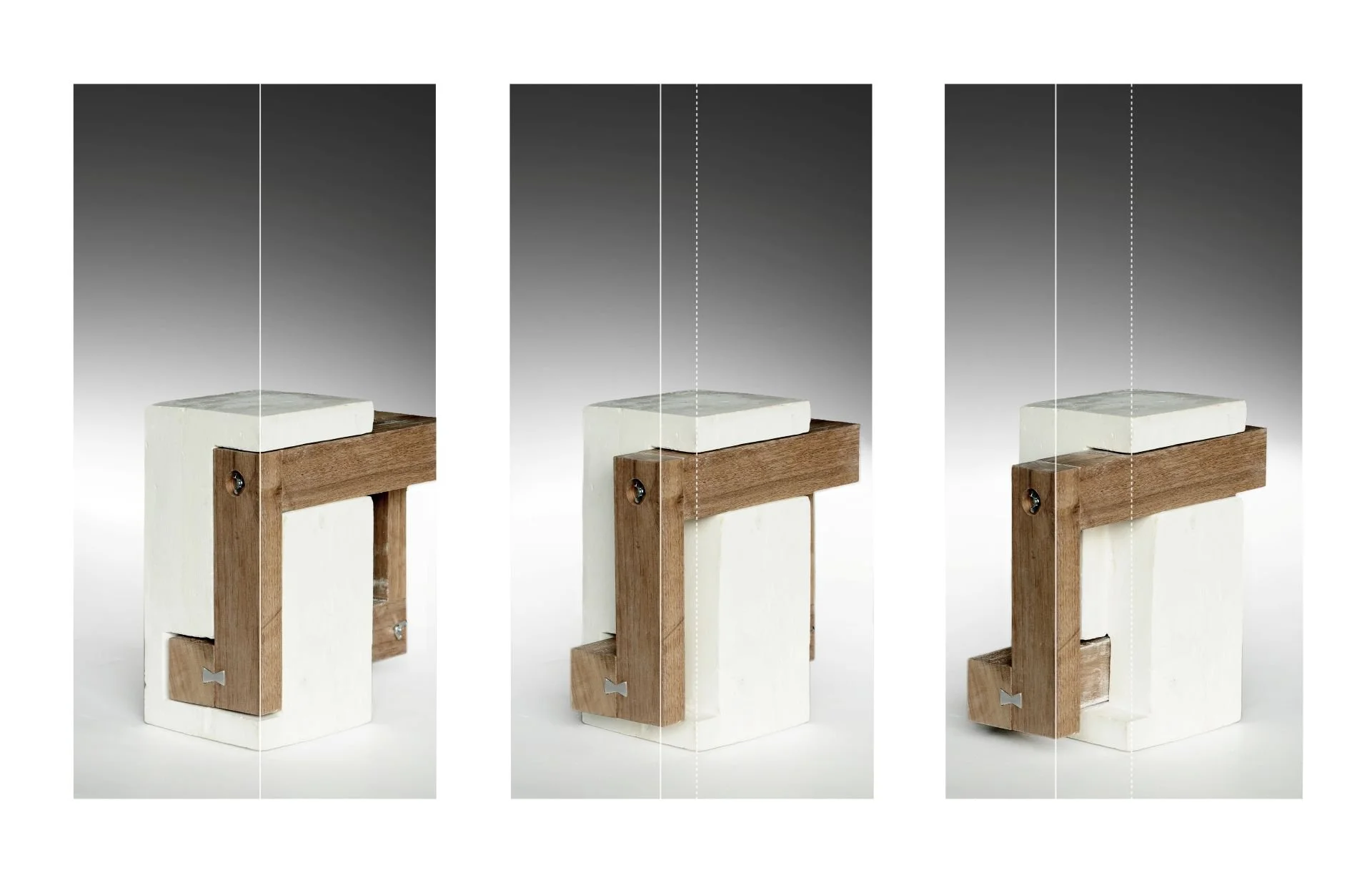
Sparano + Mooney Architecture and our team of Los Angeles architects and Salt Lake City architects is thrilled to announce its premier exhibition, “A Way of Working”, on view March 10 – July 15, 2023 at the Utah Museum of Contemporary Art (UMOCA). Showcasing seventeen of our firm's exemplary architectural works located throughout the American West, the exhibition celebrates the conception of ideas integral to the firm's design process, reflecting Sparano + Mooney Architecture's unwavering commitment to concept-driven and finely-crafted design.
The constructs exhibited are exemplary of those that guide the creation of projects throughout the region. Their formation springs from rigorous critical thinking and an unwavering commitment to a concept-driven design process in creating architecture. While anchoring each work in its specific circumstance, these constructs produce architecture that transcends convention. These objects ultimately become built, conceptual manifestations of core ideas guiding an exploration of scale, material, form and details. They serve as a point of departure through which a central, foundational idea is embodied. As stand-alone works, these devices are separate from – yet inextricably grounded in – the resulting architecture.
Founders Anne Mooney, FAIA, LEED AP, and John Sparano, FAIA, established the firm in 1997 and, to this day, maintain the ethos that the design process is critical to understanding the essential nature of their work – the relationship among environment and inhabitant and innovation – and that discovery is as compelling as the outcome. Anne and John’s shared passion for designing architecture within the rugged Western landscape has resulted in works across extreme topographies and multiple scales, from micro off-the-grid projects, to new-build work and adaptive reuse of existing structures, to new institutional, cultural and worship buildings, and mixed-use, master planning and urban design projects.
The exhibition takes inspiration from our recent monograph Sparano and Mooney Architecture: A Way of Working (Hatje Cantz: Berlin 2022), which details the firm's heuristic design process through imagery, drawings and essays. The exhibition at UMOCA further examines the heuristic devices the firm develops for new projects as a means to harmonize a regulating concept within the conditions of the site, program, inhabitants, and fundamental systems. These constructs produce architecture that transcends convention, ultimately becoming built, conceptual manifestations of core ideas. The works serve as a point of departure through which a central, foundational idea is embodied.
The opening reception for “A Way of Working” on Friday, March 10 from 6:00 to 9:00pm will also celebrate three new exhibitions at the museum – “Haimaz, Heimr, Hjem, Heem, Hām, Home”; “Boombox Benefit”; and “Matthew Sketch: FAM(ily)”.
For more information on the exhibition, please visit the UMOCA website. The Utah Museum of Contemporary Art (UMOCA) believes in the power of the art of our time. Through programming, advocacy, and collaboration, they work with artists and communities to build a better world. UMOCA is six-time recipient of funding from the Andy Warhol Foundation for the Visual Arts and a two-time recipient of the Art Works Grant from the National Endowment for the Arts. UMOCA is a 501c3 institution that is supported by public, foundation, and corporate gifts.
Sparano + Mooney Architecture is an award-winning collective of architects, artists and craftspeople in the American West with architects in Los Angeles, California, and architects in Salt Lake City, Utah. Our thought process is unique to our industry, as we strive to uncover the true essence of architecture through iterative research. We design sophisticated, bespoke mountain-modern architecture including arts and culture architecture, custom residential architecture, civic architecture and recreation and resort architecture for our clients, through a collaborative process that holds excellent architectural design as a core value.
“A great building must begin with the unmeasurable, and in the end, be unmeasurable.”
- Louis Kahn

CALVIN UNIVERSITY EXHIBITION
EXHIBITION ANNOUNCEMENT: The Architecture of Prayer @ Calvin University
MARCH 01, 2023
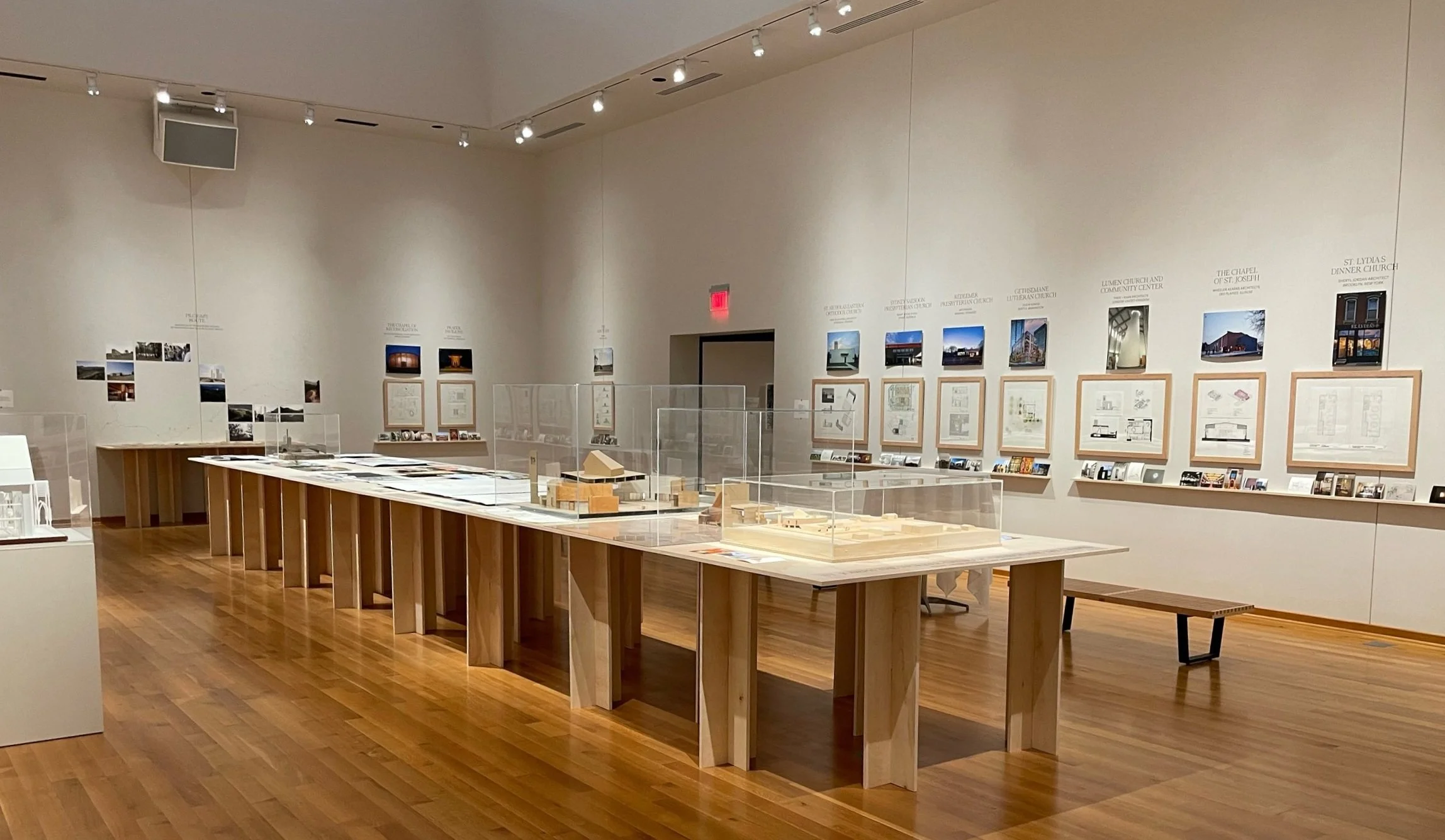
Sparano + Mooney Architecture and our community of designers and craftspeople not only create bespoke mountain-modern homes in alpine settings, nor do we focus solely on museum, theatre, civic, resort or recreation architecture in our Salt Lake City and Los Angeles architecture offices. Indeed, for the majority of our collective careers we have also delighted in the typology of worship architecture and have worked collaboratively with many worship clients, parishes, and parishioners to plan and design their new sacred spaces. It is therefore that we are thrilled to be part of The Center Art Gallery's exhibition titled “The Architecture of Prayer”, an international survey of the contemporary church and its architecture taking place February 6 – April 7, 2023 at Calvin University in Grand Rapids, Michigan.
Curated by New York-based architect Amanda Iglesias, the exhibition showcases drawings and travel photography of historic church buildings in dialogue with new projects built between 1999 and the present, contributed by over 40 global architecture firms. Collectively, it represents a selection of the most thoughtful liturgical architecture of the 21st century, contributed by internationally-recognized practices and local firms deeply embedded in their communities. The show will include work by Sparano + Mooney Architecture, Adjaye Associates, Olson Kundig, Shigeru Ban Architects, Mario Botta Architetti, Studios Architecture and Tatiana Bilbao Estudio, among dozens more.
Sparano + Mooney Architecture’s featured project is St. Joseph the Worker Catholic Church + Day Chapel, located in West Jordan, Utah. The program for the space includes a sanctuary with seating for 800, indoor and outdoor gathering spaces, church offices and a chapel for daily worship. The formal organization of the main worship space is based on two offset ellipses. The poché space between the ellipses creates a liturgical function zone housing the Chapel of the Blessed Sacrament, a reconciliation room, sacristy and prayer niches for statuary and religious art. The church’s elliptical form was conceived of as a true gathering geometry without corners, facilitating active participation from the community that will congregate there.
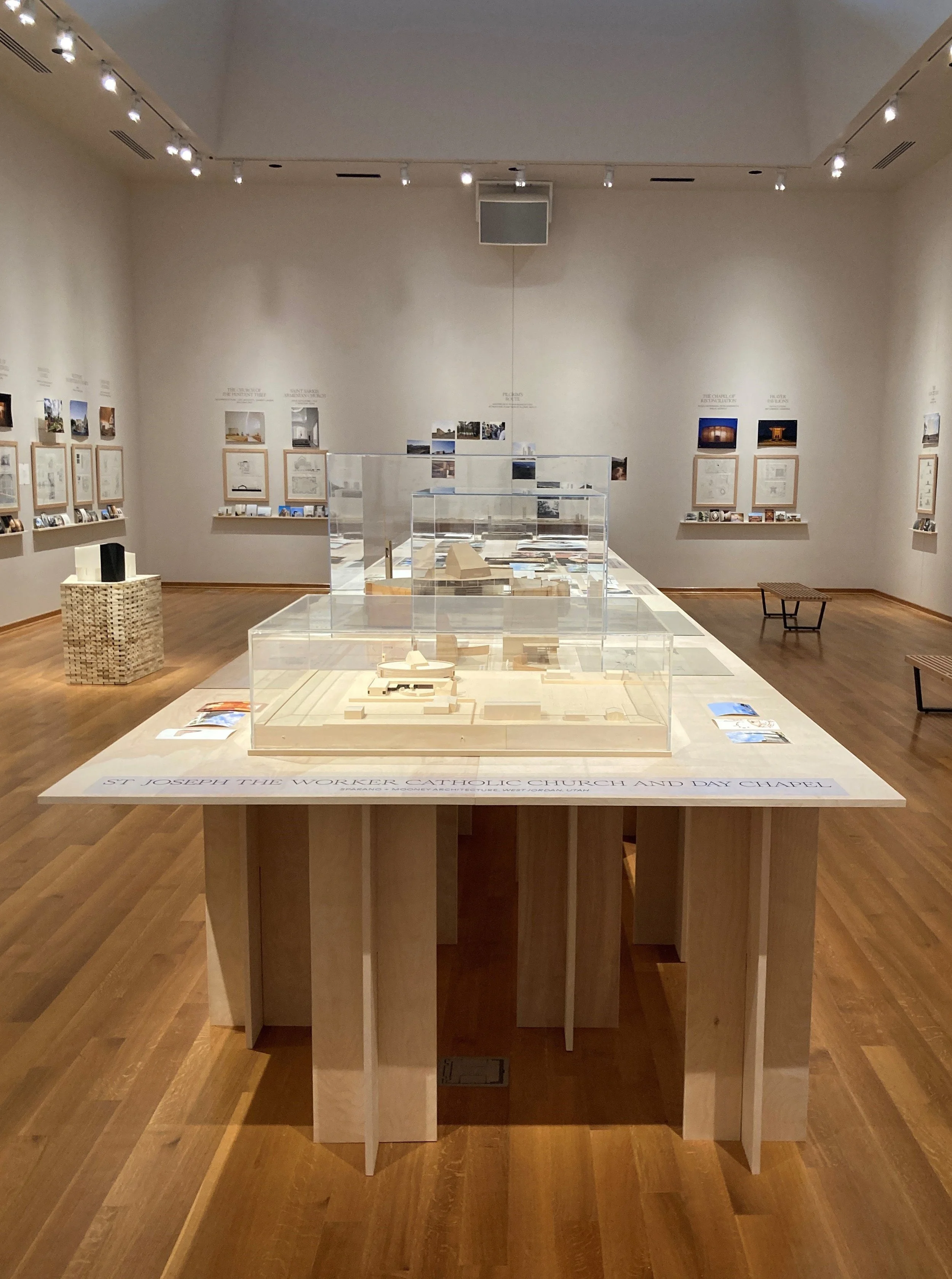
Light is brought into the sanctuary through a sandblasted, glazed band forming the base of the building, and through a large north-facing aperture (lantern) over the altar area. The upper portion of the ellipse contains eleven clerestory windows each relating in form, location and/or color to the twelve apostles. The twelfth opening is a skylight aperture over the baptismal font. The windows are all of colored, glazed panels, an affordable alternative and abstracted expression of traditional stained glass.
The firm's iconic design for St. Joseph the Worker Catholic Church + Day Chapel is one of the signature worship spaces showcased in the exhibition. For more information about the exhibition, please visit the exhibition page on Calvin University’s website and read the Curator’s Statement.
We would be delighted to meet with you to envision your congregation’s sacred space! Please contact us to speak with one of our church architecture team members in either or Salt Lake City or Los Angeles architecture offices.
GRANARY ARTS EXHIBITION
EXHIBITION ANNOUNCEMENT: The Center Can Not Hold @ Granary Arts
NOVEMBER 16, 2022
Sparano + Mooney Architecture is a community of architects and craftspeople in the American West, celebrating 25 years of great design this year from our architecture offices in Salt Lake City, Utah and Los Angeles, California. In our explorations of architectural design, contemporary challenges such as environmental conditions, cultural contexts, and occupant experience are woven around a central concept and a conceptual construct, or what we term a sculptural “heuristic device”. These devices serve as a point of departure through which a core idea is developed and embodied. As stand-alone works of contemporary art, these devices are separate from – yet crucially informative to – the resulting architecture. This belief in a foundational essence of architecture is why we were honored to be included in the forthcoming exhibition at Granary Arts, titled “The Center Can Not Hold” (November 18, 2022 – January 20, 2023).
Curated by Hikmet Sidney Loe and featuring works created by Sparano + Mooney Architecture’s principals Anne Mooney, AIA, LEED AP, and John Sparano, FAIA, as well as regional architect Hannah Vaughn, AIA, LEED AP (principal at VY Architecture), the exhibition conceptualizes the temporal nature of a “center” through the lens of architecture. We were invited to consider ideas of place. Positioning the geographical center of Utah and the town of Ephraim as the practical center for creative work, the collective and collaborative result is not architecture to be built, but is contemporary art that acts as a catalyst to mine conceptual layers of engagement with the past, the present, and the future. The ephemerality of the present moment – who occupies place, what traces remain of their existence – leads to questions of past occupation: how place is mapped, as well as concepts of erasure, remembrance, and memory.
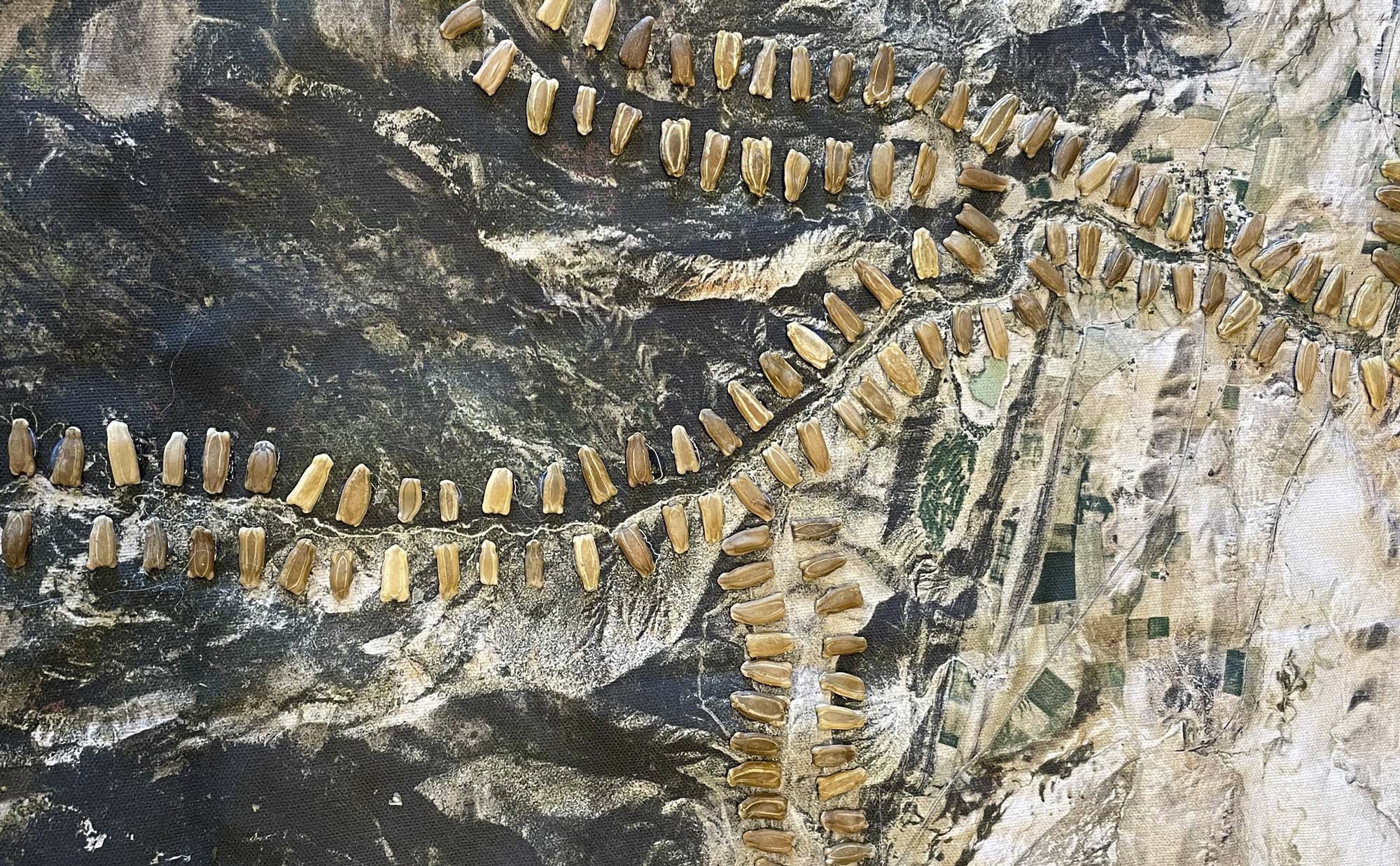
The Sparano + Mooney Architecture team constructed a full-scale oculus, offering fragmented view of maps, altered by layering graphics, natural materials, and hand-crafted, stitched elements to reimagine the idea of “center” over time. Our understanding of the term “center” embraces the invisible presence of suppressed voices and alternative ways of experiencing a landscape. In our consideration, the idea of a center is dynamic, evolutionary and transitory, and embodies an ethos of multiplicity rather than the implied singularity of the word. This interactive construct invites the visitor to explore the piece from a variety of perspectives – some direct, others requiring effort to access and assess the view.
Within a white conic shell, maps of central Utah are visible. These standardized, logical charts serve as the background for a critique of what this and other maps both portray and omit. The uniform graphics, colors and symbols act as a singular, commonly-accepted, means of reading the landscape and suggest a comprehensive documentation of place. However, this system of information prompts a questioning of what might be missing, ignored or erased.
We also present an aerial photograph of this regional center, as well as an overlay of another set of patterns, color fields and line work that helps us consider the possibility of the presence of unrecorded and invisible human settlement in this landscape – the presence of the “other”. These overlaid graphics challenge conventions of representation, but also the notion that the map is a full depiction of this geographical area. The resulting juxtaposition challenges the viewer to contemplate what – and who – else might have inhabited and experienced these spaces and landscapes. The layered logic of this work suggests the presence of others – those not visible (or excluded from) within the gridded settlements and in the agricultural fields.
The surrounding conic enclosure creates an abstract physical and visual barrier between the viewer and the maps. Two separate and distinct spaces are created, as the ideas of connection and separation are explored. A series of apertures of different shapes and sizes is the observer’s means of visual interaction with the map. The views of the map provide a variety of fragmented “ways of seeing”, and highlight the understanding that both a photograph and a map offer singular (and limited) knowledge of a place, as well as its inhabitants. Each aperture is one of a collection of perspectives, offering fragmentary points of view. Each viewer leaves this presentation with a unique sense of the concept of “center”, based on their individual interaction and engagement with the work.
For us, the ideas explored in “The Center Can Not Hold” exhibition are inherently tied to our own architectural practice. Our work explores hyper-specific cultural cues culled from a project’s client, community, program and site. This research is used to construct a conceptual heuristic device, which in turn provides the architectural order and transcends convention. We also work to construct a more meaningful relationship between modern architecture and the experience of its inhabitants. Our work revolves around the rejection of the notion that order is generated from geometric logic external to the occupant or observer. Therefore, the underlying organization of the work of our Los Angeles and Salt Lake City architects is a deliberate choice to position people at dynamic “centers” of architecture and to let space and form unfold around a continuous, directional and experiential path.
We hope you will have an opportunity to visit the exhibition, and to challenge your own conceptions of place and presence in the search for a more meaningful response to one of the essential questions of architecture: Why?
MONOGRAPH LAUNCH
MONOGRAPH LAUNCH! “SPARANO + MOONEY ARCHITECTURE: A WAY OF WORKING”
SEPTEMBER 06, 2022
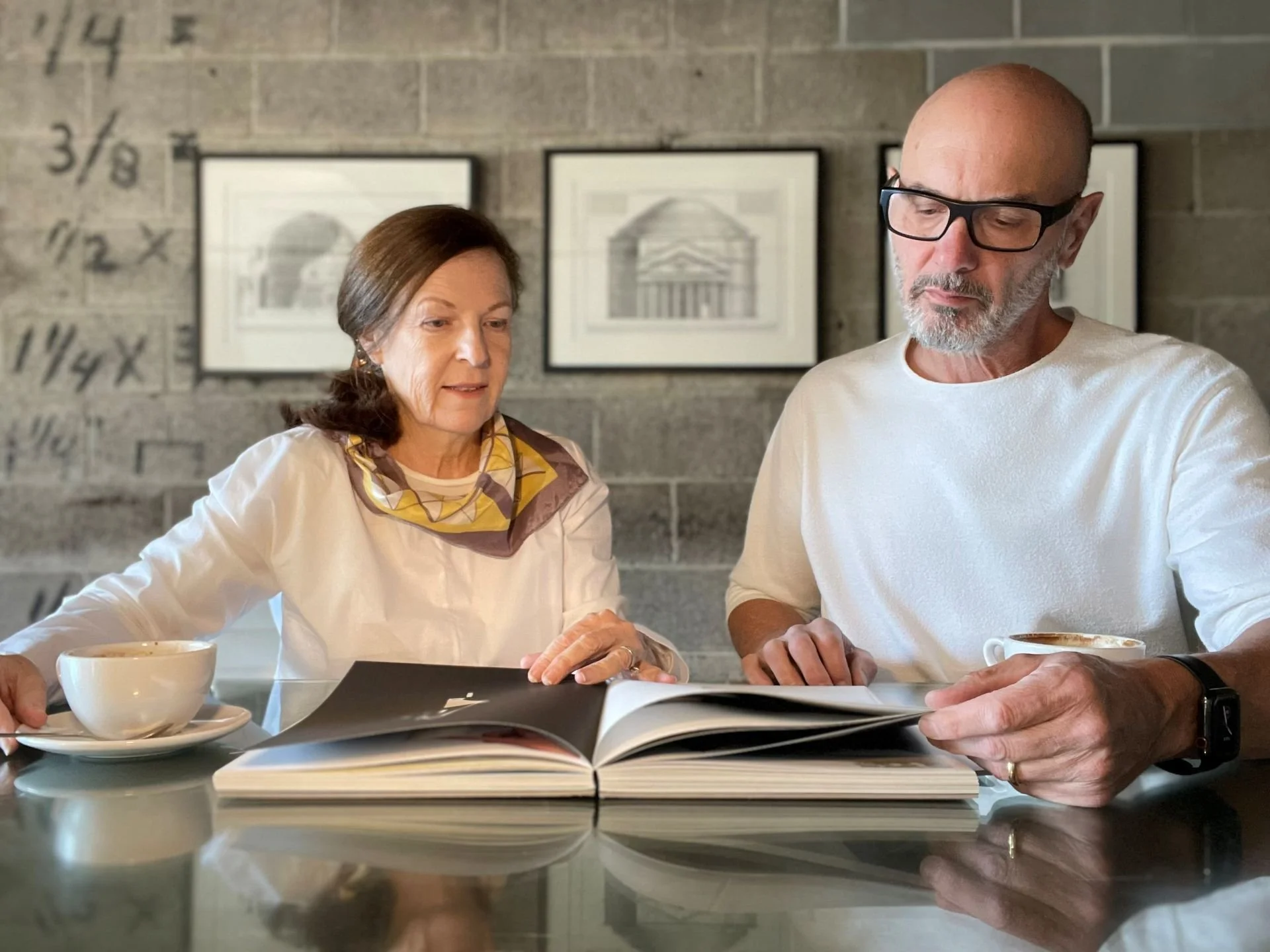
Sparano + Mooney Architecture is a community of architects and craftspeople in the American West, celebrating 25 years of great design in 2022. In honor of the firm’s portfolio, a monograph titled Sparano + Mooney Architecture: A Way of Working has been published by Hatje Cantz (Berlin).
Available for purchase now, the book highlights the dialogue between concept and location found in the firm’s work, as well as the architects’ commitment to sustainable and innovative buildings that are embedded harmoniously into spectacular mountain landscapes. The team's architectural solutions are rooted in tradition and history while also embracing cutting-edge technology, materials and details to reflect and elevate the broad communities the architecture serves. The studio’s collaborative process responds to overwhelming natural surroundings with restrained forms and innovative detailing of materials. This first monograph of the firm’s work offers an insightful perspective on developing architecture that thrives on – and is grounded within – the relationship between concept and place.
Together with a dedicated team, Sparano + Mooney Architecture is a collective of architects, clients, colleagues, makers and like-minded peers that shares a passion for design and sustainability in all that they do. The practice has grown steadily since its inception through the process of rigorous critical thinking and the completion of a wide range of architectural solutions. Carefully crafted at multiple scales, for various functions and to elicit a multitude of emotions, their work catalyzes the idiosyncrasies of each project to create a concept-driven design in the pursuit of architecture true to its time, place and circumstances. From micro off-the-grid projects, adaptive re-use of historic structures, and new-build institutional, commercial, cultural and worship buildings, to residential, civic, recreation and mixed-use projects, as well as master planning and urban design ventures, their portfolio of contemporary design work can be found throughout California, Utah, Montana, Wyoming, Colorado, Idaho, New Mexico and beyond.
The firm’s ethos is one of limitless exploration and an unwavering commitment to the heuristic process in creating architecture rooted firmly in meaning. With each project, the practice examines new ways to harmonize a regulating concept with the existing conditions of a site, program and fundamental building functions. Rather than imposing preconceived notions onto unique sites and environmental conditions, the eccentricities of any given program and site become the point of departure for that foundational idea. While anchoring each work in its specific circumstance, Sparano + Mooney Architecture endeavors to obtain a more meaningful response to one of the essential questions of architecture: Why?
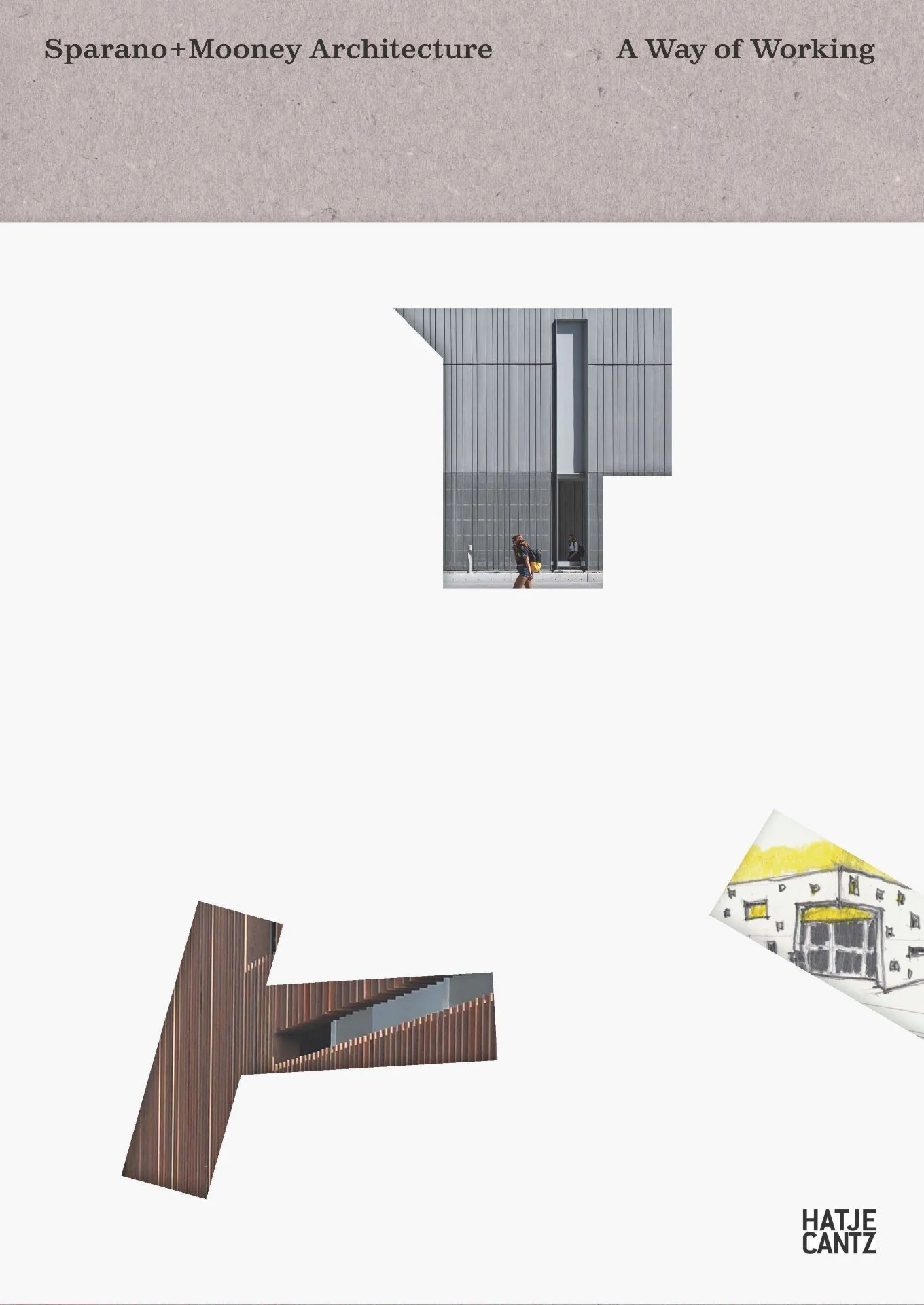
Sparano + Mooney Architecture: A Way of Working explores this central question and to detail the firm’s heuristic design process. Ten key projects and associated images, drawings and a series of essays are presented, which tie the work to vernacular ideals and land art. Finding meaningfulness in everyday materials rendered extraordinary through creativity and craft, the book investigates what it means to work within the context of the American West.
The firm is delighted to have had the opportunity to collaborate with many individuals on the production of this book, a tactile object in its own right. Contributors include acclaimed architecture author Michael Webb and art historian Hikmet Sidney Loe, with graphic design by Salt Lake City-based Studio Michael Aberman. Project management and production was provided by Dorothee Hahn and Stefanie Kruszyk, respectively, at Hatje Cantz Berlin. The team at Sparano + Mooney Architecture is thrilled to present this publication as a record of its dedication to the profession, and the tireless pursuit of great design.
PROMOTIONAL EVENTS
Scheduled events will include the Salt Lake City launch in Fall 2022:
Salt Lake DesignWeek open studio event at Sparano + Mooney Architecture with the architects and book designer, Michael Aberman, will take place on Wednesday, October 19th from 5-7pm. A presentation will take place at 6pm, highlighting the collaborative process in the design and production of the book. Address: 57 W 2100 S, Salt Lake City, UT 84115 (parking on Richards Street)
The King’s English Bookshop monograph launch event will take place on Friday, November 4th from 6-7pm. Address: 1511 South 1500 East, Salt Lake City, UT 84105
The Los Angeles/West Coast launch is scheduled to take place in Spring 2023 – please contact us for further information.
BOOK DETAILS
Sparano + Mooney Architecture: A Way of Working
ISBN 978-3-7757-5058-5
Published by Hatje Cantz Verlag GmbH
Mommsenstraße 27
10629 Berlin
Germany
www.hatjecantz.com

ANNE MOONEY: WMR SILVER MEDAL
ANNE MOONEY RECEIVES 2021 AIA WESTERN MOUNTAIN REGION SILVER MEDAL
NOVEMBER 29, 2021
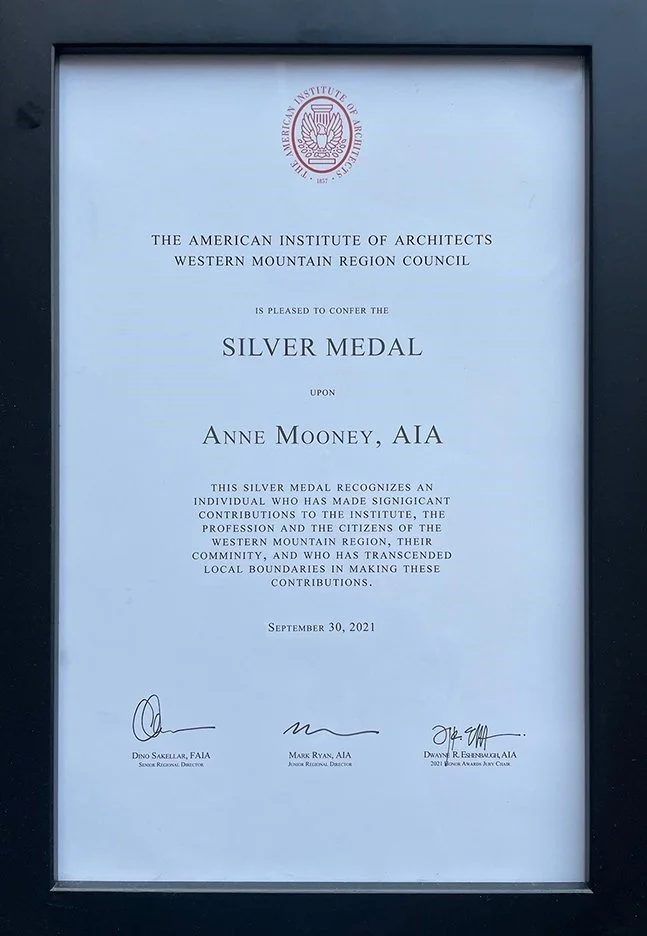
Sparano + Mooney Architecture is proud to announce that Principal and Co-Founder Anne Mooney, AIA, NCARB, LEEDAP, has been awarded the 2021 Silver Medal by the American Institute of Architects Western Mountain Region!
This prestigious award recognizes Anne’s significant contributions to the Institute, profession, region and its citizens, as well as to her community, and recognizes that Anne has transcended local boundaries in making these contributions. Importantly, this year’s award is the Institute’s final issuance of the Silver Medal, and Anne is honored to have been selected by her peers for the achievement.
The AIA Western Mountain Region Silver Medal is the highest honor awarded annually to architects in the vast territory comprising the AIA State Components of Wyoming, Nevada, Utah, Colorado, Arizona and New Mexico. First issued in 1979, the Medal is “awarded for superiority in design; service to the public or the profession, education, literature, architectural and cultural preservation…”. Anne is only the fifth architect from Utah to have received the Silver Medal – her partner, John P. Sparano, FAIA, was awarded the acclaim in 2019, making Sparano + Mooney Architecture the first and only firm in Utah to possess two Silver Medals.
From her roots in Montana and Utah to her education in New York, Los Angeles and Ticino, Switzerland, Anne has been committed to design excellence, service to the profession and her community. She began her career in the office of Eric Owen Moss in Los Angeles before co-founding Sparano + Mooney Architecture in 1997. The firm has grown into a regionally-recognized design leader with projects that elevate the design discourse throughout the Western United States and beyond, and with offices in both Salt Lake City and Los Angeles.
Anne has crafted a career dedicated to exploratory processes and meaningful architecture responsive to context, culture and community in both her practice and as an educator and mentor for an emerging generation of professionals. Her practice has established a capacity for design excellence documented in a significant body of award-winning and published work. Her portfolio of design work synthesizes aesthetic and technical innovation, and consistently earns recognition through publications and awards at the state, regional, national and international levels. Under Anne’s leadership, Sparano + Mooney Architecture has earned over 50 peer-juried, local, regional and national architectural design awards and Anne’s projects have been featured in over 45 architectural books, magazine and publications. In 2014 Anne was named the AIA Western Mountain Region Young Architect of the year; in recognition of the firm’s culture of design excellence, Sparano + Mooney Architecture was awarded the 2016 AIA Western Mountain Region Architectural Firm of the Year and the 2012 AIA Utah Architectural Firm of the Year.
Anne’s contributions as a committed educator span two decades on transformative architectural education in a laboratory of applied research, grounded in making meaningful architecture and helping students build community. Since 2004 she has held an appointment at the University of Utah and has earned the rank of Professor of Architecture with tenure. At the University, Anne teaches advanced design studios and professional practice courses as she mentors the next generation of architects inspiring through example. In 2016, Anne was honored with the Professor of the Year Award from the College of Architecture + Planning exemplifying her leadership in the education of future architects and the impact she has made in successfully bridging the academic and professional in architecture.
Through her architectural work, teaching, service and publications Anne’s impact has effectively transcended place while simultaneously being deeply rooted in the American West. Her design philosophy is informed and profoundly inspired by the region’s unique history, landscape, materials, culture and mythology. She is honored to have received the 2021 AIA Western Mountain Region Silver Medal.
LINKS

DESIGN WEEK
DESIGN WEEK - OCTOBER 18-22!
OCTOBER 14, 2021
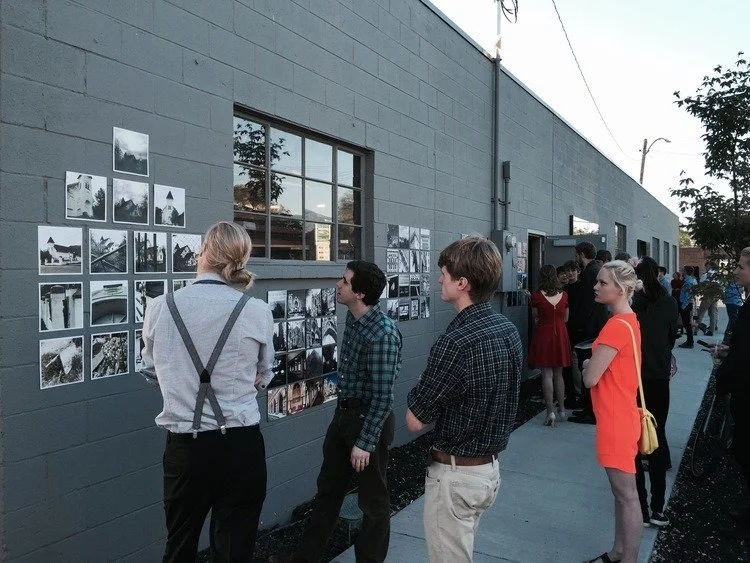
As a proud member of the Salt Lake City creative community, Sparano + Mooney Architecture is excited to welcome the 2021 edition of Salt Lake Design Week! This year’s event will be held in-person from October 18-22 at various downtown locations. As Salt Lake City architects deeply committed to producing, experiencing and helping inspire high-caliber design, we are eager to sample the multitude of events that this stellar event will offer.
Salt Lake Design Week promotes and celebrates the creativity of Utah architects and designers across a multitude of media, including architecture, product, interior, graphic, photography, digital, motion, fashion and advertising. This forum provides a vital platform for designers, businesses, professionals, students and members of the public to engage and interact with the region’s diverse and thriving design scene. The series of collaborative and inspiring events seeks to build a stronger local creative community, in turn raising awareness of the impact of design throughout the state and beyond. Significantly, Design Week is inclusive of all people and disciplines, and continues to engage, educate and motivate diverse participants in critical thinking about design.
The keynote address will be from The Office of Ordinary Things, a socially and environmentally-conscious design studio based in San Francisco that has been recognized by Creative Review, Dezeen and Fast Company. Additional events will include: “The Future of Design is Circular”, a panel discussion from Principal Design Company and Clever Octopus Creative Reuse Center exploring how to design in order to divert materials from landfills; “Make-a-Mari”, a workshop in which each participant will build their own Sedia 1 chair by renowned Italian designer Enzo Mari, facilitated by the Wasatch Design Collective; and “Designing for Non-Profits”, a collaborative session focusing on how the scale of social impact design relates to the scale of architectural and graphic design interventions; and several studio and agency tours, which form an integral component of Design Week. Tour stops this year include Gantry, Riso Geist, Struck and Made by Fell at Design Dairy. These tours offer eye-opening insight into the creative processes honed by some of the city’s most notable design firms. And, as part of Salt Lake Design Week, we invite you to visit the online Design Arts ’21 Exhibition, which features the award-winning Oikos Residence project designed by Sparano + Mooney Architecture!
Salt Lake Design Week is hosted annually by the Salt Lake City chapter of AIGA, the Professional Association for Design, and is presented by digital design and development agency, Underbelly. For more information, and to purchase tickets to selected events, please visit the Salt Lake Design Week website.
We’ll definitely be checking out this year’s events, but if we don’t have the chance to meet during Salt Lake Design Week, we’d love the opportunity to discuss our design philosophy and to create a unique work of sustainable architecture for your next cultural, civic, institutional, worship or residential project in the American West!

CRAFTOBERFEST
CRAFTOBERFEST @ THE CREATIVE INDUSTRIES ZONE!
OCTOBER 06, 2021
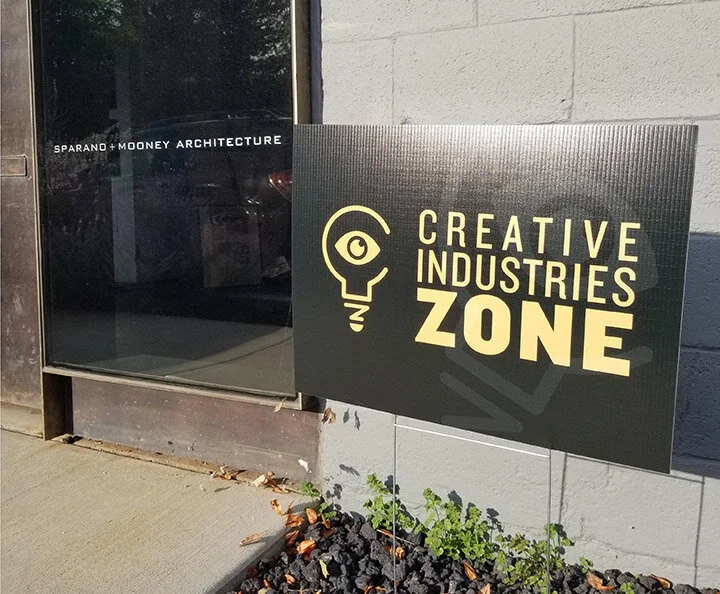
As architects, we spend our days crafting thoughtfully-designed spaces and thrive when we are “in the zone” for our clients. We also thrive on the fact that our office in Salt Lake City is located within the heart of the South Salt Lake Arts Council’s Creative Industries Zone, which seeks to unite our community, residents, businesses and fellow creatives through an appreciation and implementation of art.
WHAT IS THE CREATIVE INDUSTRIES ZONE?
The Zone is a “supportive and welcoming community stimulating local economic growth through creative, small businesses such as music, drink, dance, art, print, design, and craftsman industries that produce and sell hand-made products for local enjoyment.” It lies between 2100 South and Mill Creek (3000 S) centered on West Temple, and stretches between State Street and TRAX. Identified through an app, a collection of start-ups, artistic enterprises, and small service businesses nestled within this boundary offer unique events, public art and retail opportunities, and a collaborative social community. The Zone is walkable, bikeable and transit-connected, and businesses are located within both new offices and repurposed industrial spaces. Sparano + Mooney Architecture is proud to have our studio located among this stellar cohort.
THE DEVELOPMENT OF THE ZONE
The Zone is the result of an arts district plan developed by the SSL Arts Council, in response to positive changes in the creative landscape of the neighborhood. Recognizing that this shift had caused people to want to relocate to the area to work, live and make, the Arts Council branded the Zone as a way of celebrating this creativity. In addition, this initiative helps support local artists by seeking out and offering opportunities to showcase their craft, and also provides easy access to the arts for anyone interested. Furthermore, the project has a positive impact on the greater community, fostering a shared sense of pride in our city and bolstering our collective efforts to create. In fact, “creative industries” are one of the United States’ fastest growing business sectors and are key to empowering a diverse society and economy. South Salt Lake is no exception, and contains a remarkable array of talent in the Zone, where art meets craft.
CRAFTOBERFEST!
To celebrate and promote the Zone, the SSL Arts Council regularly holds special events such as Craftoberfest, happening Saturday, October 9th from 1-5pm in the heart of the Creative Industries Zone at 2250 S West Temple, by Beehive Distilling. The event will feature guest mural artist Atentamente and there will be live music, artist booths, an art auction, food trucks, interactive art projects and craft beverages. Come along to celebrate art, creative businesses and the community!
ARCHITECTURE + NATURE
NURTURING THE RELATIONSHIP BETWEEN ARCHITECTURE + NATURE IN UTAH
SEPTEMBER 28, 2021
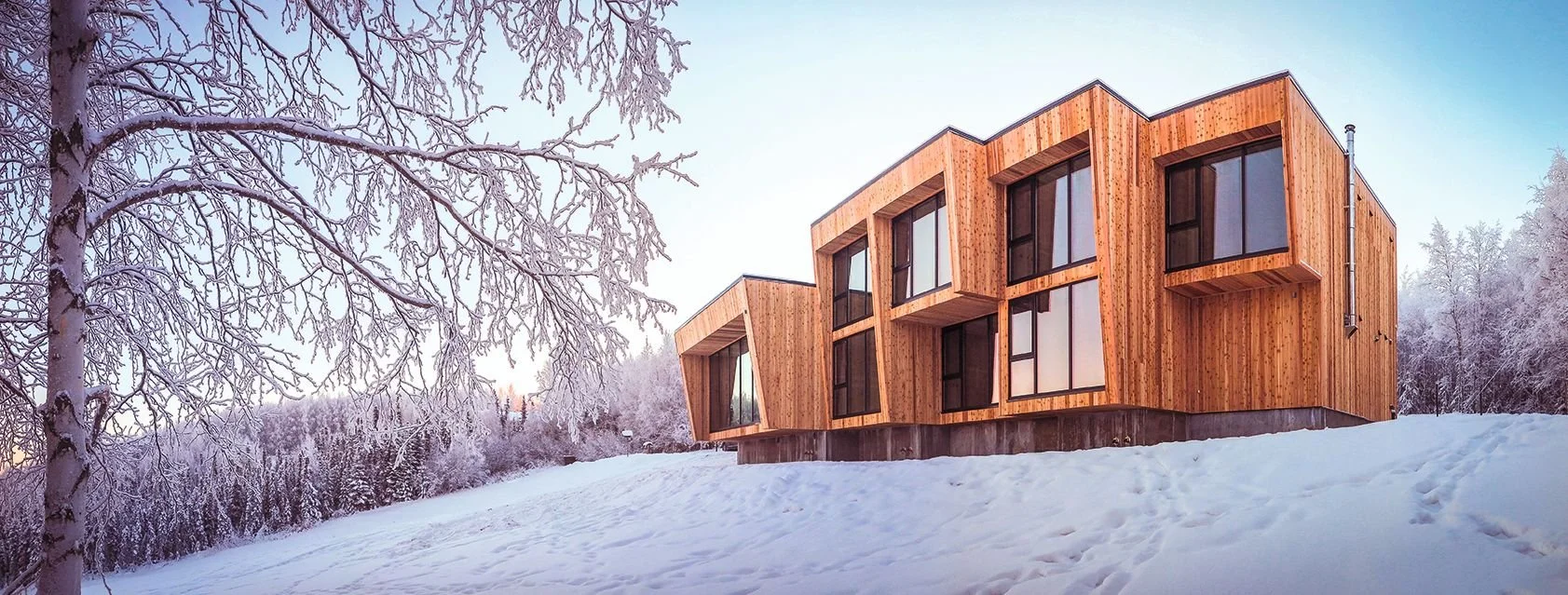
When someone learns that Sparano + Mooney Architecture has an office located in Salt Lake City, they often ask “is there any architecture in Utah?” This response prompts reflection on the nature of our environment, both natural and constructed. The City and its surroundings are renowned for spectacular visual scenery. From the red rock deserts of the southern part of the state and the awe-inspiring Bonneville Salt Flats, to Salt Lake City’s rocky mountain backdrop and its west desert expanse surrounding the Great Salt Lake, contemporary Utah architects have immense natural inspiration to draw from. However, because we are surrounded by some of the most beautiful landscapes in the world, sometimes we miss the outstanding built work in our State. Though we are modern architects in Salt Lake City, we nevertheless implement timeless design principles inspired by nature, and we regularly turn to the spectacular Utah landscapes in our sustainable building designs.
The first thing architects working here grapple with is the fact that there is no way to compete with the Utah landscape. Rather, our work is about engaging in a sensitive dialog between site and architecture to produce modern architectural designs that equally respond and contribute to the context. Inspiration is found through nature – in southern sandstone arches and deep sculptural canyons, in northern rocky sites with high winds and heavy snow loads. The four distinct seasons offer a continually changing landscape, and Utah skies provide many sunny days for ideal access to solar harvesting and places to still access dark starry skies at night.
THE CITY, CRAFTSMANSHIP + CREATIVITY
Salt Lake City offers more of a blank slate, architecturally-speaking, than other areas of the country. A rich history of indigenous places and people is still largely untapped as a source of wisdom. The region has a Western vernacular tradition from ranching and farming roots, which has provided the basis for some great contemporary architectural interpretation. The City is also home to world-class craftspeople who work in raw materials such as metal, stone, wood and concrete. The tradition of craft meets contemporary conditions such as water shortages in the American West, resulting in products such as beetle kill pine, now locally crafted into a variety of wood applications. Innovation and principles of sustainable building design are to be found all through the region when you start looking for it.
Salt Lake City – and indeed surrounding communities like Emigration Canyon, Park City and Sundance – has an untapped potential for great architectural design that doesn’t exist in many other places. Creativity and innovation in architecture is embraced when people are open to new ideas and approaches to design. The strong economy and business sector in Utah help foster this creative growth, as financial and tech companies bring in open-minded, sophisticated clients who have an appreciation of design – well-travelled architectural aficionados who understand the important dynamics between contemporary architecture, site and nature.
SOPHISTICATED VERNACULAR ARCHITECTURE INSPIRED BY NATURE
We do have a history of bringing in outsiders for major architectural commissions in Salt Lake City. When the City imports architects like the New York office of Thomas Phifer (for our Federal Courthouse) or the Canadian-Israeli architect Moshe Safdie (for the design of the main branch of the Public Library) we get an outsider’s perspective on our City, along with some great architecture. In the case of our City Library, while it is one of the best public spaces in our City – both indoors and out – we also got an architectural formula of Safdie’s from a previously-built environment in the very different locale of Vancouver, BC. More original architecturally – although perhaps less popular among the public – is New York architect Thomas Phifer‘s design for the Federal courthouse. This is a building that makes you feel something visceral when crossing through its massive threshold of justice. The building’s program is perfectly reflected in the scale, abstraction and intensity of the architecture. Phifer and Safdie have reacted to the City, Utah’s natural wonders and the programmatic needs of their clients uniquely, and offer a sophisticated but not necessarily a vernacular viewpoint.
As sophisticated mountain modern architects in our own right, and as educators helping train the next cohort of design professionals, we firmly believe in Salt Lake City’s potential – that as Salt Lake City grows up confidently into its status as a major metropolitan powerhouse, we can also expect to see a new generation of architects stepping into the primary role of defining the architecture of the City, with a self-assurance equal to any import. In fact, a more nuanced understanding of the richness of Salt Lake City and Utah’s natural and historic context that we can expect our architects to bring to their work is cause for continued optimism for our built environment. Stay tuned!
LIFE IN SUN VALLEY
LIVING AND SKIING IN SUN VALLEY, IDAHO
SEPTEMBER 14, 2021
Sun Valley, Idaho is one of the best-known resort destinations among skiers internationally. It is especially popular with elite individuals, thanks to its easy access from the West Coast. Sparano + Mooney Architecture knows the location well – in fact, we are currently designing a new custom home for a client with roots in Sun Valley and looking to take advantage of all that Sun Valley has to offer in a permanent residence there.
There is much to love about Sun Valley – the surrounding region, its beautiful landscapes, the wonderful people and, of course, its architecture and its history. Needless to say, the Sun Valley of 2021 is significantly different compared to when Sun Valley Lodge first opened in 1936!
THE NATION’S FIRST SKI RESORT
Sun Valley is considered to be the nation's first destination ski resort. It was built by developer and Union Pacific Railroad chairman W. Averill Harriman. Harriman happened upon the idea for a winter ski resort after noticing an increased interest in winter sports following the 1932 Winter Olympics in Lake Placid, New York.
He reasoned that opening a winter resort somewhere in the western mountain region would be a good way to increase ridership of Union Pacific trains running between the West Coast and Midwest. He spent more than a year looking at sites before finally settling on what would eventually become Sun Valley.
What impressed Herriman and his team most was Bald Mountain. The location was ideal due to its lack of dense wood and severe winds. Even better, the region experienced ample snowfall and its fair share of sunshine. Sun Valley Resort was born with the purchase of more than 3800 acres. Some seven months and nearly $2 million later, the resort opened with the promise of providing "winter sports under a summer sun”.
SUN VALLEY ARCHITECTURE
As you might expect, the greater Sun Valley area is home stylistically to the quintessential ski lodge. With three mountains to choose from, homeowners typically look for spacious, comfortable settings that are as centrally located possible. And because the area is very attractive to the glitterati, big tends to be better (and beautiful) in the region.
Modern mountain contemporary is the rule of the day. Architects and builders design here with a keen eye on the natural environment. Wood and stone abound. Interiors tend to be modern and open, mimicking the vastness of the region, with an emphasis on large spaces to entertain friends and family visiting from out of town.
In this part of the world, the views are everything. These ski-in mountain homes are built with floor-to-ceiling windows that offer opportunities for breathtaking scenery night and day. Many of the area’s older vacation homes are purposely rustic yet in no way lack comfort or luxury. A certain elegance and refinement exist here, perhaps rooted in the fact that the resort was not accidental. It was designed to be a vacation destination right from the start.
A GREAT PLACE TO LIVE + SKI
In the 80+ years since W. Averill Harriman first began developing the resort outside of Ketchum, Idaho, the Sun Valley area has grown and matured. It is one of the best places to live and ski in America. The weather is fantastic, the outdoor recreation is outstanding, and the people are warm and friendly.
Sparano + Mooney Architecture would be honored with the opportunity to design your new Sun Valley home. Whether you're looking to move permanently or establish a vacation getaway, our expertise in mountain modern architecture will help you realize your dream of owning a luxurious ski lodge in a renowned resort town.
If Sun Valley is not a convenient locale, then let's talk about Utah, Montana, Colorado or Wyoming! We also work to deliver mountain modern architecture to clients in Park City, Deer Valley, Big Sky and throughout the American West.

DESIGNARTS UTAH EXHIBITION
DESIGN ARTS UTAH ‘21 VIRTUAL EXHIBITION OPENING - Oikos Residence
SEPTEMBER 02, 2021

DesignArts Utah ’21 – this year’s virtual installment of the Utah Division of Arts & Museums’ annual exhibition – is now open! Sparano + Mooney Architecture is pleased to announce that our Utah custom residential project, Oikos Residence, will be featured in the show. While we are always thrilled to create bespoke mountain modern architecture for our clients, this home showcases our firm’s equal passion for designing contemporary urban sanctuaries and leading-edge heritage homes.
The site for this sophisticated sustainable home is located at the edge of downtown Salt Lake City with spectacular panoramic views overlooking the metropolis below. The passive design takes full advantage of the solar path and captures dramatic vistas including the Wasatch mountain range to the east, and valley and city views to the south and west, with a shimmering field of city lights illuminating the occupants’ view at night.
The design team explored ideas of western mountain architecture and its materiality, history, proportions, and architectural form. The design concept for Oikos Residence was organized around two essential principles; a focus on accessible home design for the client as they age into the home, and sustainable home design with passive design strategies and renewable energy to power the house. Sparano + Mooney Architecture designed the home to meet LEED-H (Leadership in Energy and Environmental Design for Homes) standards and is powered by solar panels.
The main level program addresses all needs for the residents on a day-to-day basis, and the lower level functions as an ADA-accessible destination for family and gathering throughout the year. Universal design and planning allow the home to adapt over time for future generations and abilities, with an elevator, accessible lighting, and acoustical cues. The program includes family suites, living and entertaining spaces, kitchen and dining spaces, an office, a pool, and gardens landscaped with native and drought-tolerant vegetation.
At Sparano + Mooney Architecture, great design is at the heart of our architectural practice. Similarly, Utah Division of Arts & Museums believes that design “is the creative beginning of any human-initiated arrangement of materials”. They are dedicated to the promotion of excellence in the diverse fields of design in Utah, striving to help community members see, experience, utilize and value the art of design that surrounds us. Yearly, the organization sponsors a juried exhibition of work by some of Utah's best designers. The juror for DesignArts Utah ’21 was Antionette Carroll, Founder, President and CEO of Creative Reaction Lab, a nonprofit educating and deploying youth to challenge racial and health inequities impacting Black and Latinx populations. Ms. Carroll selected 19 designs from Utah creatives working in a broad representation of media. She highlighted the excellence of both Utah's professional and post-secondary student designers and their work.
Sparano + Mooney Architecture will exhibit conceptual models, sketches, drawings and renderings of the Oikos Residence, as well as photographs of the completed project via the DesignArts Utah ’21 Digital Exhibitions Page. Please visit the site to find more information about our work, and to explore and support the plethora of extraordinary design talent in Utah. And, of course, we’d love to hear from you about the vision for your own timeless, contemporary custom home!
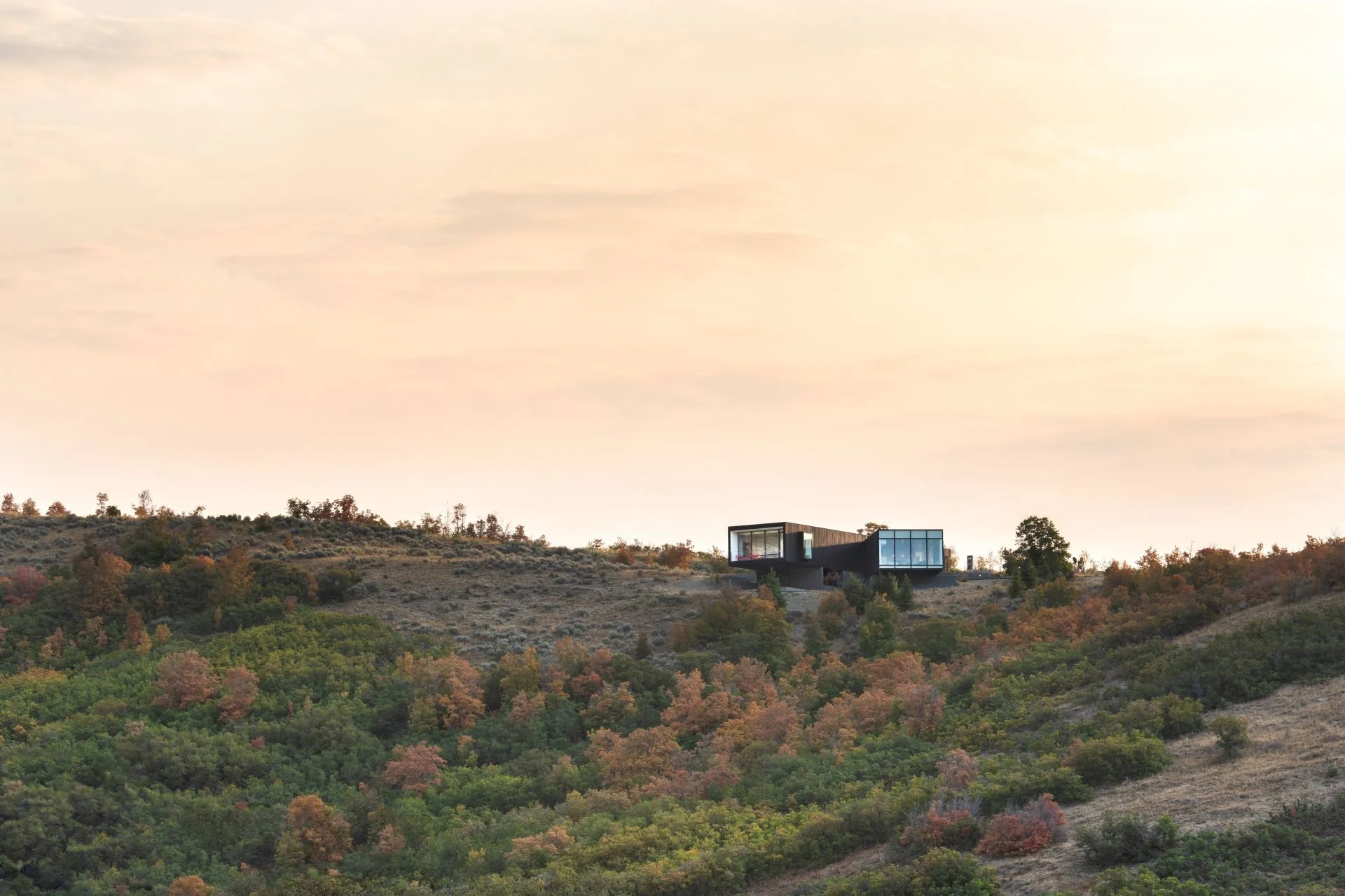
LANDSCAPING, SITE DESIGN + ARCHITECTURE
HOW LANDSCAPING AND SITE DESIGN INTEGRATE WITH ARCHITECTURE
AUGUST 24, 2021
That the average person may think of architecture solely in terms of designing building. Clearly, architectural design constitutes a large portion of what we do, and yet we are also concerned with the context within which a building sits. Landscaping and site design is ideally integrated with architecture to create holistic environment that is unified.
The Sparano + Mooney Architecture team was recently hired to design and help build a new vacation home in the Park City, Utah, area. Our team began to evaluate the local site characteristics and conduct a site analysis before moving forward to other project aspects in the design. Why? Because the site design and overall context influences the architecture we develop, and the phrase “site design” takes into account more than just natural elements like plants and trees.
ZONING ORDINANCES + CODE REQUIREMENTS
Building a new mountain modern home in Park City requires adherence to local regulations. There are planning and zoning ordinances that determine what types of structures can be built in specific areas, as well as how those buildings can be used. We must also pay close attention to both state and local building codes, which play a role in everything from material choices to safety, engineering and accessibility.
Importantly, architects take a wholistic approach to regulations and requirements when designing a new building. Ultimately, the finished design must comply with zoning and code restrictions. However, designing only with those considerations in mind can lead to buildings that are simply utilitarian – perhaps appropriate when designing a warehouse, though not ideal when designing a luxury home.
THE ROLE OF LANDSCAPING
Designing with the site in mind only begins with zoning ordinances and code restrictions. Architects then must gain a sound understanding of and appreciation for the natural elements in the immediate area and the larger context. For example, Sparano + Mooney Architecture specializes in modern mountain architecture. This is a specific style of architecture that relies heavily on what the surrounding area has to offer.
A modern mountain home fits into with the land on which it sits, almost organically. And still, there is a natural separation between structure and land. One of the goals of landscaping can involve diminishing that separation as much as possible.
Landscaping is the bridge between site design and structural design. It creates inviting exterior spaces that people actively want to experience. Functionally, effective landscaping enhances energy efficiency, proper drainage, protection against the elements, and a home's environmental footprint.
ARCHITECTURE IN CONTEXT
We believe it is appropriate to say that designing a new home without proper consideration of landscaping and site design leads to less-than-optimal results. Architecture within its context contributes to the surroundings in a way that enhances the environment.
It is important to integrate landscaping and site design into architectural design, to avoid creating structures that clash with the land on which they are built. In fact, this discord happens more often than you might think. Homes that just don't look like they “belong” can be found readily. They exist because those who designed them did not properly integrate site design and landscaping into the architectural design.
When you choose Sparano + Mooney Architecture as your Park City architect, you will be working with a firm that not only understands the nuances of Utah’s state and Park City and Summit County’s local building requirements, but that also grasps the importance of integrating landscaping and site design into the architectural design. We design homes that reflect and respect their natural surroundings, and that sit in harmony with their natural surroundings. Our goal is to construct a more meaningful relationship among the native landscape, modern architecture, and the experience of its inhabitants.

DESIGNS FOR SUPPORTIVE HOUSING
CIVIC ARCHITECTURE, DESIGN FOR INDIVIDUALS EXPERIENCING HOMELESSNESS + THE HOMEKEY PROJECTS
AUGUST 16, 2021

Sparano + Mooney Architecture is committed to improving the communities in which we live and work. As civic architects and housing architects who collaborate with municipalities across Southern California, we believe wholeheartedly that excellent design can not only bolster a cityscape, but profoundly affect residents’ lives. With this influence in mind, we are honored to have the opportunity to provide homeless architectural solutions for project Homekey in partnership with the County of Los Angeles.
CIVIC ARCHITECTURE PROVIDING AFFORDABLE HOUSING
Homekey is an innovative enterprise between the County of Los Angeles and the State of California to “purchase and rehabilitate hotels and motels, and convert them into permanent, long-term housing for people experiencing homelessness.” Homekey builds upon Project Roomkey, an initiative among the County, State and Los Angeles Homeless Services Authority to secure motel and hotel rooms for seniors and medically-vulnerable citizens experiencing homelessness, to help prevent the spread of COVID-19. With more than 161,000 people in the State and 66,000 people in the County experiencing homelessness, and especially during a global pandemic, the supply of well-designed affordable housing is more prescient than ever.
Evolving from a measure to curb the pandemic to an attempt at curbing the homelessness crisis, Homekey makes available nearly 630 new rooms for permanent housing units, and will provide essential services and stability for our most vulnerable neighbors. In early 2021, the sites began operating as interim lodging. While this solution certainly eased some of the hardship, the need for long-term housing was still urgent, which is why Homekey is such an essential and socially-valuable investment for these communities. As Dr. Margot Kushel, director of the Center for Vulnerable Populations at the University of California, San Francisco, has noted, Homekey has spearheaded the key factor to helping solve homelessness – providing permanent, supportive housing, and not temporary shelter. “Some people need services that go along with that housing, and some people don’t. But the really essential thing is that without the housing, the services don’t work,” Kushel has said.
During the onset and height of the pandemic, officials recognized the abundance of unused commercial properties such as motels and hotels, and the County decided to use funds from local, state and federal sources to acquire these premises and make improvements to the architecture. Conversion of existing buildings saves a great deal of time and cost compared to constructing new facilities from the ground-up – crucial savings during public health emergencies. Congress recently approved $5 billion to turn hotels across the country into housing, and the State of California committed nearly $3 billion to expanding Homekey over the next two years. With this funding in place, and through innovative homeless architectural solutions, Sparano + Mooney Architecture is in the process of converting former Motel 6 and Holiday Inn sites in Long Beach and Harbor City into permanent housing and support facilities for the Homekey project.
CONVERTING HOTELS INTO PERMANENT HOUSING
With this civic architecture project in the County of Los Angeles, the goal is to retain existing design layouts, while updating the properties and providing ADA-compliant housing options at each site for the County’s most vulnerable residents. Each unit will supply a kitchenette, with a refrigerator, microwave, hand-sink and cabinetry, and comfortable living quarters with private bathrooms, new furniture and storage closets. Additional amenities will include ADA-complaint offices, laundry conveniences, and public-restrooms. Upgrades to telecommunications infrastructure and security parameters are also integral to the refurbishment. Residents will have access to communal outdoor areas such as gardens, pet relief and play areas, bike storage and shaded tenant recreation spaces. Each location will have 24-hour security and will offer meals. On-site services may comprise counselling, addiction treatment and recovery, mental health support, and job placement services.
These measures will create dignified, safe and habitable living conditions in the architecture, and will allow residents to be independent as much as possible. As Michele Griffin Young, an elderly homeless citizen caring for her severely diabetic son John, has noted, access to this form of housing has been lifesaving. When Young and John lived in a car, keeping his insulin cold was difficult and precarious. Through the County’s initiatives, Young and John were able to secure accommodation at a converted Travelodge. “We had a refrigerator to keep the insulin in. And we had a microwave…[T]here was food every morning and food every night and our own showers and bathrooms. And everything was just fantastic.”
The Homekey project is so much more than a nuts-and-bolts refurbishment. To SMA, this focus on civic architecture is a chance to take action and help address a public health crisis in the State of California and County of Los Angeles. It is an occasion to give back to the communities that have provided our team members life-changing experiences of our own. It is an opportunity to use housing architecture to advocate for social welfare and justice. We are proud to be civic architects in Los Angeles, and to be working on profound projects like Homekey to address the challenges of our time though our work in architecture.

WOMEN IN ARCHITECTURE
WOMEN IN ARCHITECTURE - SPOTLIGHT ON ANNE MOONEY, AIA, NCARB, LEED AP
AUGUST 02, 2021
Sparano + Mooney Architecture passionately believes that it takes great people to make great architecture, which is why we are committed to collaborating with the top talent in architecture, design, engineering and construction. We also believe in trailblazing by example, and award-winning, critically-acclaimed and forward-thinking Principal, Anne Mooney, AIA, NCARB, LEED AP, is leading the charge. Anne was recently highlighted by Women In Architecture Salt Lake City, an organization that works towards gender parity in the field of architecture, for her contributions to the profession, dedication to design and mentorship of the next generation of architects.
According to Women In Architecture, analysis shows that architecture is a vocation that struggles to retain women. Nationally, women graduating with professional architecture degrees comprise nearly 50% of their graduating classes, but less than 20% follow through with licensure, and female firm leadership comprises less than 8%. The equivalent percentages in Utah are, unfortunately, even lower than these national averages.
Women In Architecture Salt Lake City supports the local community of female architects in a number of different ways, such as holding community events, sponsoring licensing exams for female architectural interns, providing mentoring opportunities and by sponsoring design competitions that benefit the community. Anne is honored to be involved with the organization – she is truly an inspiration to her colleagues and peers, her work is highly-regarded irrespective of her gender, and she works tirelessly to build the community of female leadership in the profession.
Women In Architecture’s spotlight on Anne is included below as a visual essay.

I was born in Montana and grew up in Utah, Montana and California. After graduating from the University of Utah, I studied architecture in New York at Columbia and in Los Angeles and Ticino, Switzerland at SCI-Arc (Southern California Institute of Architecture) where I came to fully appreciate the American West and its potential for great design. I was introduced to architecture by a wonderful professor at the University of Utah, Gail Della-Piana, who opened my world to the possibilities of design and began my lifelong passion for architecture and design as well as a desire for educating future architects. I practice architecture and teach advanced-level architectural design studios at the University of Utah’s School of Architecture.
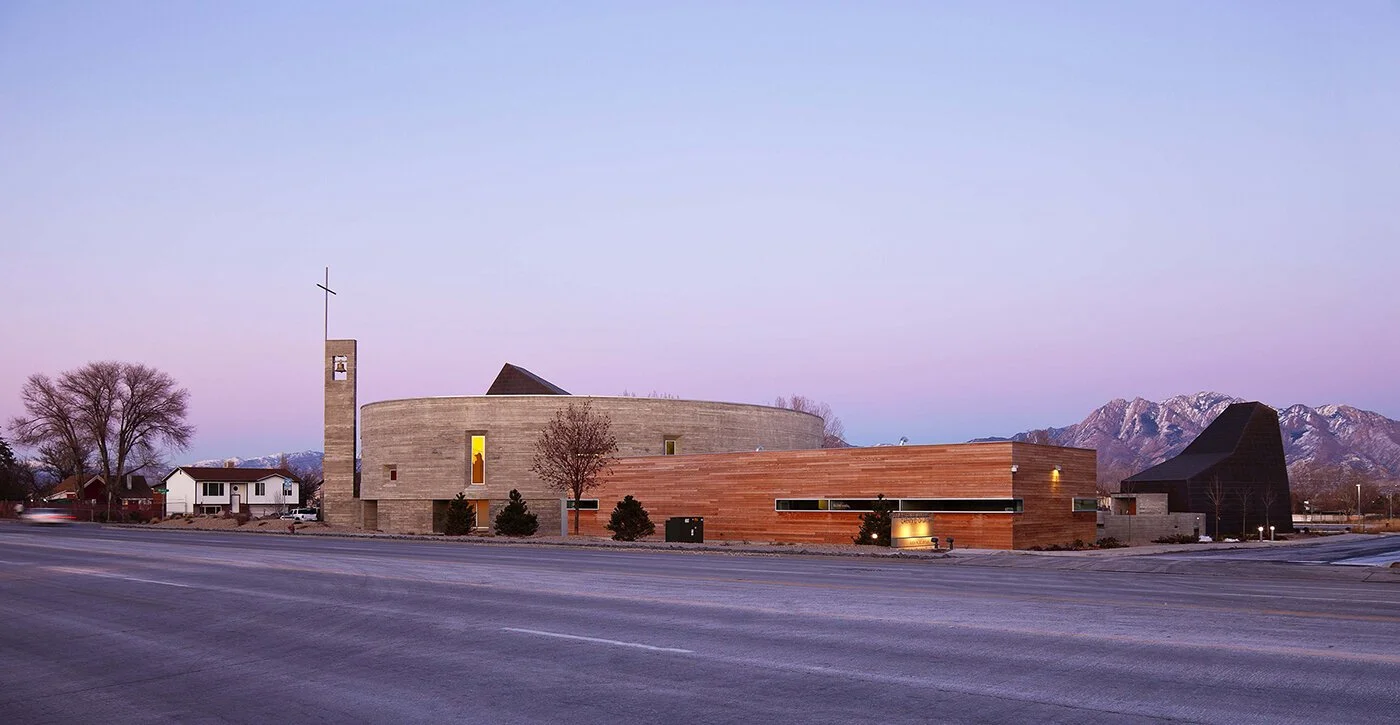
My office is an incredible place of inspiration as I am surrounded by talented and thoughtful collaborators. We are also lucky to work on some of the most incredible sites in the country, with clients who really care about design.
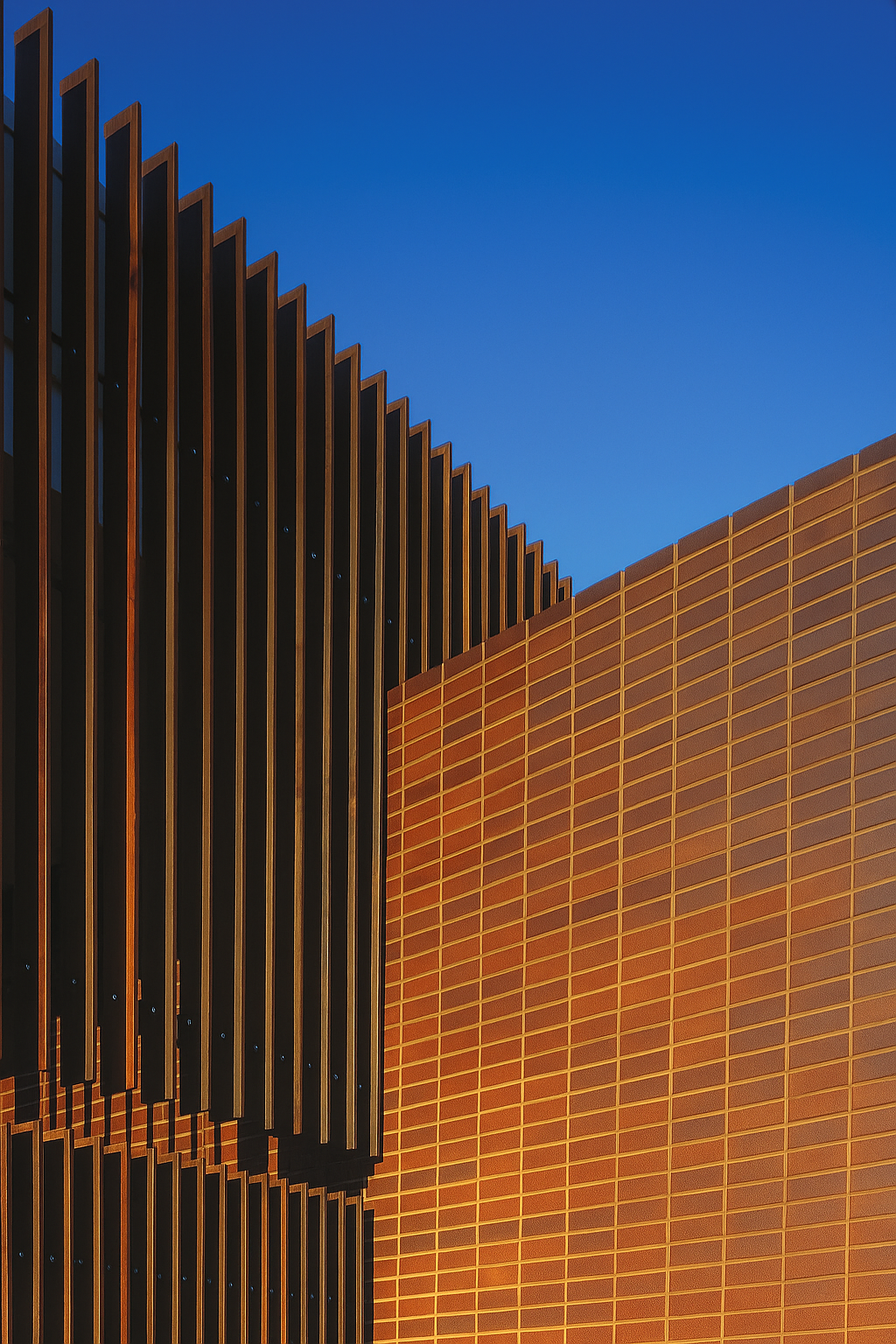
Arcadia museum provided the opportunity to collaborate on the architecture, interiors, landscape and exhibit design for a cohesive design.
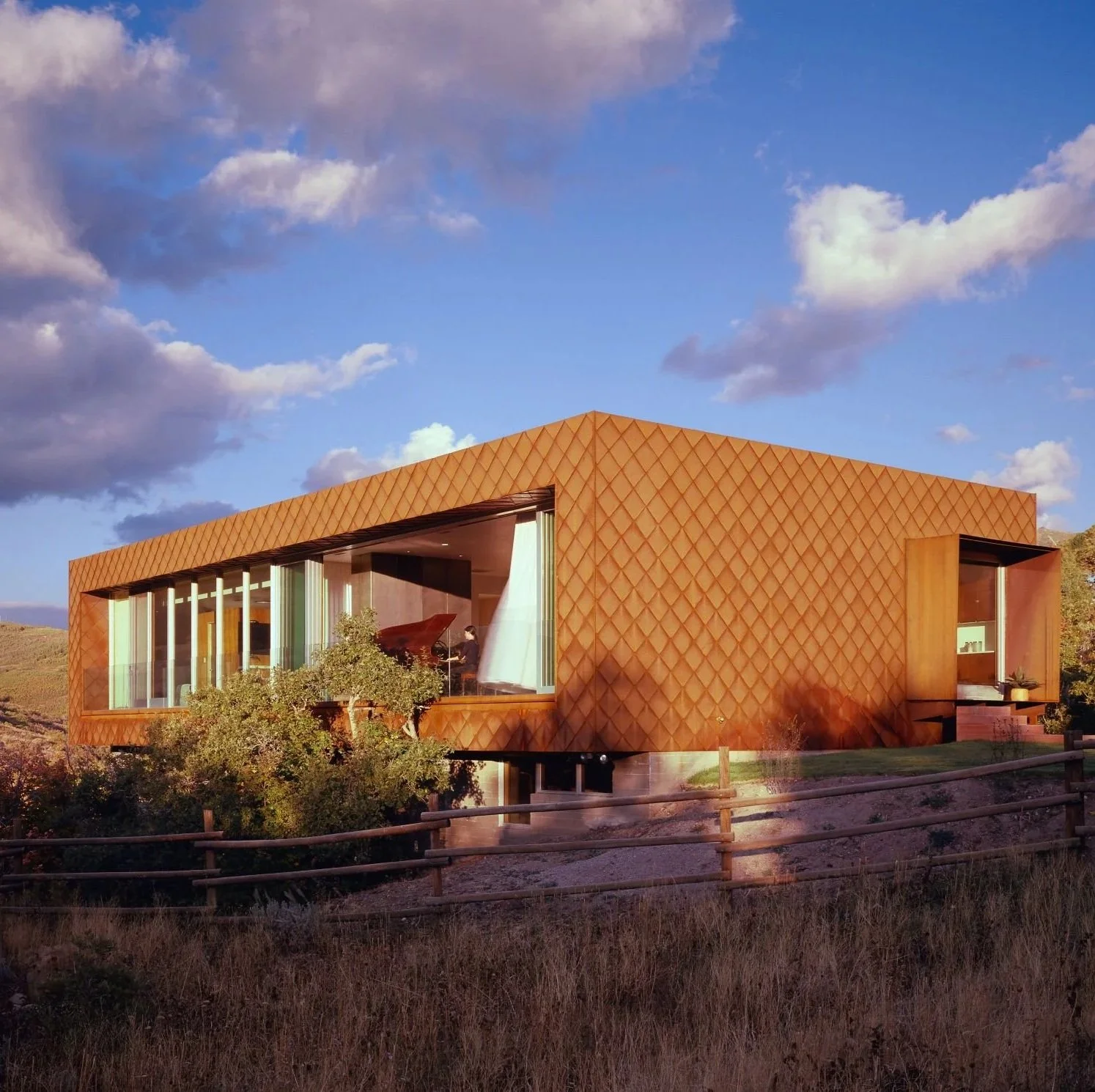
We work on several very special homes each year and I am fortunate to live in a home we designed to see how it works throughout the year and over time.
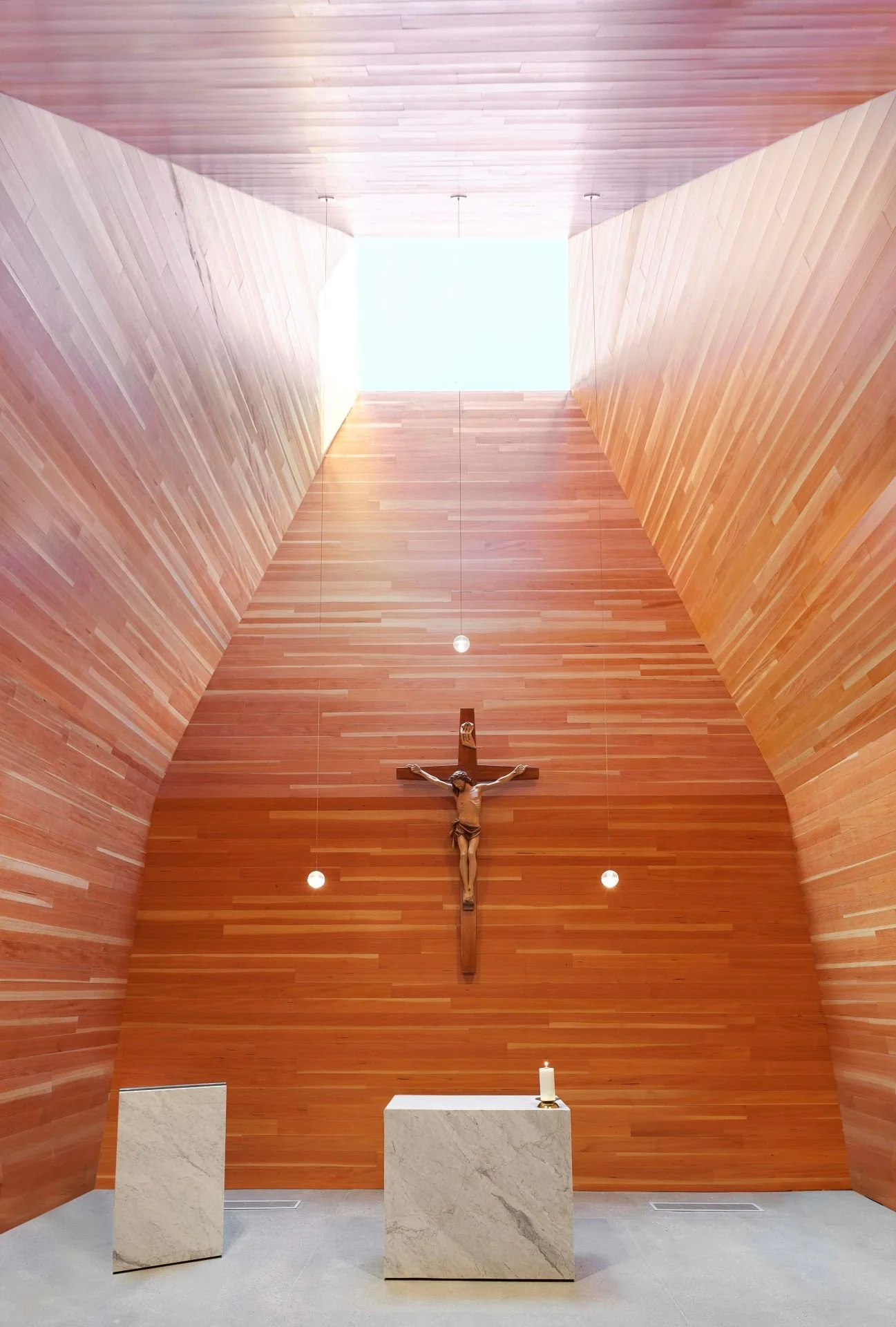
An interest in exploring the qualities and potential of materials is a constant in our work - something that I have been interested in since the beginning of my architectural education and career.
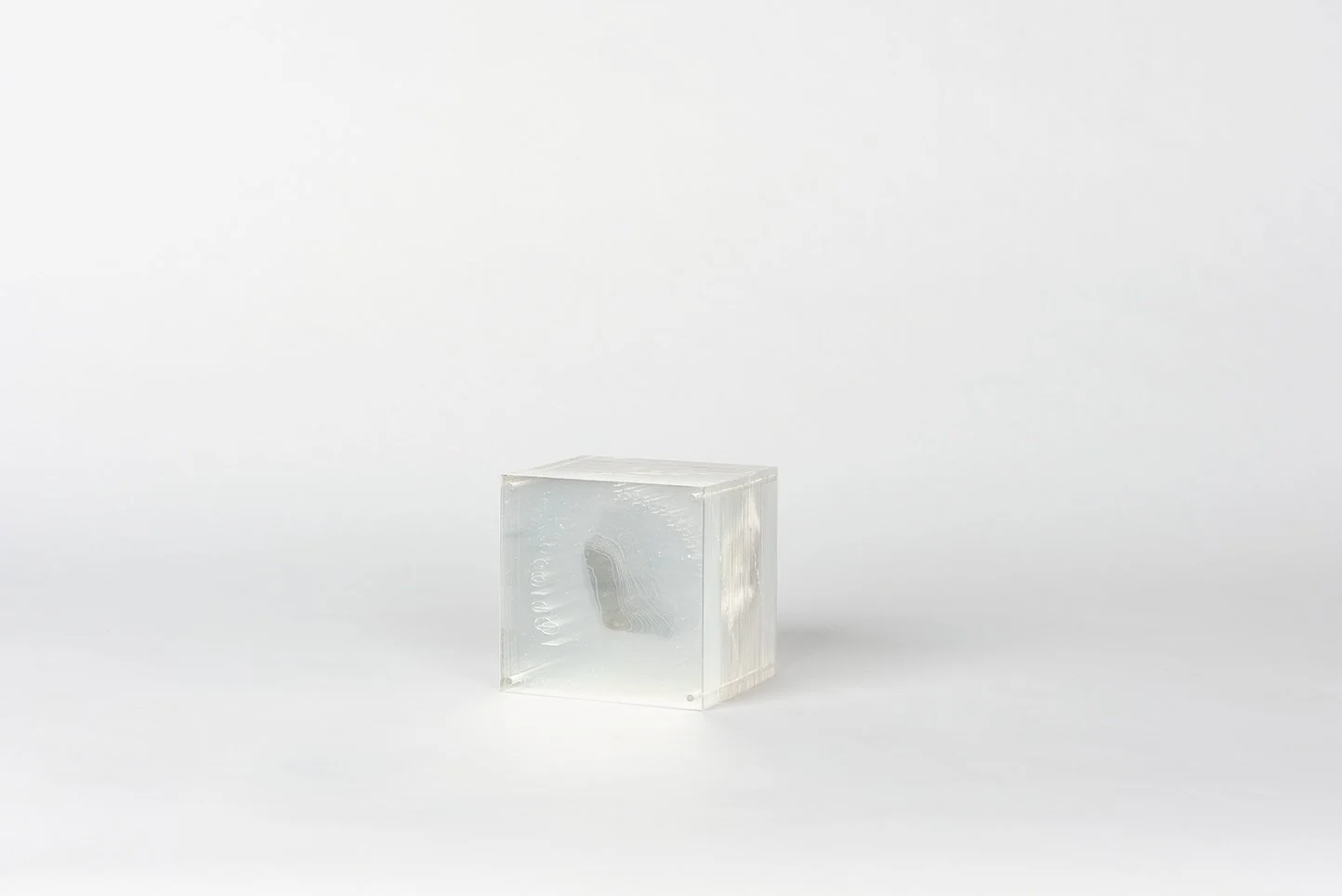
One of the most important aspects of our practice lies in the honing and refinement of our design process. We employ conceptual devices like this one that help us explore ideas and move away from preconceptions as we work toward architecture.
I come from a family of aviation pioneers and professionals and learned to fly when I was a teenager. This image, of a conceptual model inspired by the sky, typifies a recent site analysis and investigation, as well as our way of working.