
CUSTOM HOME DESIGN
FEATURES OF CUSTOM CONTEMPORARY HOMES
MARCH 01, 2021
Every era in architectural history has key characteristics that differentiate it from other eras. Victorian architecture is easily identifiable, but is no longer considered contemporary or modern, although it was at the time. In the same sense, there are architecture styles we associate with the 21st century that are prevalent today.
In a mountain setting, we refer to this style as mountain contemporary architecture. This type of design is intended to meld seamlessly with the natural environment in everything from function to aesthetics and efficiency. In light of that, there are four key features found in many custom contemporary homes.
BROAD SIGHT LINES
Broad sight lines are often considered interchangeable with an open plan design. Though the two ideas share similarities, their outcomes are different. Both open spaces and broad sight lines make homes more accommodating and inviting, but broad sight lines differ in both function and purpose.
Broad sight lines are based on establishing the home’s focal point and designing sight lines from there. Examples of this concept in practice would be creating a visual line from the entertaining space to the yard, to allow a client to socialize with guests while keeping an eye on the children playing outside.
INTERCONNECTEDNESS
Clients deciding to build a mountain contemporary home often express the goal of incorporating the outdoors inside. Modern designers do this by pursuing the concept of interconnectedness.
People who choose to build mountain contemporary homes often express the goal of wanting to bring the outdoors inside, especially when the home is on a beautiful site. Modern designers take that one step further by pursuing the concept of interconnectedness. Interconnectedness does more than just provide spectacular views. It incorporates multipurpose living spaces that make the differences between indoor and out as subtle as possible.
In the Park City area, interconnectedness is influenced by our weather. But despite warm, dry summers juxtaposed by cold, snowy winters, interconnectedness is still very achievable. It just takes a skilled architect with the right vision and skill.
In Park City and the surrounding areas in Utah and the mountain west, interconnectedness is a big part of our life philosophy. Many of us chose to make our homes here because we love the natural environment. We organically strive for interconnectedness simply because living close to nature is why we are here.
SUSTAINABILITY
Today's home buyers are looking for properties that are developed with sustainability in mind. Sustainability covers everything from how land is utilized to the materials used to build a home. And yet, it doesn't start there. Designing with sustainability in mind requires forward thinking about how the house will interact with the land years down the road. Striking the right balance is incredibly important in how you choose to build within a natural environment.
ENERGY EFFICIENCY
Hand-in-hand with sustainability is energy efficiency. To that end, building to Leadership in Energy and Environmental Design (LEED) standards is a must. After all, a homeowner isn't realizing the benefits of sustainable design if their newly constructed house is not as energy efficient as possible.
One special area of note here is passive home (or Passivhaus) construction. Passive houses reduce energy consumption by eliminating or minimizing the need for HVAC systems, conventional boilers or furnaces, etc. Passive homes are heated and cooled using passive systems – like solar and wind power – as opposed to active systems.
Do not confuse contemporary architecture with mere aesthetics. It is so much more than that. Contemporary architecture encapsulates the combined experience of living in and utilizing a home. Its reach extends to energy efficiency, sustainability, interconnectedness, and even sight lines.
Are you planning to build a Park City vacation home or relocate to the area permanently? If so, you have chosen a fantastic location. Now it's time to build your home. Sparano + Mooney Architecture is ready to work with you. We specialize in mountain contemporary architecture in Park City, Sundance, Powder Mountain, Deer Valley, and the entire Wasatch Back.
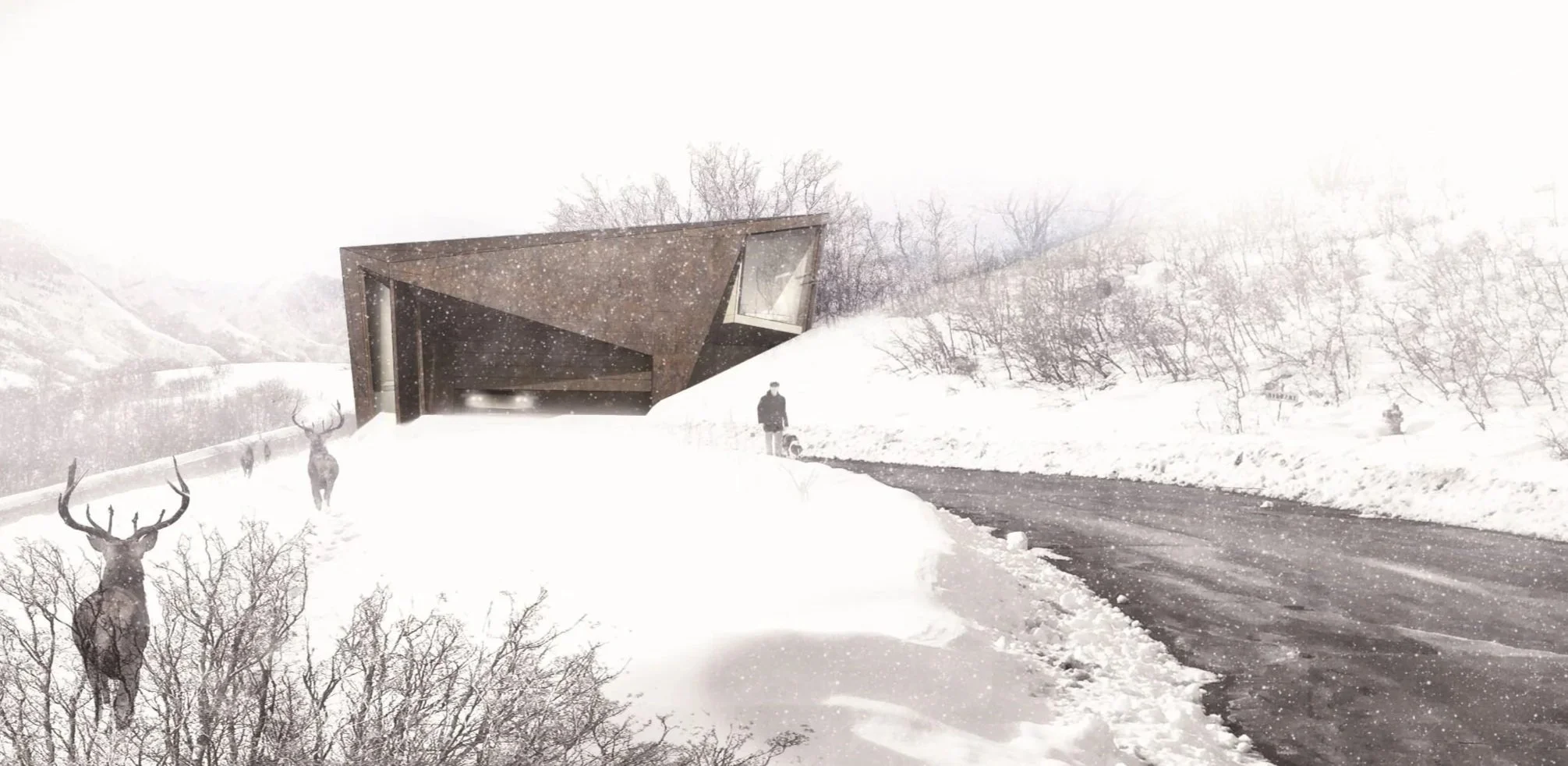
SKI LODGE DESIGN
WHAT TO LOOK FOR IN YOUR NEW FAMILY SKI LODGE
FEBRUARY 22, 2021
Deciding to purchase or build a new family ski lodge in Park City, Deer Valley, Sundance or Powder Mountain is the start of a lifelong adventure. There is nothing quite like having your own Utah ski lodge to escape to whenever you get the urge to hit the slopes to ski in the winter or hike and mountain bike in the summer. We recommend building your dream vacation home over buying an existing one; when you build, you get exactly what you want.
If you’ve ever entertained the idea of building a ski lodge, you might have an idea of some of the options available to you, but you may not be aware of just how many options there are. Below are some suggestions for what to look for in your custom Park City home.
MOUNTAIN MODERN ARCHITECTURE
The best family ski lodges in this area are those designed around mountain modern architecture. As experts in the style of design, it is a favorite among clients looking to build from the ground up. Mountain modern combines the best of rustic themes and natural materials with modern design and all the Utah mountain environment has to offer.
SUSTAINABLE ARCHITECTURE
If you’ve decided to build from the ground up, it is beneficial on many fronts to invest in sustainable architecture that will save energy, create savings, and protect the environment. We work to help preserve the natural beauty and health of Park City, and choosing to build sustainably helps to keep Park City what it is today. Sustainable design allows us to create a home that you and your family can enjoy for generations.
A GRAND FIREPLACE
In terms of physical amenities, no family ski lodge is complete without a fireplace in the great room. Frigid winter evenings are best spent gathered around the fire after a long day of skiing. The fireplace is the centerpiece of any great ski lodge.
FLOOR-TO-CEILING VIEWS
While your grand fireplace commands the evening, spectacular views through floor-to-ceiling windows should greet you every morning. Imagine anticipating a full day of skiing as you look out over a snow-covered mountain and sip hot coffee. Floor-to-ceiling windows offer the most spectacular views unencumbered by interior elements.
USABLE OUTDOOR SPACE
Your new family ski lodge doesn't have to be strictly a winter destination. You can enjoy it during the summer months too. To that end, look for usable outdoor space. Whether that means a large backyard or a wooden deck that wraps around the home. Add a fire pit and hot tub to create an even more enjoyable space.
STORAGE FOR YOUR EQUIPMENT
You’ll need ample storage space for all of your equipment. From skis and poles to snowboards and boots, a place for everything and everything in its place. The right storage solutions give you easy access to your equipment when you need it, but keep it hidden out of sight when you don't.
ACCESS TO THE SLOPES
Above all else, a family ski lodge is your home base for an exceptional vacation focused on skiing. Choose a ski-in ski-out location that gives you direct and easy access to the slopes. Traveling to and from the slopes shouldn’t be a commute, if possible choose a location that skiing is convenient.
Park City, Sundance, Deer Valley, Powder Mountain, Alta, etc. are all excellent choices for building a family ski lodge. At Sparano + Mooney Architecture, we specialize in making dreams a reality. Let us talk about how we can design and build the family ski lodge you have always wanted. You supply the vision; we supply the expertise.
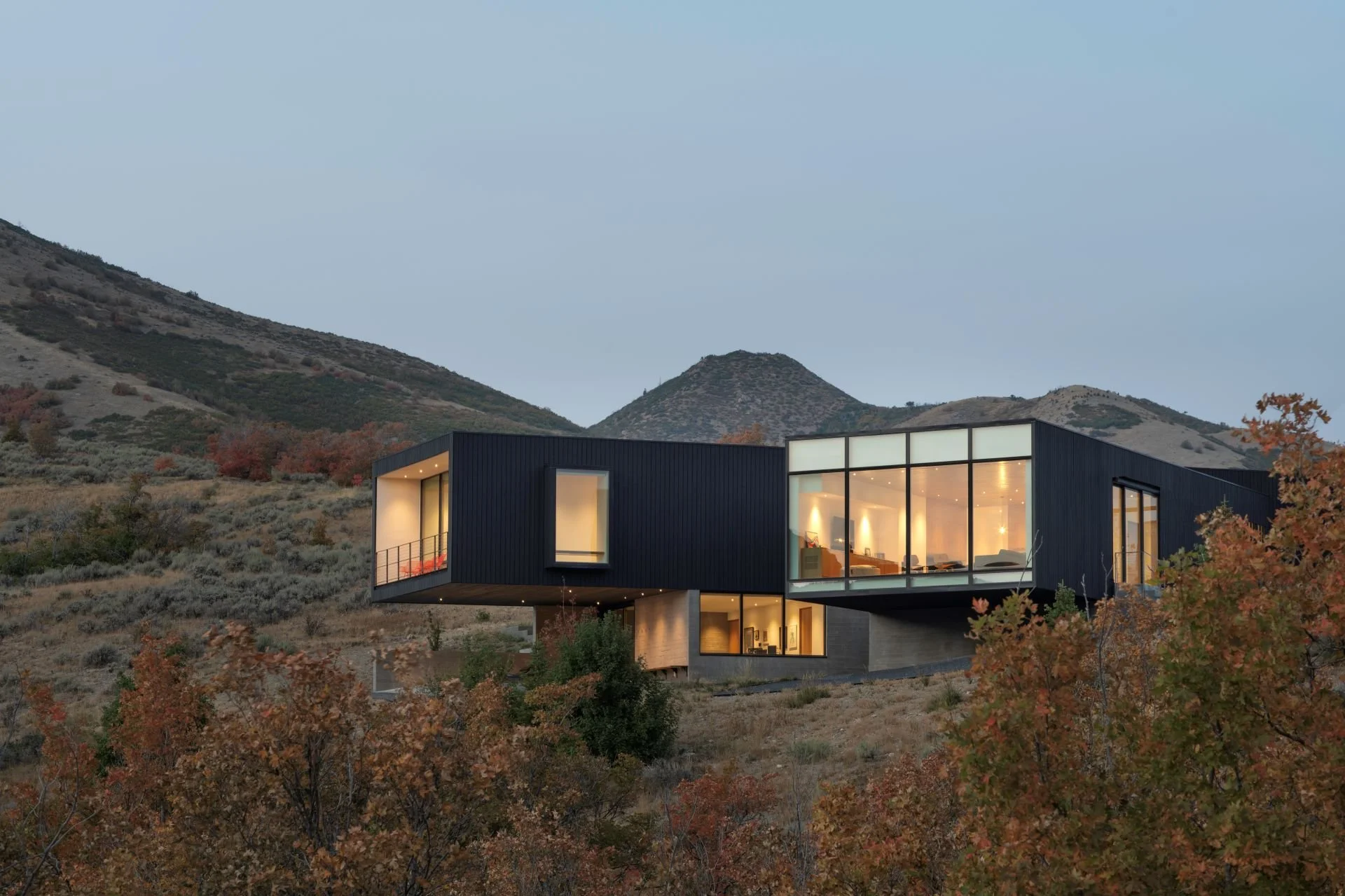
BUY OR BUILD?
LANDING A VACATION HOME: To Buy or Build?
FEBRUARY 15, 2021
The last several decades have been particularly good to Park City and its tourism industry. Today, Utah is as much a vacation destination as a permanent place to put down roots. Perhaps that's why you selected it as the location for your vacation home. Now you are wondering whether to buy an existing property or build from the ground up.
As Park City architects, we encourage people to build their dream homes in Park City or its surrounding neighborhoods including Deer Valley, the Colony, Glenwild, or Victory Ranch. Yet we understand there are certain benefits that come with buying an existing property. The point of this post is to get you thinking about whether you would rather buy or build. Should you decide to build, know that the architects at Sparano + Mooney specialize in mountain modern architecture that aligns perfectly with Utah's natural environment. We are also experts in sustainable architecture and passive homes.
COST + CONVENIENCE
Cost and convenience are the two most attractive elements of buying an existing property. In terms of cost, it is almost always less expensive to buy an existing home. Why? Because the land and home are all you are purchasing. You are not paying for land improvement, architectural services, a builder, all the necessary permits, and so forth.
Convenience is all about purchasing a property, closing on it, and moving in. You can complete the entire process in months. And if you're lucky enough to find a turnkey property, you might not have to make any modifications short of some minor interior decorations and your furniture.
CHOOSING YOUR OWN LAND
One of the downsides of purchasing an existing property is having less choice in terms of the land. You might love a piece of land but not the house that sits on it. Likewise, you might find your dream house sitting on a piece of land that doesn't appeal. Neither scenario is ideal if you are hoping to establish what you would consider a dream home in the Park City area. As long as you're dreaming, do you really want to settle for something you can’t live with?
Building from the ground up gives you more freedom in your choice of land. Search around until you find a lot that sets your mind racing and your heart pumping. Find the perfect view, for example, then work with your architect to design a home that takes full advantage of it. But keep in mind there is not a large inventory of lots available in the highly desirable areas of Utah.
BUILDING WHAT YOU WANT
The primary appeal of building from the ground up is getting exactly what you want. If your vision of the perfect Park City vacation home is a mountain retreat that reminds you of a chalet you and your significant other visited 20 years ago, that is what you build. If you are dreaming of something more contemporary and simultaneously sustainable, you and your architect can make this happen also.
Building brand-new virtually guarantees building something more efficient and environmentally friendly than you could find in an existing property. It might also end up being better for you in the sense that a new build will not contain any of the hazardous materials or finishes builders used a few decades ago.
YOUR VISION IS WHAT MATTERS
From our perspective, what matters in the end is your vision. What are you hoping to get out of your new Park City vacation home? How much time do you plan to spend here, and during what seasons? How do you feel about Utah's natural environment and how do you want to experience it?
Realizing your vision might not be possible if you choose to buy an existing property. By contrast, building from the ground up represents an opportunity to make your new home or vacation home as perfect as it can be.

PARTNERING WITH AN ARCHITECT
TO GET THE HOME YOU WANT, HIRE YOUR ARCHITECT FIRST
FEBRUARY 08, 2021
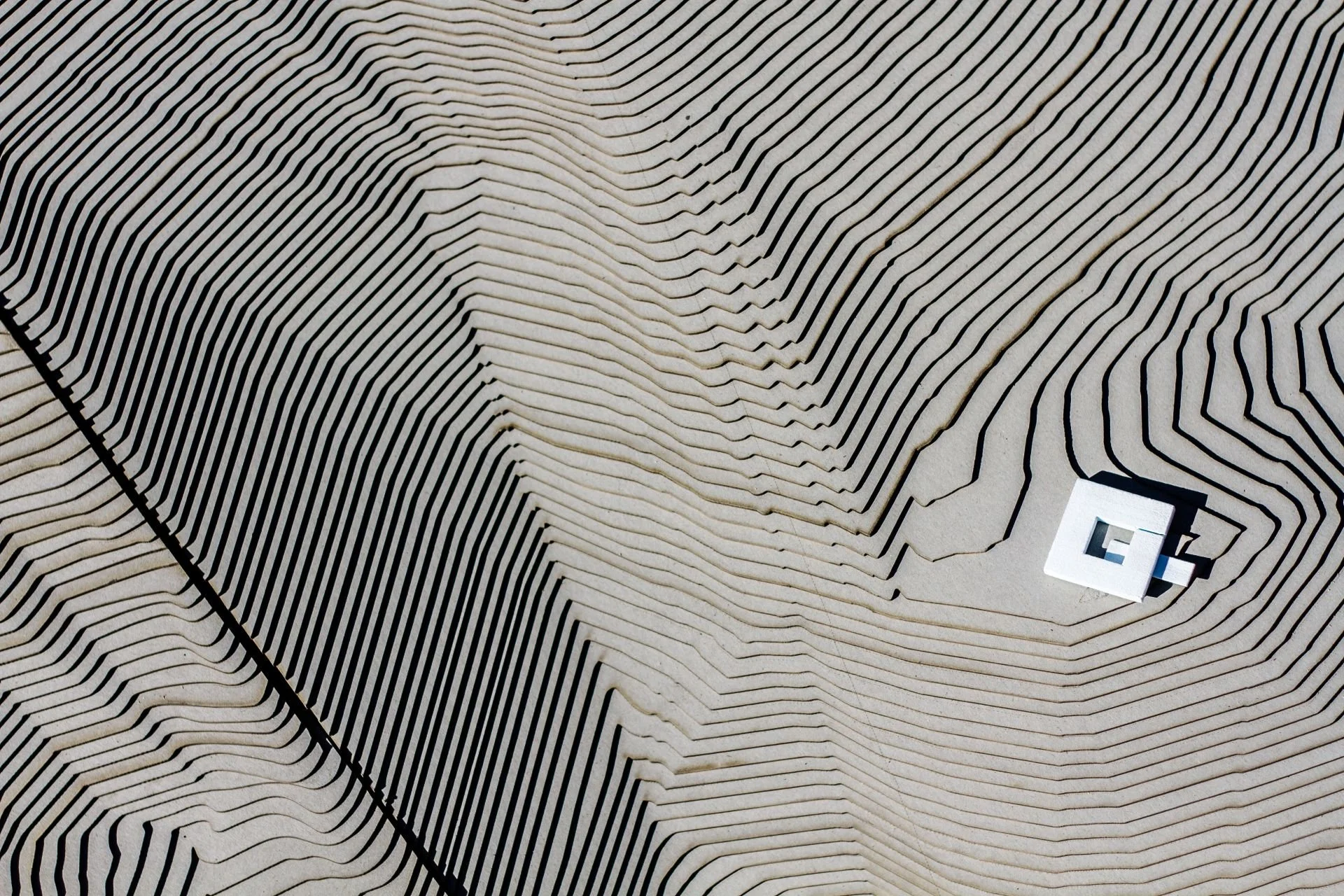
When deciding to build a custom home, one of the first questions you’ll have to ask is: who do you hire first? Some would say you start with a builder, or alternatively, hire a firm that works on the combined design-build model. However, to get exactly the home you want, we believe it is important to hire your architect first.
With offices in California and Utah, and licensed in many of the western states, Sparano + Mooney Architecture has two decades of experience designing custom homes for clients throughout the American West. We understand the challenges of bringing the architect in after the builder has been hired. The entire process will be easier, from the conceptual design to the last day of the build, by hiring your architect first and having them help you through every step of the process.
MAKE BUDGETING + BIDDING EASIER
The first reason we encourage our clients to start with an architect is that doing so makes bidding on your project easier. In order for a contractor to solicit the best possible bids, they need to have a detailed set of plans to work from. Without an architect in place, it becomes more difficult for contractors to bid and price a home since they don't know the specifics. The architect supplies these details in their construction documents, and in turn, makes the bidding process easier.
BETTER COLLABORATION
If you’re worried about whether your contractor and architect have an established relationship, hiring your architect first puts contractors in a position of knowing the team with whom they will be working. If your architect and the eventual builder have worked together before, collaboration between them will be established and straightforward. Because of these pre-established relationships, the collaboration will be better for not only those behind the scenes, but also for you as a client. Sparano + Mooney architects have a pool of amazing contractors who can deliver well-designed custom homes in a collaborative process.
STICK TO YOUR BUDGET
When hiring an architect first, staying on track to end within your budget becomes substantially easier.
An architect is trained to understand building systems and structural design options. Architects know what they can design while remaining within the client's budget. They can hand builders a set of well developed plans that meet a client’s budget. Often when a builder makes changes during construction, this leads to cost overruns and the end design not being what you initially dreamed. Starting with your architect and a great set of drawings will help avoid these issues.
MAXIMUM CUSTOMIZATION
One of the most important aspects is hiring an architect capable of giving you exactly what you want. Builders and their subcontractors focus on erecting the structure that will eventually be your home, but it is the architect who designs your dream home. It is the architect who listens to what you want and then finds a way to make your vision a reality. If you hire your builder first, you might find yourself constrained by a lack of design vision.
If you are looking to build your custom home in the Park City, Powder Mountain or other high altitude alpine area, we encourage you to start the process by hiring your architect first. Take your time and interview as many architects as necessary, and above all, be sure you are comfortable with the individual or firm you choose. If your choice is Sparano + Mooney, we would be honored to help you design and build the perfect mountain home for you and your family.
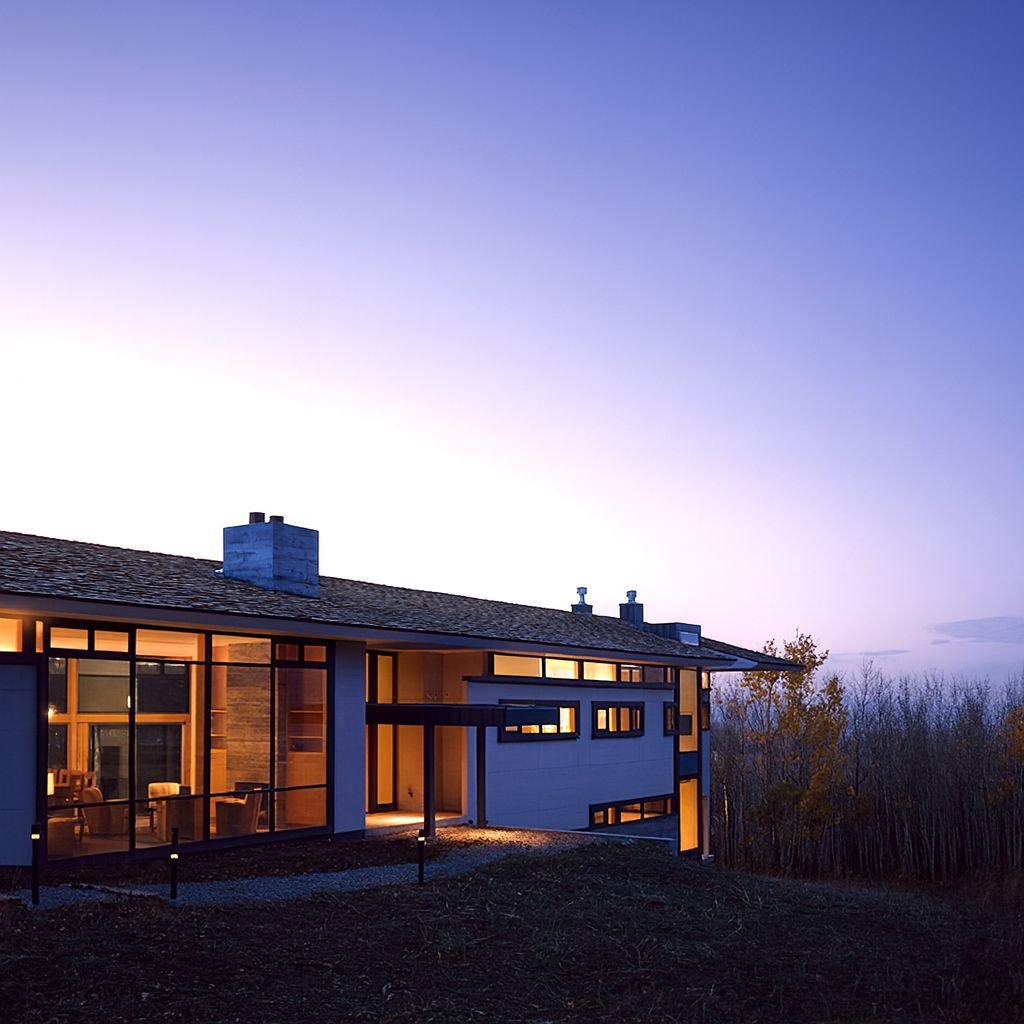
BUILDING A PARK CITY VACATION HOME
7 STEPS FOR BUILDING A VACATION HOME IN PARK CITY
JANUARY 26, 2021
You have decided on Park City, Utah as the location for your vacation home. Wise choice. Now you actually have to enlist a team to design, realize and build it. How do you do that? The process is more complex than we could ever describe in a single blog post. Yet we can still offer help with this guide.
We have laid out a basic 7-step process for building a custom vacation home. The steps are as applicable to Park City as any other location in this area - including around the resorts of Powder Mountain, Snowbird, Alta, Deer Valley or Sundance. The key to making it work is striking a delicate balance between knowing what you want and going into the process with an open mind.
STEP #1 - DECIDE WHAT YOU WANT
It is one thing to dream about what your vacation home should be. It is an entirely different matter to decide on what it is you actually want and need. We recommend looking around. Check out mountain contemporary architecture online, some of the sites our clients use for this purpose include Houzz and Archdaily. Look at architectural websites and magazines, Residential Design (or RD), Aspire, Dwell and Mountain Living are great print publications to start with. Instagram and pinterest are also client favorites for inspiration. Write down things that appeal to you, download photos, or consider creating a board of images. These ideas can help you start to articulate your aesthetic and discover your true vision.
STEP #2 - CALCULATE YOUR BUDGET
Your Park City architect will be guided by the constraints of your budget. Therefore, it is imperative that you determine how much you can allocate to the project before getting started. Bear in mind that a budget doesn't have to be ironclad. It can be more of a general guideline as long as you have the financial resources to go above it as needed. Costs for design and construction can vary based on the complexity of the site (its location and topography), the size and complexity of the program elements (number of rooms and their design elements), and of course the materials and finishes.
STEP #3 - SELECT YOUR ARCHITECT
Assuming you already have purchased the land (or bringing on an architect to help you evaluate sites), the third step is to select an architect. We recommend not rushing into this. There are plenty of great architects out there, but not all of them will be aligned with your design vision, have the technical skills you need or will be able to meet your schedule goals. For example, you might have your heart set on a home grounded in sustainable architecture and passive design elements. That is something we specialize in. Not all Park City architects do.
STEP #4 - WORK THROUGH THE DESIGN PHASE
This next step might be the most challenging (but also exciting) step of all. Here you will work with your architect through the design phase. You will pitch some ideas; you will have other ideas pitched to you, some you probably haven't even considered. This is the engaging and collaborative process of design! Once you have a preliminary plan in place, you will be ready for the next step. Note that the preliminary design concepts and floorplans will probably be modified multiple times before all is said and done.
STEP #5 - SELECT YOUR BUILDER
If you have not yet chosen a builder, now is the time to do so. You should plan on vetting builders with as much diligence as you vetted local architects and we can help with the introductions to our awesome team of skilled builders and contractors in Utah. Your chosen builder needs to see your preliminary plans to determine whether or not they can build what you want within your budget. If they can, proceed to the next step. Otherwise, it is back to your architect for design modifications to work on getting the project into budget.
STEP #6 - SELECT YOUR LENDER
After you have a design from your architects and a cost estimate from your builder, it's now time to select your lender and arrange your financing. Not all lenders are keen on financing new builds, so you may have fewer institutions to choose from. Keep in mind that you don't have to go to a bank. You can use a mortgage broker or other options for financing your new home.
STEP #7 - CONSTRUCTION + CLOSE-OUT
The final step is to actually build your home and close on it. Needless to say that it will be a process involving collaboration with both your architect and builder to ensure you get what you want. Be prepared for some unforeseen circumstances along the way, but with the right team in place everyone will work through whatever comes up during the process.
Building a vacation home in Park City, Deer Valley, Alta, Powder Mountain or Sundance would be a dream come true for many. If it is your dream, we invite you to contact Sparano + Mooney Architecture. Our experience with custom residential architecture has helped our clients build homes in many Park City neighborhoods including Glenwild, the Preserve, Thaynes Canyon, the Colony at White Pine Canyon and Victory Ranch. We would appreciate the opportunity to discuss your vision and to demonstrate what we can do for you to help you realize your goals.
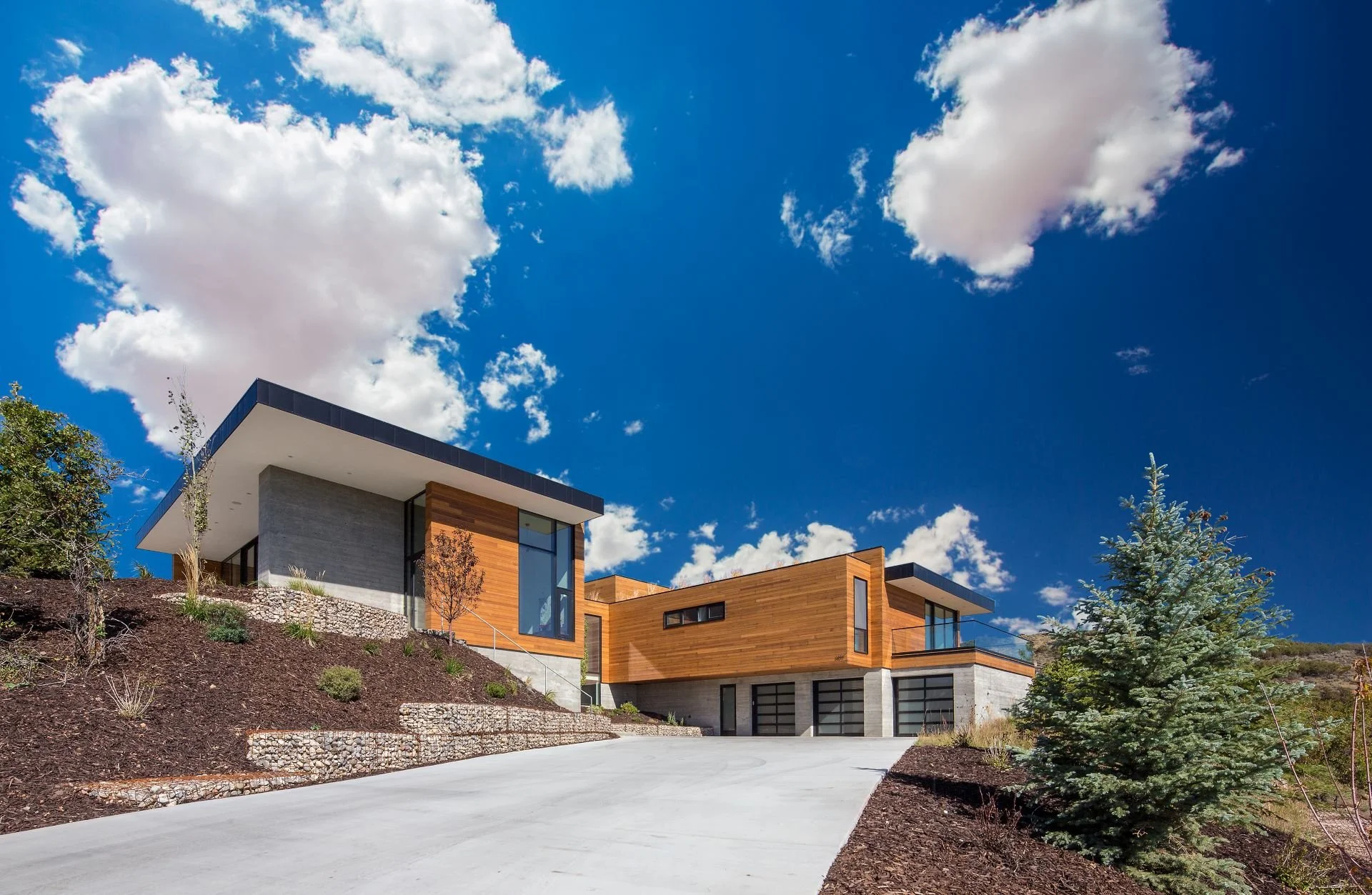
SELECTING AN ARCHITECT
HOW TO SELECT AN ARCHITECT FOR YOUR PARK CITY HOME
JANUARY 13, 2021
Working with an architect to design and build your dream home could represent one of the most important decisions you will ever make affecting your quality of life and enjoyment of your space. As such, who you choose to design your dream home matters. We encourage you to take the necessary time to reflect on your values and your vision as you carefully select the right architect for your Park City home. While doing this consider the value in getting things right during the all important design process and finding the right partner to help every step of the way. We hope you find Sparano + Mooney Architecture is worthy of your consideration.
Park City, Utah is a wonderful place to build a home. The people are friendly, the community is active and supportive, and the amenities are plentiful. And of course, Utah's famous mountain environment is among the most spectacular in the world. Building here is unlike building anywhere else. Steep terrain, heavy snow loads, special codes and regulations, unique daylighting and seasonal considerations are all things to think about in planning a new home in Utah.
To make your dream come true, you need to partner with an experienced architect that shares your vision and has the background, skills and knowledge to help you see that vision through. So how do you select such an architect?
1. LOOK BEYOND PROPERTY VALUE
The whole point in hiring a Park City architect is to help you plan and design your dream home. But your dream home will be more than just a building resting on a piece of land. It is an extension of you. The home you realize should contribute to its context and add value to the life you live. As such, look beyond mere property value. Look for lifestyle value as well. Your Park City architect should be able to grasp the vision you have for both the architecture, its interiors and the life you envision. The process should involve research, site studies and 2D plans and 3D modeling exploring ideas and options that will spark new ideas for the home design. The vision you have for your Utah lifestyle will also influence the forms and spaces your architect designs.
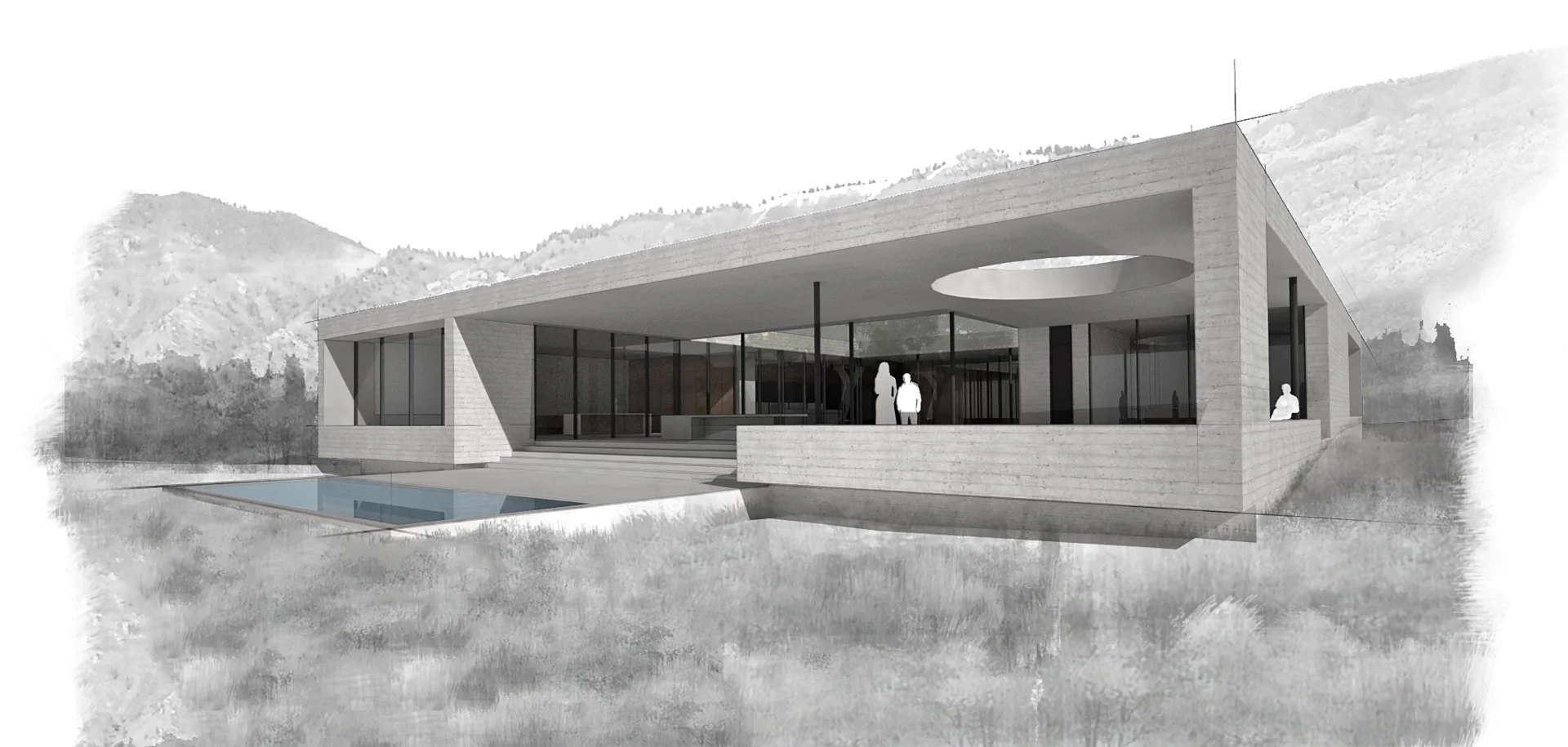
2. LOOK AT SPECIALIZATIONS
Like doctors, architects tend to have specialties. Somewhere in the area is an architect whose training and specialty is exactly what you are looking for. Here at Sparano + Mooney Architecture, one of our areas of expertise is understated and beautifully contextual mountain modern homes. Also known as mountain contemporary architecture or mountain modern design, this is a form of design that focuses on creating contemporary custom homes that exist in harmony within a mountain environment. This design approach emphasized forms and materials that reflect and respond to nature and that allow the landscape and surroundings to be celebrated.
3. LOOK AT GENERAL STYLES
Individual architects each bring their own approach and design aesthetic to the table. Architectural firms can be known for a singular look or can adapt a look for each individual commission. Note that styles are just as important as specialties. Look at a firm's general aesthetic and style to see if it aligns with yours. Otherwise, you might find yourself with a firm that spends the entire design phase pitching ideas that just do not appeal to you. Have a conversation about design directions before committing to an architect to make sure you are both on the same page.
4. LOOK AT PORTFOLIOS
Architects maintain portfolios of their work as a means of demonstrating their capabilities to potential clients. A portfolio is one of the most effective ways to get a feel for how an architect designs, how robust their process is, and to see the design outcomes in built work. Vetting architects by exploring their portfolios is absolutely necessary. To that end, so are personal interviews where an approach to design is outlined. Seeing an architect's portfolio of design work pulls all these conversations together and provides evidence of both design skill and technical experience.
Another way of thinking about a portfolio is that it is a visual representation of the passion and priorities an architect tries to convey during consultation. The design portfolio is a manifestation of how the individual approaches architecture and home design and provides insight into understanding your architect's view of the world.
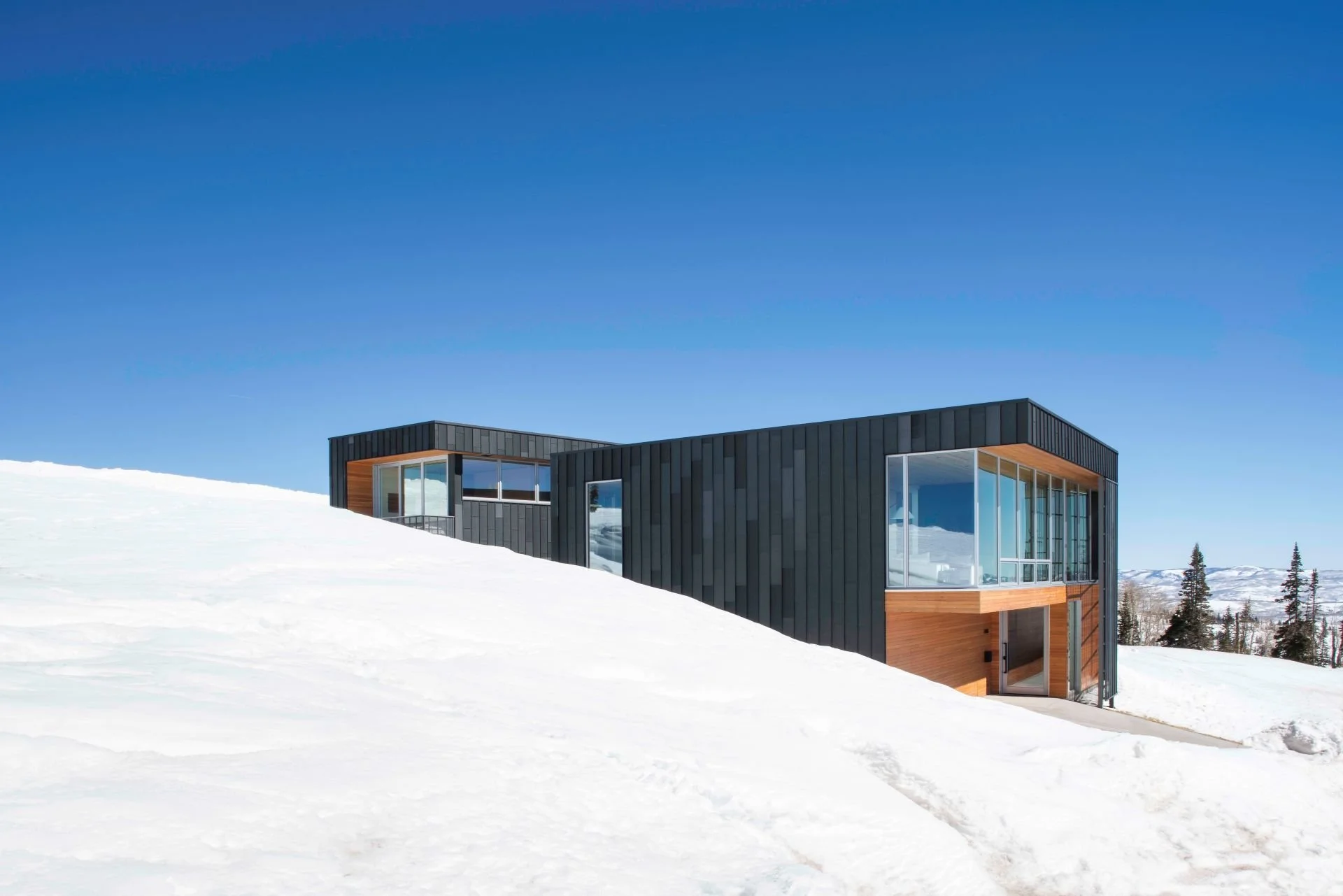
NOT ORIGINAL IMAGE WAS A RENDER, NEEDS APPROVAL
5. LOOK AT ACTUAL PROPERTIES
Like builders and contractors provide references, local architects can often refer you to projects they have previously completed. If any of those projects are open to the public, go look at them. Seeing actual properties in Park City allows you to make connections just not possible sitting in an office talking. Visiting a property lets you experience it fully and pick up on the care that went into the design and the details of the architecture. If possible, ask to see a home in a neighborhood you are considering: Glenwild, the Colony, Victory Ranch or the Preserve are all neighborhoods in Park City or Summit County with complex requirements for building that can be a challenge for the inexperienced to navigate.
Your desire to build a primary or vacation home in Park City deserves the attention of an architect who can work with you to successfully realize your vision. Take your time and be selective. After all, you're not just building a structure; you are building an integral part of your life and your family’s legacy.

WOMEN IN ARCHITECTURE HONOREE
ANNE MOONEY IS A TOP WOMAN IN ARCHITECTURE HONOREE BY MOUNTAIN LIVING MAGAZINE
JULY 20, 2020
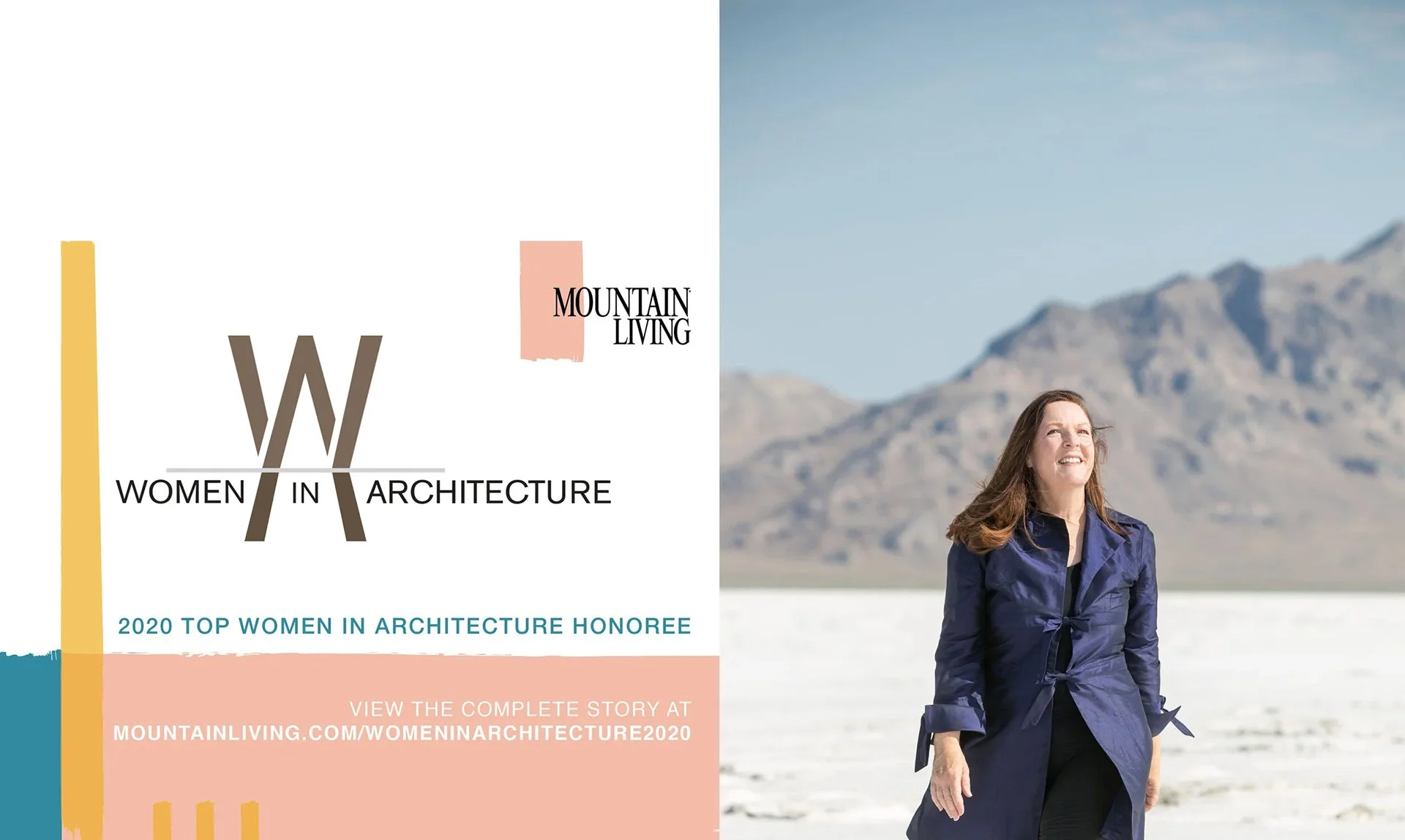
Sparano + Mooney Architecture is pleased to announce that our Principal Architect and Co-Founder, Anne Mooney is one of this year’s recipients of the Mountain Living Magazine’s Top Female Architects!
Anne was educated in architecture at Columbia University in New York, and at the Southern California Institute of Architecture (SCI-Arc) where she studied in Switzerland and Los Angeles. Anne has achieved professional distinctions as an architectural practitioner, professor and design critic, and her award-winning designs have been featured in publications and exhibitions in the United States, Canada, China, England, Spain, Switzerland, Italy, Germany and Japan.
From our two award-winning architectural design studios Anne’s practice draws its inspiration from the American West, as she believes in the potential of the region as a point of departure for world class design. Her team of creative partners and collaborating architects has consistently produced a body of work dedicated to contributing to the elevation of a strong regional design movement.
The architects have honed a research based conceptual design approach, developing architecture that reflects an area of study unique to each client’s vision while carefully considering the budget, site, program, cultural and community contexts. In addition to the Mountain Living’s Top Women in Architecture award, Anne’s design work has received numerous regional and national awards for built and conceptual work.
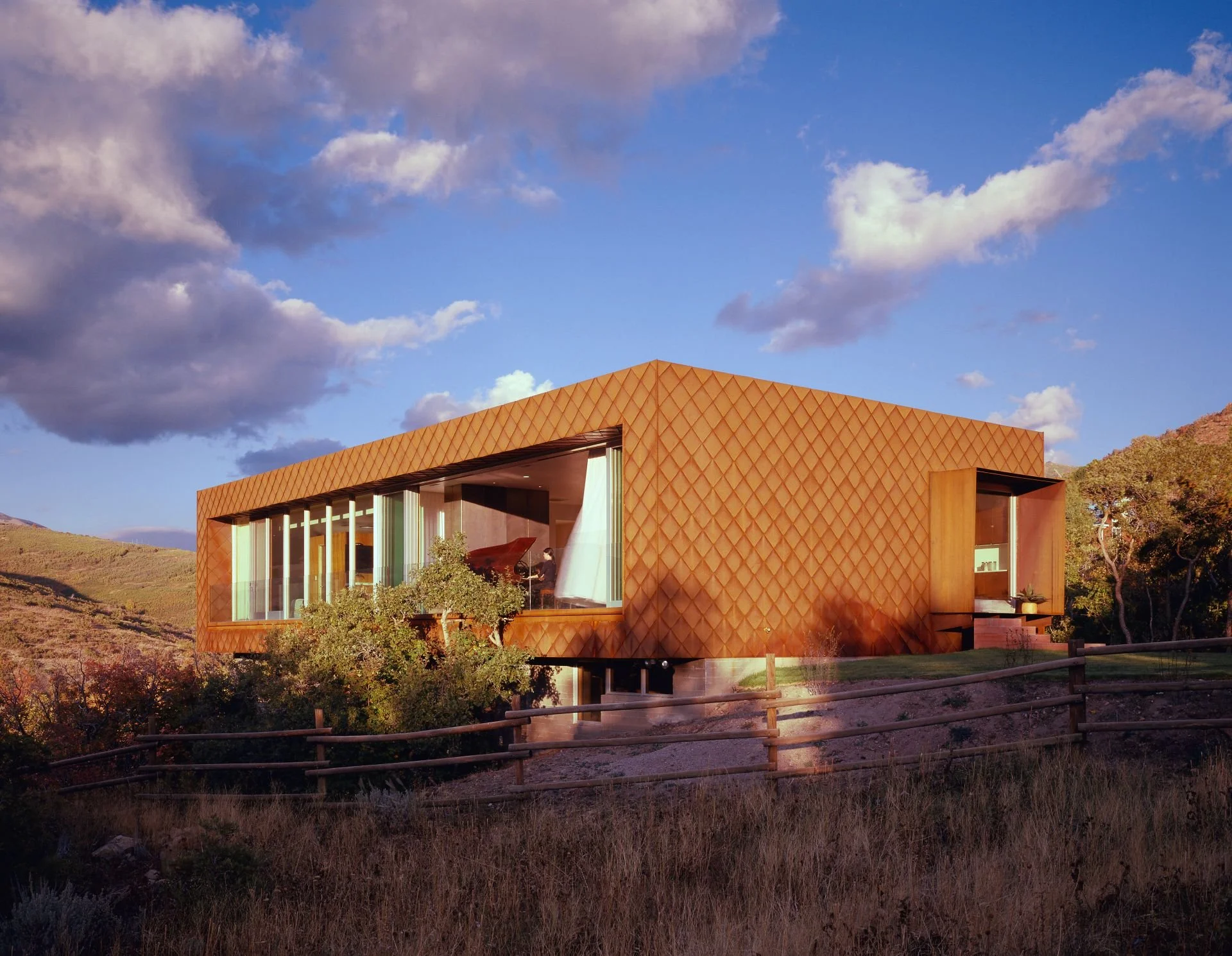
Sparano + Mooney Architecture has been recognized with the American Institute of Architects (AIA) Western Mountain Region Architectural Firm of the Year Award (2016-2017), the AIA Western Mountain Region Young Architect of the Year Award (Anne Mooney, 2014) and the AIA Utah Architectural Firm of the Year Award (2012). Recent publications in the architecture and design press include the Wall Street Journal, Mountain Living, Aspire, Dwell (USA), A+U (Tokyo), Bauwelt (Berlin), World Architecture (London), Hospitality Design (USA), Utah Style & Design, Hinge (Hong Kong) and L’Arca (Milan).
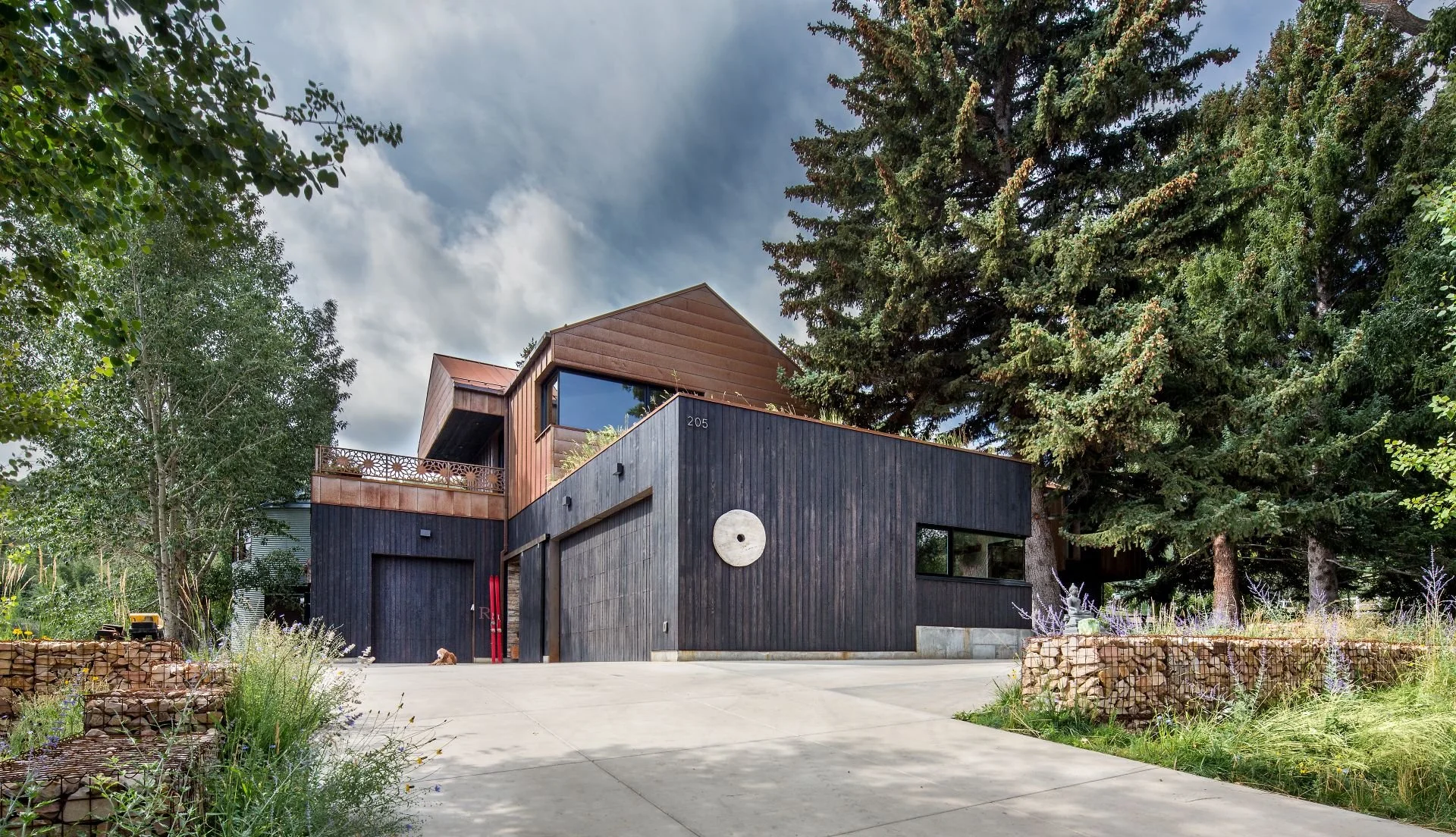
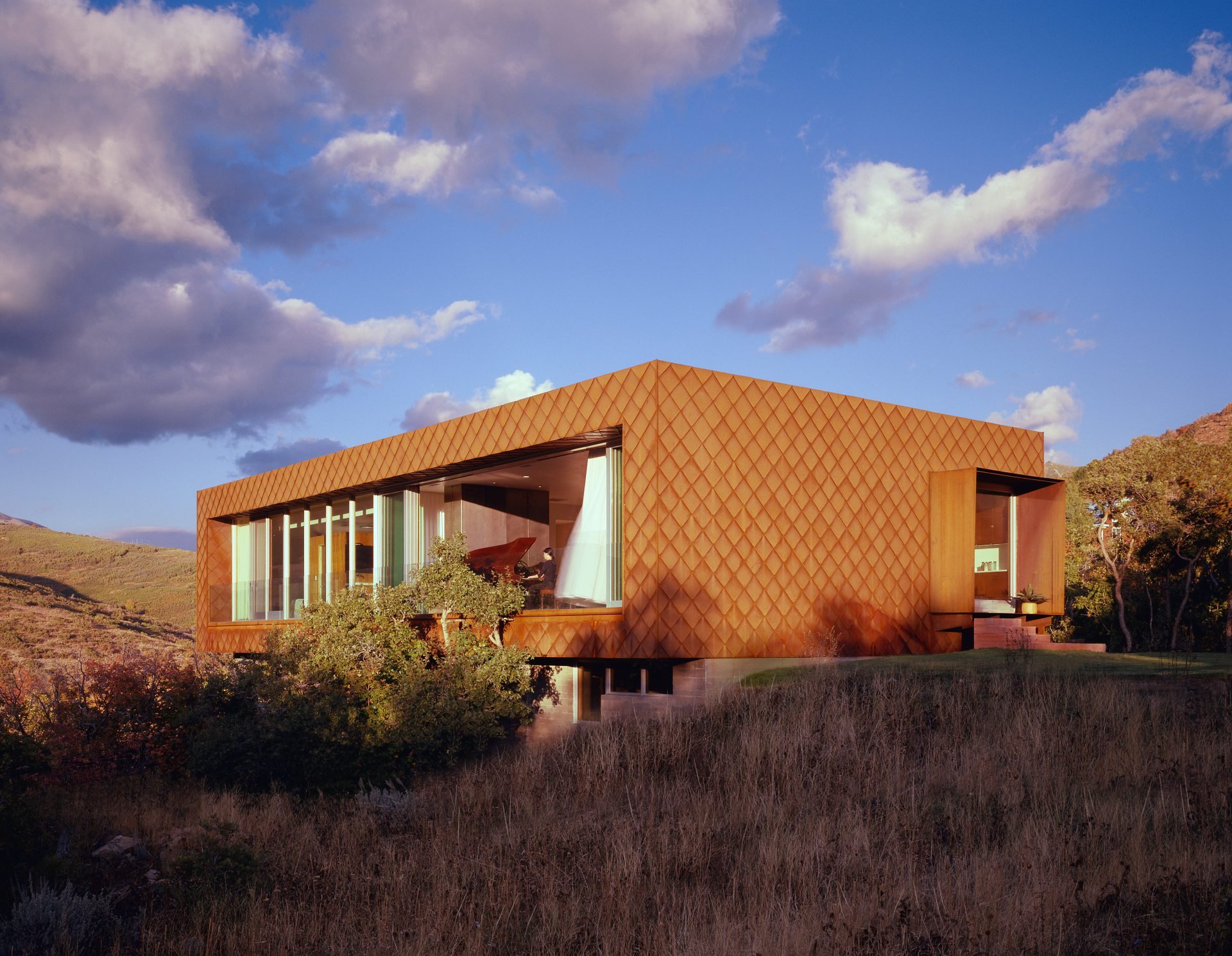
RELOCATION: THE AMERICAN WEST
WHY RELOCATING TO THE AMERICAN WEST MIGHT BE YOUR BEST IDEA YET
MAY 17, 2020
It is no secret that certain parts of the country are experiencing a steady population decline. States like New York, New Jersey, and California are watching as residents relocate to other states. And while Florida and Texas are hot spots right now, the American West is also drawing its fair share of relocating families.
We are particularly fond of the American West region and Idaho, Montana, Utah, and Wyoming in particular, not only because one of our offices is located in Utah. We think that the American West is a great place to live, especially if you're looking to build your custom dream home.
Relocating out West might be your best idea yet. Here are just some of the reasons explaining why:
AVAILABLE LAND
Much of the American West remains undeveloped and the urban centers are thriving. In the western states our architects are focused on, there are still opportunities to buy that perfect piece of land on which to build your own custom home. From the ski slopes of Utah to Montana's Big Sky Country, there may be no better place to build a custom home that affords you the opportunity to enjoy all that nature offers.
We do a lot of design work for customers relocating to Park City, Sundance, Powder Mountain, and Deer Valley. Most of them love skiing. But skiing is not the only thing Utah has to offer. Opportunities for all sorts of winter sports abound. And when the snow melts, the surrounding mountains come alive in ways new residents never imagined.
A MORE LAID-BACK LIFE
Imagine a custom view home on ten acres in Idaho. Imagine a more laid-back life rich with activities like hiking and biking. Imagine slow, relaxed mornings enjoying a fresh cup of coffee on your deck, gazing at a spectacular view as the sun comes up.
More than one Sparano + Mooney Architecture client has relocated to the American West only to discover that its more laid-back lifestyle suits them perfectly. Out here, things aren't so rushed. People slow down and enjoy life.
BETTER COST OF LIVING
If you are looking to relocate, you should know that most areas in the American West offer improved cost of living. You are likely to not spend as much on everything from utilities to groceries. You will also spend less to design and build a custom home.
For some of our clients, this means getting more for the same amount of money. They know how much they could afford to build a custom home in Florida or Texas but spending that same amount in Utah, Idaho or Montana can get them much more house for the money. There is a lot to be said for that.
GROWING ECONOMIC OPPORTUNITIES
Many of our clients are moving out west to follow the jobs, Utah is one of the fastest-growing states for that very reason. Cities like Park City and Salt Lake City are attracting businesses from all over the country. They are relocating to Utah and job seekers are coming with them.
Here at Sparano + Mooney Architects, we specialize in mountain modern and contemporary architecture with an emphasis on passive design. If you are looking to relocate, we would encourage you to consider Idaho, Montana, Utah, and Wyoming for your custom home. There is something to be said about designing a home so that you get everything you want. It sure makes relocating easier.

PUBLICATION: THE PLAN
SPARANO + MOONEY ARCHITECTURE IN THE PLAN NO. 122
MAY 11, 2020
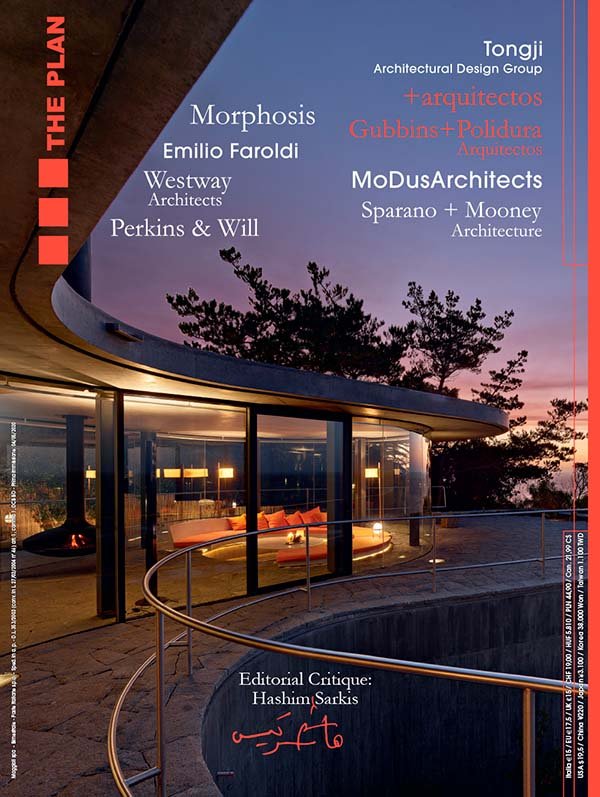
One of Sparano + Mooney Architecture’s favorite international architectural publications, The Plan based out of Bologna, Italy did an in-depth feature of our studio’s design process in their most recent edition published this week. Written by architecture and design critic, Michael Webb (Architect’s Houses, Moving Around: A Lifetime of Wandering, and many others), the article titled “Interpreting the Context to Create Striking Architecture” explores the studio’s interest in design, process, site-specificity, and the unique context of the American West.
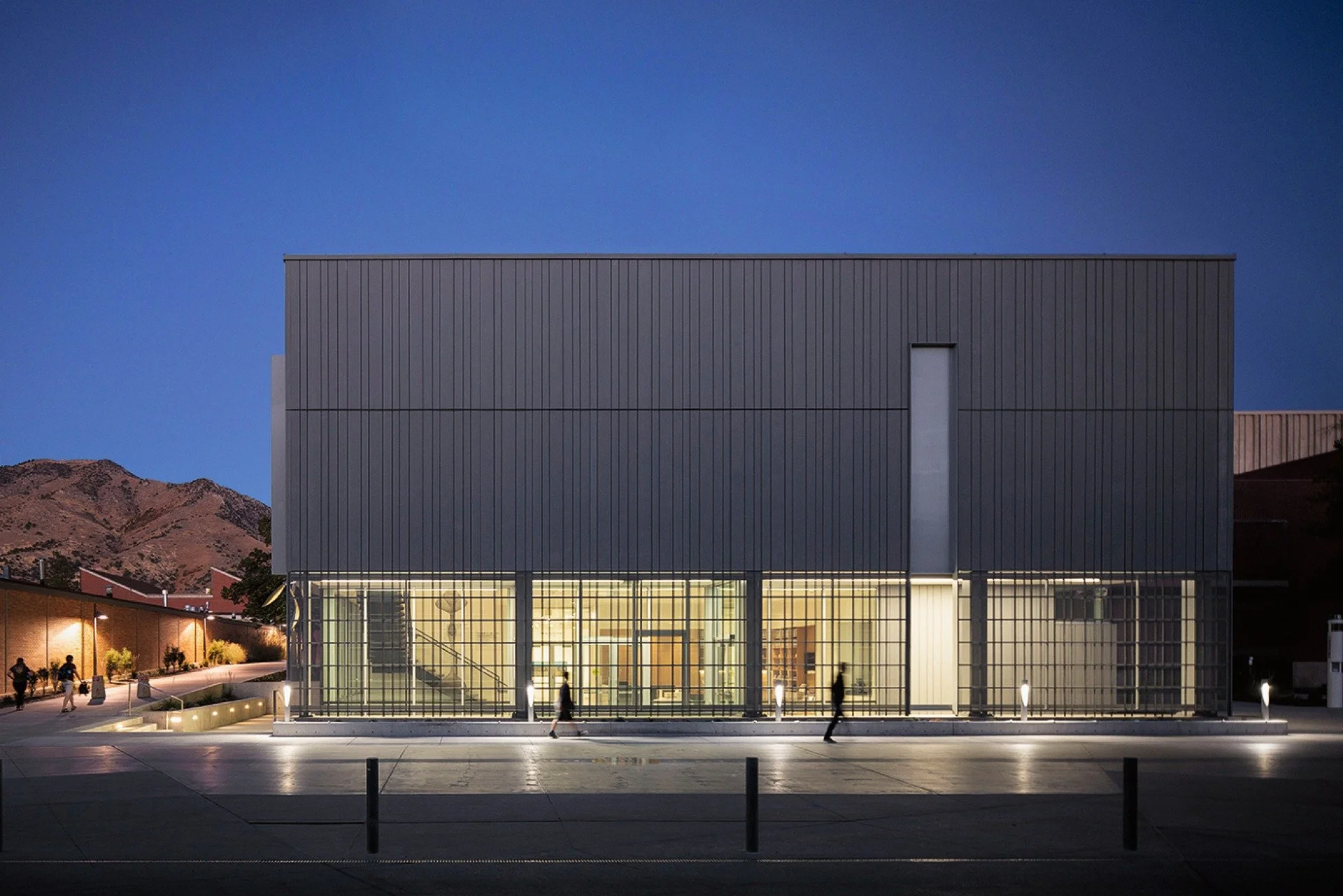
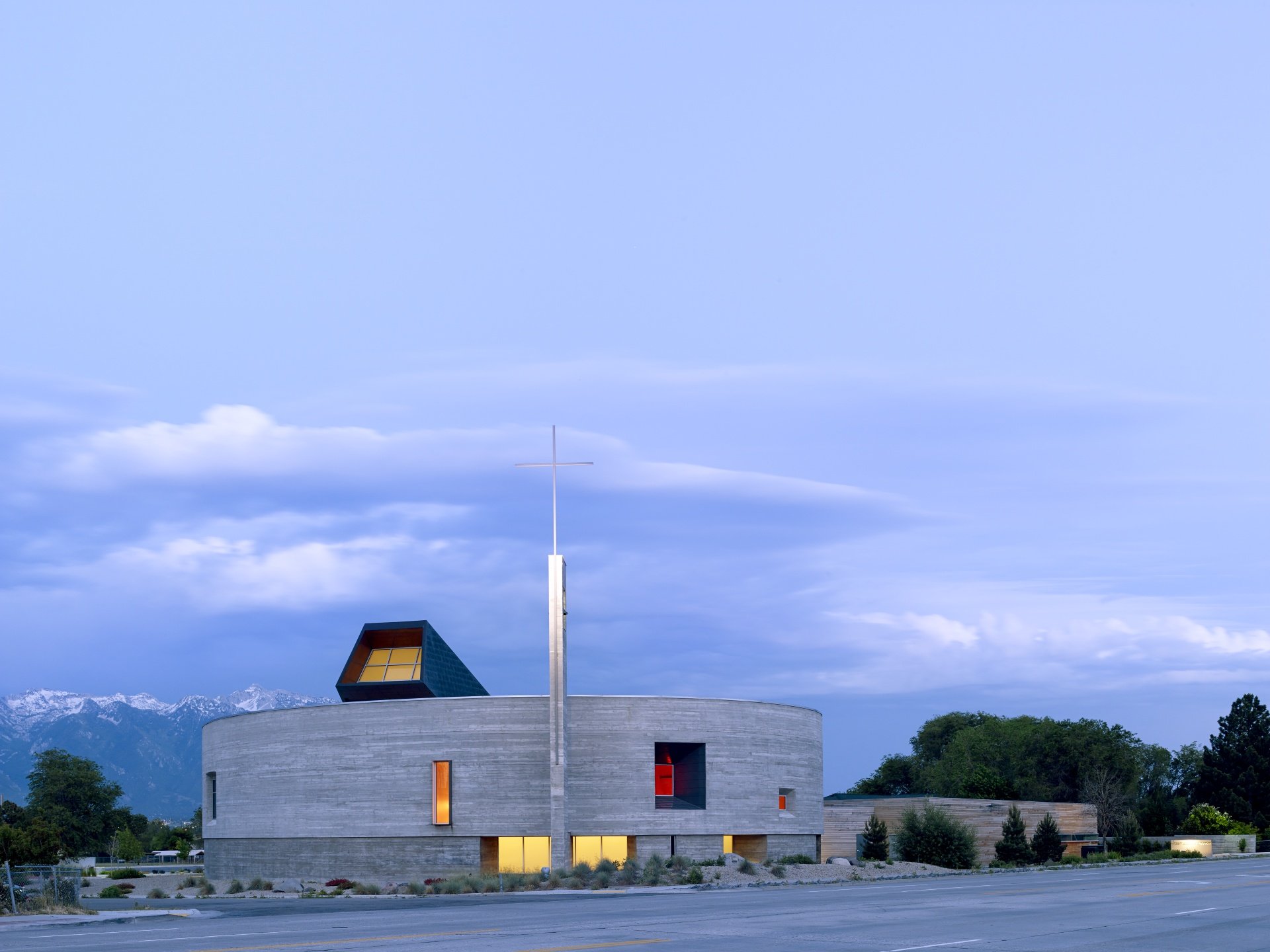
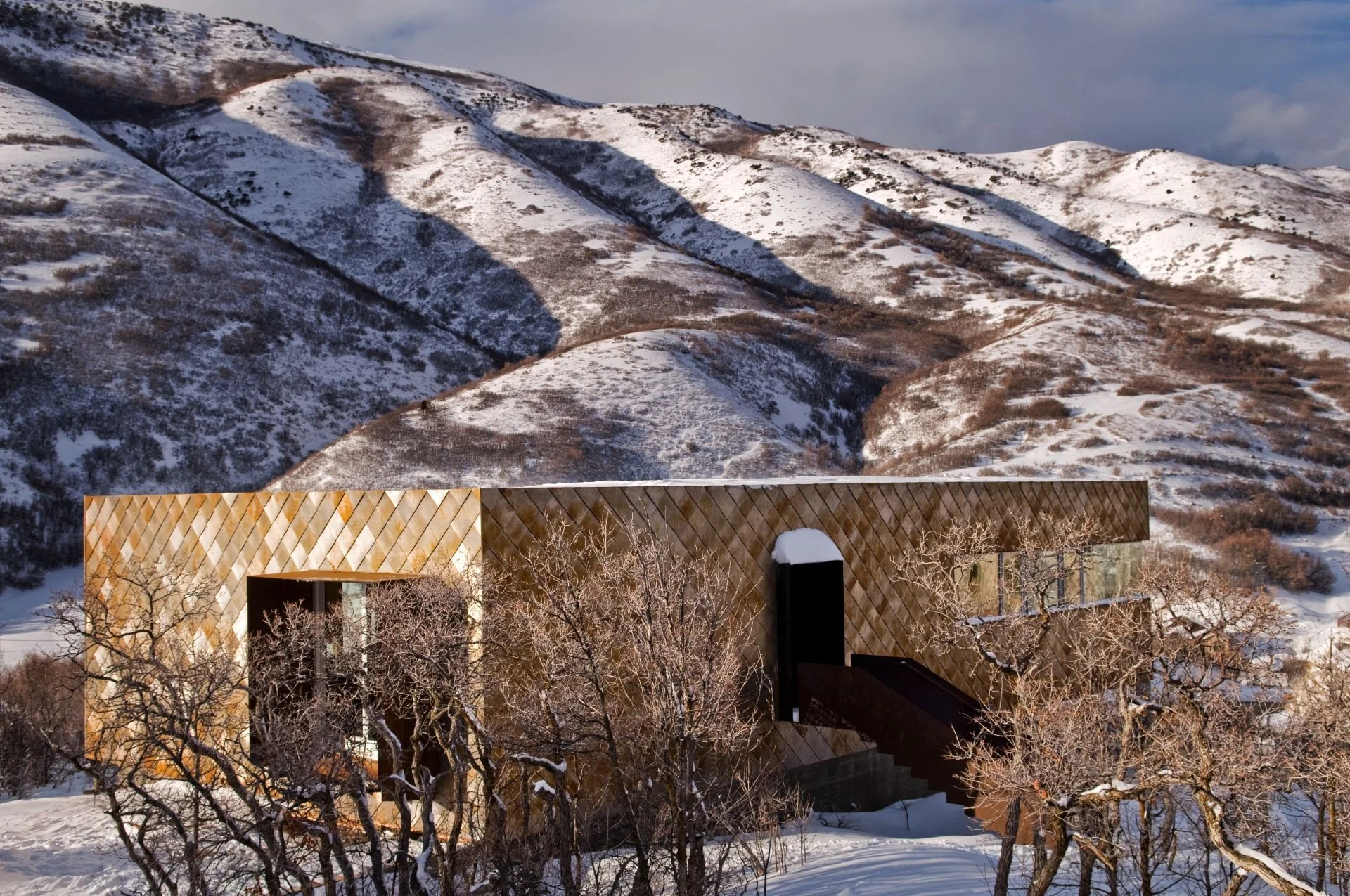
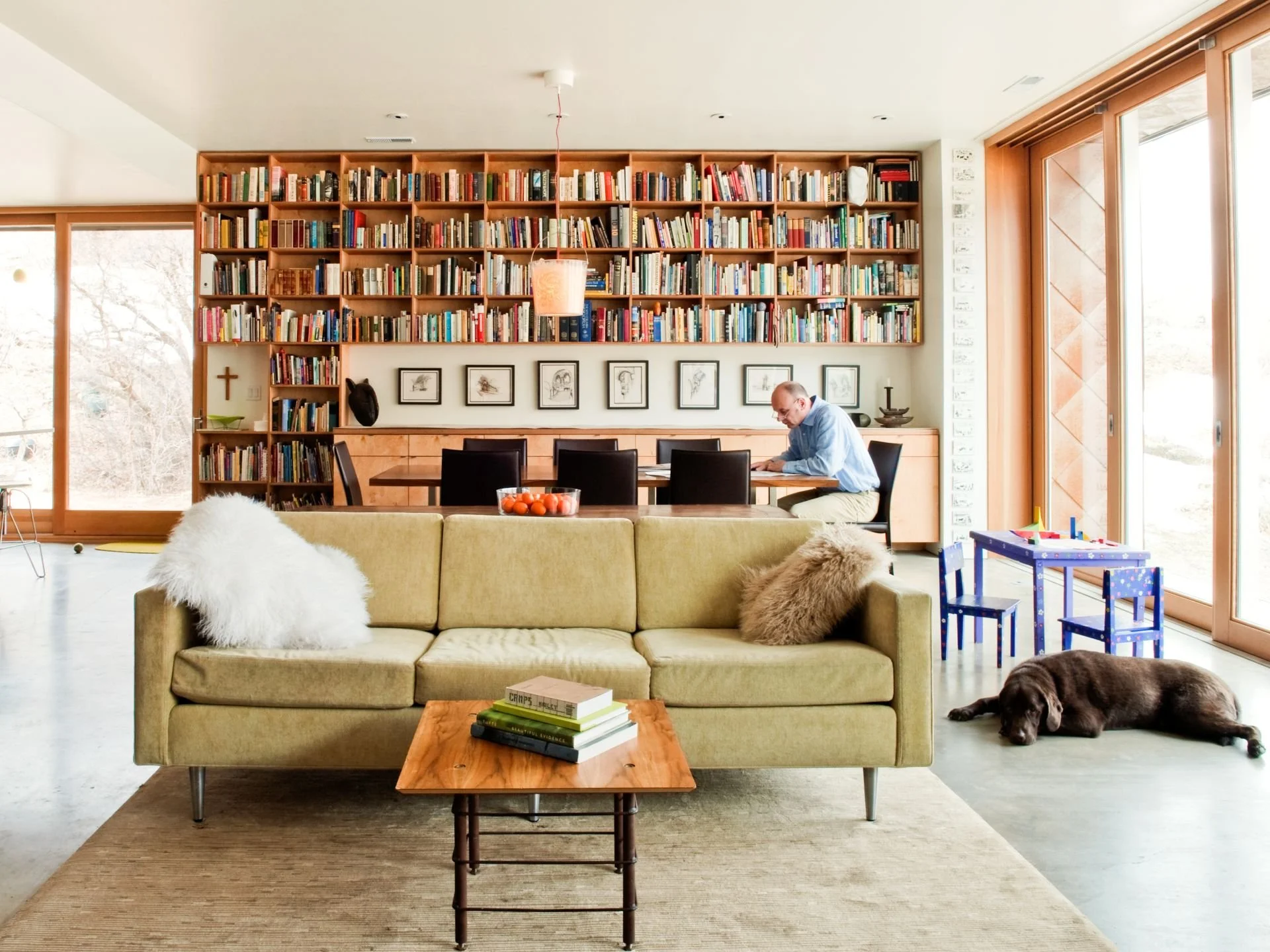
We had the opportunity to host author Michael Webb for a few days to tour some of the projects featured in the article. The article features several examples of the studio’s body of creative work in architecture including the Nora Eccles Harrison Museum of Art, the new Aurora Villa hotel, St. Joseph the Worker Church, and one of our modern homes in Emigration Canyon.
Principals and founders John Sparano and Anne Mooney discussed with Michael Webb their personal routes to architecture, and some of their biggest design inspirations. Both of their design background through international programs (John in London at the Architectural Association and Anne in Switzerland at SCI-Arc) are evident in their specific interest in materiality, detailing sustainability, and functionality of the beautiful and timeless designs produced by the office in a highly collaborative manner.
RADICAL ARCHITECTURAL STYLES
WHICH OF THESE 5 RADICAL ARCHITECTURAL STYLES DO YOU LIKE MOST?
APRIL 26, 2020
Architectural history is spanned by periods during which the world's foremost designers introduced radical concepts. Perhaps every new architectural concept was radical for its time, but these days, certain types of architectural styles are considered conservative and staid and are not considered radical by modern standards.
Victorian architecture is so prevalent in this country that most of us associate it with U.S. home construction. Victorian houses are still being constructed today along with colonials, bungalows, etc. Yet every once in a while, you find an architectural firm willing to push the envelope.
With that said, here are five radical types of architecture still being practiced today. Do you have a favorite among them?
1. ART DECO
The Art Deco style was birthed in Paris at the turn of the 20th century. It had spread all across Europe and to the U.S. by the 1930s. Art Deco eventually went by the wayside as a result of rebuilding following World War II, but it still has its fans. It features plenty of geometric shapes including chevrons and florals. Building materials include stucco, chrome, stainless steel, and terracotta. And of course, Art Deco design loves deep and bright colors.
2. BAUHAUS
Established by German architect Walter Gropius, Bauhaus is a form of architecture that starts with function and then translates to form. Bauhaus buildings are simplistic in every way. They tend to be designed around simple shapes with a big focus on the most efficient use of space from a practical standpoint. Aesthetically, they are almost the exact opposite of Art Deco.
3. BRUTALIST
If Bauhaus is not industrial enough for you, consider Brutalist architecture. This type of architecture is characterized by large, bold concrete structures. Lines are simple and shapes limited. External beauty is also eschewed in favor of the brutal honesty of a concrete aesthetic. Buildings designed from this mindset tend to be large, bulky, and very heavy-looking. Brutalist design is often considered something you either love or loathe.
4. MODERN
Though modern and contemporary architecture are often mistaken for the same thing, they are not. Modern architecture refers to a type of design created by greats like Frank Lloyd Wright during the early-to-mid-20th century. Like Bauhaus design, modern architecture prefers function over form. However, Wright proved he could incorporate both seamlessly.
One of the things that makes modern distinct from contemporary is its defined nature. You can look at a Wright home and know it was built at some point during the first half of the 20th century. It will feature large rooms, straight lines, and what might seem like an excessive amount of storage.
5. CONTEMPORARY
We save contemporary for the last because it is something that we specialize in. Contemporary architecture is modern in the sense that it shows deference to current design trends and preferences. The one thing that makes it unique from the modern architectural style of the 20th century is that it does not pay homage to any particular architectural period that came before it.
Contemporary design is design for the here and now. Today's contemporary is about open spaces, natural light, energy efficiency, and sustainability. Aesthetically, it is about designing homes that look as though they were birthed from the natural environment.
The most daring architects have always pushed the envelope with their designs. The best of such radical designs have legacies that last for a long time because they are so radical. But that's what makes them so inviting.

COVID-19 + ARCHITECTURE
COVID-19, DESIGN, AND HOW WE ARE DEALING WITH IT
APRIL 16, 2020
At the very start of this year, only a mere three months ago, we don’t think there could have been any way to anticipate just how drastically things have changed globally due to the COVID-19 pandemic. As our staff have begun working remotely we have encountered some challenges, but also opportunities to rethink how we work as individuals and as a team.
Earlier last week, founder and principal of Sparano + Mooney architecture, Anne Mooney virtually ‘sat down’ with design journalist David Sokol to discuss some of the ways SMA is dealing with and adapting to our new world order. In an article for Architectural Record, “Architects Share Best Practices for Working from Home,” Mooney shared that her most immediate challenge after getting the at home work stations operational, has been maxed-out Internet connectivity, “with all our neighbors also working at home, along with the kids tackling online school.” In the same article, Eric Höweler from Höweler + Yoon Architecture reported, “For us, everyone is on Remote Desktop. We have 22 workstations that seem to be working without operators—like the studio is possessed.” With the SMA staff working from home in both Los Angeles and Salt Lake City, there is a similarly eerie of feeling in the studios.
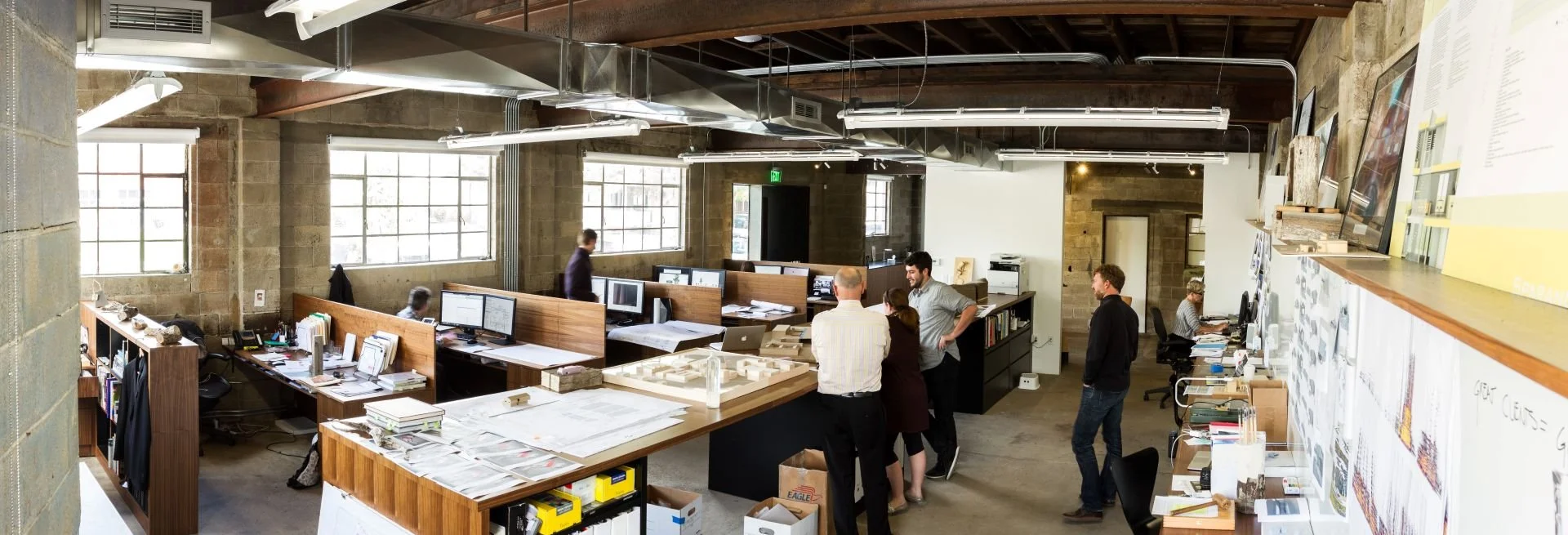
On top of dealing with technical difficulties and lack of usual, daily interaction with colleagues, what to do about the halting and delay of projects? In another article by Sokol for Architectural Digest “What to Do If Your Project Is Put On Hold or Canceled,” Mooney discussed the option of potentially diversifying revenue streams, and working on in-house projects that may have been on hold because of lack of time and attention due to the demands of other projects and deadlines.
For SMA, this could be the time to start working on turning some one-off designs including furniture pieces from the studio’s various architecture projects into a collection. “With an online shop, we can share these with the world and move into production and manufacturing,” Mooney predicted. “And if we have even more time on our hands, we could develop a little more depth in the line.”
Although the times are uncertain at best, SMA remains committed to maintaining our track record of best practices, excellent design, and continual support of our colleagues and clients.
TOP 10: SAINT JOSEPH THE WORKER CHURCH
SMA DESIGNED SAINT JOSEPH THE WORKER CHURCH ONE OF TOP TEN BUILDINGS IN UTAH
JANUARY 08, 2021
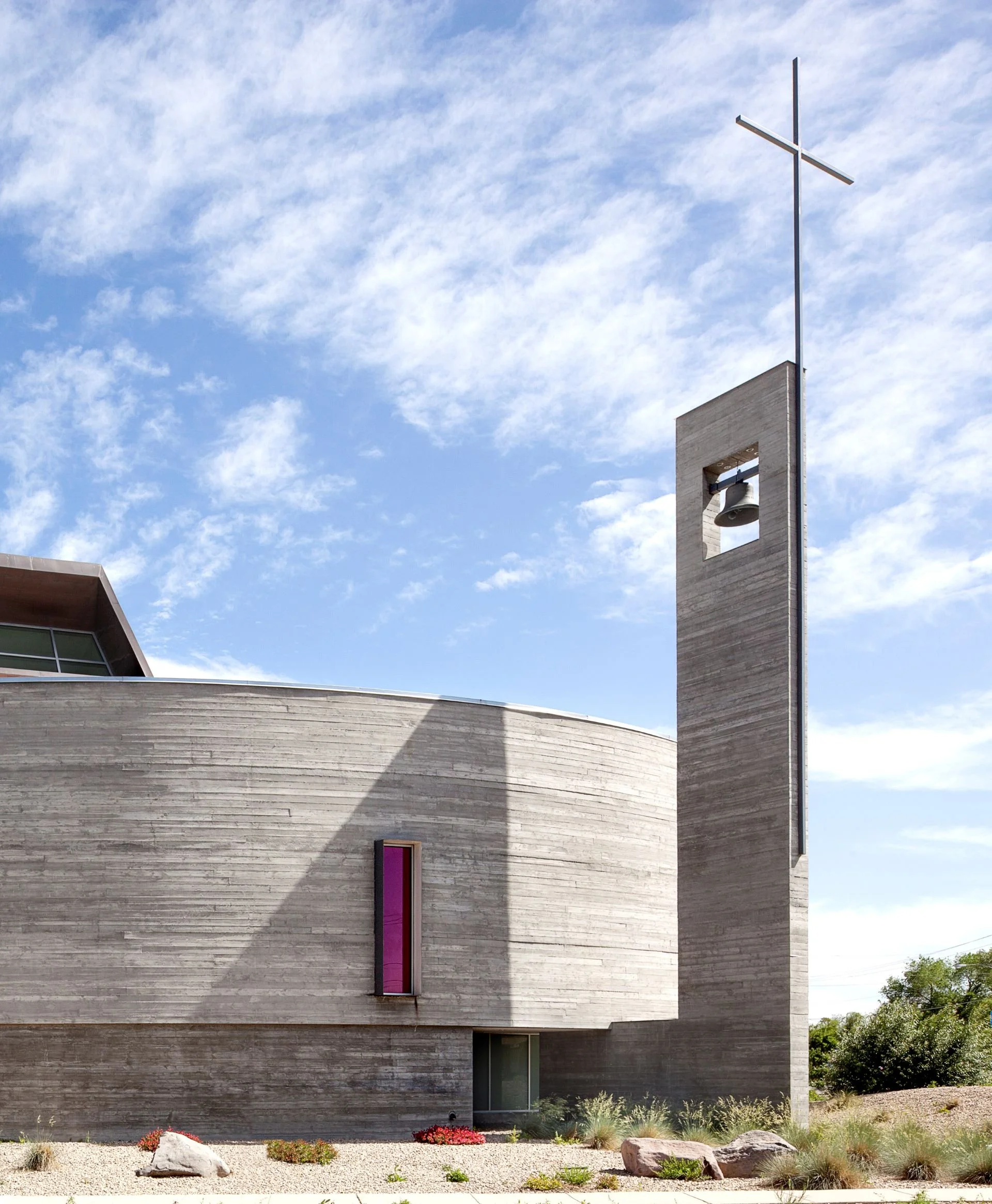
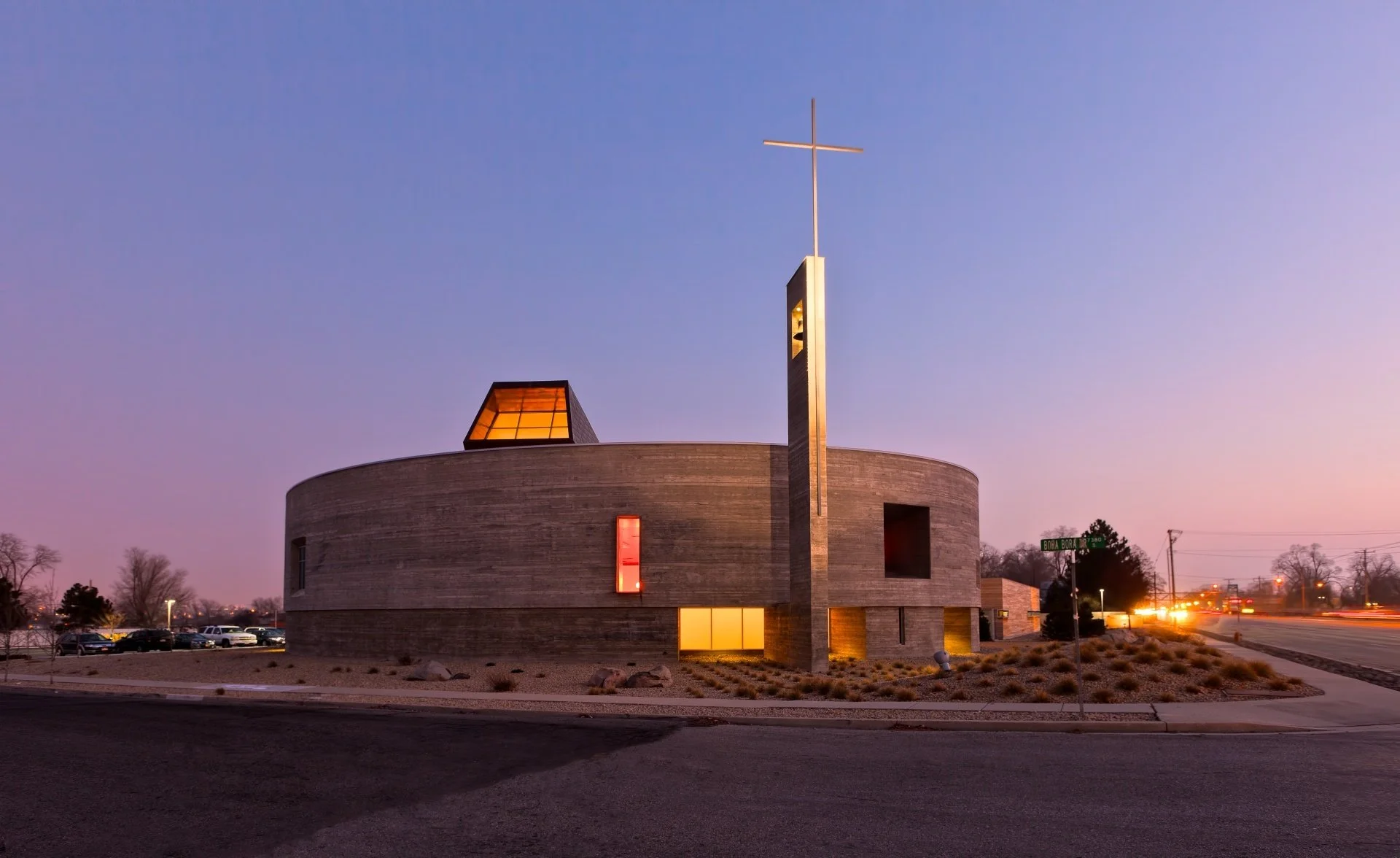
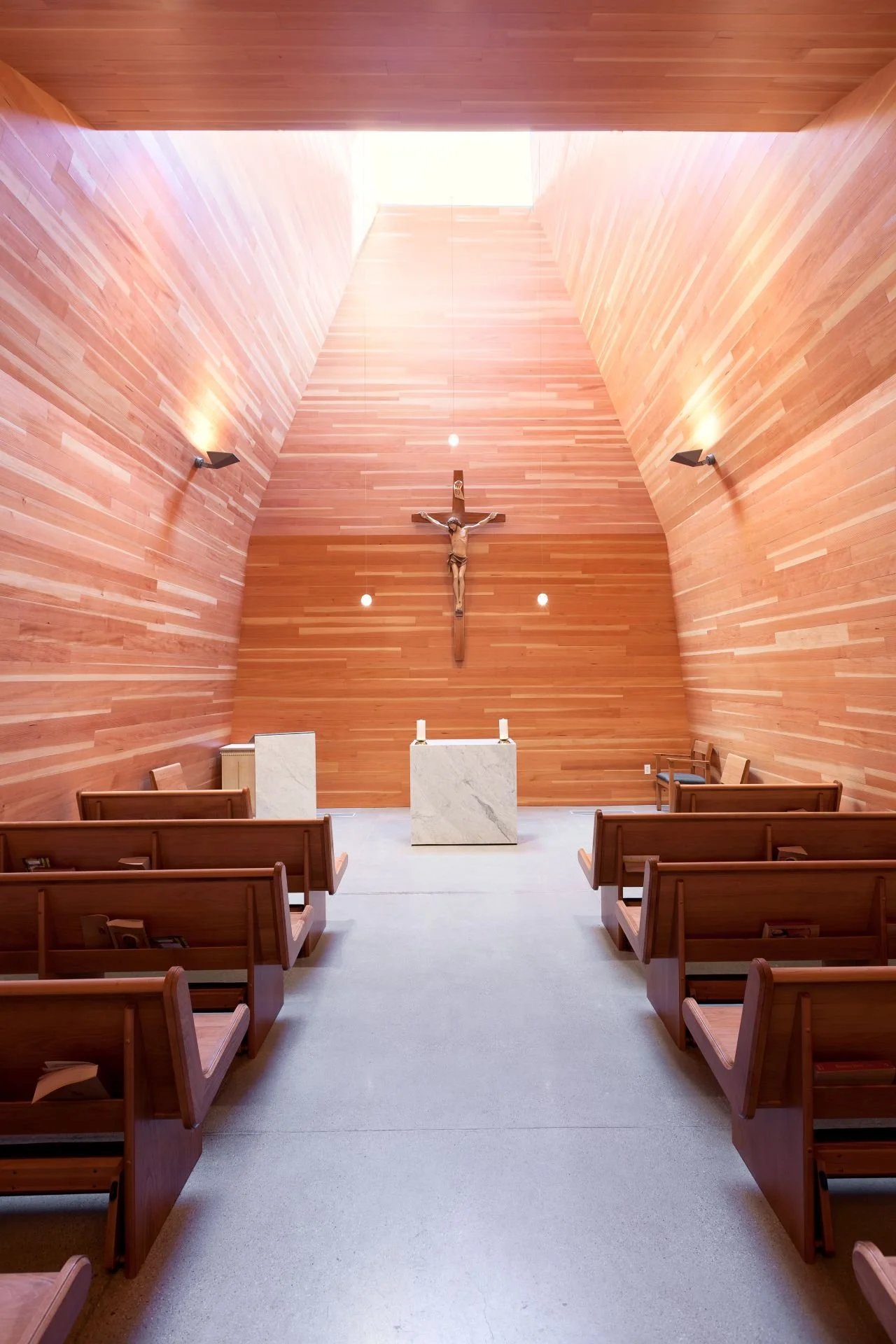
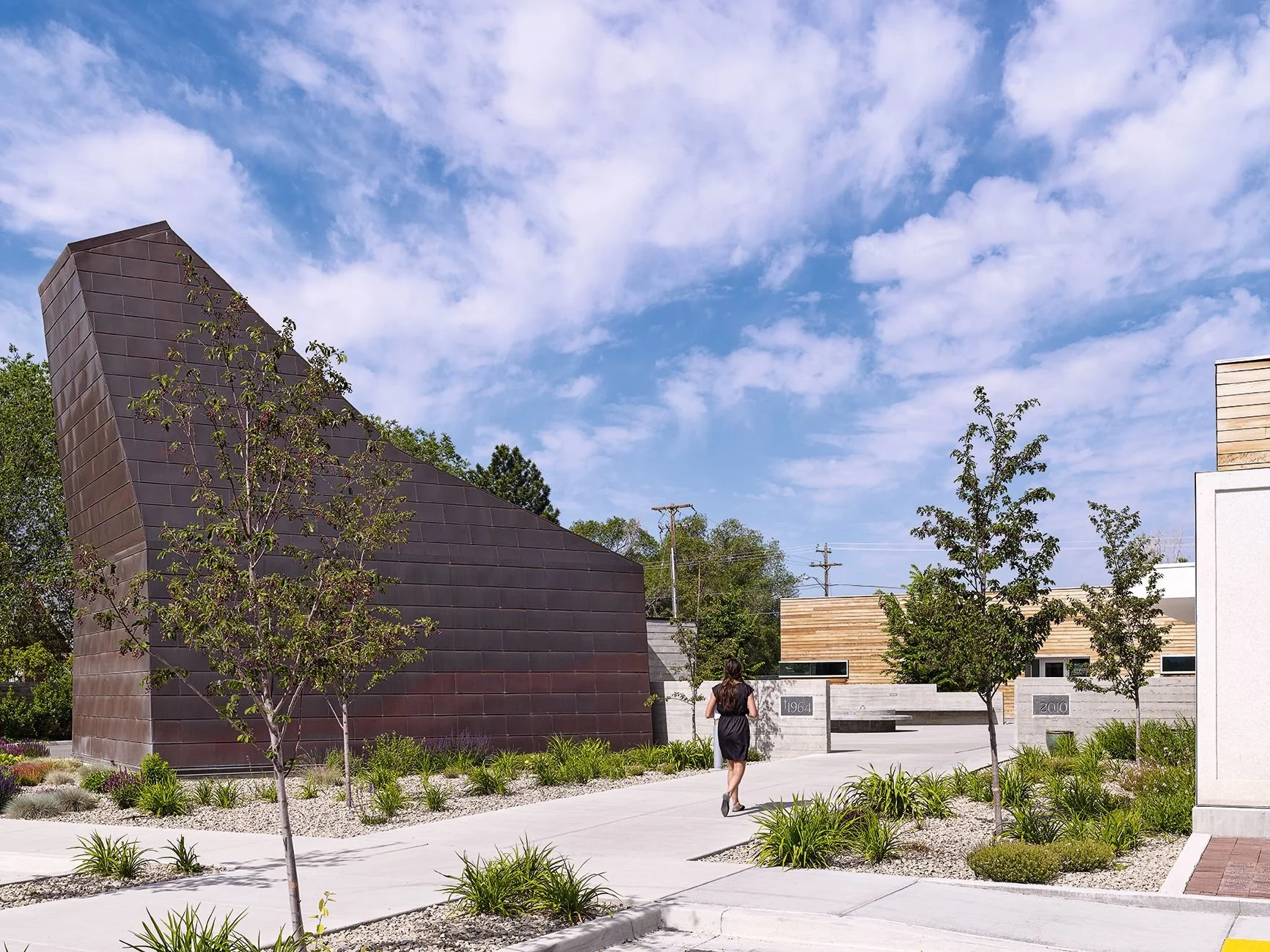
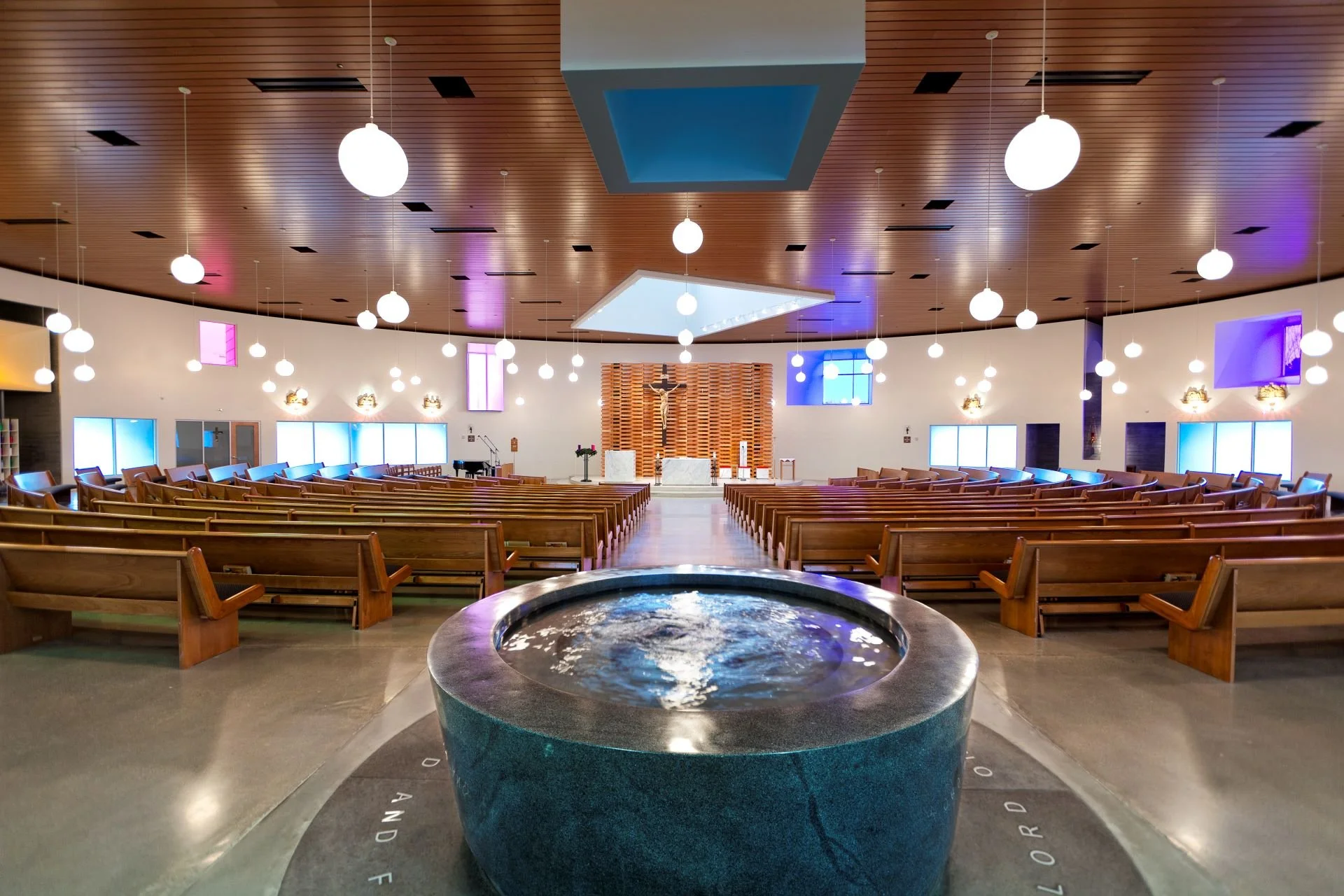
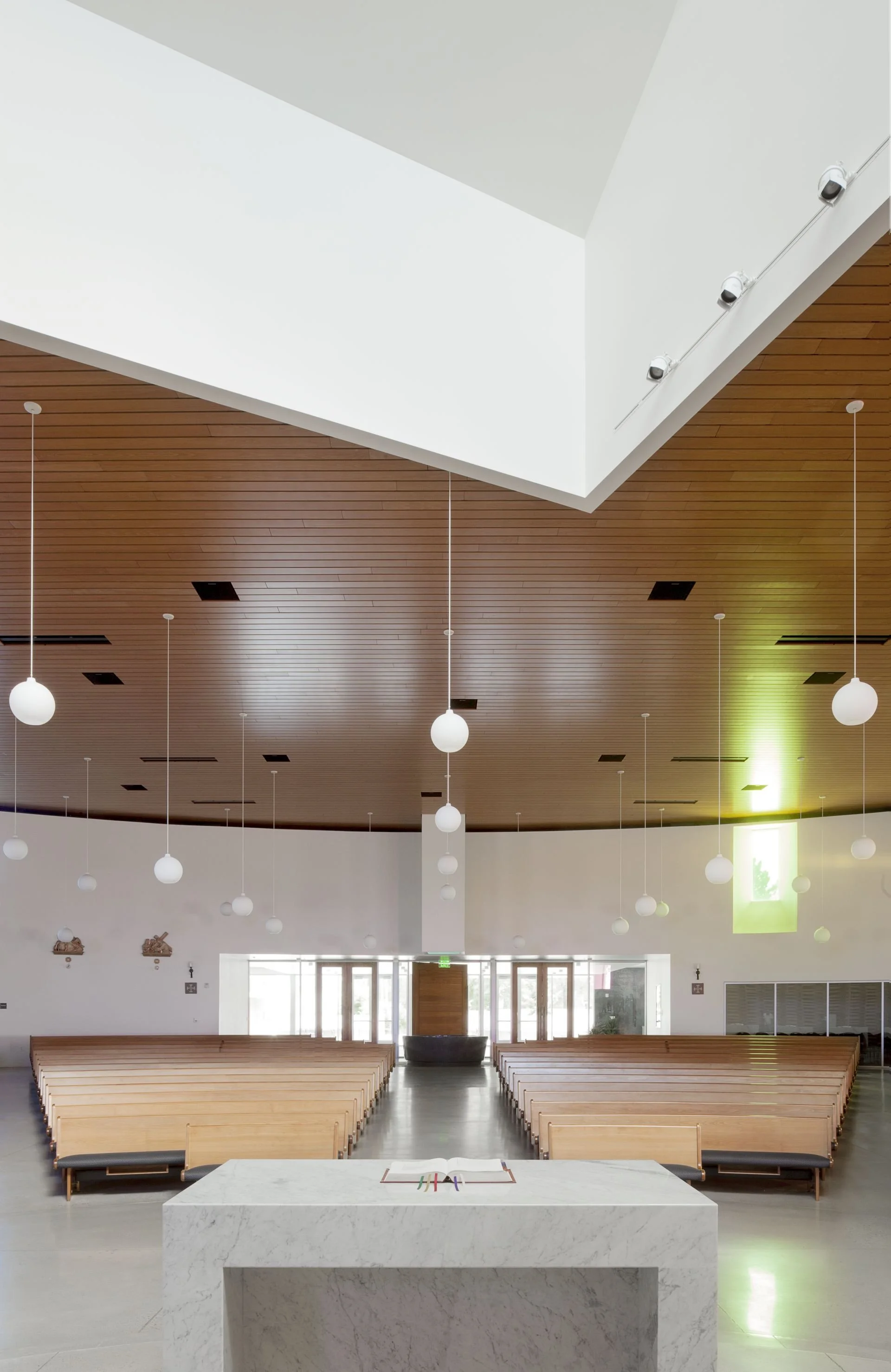
We were delighted to start the New Year (and decade!) with one of our favorite projects, St. Joseph the Worker Church in West Jordan being named one of the Ten Best Buildings in the State of Utah by local architect and author David Ross Sheer in the Salt Lake Tribune.
Sheer writes, “Ten best” lists are great conversation (or argument) starters. If it’s a slow night in a sports bar, you can always liven things up by asking fans to list the 10 best baseball (football, soccer, badminton, bocce) players in history. Like all such lists, this one is subjective, but (I hope) not without a certain objective basis. One major difference between sports and architecture is that while, for example, batting and pitching are judged separately, good buildings have to “play both ways” and meet all of the following criteria:
an interesting (if not beautiful) external appearance;
spaces within the building that dignify the building’s functions;
a design that enhances its surroundings;
endowing its purpose with special meaning.
Also, I only included buildings open to the public so anyone can visit them.”
About St. Joseph the Worker -
“This small parish church complex in West Jordan manages to be monumental and modest at the same time. The complex includes a small chapel, offices and the sanctuary. Throughout the complex, humble materials are ennobled by superb craftsmanship, honoring the laborers who founded the parish. The exterior of the sanctuary is especially noteworthy, an exquisite piece of concrete construction that resulted from careful design by the architects and the consummate craftsmanship of the builder. The concrete was formed by wooden boards, which left an impression of every detail of the wood’s surface on the concrete. If you think concrete is an ugly material, you need to visit this church.”
You can read the entirety of the article with the other nine projects – both contemporary architecture and historic architectural gems - here.
The Utah Top 10 Buildings are:
The State Capitol (1916, Richard Kletting)
The City Library (2003, VCBO)
Abravanel Hall (1976-79, FFKR Architects)
The City and County Building (1891-94, Henry Monheim, Bird & Proudfoot)
Ogden High School (1937, Hodgson and McClenahan)
The Adobe Utah campus (2012, WRNS Studio)
The Tabernacle on Temple Square (1867, William H. Folsom and Henry Grow)
The Rio Tinto Center — Natural History Museum of Utah (2011, Ennead Architects with GSBS Architects)
Lassonde Studios (2016, Cannon Design in association with EDA Architects)
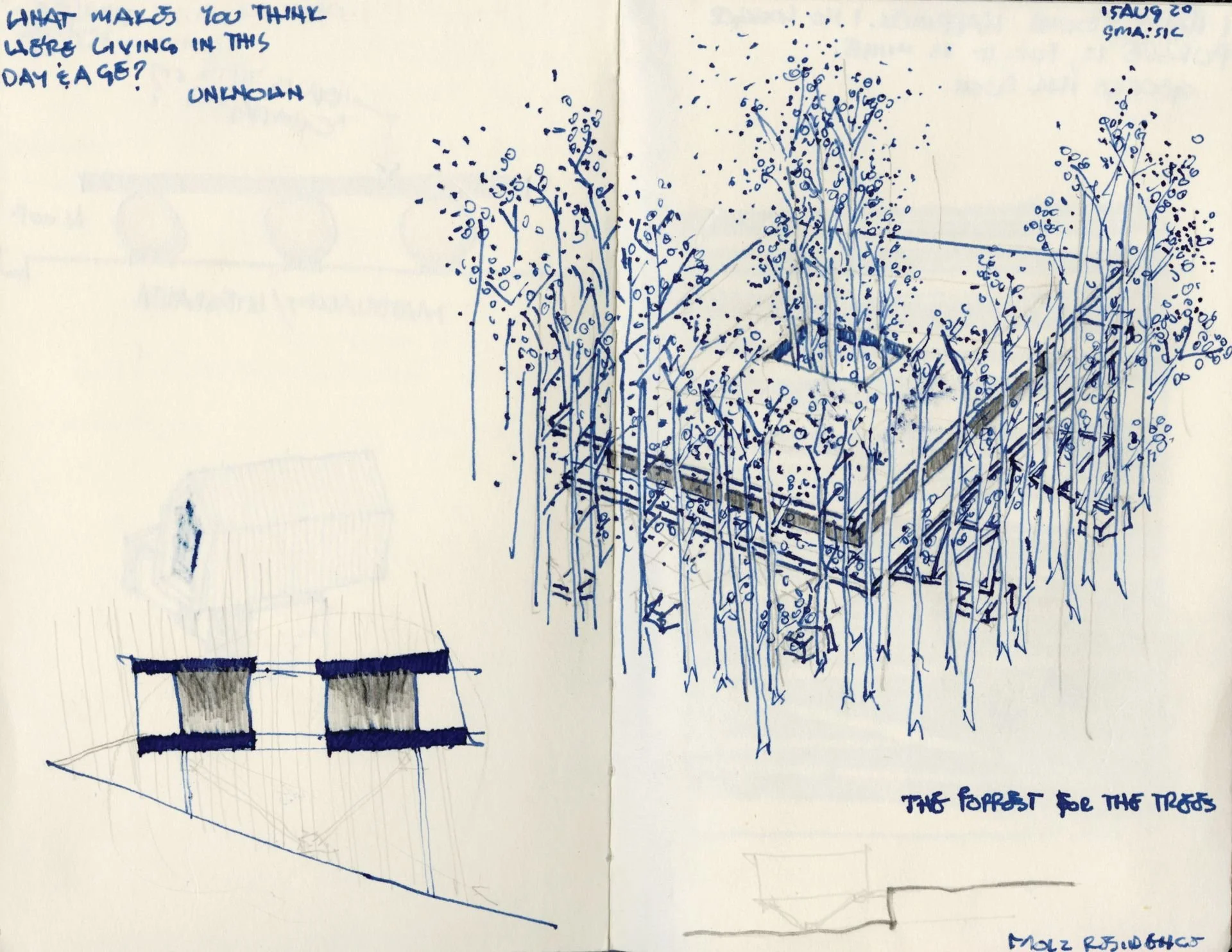
A STADIUM FOR THE TREES
A STADIUM FOR THE TREES
SEPTEMBER 18, 2019
The drawing depicts a common modern scenario, a vast urban stadium – architecture densely packed with spectators. But instead of an athletic event, the stadium looks onto a grove of trees, planted in the center of the field. The wooded area is a direct juxtaposition to the teaming skyline behind it, visible just above the rim of the stadium. Skyscrapers, cranes, and billowing smoke render the cityscape as a dynamic engine of growth and development. By contrast, the forest is still, even contemplative.
From now until the 27th of October in Klagenfurt, Austria, you can witness this drawing brought to life. Installed in Wörthersee Stadion, three hundred trees have been planted on the pitch of the stadium, a direct manifestation of Max Peintner’s dystopic image. The project, conceived by contemporary Austrian curator, Klaus Littmann is the largest and most complex public art installation in Austria to date.
Many of the species of trees chosen to be planted, including silver birch, alder, aspen, white willow, hornbeam, field maple, and common oak are currently subject to population decline due to deforestation and climate change. After the installation, the trees will be relocated and replanted nearby the stadium, beginning a second life as a “living sculpture.”
Landscape architects, Enea Landscape Architecture, is responsible for the design concept for the trees currently installed in the stadium, and the design of the permanent forest.
AURORA VILLA OPENS
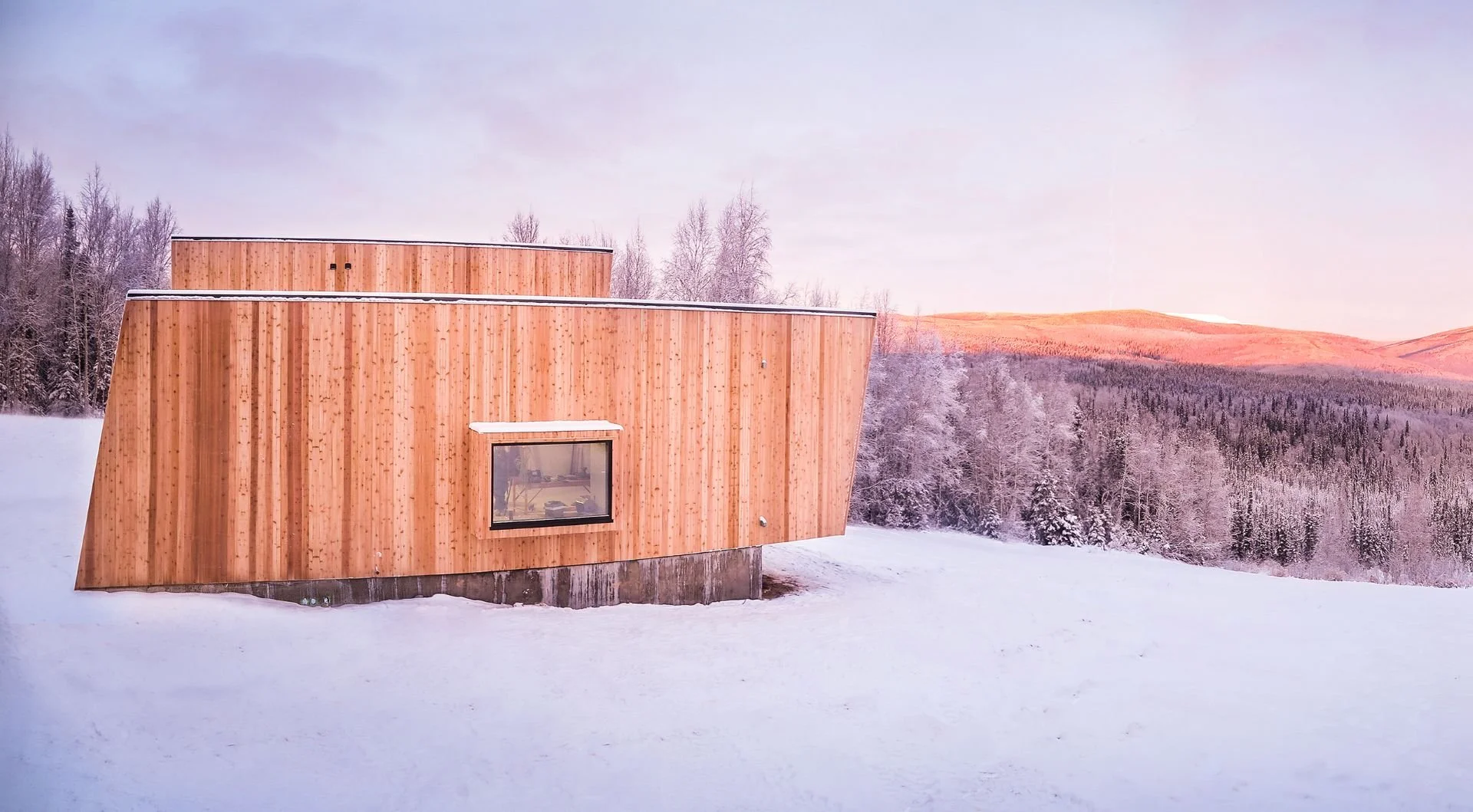
DESIGNED BY SPARANO + MOONEY ARCHITECTURE, HOTEL AURORA VILLA OPENS TO GUESTS IN FAIRBANKS, ALASKA
MARCH 31, 2019
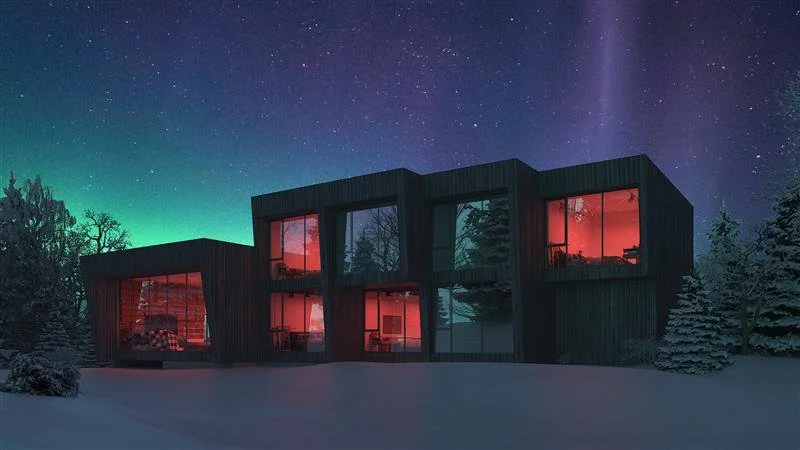
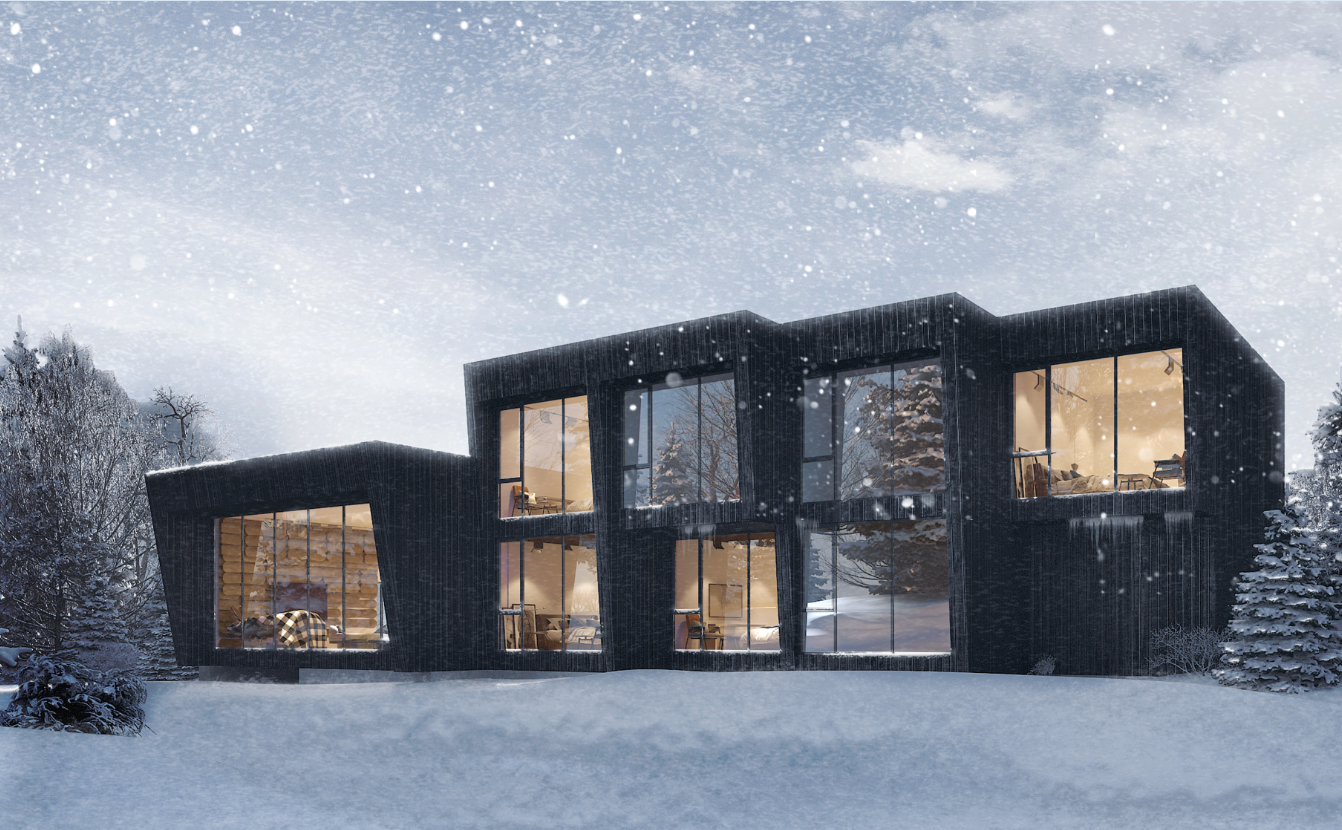
Ephemeral and enchanting, the Northern Lights have fascinated and haunted human beings with their spectral presence for millennia. However, only over the past decade has there been a distinct surge in international tourism to the remote and icy locales above the Arctic Circle where the Aurora Borealis can best be viewed and photographed. The recently opened Aurora Villa, a boutique hotel designed by the architects at Sparano + Mooney was created with the specific intention of viewing and experiencing the Borealis within the comfort and coziness of the lodge.
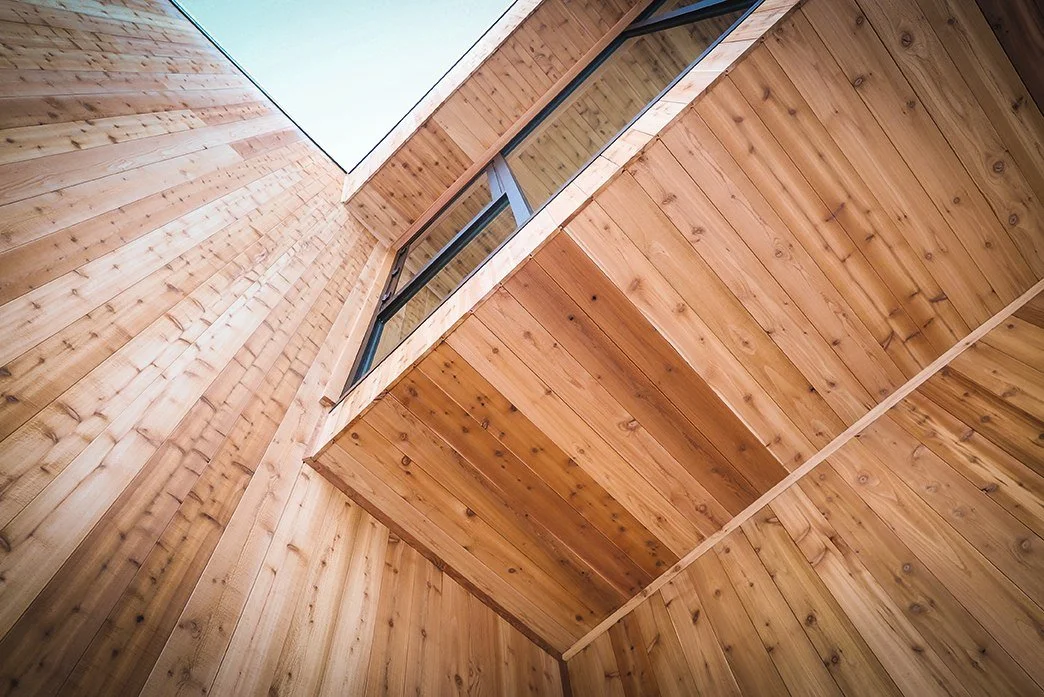
The Aurora Villa, located outside of Fairbanks, Alaska, is becoming known internationally as one of the best places in the world to view and photograph the Aurora Borealis. The modern resort project includes guest rooms and suites, public living spaces, a lobby and reception area, and dining space with large glazed openings oriented to the view of the northern lights. Outdoor spaces include decks for photography, a hot tub area and an entry court. Extreme climate conditions were considered during the development of the design and its sustainable aspects, incorporating a highly insulated building envelope and energy-efficient materials and systems.
SOURCES
-Williams, Ingrid K. “Drawn to the Lights.” The New York Times (Printed February 17, 2019)
https://www.nytimes.com/2019/02/11/travel/northern-lights-tourism-in-sweden.html (accessed February 17, 2019)

FLORENCE KNOLL
PIONEER OF MODERNIST DESIGN, FLORENCE KNOLL BASSETT DIES AT 101
JANUARY 31, 2019
If you were to take a quick look around Sparano + Mooney’s Salt Lake City office, there are a few things that immediately stand out about the space. We work in a converted industrial building with an open floorplan, strategic architectural embellishments have been added to the frame of the building, but very little has been done to the existing concrete floors and cinderblock walls. Individual work spaces comprised of sleek wooden furniture are situated along the walls, while a main counter where our team frequently gathers for meetings runs down the center of the main office space. In a word, our office is “modern.”
While this particular look and layout is increasingly prevalent throughout most contemporary office spaces, it primarily can be attributed to one mid-century designer, Florence Knoll Bassett who died earlier this week on January 25th at the age of 101. Our contemporary design landscape would look very different without her extensive input, influence and abiding philosophy of “total design” in regards to creating uniquely beautiful and utilitarian spaces.
Born on May 24, 1917 in Saginaw, Michigan, to Frederick and Mina Schust, Knoll’s maiden name formed the basis of her lifelong nickname, “Shu.” Knoll attended Cranbrook Academy of Art, overseen by Eliel Saarinen, who became her de-facto guardian after her father died at age five, and her mother at age 12. She would go on to continue her education at Columbia University, the Armour Institute of Technology and the Architectural Association of London. Knoll studied closely under such Modernist luminaries as Ludwig Mies van der Rohe, Walter Gropius and Marcel Breuer, and her extensive architectural training is evident throughout her holistic design process.
Shu began designing for Hans Knoll in 1943. Mr. Knoll was the third generation of a family of German furniture makers who sought to bring European Modernism to a burgeoning American market, and had started his own furniture company in New York in 1938. After Hans and Florence married in 1946, she became the true force and head of design of Knoll Associates and paved the way for modern American design to become an internationally recognized style. She was instrumental in van der Rohe’s Barcelona Chair becoming a cult object, she created fabric swatches which are utilized by every interior designer since, as well a multitude of other design tropes we use to this day. After Hans died in an automobile accident in 1955, Florence assumed the position of CEO as well as maintaining full artistic control until she stepped down from the company after 20 years in 1965.
Although Knoll formerly retired to Miami in 1965, she still maintained close ties to Knoll Inc, occasionally stepping in to fine-tune a design or offer her expert opinion on showrooms and products. As well as maintaining their status as ubiquitous fixtures in most modern offices and homes, Knoll’s work also resides in a number of museum collections, including the Philadelphia Museum of Art, the Museum of Modern Art and The Metropolitan Museum of Art. In true Knoll fashion, she also helped design the installation for her retrospective at the Philadelphia Museum of Art in 2004-2005, Florence Knoll Bassett: Defining Modern.
Knoll was the recipient of the prestigious Athena award granted by the Rhode Island School of Design in 1983, and was awarded the National Medal of the Arts in 2002 for her outstanding contributions to the field of architecture and design. Despite these accolades, Knoll’s most abiding legacy is of her gesamtkunstwerk ideal of creating beautifully functional spaces, of which we at Sparano + Mooney still enjoy and inspire us to this day.
EXHIBITION: NEHMA (COLLECTING)
NEHMA OPENS WITH EXHIBIT: Collecting on The Edge
SEPTEMBER 20, 2018
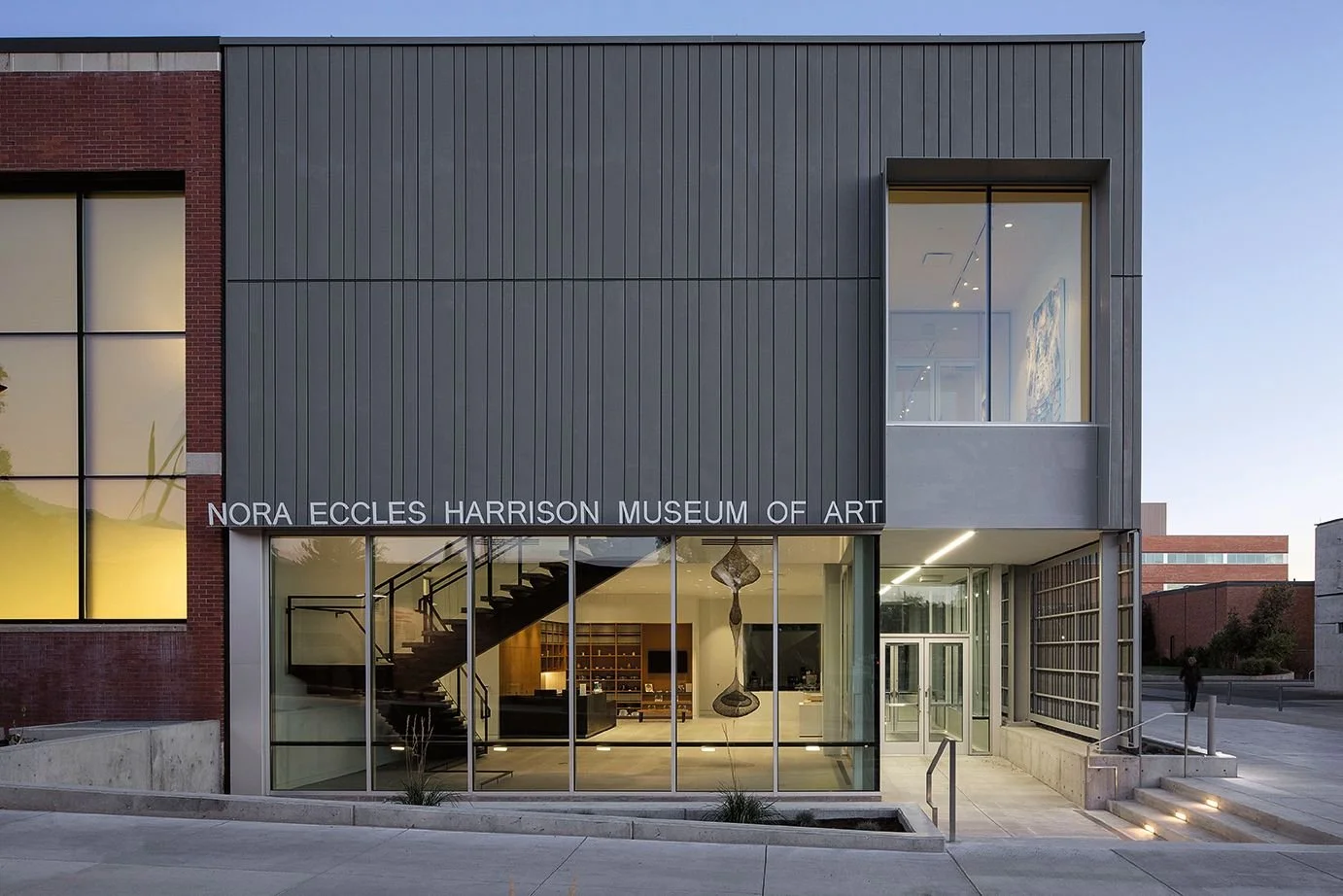
The moment is finally upon us! Sparano + Mooney Architecture’s re-design of the museum building for the Nora Eccles Harrison Museum of Art (NEHMA) in Logan, Utah is now open. NEHMA celebrated its grand re-opening last weekend, and our architects were honored to be in attendance. It was an incredible night filled with live music, gallery talks, fantastic artwork, great company and a tour of the museum architecture, of course! The current exhibit, Collecting on the Edge: Part 1 is on display now through December 15, and we must say – it is extraordinary. Collecting on the Edge: Part 2 will be showing next year January 17 through May 4. Collecting on the Edge features the work of 172 artists west of the Mississippi River since 1920.
Utah State University was able to originally construct NEHMA in 1982, through a generous donation made by Nora Eccles Treadwell Harrison. Over the past three decades, NEHMA has developed a one-of-a kind collection of modern artworks from the American West – works that have been largely overlooked in the mainstream art history narrative. George Wanlass, the great-nephew of Harrison, has been instrumental in developing this amazing design collection. His eye for artistic significance is impeccable – looking not at the monetary value of a piece, but instead its inherent quality and the context of its creation.
Educated on the history of modern Europe, Wanlass’ understanding reflects the evolution of contemporary culture. This understanding promotes his skill in deciphering the best works of art, many of which he has shared with the museum, with a focus on collecting significant pieces that he believes will either soon disappear, or become very costly. Wanlass loves researching, traveling, and meeting with collectors and artists in pursuit of obtaining these works for NEHMA.
The list of incredible artists showcased in this exhibit is extensive, but a small taste has been curated for your enjoyment below. Can’t make it to the museum for an in-person visit? A new book published by the museum, aptly named, Collecting on the Edge, is available for purchase through the University Press of Colorado & Utah State University Press and Amazon. We do hope you get the chance to witness this captivating exhibit! Feel free to contact us with any museum design inquires. We love being part of designing sustainable, beautiful architecture for the arts and cultural community!

LA MOCA WELCOMES NEW DIRECTOR
NEW AT LA MOCA (Museum of Contemporary Art): From NY to LA
SEPTEMBER 13, 2018
Klaus Biesenbach, the former director of MoMA PS1 in New York City, and Chief Curator at Large of MoMA, will become the new director of one of our architectural clients, The Museum of Contemporary Art in Los Angeles. Biesenbach reveals, “It is humbling to be invited to lead a museum that has already achieved so much, and that in so many ways represents the highest aspirations of contemporary art.”
Born in Germany, Biesenbach co-founded the Kunst-Werke (KW) Institute of Contemporary Art in Berlin – now one of the city’s most important arts institutions – and the Berlin Biennale. Starting as a curator in 1995 at PS1, Biesenbach became curator of MoMA’s film and media department after MoMA merged with PS1 in 2000. In 2009, after the film and media department split, he expanded the media half into the Department of Media and Performance Art. Under his recent direction, he has tripled MoMA PS1’s board member numbers and more than doubled its budget.
A few of Biesenbach’s many celebrated curatorial achievements include the piece from visual artist Pipilotti Rist, “Pour Your Body Out” (2008); MoMA’s Marina Abramovic retrospective, “The Artist is Present” (2010); and the launching of “Rockaway!” which features large-scale commissions by contemporary artists around Rockaway Beach in Queens. Contrarily, his 2015 “Björk” exhibition is evidence of his propensity for risk-taking. The now highly-regarded sculptor Sarah Sze, who was a recent United States representative at the Venice Biennale, was given an early opportunity decades ago by Biesenbach at the Berlin Biennale.
Biesenbach was chosen unanimously by MOCA’s board from a pool of nearly 40 candidates. In a statement from co-chairs of MOCA’s board, Maurice Marciano and Lilly Tartikoff Karatz expressed, “The Board is excited to welcome Klaus Biesenbach, one of the world’s most knowledgeable, wide-ranging, and innovative museum executives of contemporary art.” Considering Biesenbach’s track record, we see a bright future in store for MOCA and the thriving art and design scene in our city of Los Angeles.
PUBLICATION: MOUNTAIN LIVING
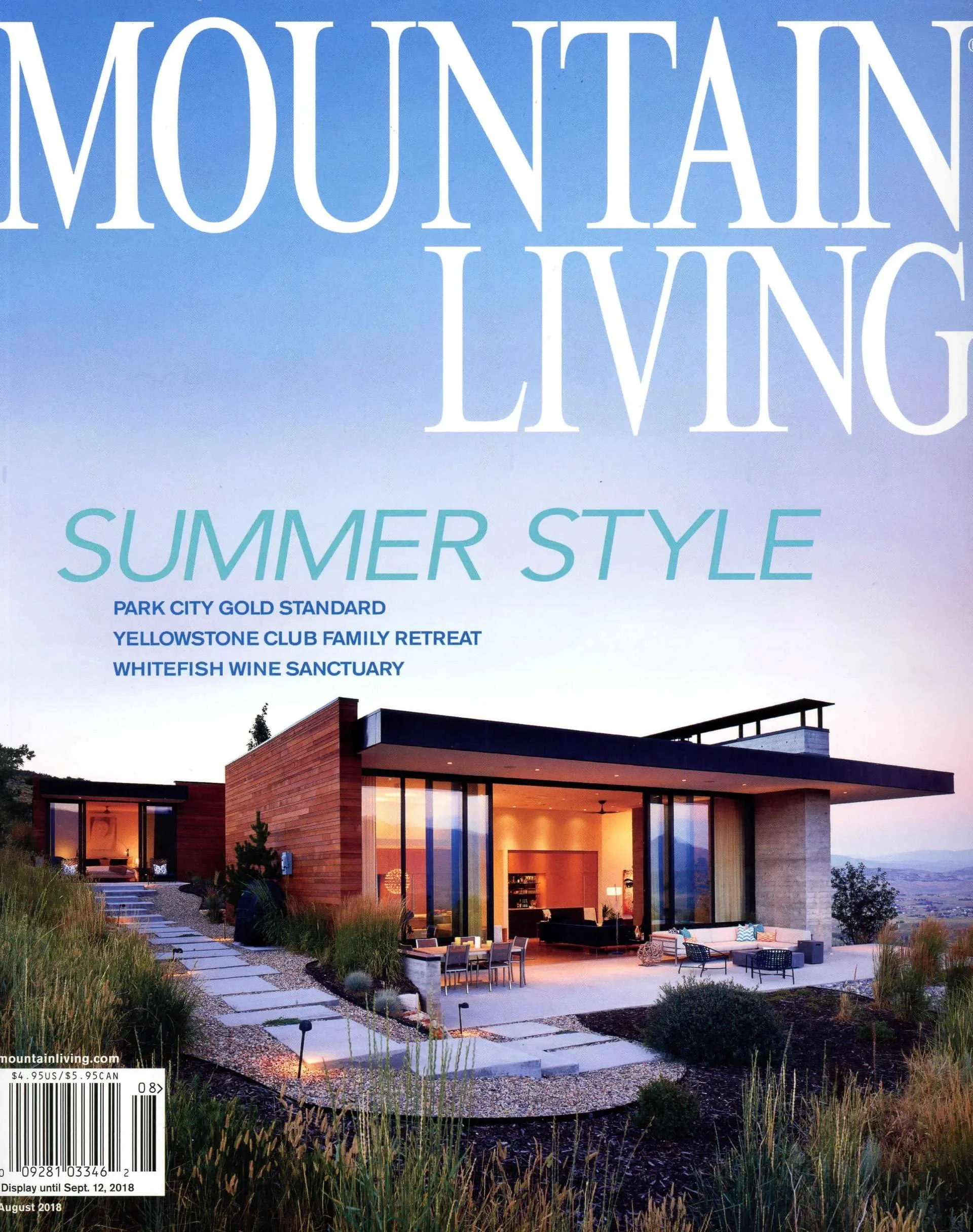
COVER STORY: Park City Mountain Modern Architecture
AUGUST 29, 2018
“Overall, the residence, designed to work with rather than dominate its site, simultaneously offers respite in its tranquility and drama in its openness to nature.”
— CHASE REYNOLDS EWALD
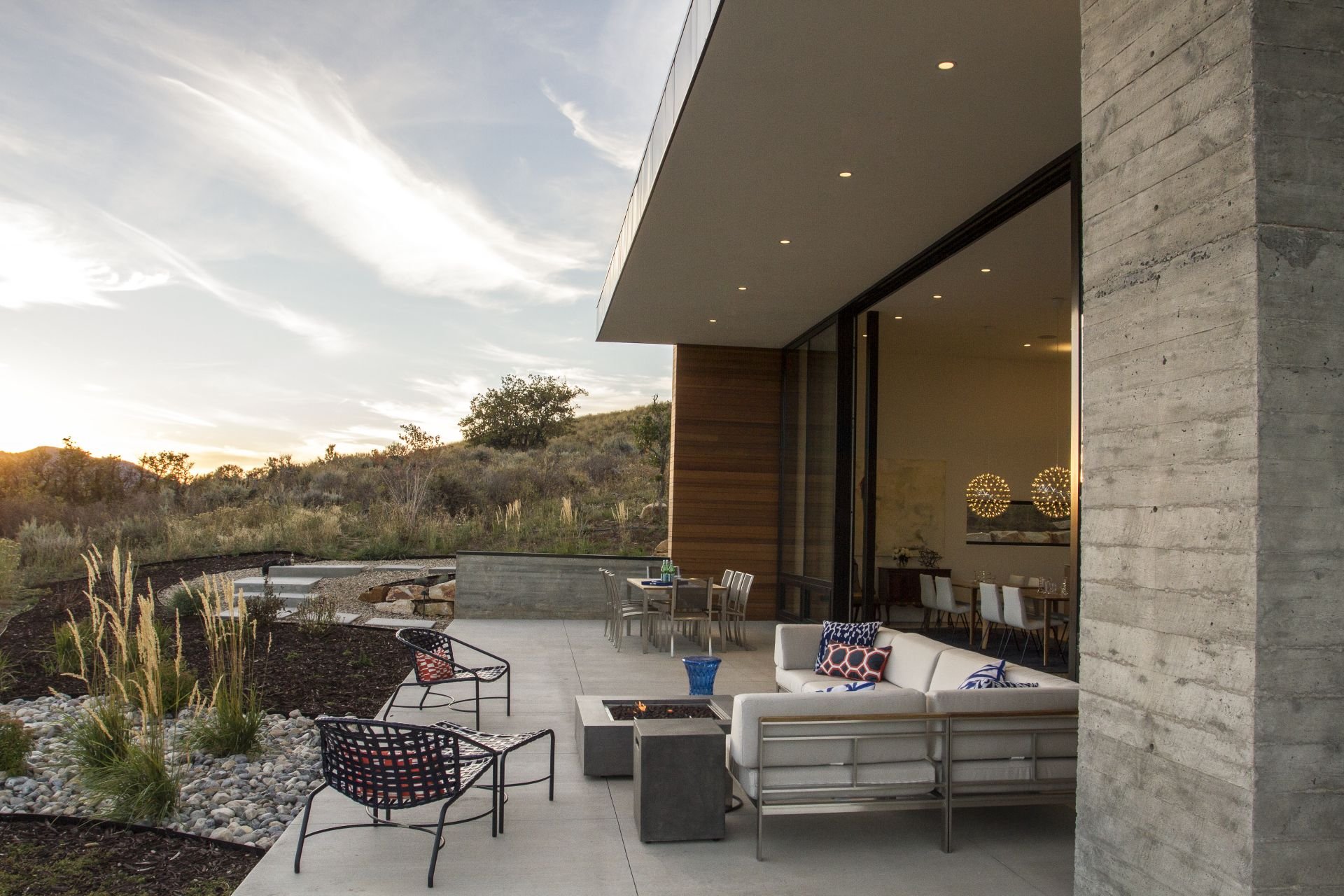
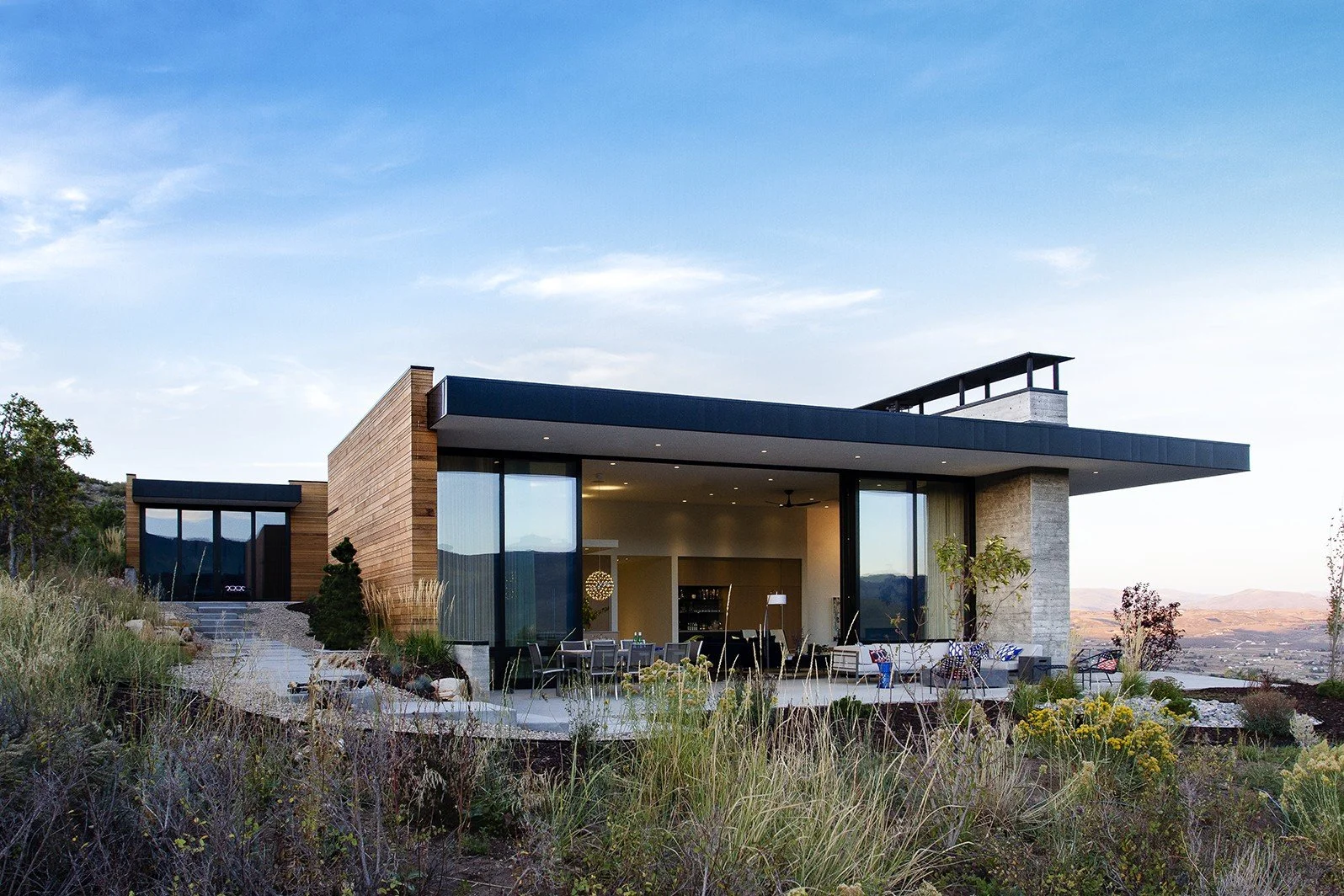
As residents of Park City for over a decade, Ken and Julie Chahine were ready for an architect to design their dream mountain home. The Chahine’s knew exactly what they wanted – modern architecture, sustainable design and energy efficient systems. Although modern homes in a mountain setting are still the exception, this is exactly what the couple was interested in pursuing. Julie has her own interior design business, J Squared Interiors, and the couple had been developing their style and design ideas over many years.
After selecting their home’s site, the Chahine’s decided reached out to Sparano + Mooney Architecture. As Julie explains, “I wanted someone who knew green building, who would get the details right and who would allow me to be part of the process.” (Thanks, Julie!) Their mountain site has quite a bit of topographic change but a wonderful southern orientation. Since the Chahine’s were interested in pursuing LEED certification for their home, the orientation was ideal for passive solar design which is a key strategy our architects use for maximizing energy efficiency. In this case both the views and the ideal orientation for the house aligned perfectly, allowing for both magnificent views of Park City and passive solar design.
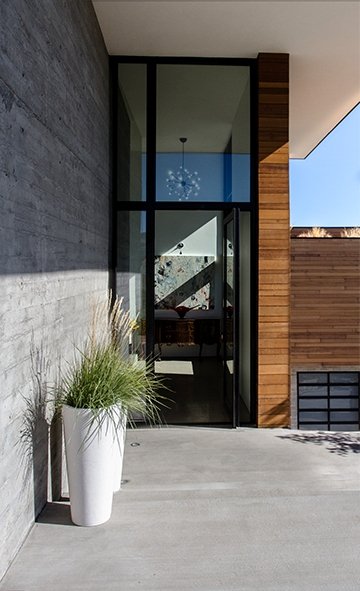
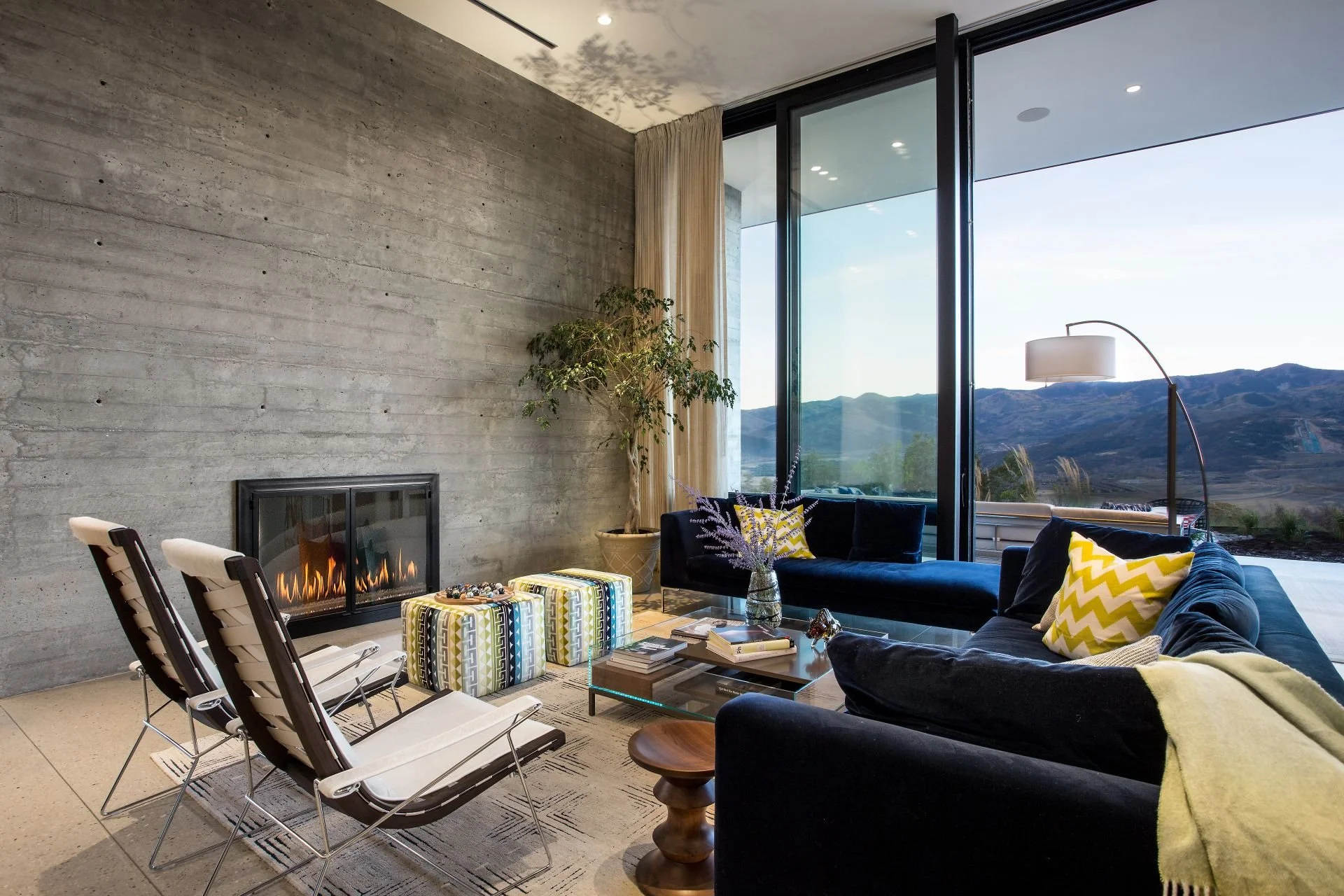
Architects Seth Striefel, Anne Mooney, and John Sparano worked to provide an efficient floor plan for the couple, which includes four bedrooms and two home offices. The architecture provides flexible spaces able to accommodate a crowd but also intimate spaces for the family. Key materials in the design include cedar wood, glass and board-formed concrete, which were inspired through a study of transparency, minimalism, and serenity. The home’s breathtaking views and seamless integration with the surrounding landscape are experienced through the expression and detail of materials. The massive 14-foot glass sliders provide uninterrupted exposure to far-reaching views including Park City Mountain Resort and the Utah Olympic Park ski jumps. The outdoors are accessed effortlessly through several terraces, including one from the main living/kitchen/dining area, the master bedroom and Ken’s office.
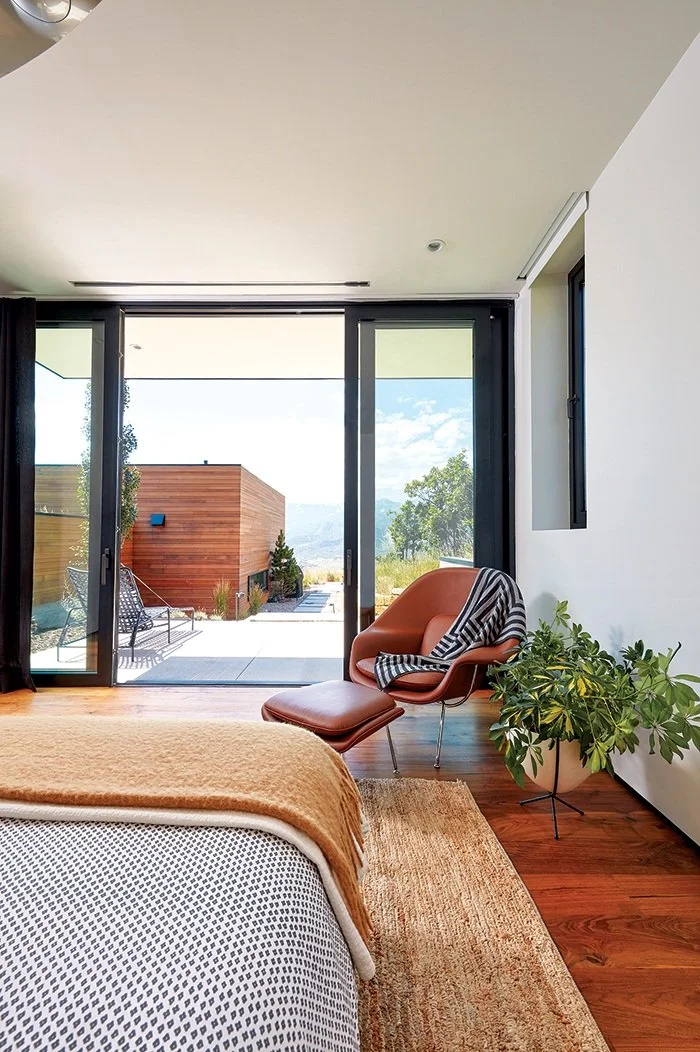
The home’s interiors are furnished with a blend of carefully selected modern pieces with treasured family antiques, and kept uncluttered for a minimalist vibe. Bedrooms are warmed by walnut floors and cozy textiles. Architect Anne Mooney, “One of the things I love about this project is that the architecture and interiors are speaking the same language. This was a great collaboration, even down to details, color schemes and artwork – all worked so perfectly with the architecture. Julie’s pallet came from nature, and our materiality did too.”
Sparano + Mooney Architecture enjoyed collaborating with the Chahine’s on this Park City residential project. Check out the full article by Chase Reynolds Ewald featured on the current cover of Mountain Living and/or on their website here. We look forward to showcasing more Mountain Modern architecture in Park City and other beautiful sites in the world!
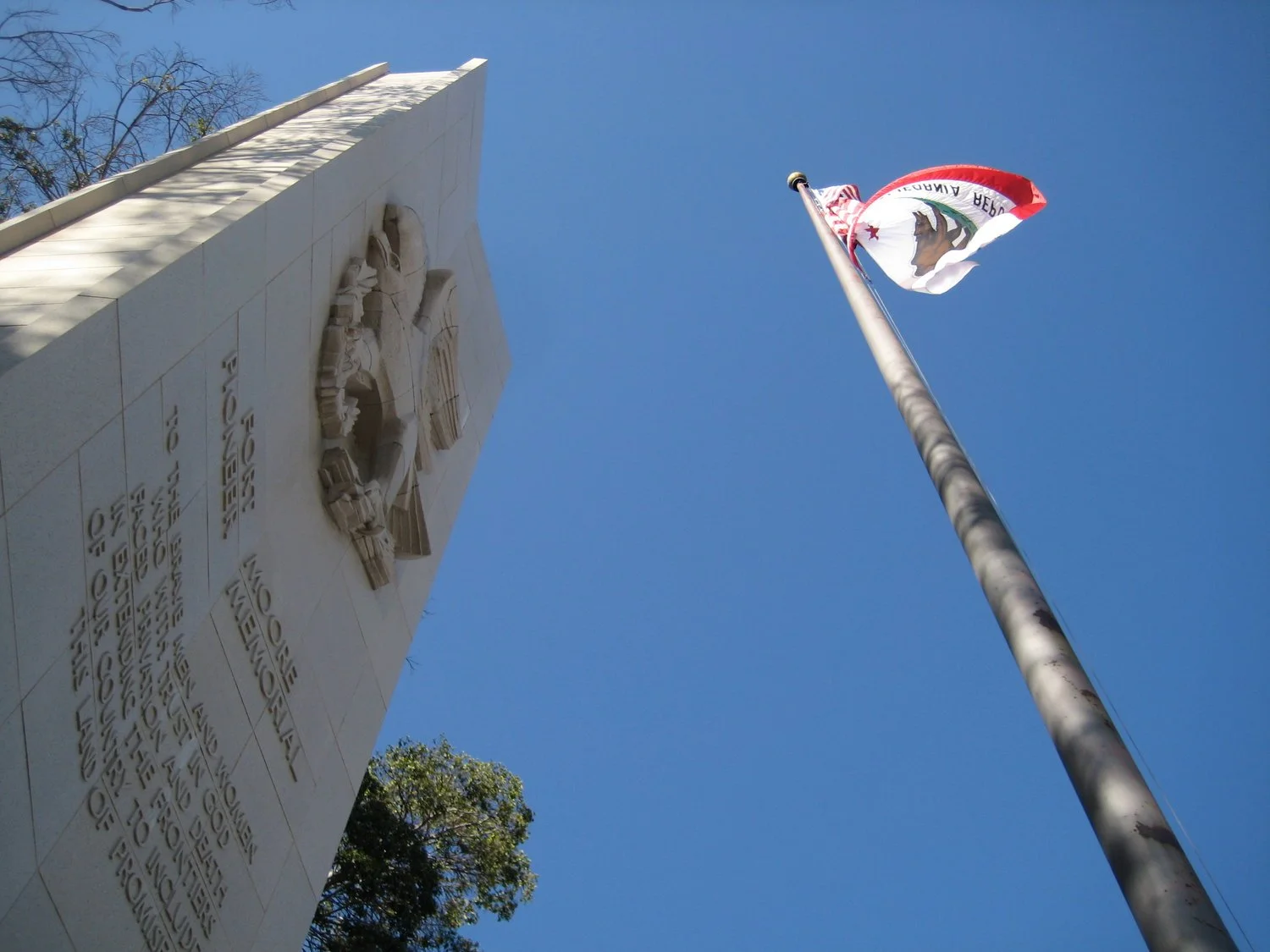
FORT MOORE TIME CAPSULE
ARCHITECTS’ UPDATE: Fort Moore Memorial Time Capsule Discovery
AUGUST 24, 2018
In July of 1957, residents of Los Angeles placed a time capsule in the Fort Moore Memorial monument. Almost 60 years later to the day, a time capsule was discovered in the flag pole base during the Fort Moore Memorial Restoration project the architects at Sparano + Mooney Architecture are currently working on.
A letter from the former president of San Francisco State College, Dr. Glenn Dumke, proposed a time capsule and a list of items to be included, but it was uncertain whether this was ever done. What a great surprise to discover the time capsule existed! Staff from the Department of Public Works and the Arts Commission found the time capsule. Art Conservator, Donna Williams, says it is unclear whether the items in the capsule are the items that were originally proposed.
The time capsule was made from several copper sheets, folded and soldered together to form a container. The materials and technique of making this container perfectly preserved all items, including photographs, documents, and a manuscript describing the memorial concept. Plans are in the works to digitize all items found in the time capsule for public viewing. Discussions are also underway to decide what to put into this generation’s time capsule, to be placed back in the same spot where the original one was found.
The Fort Moore Memorial in downtown Los Angeles, California marks the spot where residents first raised the American flag in 1847. Check out this link to the news story, and see if you can spot Sparano + Mooney Architecture Principal Ludwing Juarez and Associate Jorge Beltran in the video. What would you put in the time capsule for 2078 discovery?

VATICAN ENTRY TO VENICE BIENNALE
NEW VATICAN ENTRY TO THE ARCHITECTURE BIENNALE
AUGUST 01, 2018
Located on the quiet, secluded island of San Giorgio Maggiore lies the Vatican’s entry to this year’s Venice Architecture Biennale - bringing quite the transformation to the event. For one, this is the Vatican’s first entry into an architectural exhibition of this scale. Secondly, entries to the Architecture Biennale are usually models, renderings, and sketches of the building process by architects, while the Vatican’s entry is comprised of 10 built chapels. Professor Francesco Dal Co, the curator, was the driving force of the Vatican choice to pursue these built works as opposed to entering renderings. We hope architectural tourists reading this will have a chance to visit this year’s Biennale and see these spaces.
Professor Francesco Dal Co selected 12 contemporary architects from around the world that included 2 Pritzker Prize winners, Eduardo Souto de Mouro and Norman Foster, and invited them to submit designs for the chapels. The only bounds they were given to the architects is that the chapels have a pulpit and an altar, to represent the core of Christianity, which is “the word, and the bread and wine”. The architects were directed to the Swedish architect, Gunnar Aslpund’s “Woodland Chapel,” built almost a century ago, for their design inspiration. Professor Francesco Dal Co explains, “with this small masterpiece Asplund defined the chapel as a place of orientation, encounter and meditation, seemingly formed by chance or natural forces inside a vast forest, seen as the physical suggestion of the labyrinthine progress of life, the wandering of humankind as a prelude to the encounter.”
Aslpund’s “Woodland Chapel” drawings and model of the chapel is displayed at the entrance to the Vatican’s exhibit, in order to connect the viewer to the inspirational source guiding the architecture. The ties between this original work and the exhibition are carried over in the secluded nature of both and their distinction from everyday life. A visitor embarks on a pilgrimage of sorts, to even view these architectural installations. While chapels are usually placed in a center of civilization for the use of a community, these are placed in a secluded area, intertwined with nature, creating a compelling challenge for the architects.
The site, removed from the urban core, allows visitors to truly connect with nature. Cardinal Ravasi explanations a visit to the exhibit as, “a path for all who wish to rediscover beauty, silence, the interior and transcendent voice, the human fraternity of being together in the assembly of people, and the loneliness of the woodland where one can experience the rustle of nature which is like a cosmic temple.”
The variety of modern architectural style and interpretation of “chapel” is remarkable – ranging from Norman Foster’s skeletal wooden structure, to Francesco Cellini’s juncture of sleek, ceramic slabs. There is Terunobu Fujimori’s more traditional enclosed chapel, with seating and an illusion of the customary stained glass windows. While others are more interpretive, including Javier Corvalán Espinola’s chapel, a massive steel tripod apparatus, with a central hovering cross emitting a shadow cross on the ground. The most otherworldly chapel is Carla Juaçaba’s steel mirrored cross, which seemingly floats in mid-air. Cardinal Ravasi remarks, “These are true and proper temples in Christian worship, even if in a minor form compared with cathedrals, basilicas and churches.”
Although religious in context, this was not so much an attempt to spread the religiosity of chapels, as an attempt to bridge the gap between secularism and spirituality, between art and faith. A question remains as to whether this architecture will stay or go after the exhibition is over in November. There have already been requests to relocate them elsewhere, although Professor Dal Co would be happy to have them stay, suggesting they’d be a beacon of hospitality, an opportunity to share the peacefulness of the island to others, and benefit Venice’s economy. We find these structures an alluring ode to architecture’s ability to influence the meaning and purpose of faith.