ARCHITECTURE WITH PURPOSE
Architecture with Purpose: Designing Supportive Housing + Tiny Home Villages that Change Lives
July 30, 2026
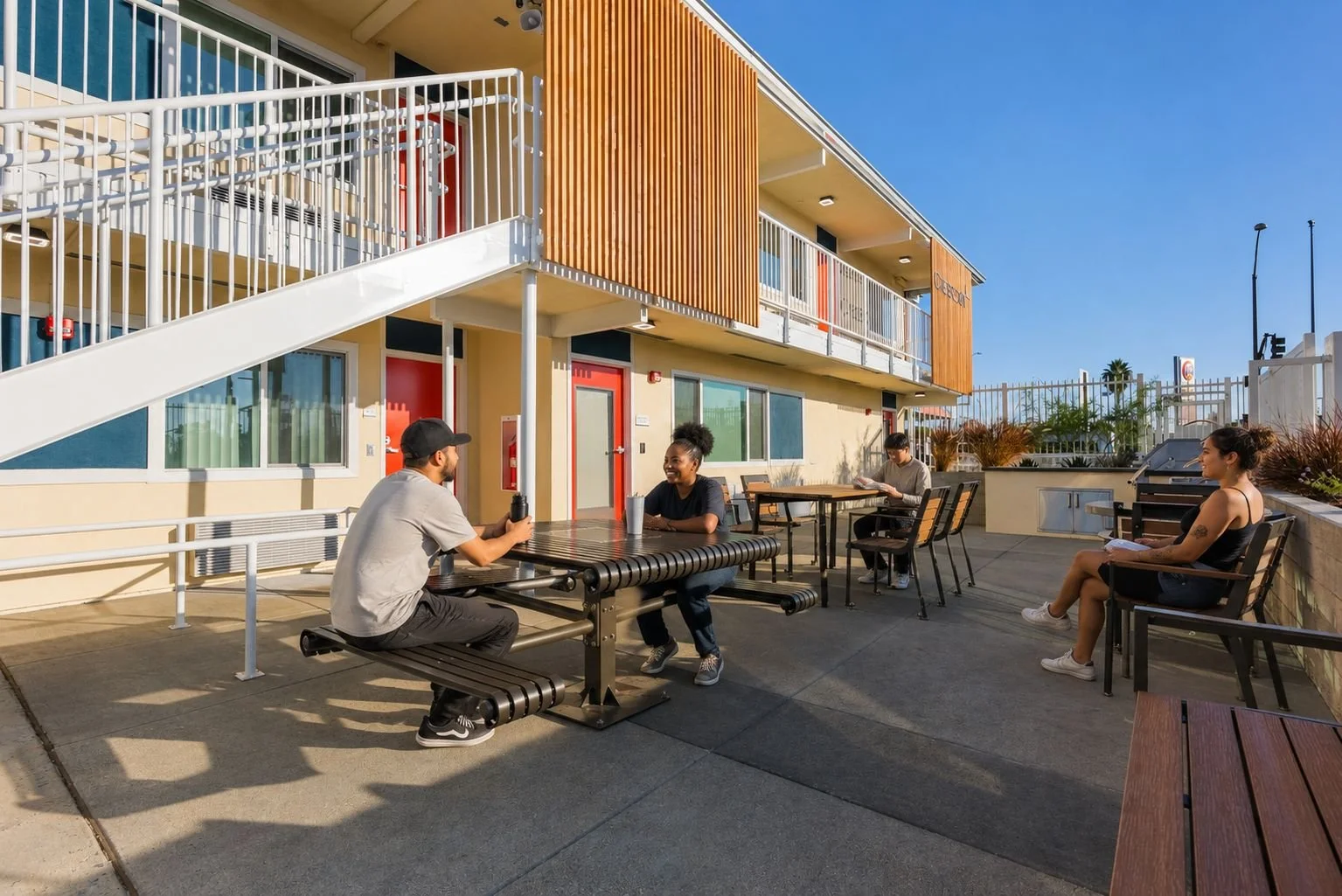
Project Homekey / Linc Housing - Crescent supportive housing; photo courtesy Imperial Contracting
Few challenges facing American cities today are as urgent (or as visible) as homelessness. In Los Angeles County alone, tens of thousands of people experience homelessness on any given night, while cities across the country continue to grapple with rising housing costs, economic instability, behavioral health challenges and a shortage of affordable homes. Solving this crisis requires coordinated public policy, social services, healthcare and sustained investment. It also requires thoughtful design.
At Sparano + Mooney Architecture, we believe design has an essential role to play in addressing homelessness. Over the past several years, we have worked with nonprofit organizations, municipalities and housing providers throughout Southern California – including the County of Los Angeles, City of Los Angeles, Brilliant Corners and Linc Housing – to transform underutilized properties into supportive housing and to create thoughtfully-designed tiny home villages that provide safe, dignified places for people to rebuild their lives.
While no single project can solve homelessness, every well-designed community creates opportunities for stability, recovery and hope.
More Than Shelter
Supportive housing is fundamentally different from emergency shelter. It combines permanent or transitional housing with wraparound services such as case management, mental health support, employment assistance, healthcare and life-skills training. The goal is not simply to provide a roof overhead but also to create the foundation for long-term success.
Architecture directly influences how successful these communities become. A well-designed project can foster safety, encourage social connection, preserve privacy, reduce operational costs and help residents regain a sense of ownership over their lives. Design decisions that may seem small – from natural daylight and outdoor gathering spaces to intuitive circulation and durable materials – can have profound effects on residents' physical and emotional well-being.
For individuals emerging from chronic homelessness, the built environment often represents their first opportunity in years to experience stability, dignity and permanence.
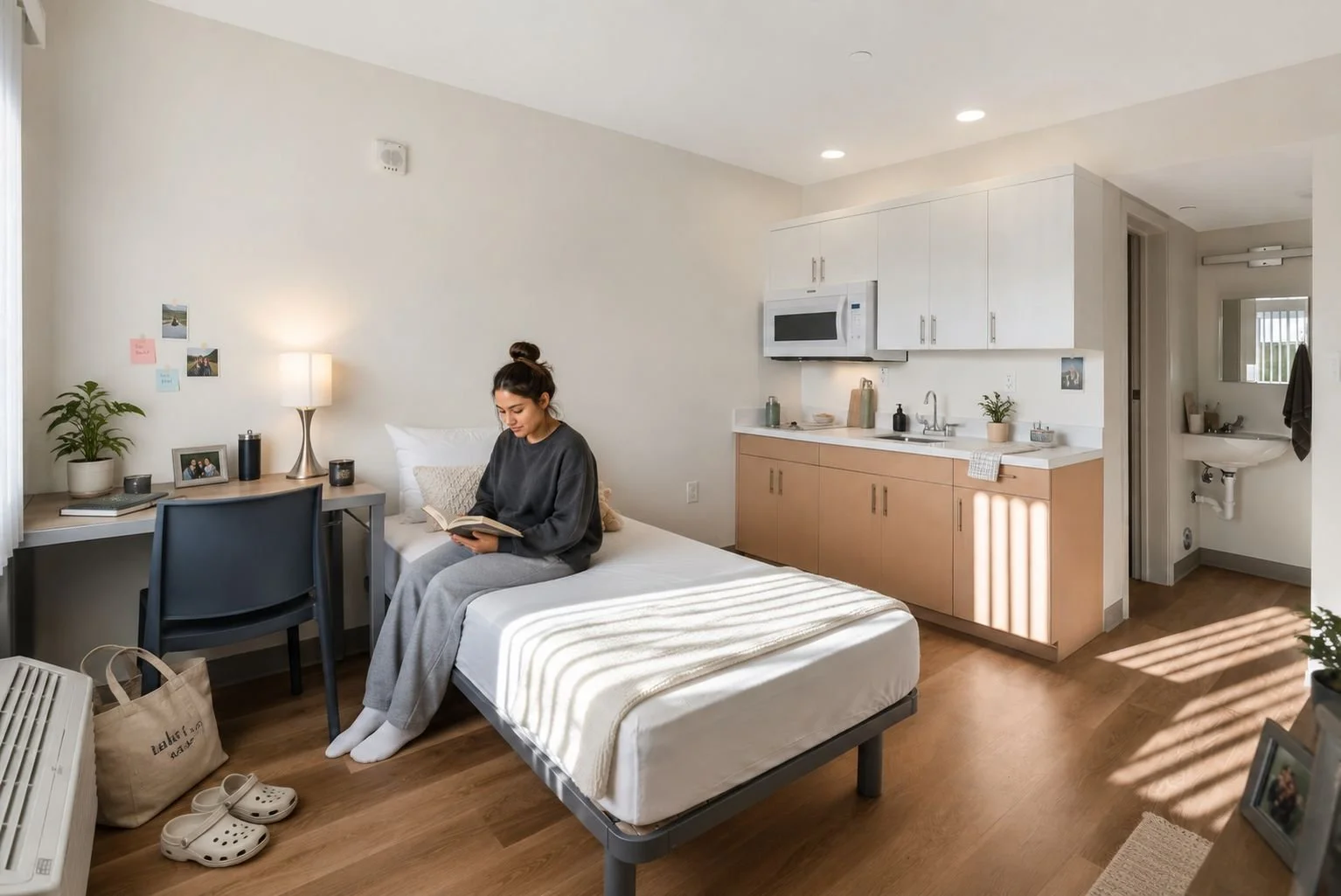
Project Homekey / Linc Housing - Crescent supportive housing; photo courtesy Imperial Contracting
Reimagining Existing Buildings
One of the most effective strategies for addressing the housing shortage is adaptive reuse. Rather than waiting years to construct new housing from the ground-up, many communities are converting existing hotels and motels into supportive housing, allowing residents to move in far more quickly while recycling existing infrastructure in a sustainable approach.
Our team has worked extensively on these complex renovation projects, transforming aging hospitality buildings into modern residential communities that meet current accessibility standards while providing comfortable, functional homes. These projects require careful coordination among architecture, engineering, accessibility specialists and service providers to create environments that support residents while making efficient use of limited public funding and resources.
Converting a motel into housing is far more involved than simply renovating guest rooms. Units must be redesigned for long-term living, kitchens added, building systems upgraded, accessibility barriers removed and common spaces reimagined to support counseling, community gathering and resident services (including amenities such as pet relief areas, bicycle storage and communal gardens).
The result is housing that is delivered more rapidly, more sustainably and often at a significantly lower cost than entirely new construction.
Tiny Home Villages as Transitional Communities
Tiny home villages have become another important tool in addressing homelessness, particularly for individuals transitioning from encampments or emergency shelters into permanent housing.
These communities provide private, secure sleeping accommodations while sharing communal kitchens, bathrooms, laundry facilities, outdoor spaces and support services. More importantly, they create neighborhoods rather than camps.
Successful tiny home villages depend on thoughtful planning. Site layout influences security and visibility. Shared outdoor spaces encourage community interaction without sacrificing privacy. Clear circulation improves accessibility and operations. Durable materials reduce maintenance costs while creating environments that residents can take pride in.
Our work has focused on balancing these operational requirements with the human experience, recognizing that every design decision contributes to residents' sense of belonging and safety.
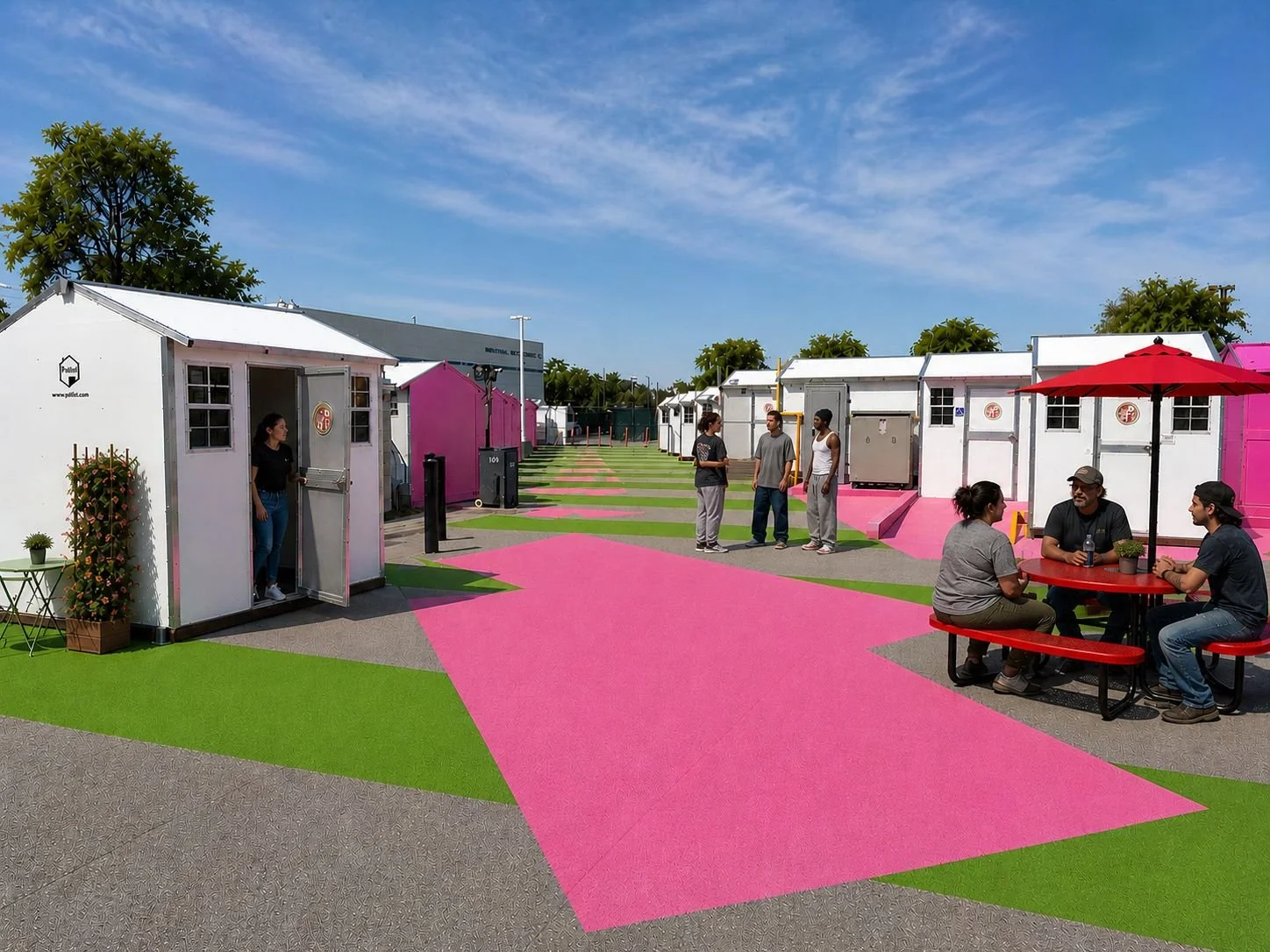
City of Los Angeles CD6 Sun Valley Metrolink Tiny Home Village
Designing with Dignity
People experiencing homelessness deserve the same quality of architecture as anyone else. Too often, affordable or supportive housing has historically been treated as purely functional infrastructure, where design quality becomes secondary to cost. We believe these goals are not mutually exclusive.
Thoughtful architecture can be both economical and inspiring. Natural light, carefully-scaled buildings, welcoming entries, resilient materials, landscaped outdoor spaces and intuitive wayfinding all contribute to healthier communities. These elements improve quality of life while also supporting the organizations responsible for operating and maintaining these facilities over the long term.
Equally important is universal accessibility. Many residents have mobility challenges, chronic health conditions and/or disabilities. Designing inclusive environments from the outset ensures that housing remains usable, welcoming and adaptable for everyone.
Building Stronger Communities
Supportive housing benefits entire communities, not just its residents. Research consistently demonstrates that stable housing reduces emergency room visits, decreases interactions with the criminal justice system, improves health outcomes and increases opportunities for employment and long-term independence. These outcomes translate into meaningful social and economic benefits for cities while improving neighborhood stability.
Architecture cannot replace social services, but it can amplify their effectiveness by creating environments specifically designed to support healing, connection and independence.
As architects, we have a responsibility to think beyond buildings. Every project should contribute positively to the larger community and reflect the values of inclusion, resilience and human dignity.
Looking Forward
The homelessness crisis did not develop overnight, and it will not be solved through any single strategy. It will require collaboration among public agencies, nonprofit organizations, developers, healthcare providers, community members and design professionals.
At Sparano + Mooney Architecture, we are proud to contribute our expertise to this effort. Whether transforming existing buildings into supportive housing or planning new tiny home communities, we approach every project with the understanding that architecture can do more than provide shelter: it can create opportunity.
Every resident deserves a safe place to call home; every neighborhood deserves thoughtful design; and every community benefits when architecture becomes part of the solution. By designing places that foster dignity, stability and belonging, we help create communities where people are not simply housed but are also given the opportunity to thrive.
