A STADIUM FOR THE TREES
A STADIUM FOR THE TREES
SEPTEMBER 18, 2019
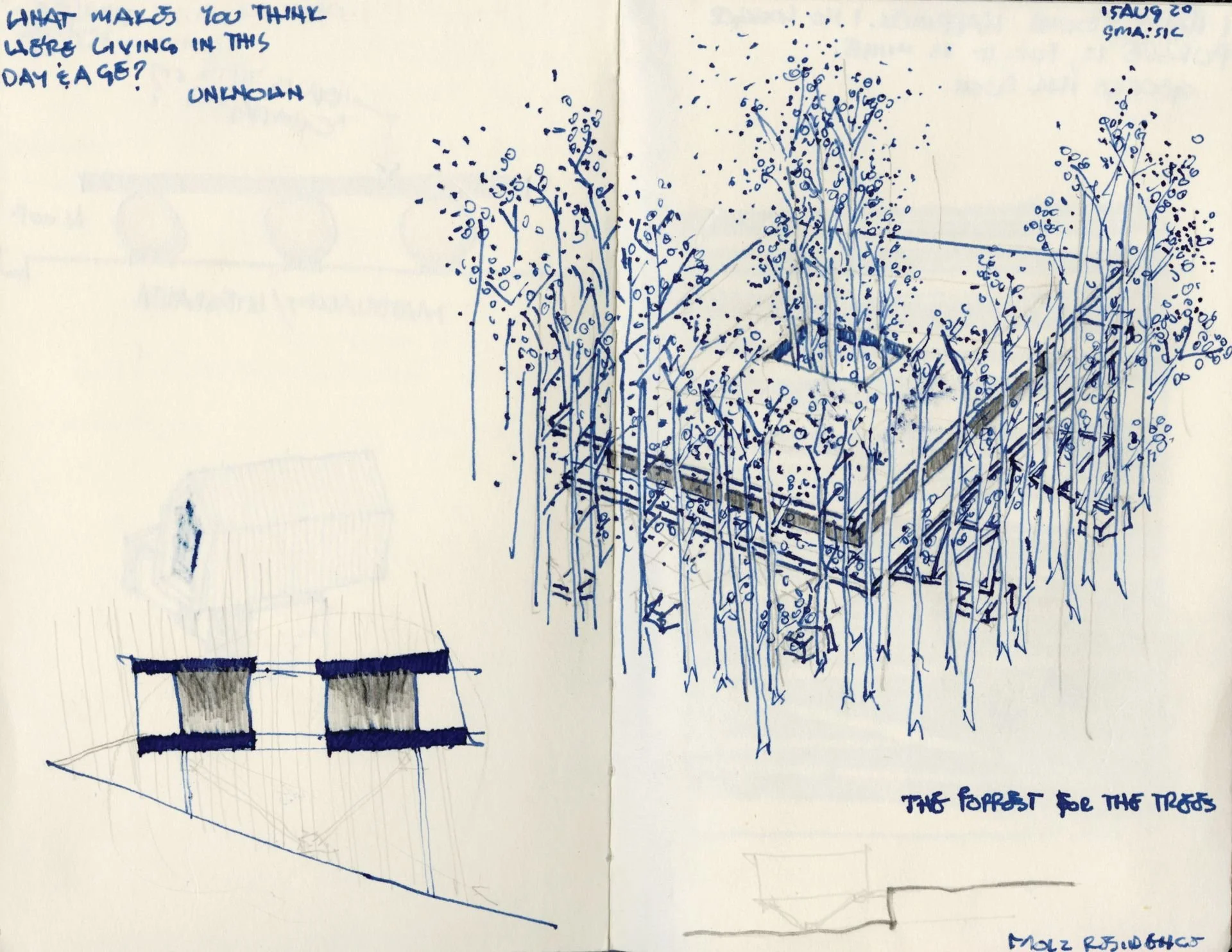
The drawing depicts a common modern scenario, a vast urban stadium – architecture densely packed with spectators. But instead of an athletic event, the stadium looks onto a grove of trees, planted in the center of the field. The wooded area is a direct juxtaposition to the teaming skyline behind it, visible just above the rim of the stadium. Skyscrapers, cranes, and billowing smoke render the cityscape as a dynamic engine of growth and development. By contrast, the forest is still, even contemplative.
From now until the 27th of October in Klagenfurt, Austria, you can witness this drawing brought to life. Installed in Wörthersee Stadion, three hundred trees have been planted on the pitch of the stadium, a direct manifestation of Max Peintner’s dystopic image. The project, conceived by contemporary Austrian curator, Klaus Littmann is the largest and most complex public art installation in Austria to date.
Many of the species of trees chosen to be planted, including silver birch, alder, aspen, white willow, hornbeam, field maple, and common oak are currently subject to population decline due to deforestation and climate change. After the installation, the trees will be relocated and replanted nearby the stadium, beginning a second life as a “living sculpture.”
Landscape architects, Enea Landscape Architecture, is responsible for the design concept for the trees currently installed in the stadium, and the design of the permanent forest.
AURORA VILLA OPENS
DESIGNED BY SPARANO + MOONEY ARCHITECTURE, HOTEL AURORA VILLA OPENS TO GUESTS IN FAIRBANKS, ALASKA
MARCH 31, 2019
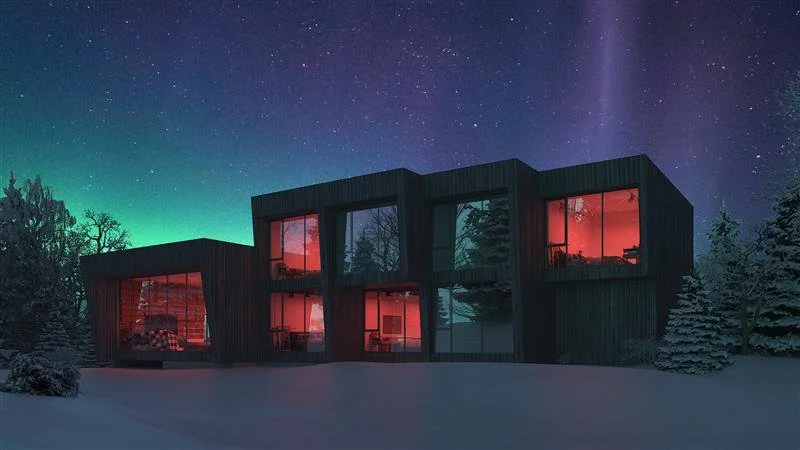
Ephemeral and enchanting, the Northern Lights have fascinated and haunted human beings with their spectral presence for millennia. However, only over the past decade has there been a distinct surge in international tourism to the remote and icy locales above the Arctic Circle where the Aurora Borealis can best be viewed and photographed. The recently opened Aurora Villa, a boutique hotel designed by the architects at Sparano + Mooney was created with the specific intention of viewing and experiencing the Borealis within the comfort and coziness of the lodge.
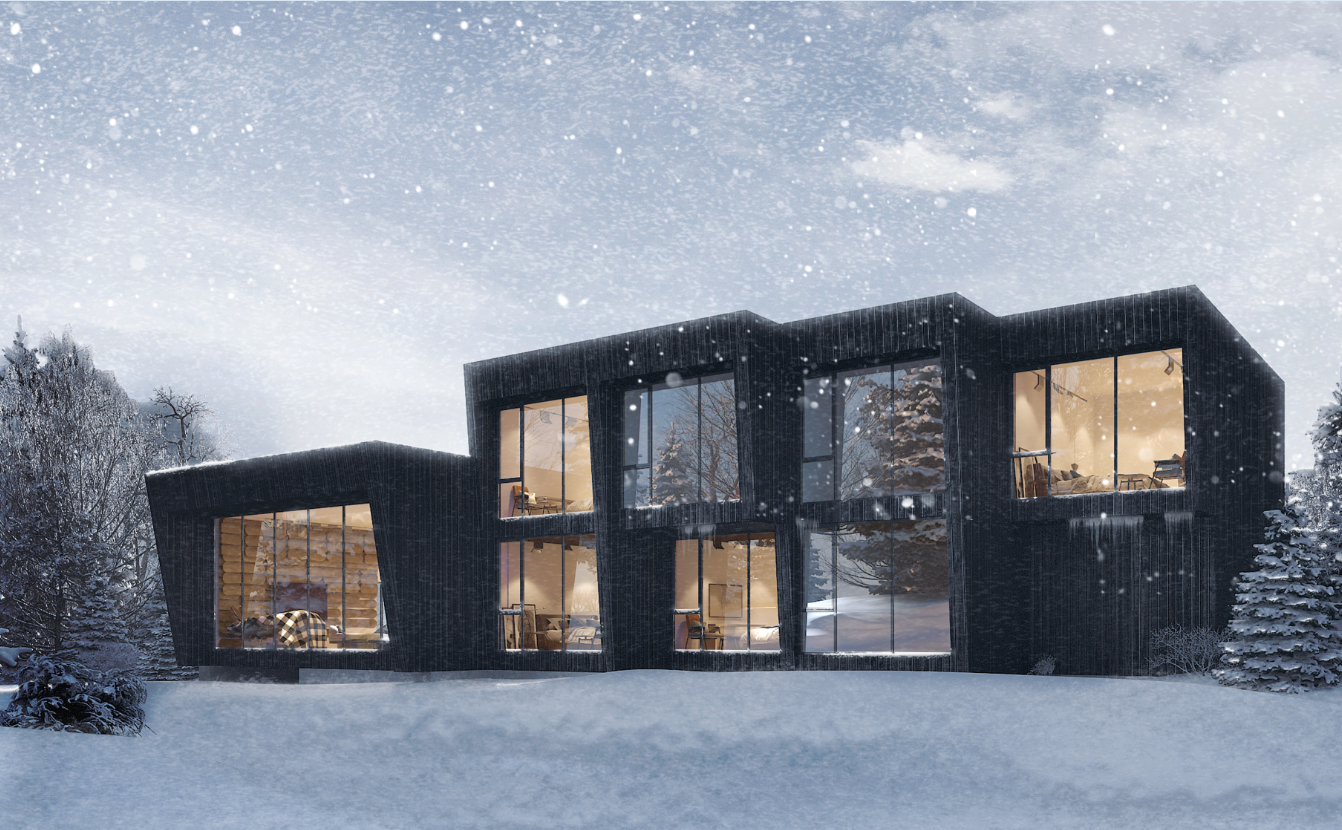
The Aurora Villa, located outside of Fairbanks, Alaska, is becoming known internationally as one of the best places in the world to view and photograph the Aurora Borealis. The modern resort project includes guest rooms and suites, public living spaces, a lobby and reception area, and dining space with large glazed openings oriented to the view of the northern lights. Outdoor spaces include decks for photography, a hot tub area and an entry court. Extreme climate conditions were considered during the development of the design and its sustainable aspects, incorporating a highly insulated building envelope and energy-efficient materials and systems.
SOURCES
-Williams, Ingrid K. “Drawn to the Lights.” The New York Times (Printed February 17, 2019)
https://www.nytimes.com/2019/02/11/travel/northern-lights-tourism-in-sweden.html (accessed February 17, 2019)

FLORENCE KNOLL
PIONEER OF MODERNIST DESIGN, FLORENCE KNOLL BASSETT DIES AT 101
JANUARY 31, 2019
If you were to take a quick look around Sparano + Mooney’s Salt Lake City office, there are a few things that immediately stand out about the space. We work in a converted industrial building with an open floorplan, strategic architectural embellishments have been added to the frame of the building, but very little has been done to the existing concrete floors and cinderblock walls. Individual work spaces comprised of sleek wooden furniture are situated along the walls, while a main counter where our team frequently gathers for meetings runs down the center of the main office space. In a word, our office is “modern.”
While this particular look and layout is increasingly prevalent throughout most contemporary office spaces, it primarily can be attributed to one mid-century designer, Florence Knoll Bassett who died earlier this week on January 25th at the age of 101. Our contemporary design landscape would look very different without her extensive input, influence and abiding philosophy of “total design” in regards to creating uniquely beautiful and utilitarian spaces.
Born on May 24, 1917 in Saginaw, Michigan, to Frederick and Mina Schust, Knoll’s maiden name formed the basis of her lifelong nickname, “Shu.” Knoll attended Cranbrook Academy of Art, overseen by Eliel Saarinen, who became her de-facto guardian after her father died at age five, and her mother at age 12. She would go on to continue her education at Columbia University, the Armour Institute of Technology and the Architectural Association of London. Knoll studied closely under such Modernist luminaries as Ludwig Mies van der Rohe, Walter Gropius and Marcel Breuer, and her extensive architectural training is evident throughout her holistic design process.
Shu began designing for Hans Knoll in 1943. Mr. Knoll was the third generation of a family of German furniture makers who sought to bring European Modernism to a burgeoning American market, and had started his own furniture company in New York in 1938. After Hans and Florence married in 1946, she became the true force and head of design of Knoll Associates and paved the way for modern American design to become an internationally recognized style. She was instrumental in van der Rohe’s Barcelona Chair becoming a cult object, she created fabric swatches which are utilized by every interior designer since, as well a multitude of other design tropes we use to this day. After Hans died in an automobile accident in 1955, Florence assumed the position of CEO as well as maintaining full artistic control until she stepped down from the company after 20 years in 1965.
Although Knoll formerly retired to Miami in 1965, she still maintained close ties to Knoll Inc, occasionally stepping in to fine-tune a design or offer her expert opinion on showrooms and products. As well as maintaining their status as ubiquitous fixtures in most modern offices and homes, Knoll’s work also resides in a number of museum collections, including the Philadelphia Museum of Art, the Museum of Modern Art and The Metropolitan Museum of Art. In true Knoll fashion, she also helped design the installation for her retrospective at the Philadelphia Museum of Art in 2004-2005, Florence Knoll Bassett: Defining Modern.
Knoll was the recipient of the prestigious Athena award granted by the Rhode Island School of Design in 1983, and was awarded the National Medal of the Arts in 2002 for her outstanding contributions to the field of architecture and design. Despite these accolades, Knoll’s most abiding legacy is of her gesamtkunstwerk ideal of creating beautifully functional spaces, of which we at Sparano + Mooney still enjoy and inspire us to this day.
EXHIBITION: NEHMA (COLLECTING)
NEHMA OPENS WITH EXHIBIT: Collecting on The Edge
SEPTEMBER 20, 2018
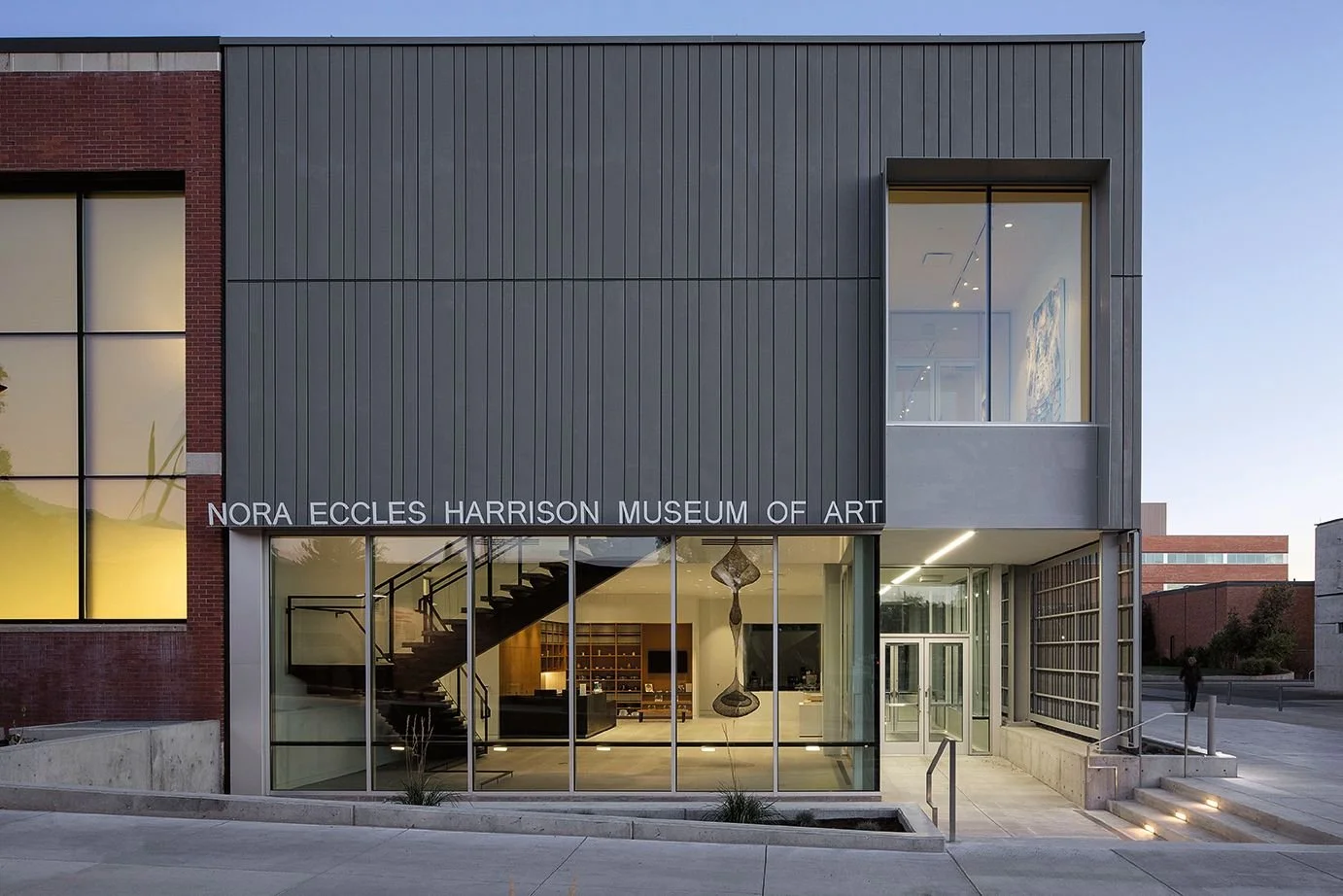
The moment is finally upon us! Sparano + Mooney Architecture’s re-design of the museum building for the Nora Eccles Harrison Museum of Art (NEHMA) in Logan, Utah is now open. NEHMA celebrated its grand re-opening last weekend, and our architects were honored to be in attendance. It was an incredible night filled with live music, gallery talks, fantastic artwork, great company and a tour of the museum architecture, of course! The current exhibit, Collecting on the Edge: Part 1 is on display now through December 15, and we must say – it is extraordinary. Collecting on the Edge: Part 2 will be showing next year January 17 through May 4. Collecting on the Edge features the work of 172 artists west of the Mississippi River since 1920.
Utah State University was able to originally construct NEHMA in 1982, through a generous donation made by Nora Eccles Treadwell Harrison. Over the past three decades, NEHMA has developed a one-of-a kind collection of modern artworks from the American West – works that have been largely overlooked in the mainstream art history narrative. George Wanlass, the great-nephew of Harrison, has been instrumental in developing this amazing design collection. His eye for artistic significance is impeccable – looking not at the monetary value of a piece, but instead its inherent quality and the context of its creation.
Educated on the history of modern Europe, Wanlass’ understanding reflects the evolution of contemporary culture. This understanding promotes his skill in deciphering the best works of art, many of which he has shared with the museum, with a focus on collecting significant pieces that he believes will either soon disappear, or become very costly. Wanlass loves researching, traveling, and meeting with collectors and artists in pursuit of obtaining these works for NEHMA.
The list of incredible artists showcased in this exhibit is extensive, but a small taste has been curated for your enjoyment below. Can’t make it to the museum for an in-person visit? A new book published by the museum, aptly named, Collecting on the Edge, is available for purchase through the University Press of Colorado & Utah State University Press and Amazon. We do hope you get the chance to witness this captivating exhibit! Feel free to contact us with any museum design inquires. We love being part of designing sustainable, beautiful architecture for the arts and cultural community!

LA MOCA WELCOMES NEW DIRECTOR
NEW AT LA MOCA (Museum of Contemporary Art): From NY to LA
SEPTEMBER 13, 2018
Klaus Biesenbach, the former director of MoMA PS1 in New York City, and Chief Curator at Large of MoMA, will become the new director of one of our architectural clients, The Museum of Contemporary Art in Los Angeles. Biesenbach reveals, “It is humbling to be invited to lead a museum that has already achieved so much, and that in so many ways represents the highest aspirations of contemporary art.”
Born in Germany, Biesenbach co-founded the Kunst-Werke (KW) Institute of Contemporary Art in Berlin – now one of the city’s most important arts institutions – and the Berlin Biennale. Starting as a curator in 1995 at PS1, Biesenbach became curator of MoMA’s film and media department after MoMA merged with PS1 in 2000. In 2009, after the film and media department split, he expanded the media half into the Department of Media and Performance Art. Under his recent direction, he has tripled MoMA PS1’s board member numbers and more than doubled its budget.
A few of Biesenbach’s many celebrated curatorial achievements include the piece from visual artist Pipilotti Rist, “Pour Your Body Out” (2008); MoMA’s Marina Abramovic retrospective, “The Artist is Present” (2010); and the launching of “Rockaway!” which features large-scale commissions by contemporary artists around Rockaway Beach in Queens. Contrarily, his 2015 “Björk” exhibition is evidence of his propensity for risk-taking. The now highly-regarded sculptor Sarah Sze, who was a recent United States representative at the Venice Biennale, was given an early opportunity decades ago by Biesenbach at the Berlin Biennale.
Biesenbach was chosen unanimously by MOCA’s board from a pool of nearly 40 candidates. In a statement from co-chairs of MOCA’s board, Maurice Marciano and Lilly Tartikoff Karatz expressed, “The Board is excited to welcome Klaus Biesenbach, one of the world’s most knowledgeable, wide-ranging, and innovative museum executives of contemporary art.” Considering Biesenbach’s track record, we see a bright future in store for MOCA and the thriving art and design scene in our city of Los Angeles.
PUBLICATION: MOUNTAIN LIVING
COVER STORY: Park City Mountain Modern Architecture
AUGUST 29, 2018
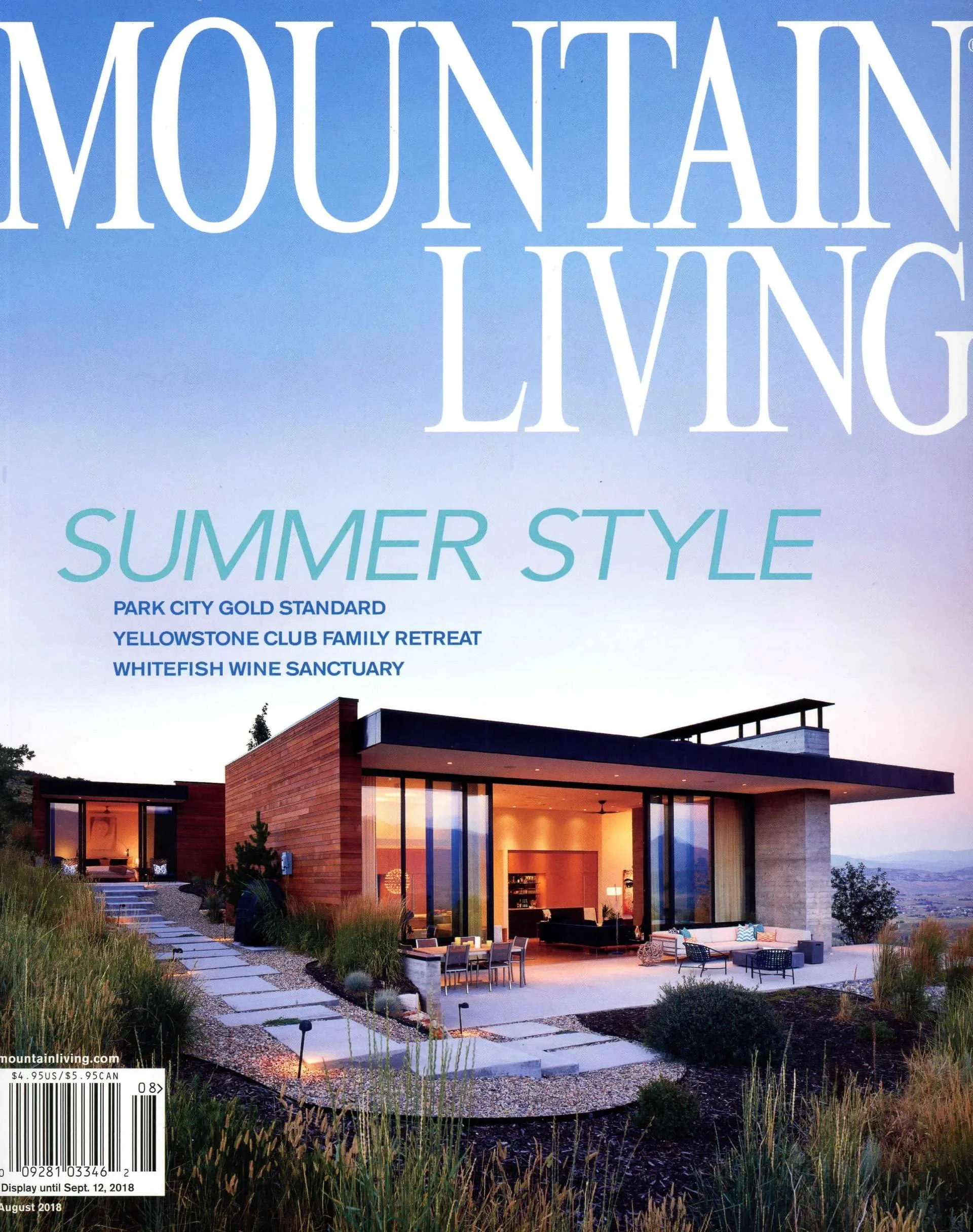
“Overall, the residence, designed to work with rather than dominate its site, simultaneously offers respite in its tranquility and drama in its openness to nature.”
— CHASE REYNOLDS EWALD
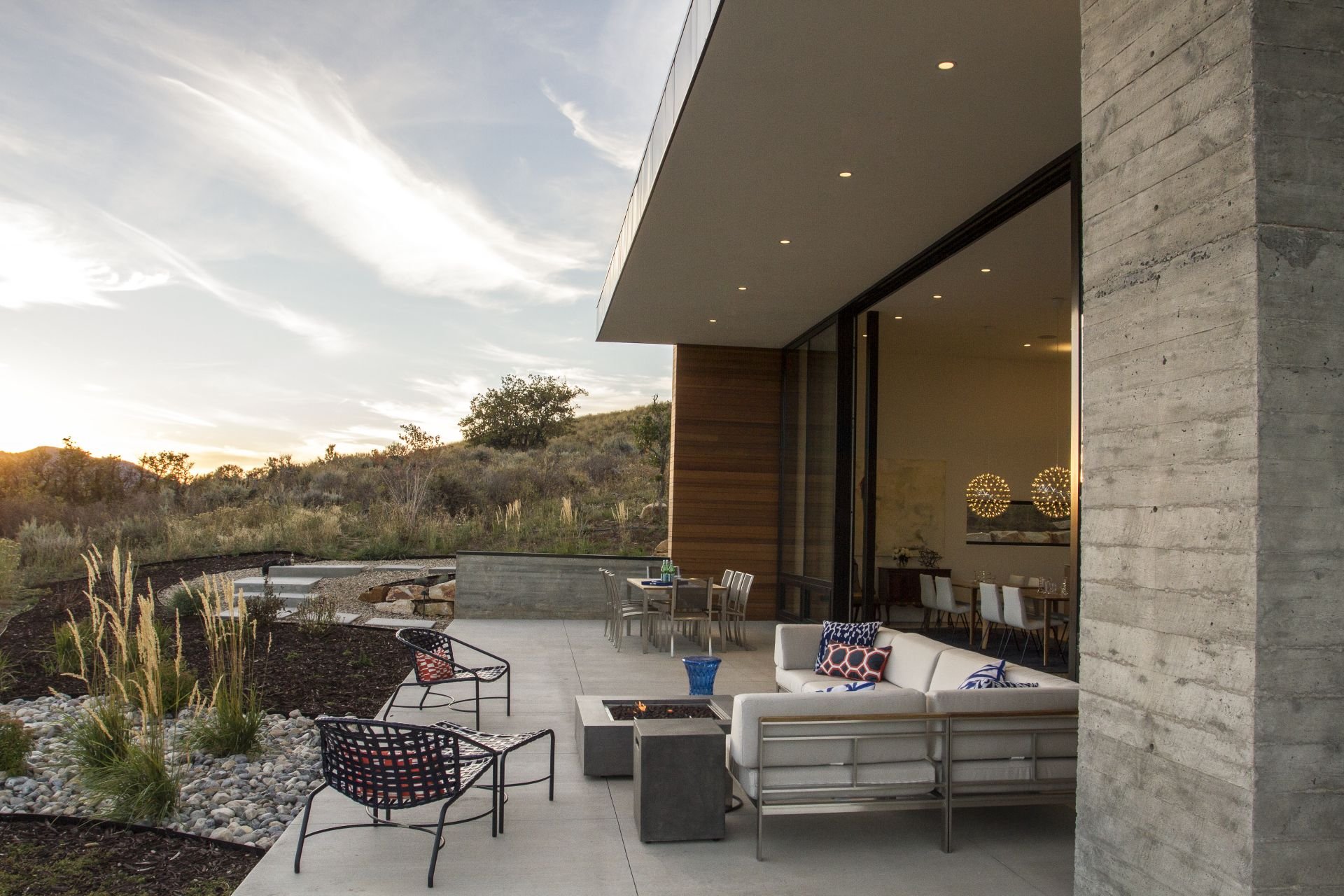
As residents of Park City for over a decade, Ken and Julie Chahine were ready for an architect to design their dream mountain home. The Chahine’s knew exactly what they wanted – modern architecture, sustainable design and energy efficient systems. Although modern homes in a mountain setting are still the exception, this is exactly what the couple was interested in pursuing. Julie has her own interior design business, J Squared Interiors, and the couple had been developing their style and design ideas over many years.
After selecting their home’s site, the Chahine’s decided reached out to Sparano + Mooney Architecture. As Julie explains, “I wanted someone who knew green building, who would get the details right and who would allow me to be part of the process.” (Thanks, Julie!) Their mountain site has quite a bit of topographic change but a wonderful southern orientation. Since the Chahine’s were interested in pursuing LEED certification for their home, the orientation was ideal for passive solar design which is a key strategy our architects use for maximizing energy efficiency. In this case both the views and the ideal orientation for the house aligned perfectly, allowing for both magnificent views of Park City and passive solar design.
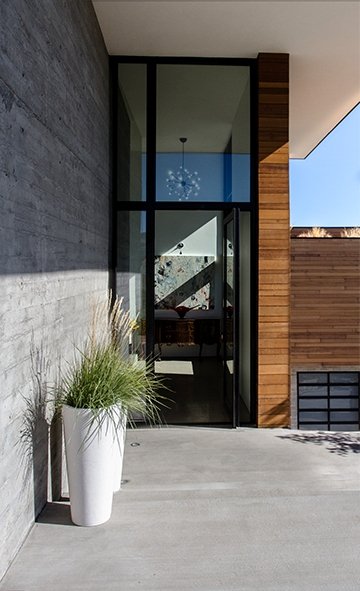
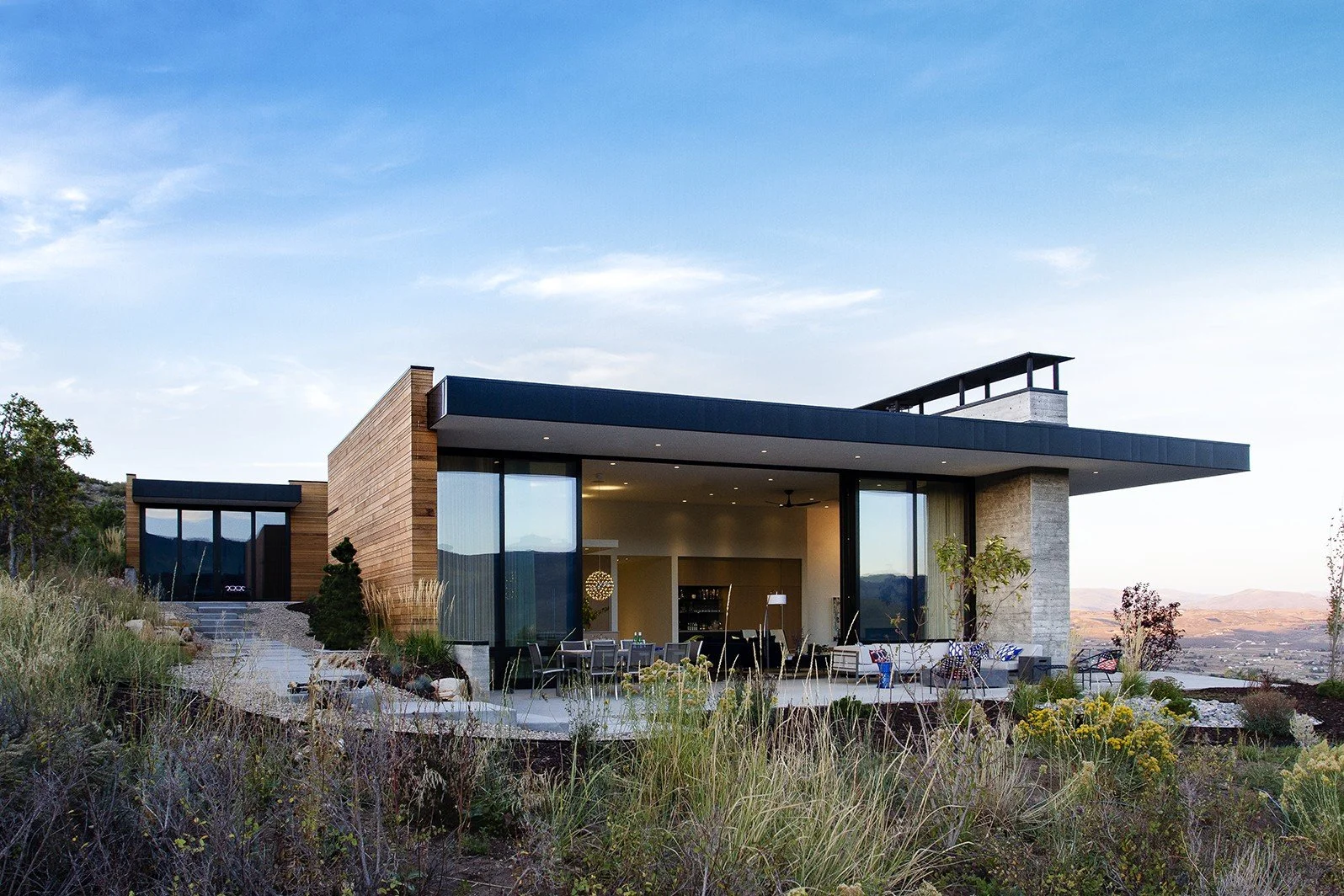
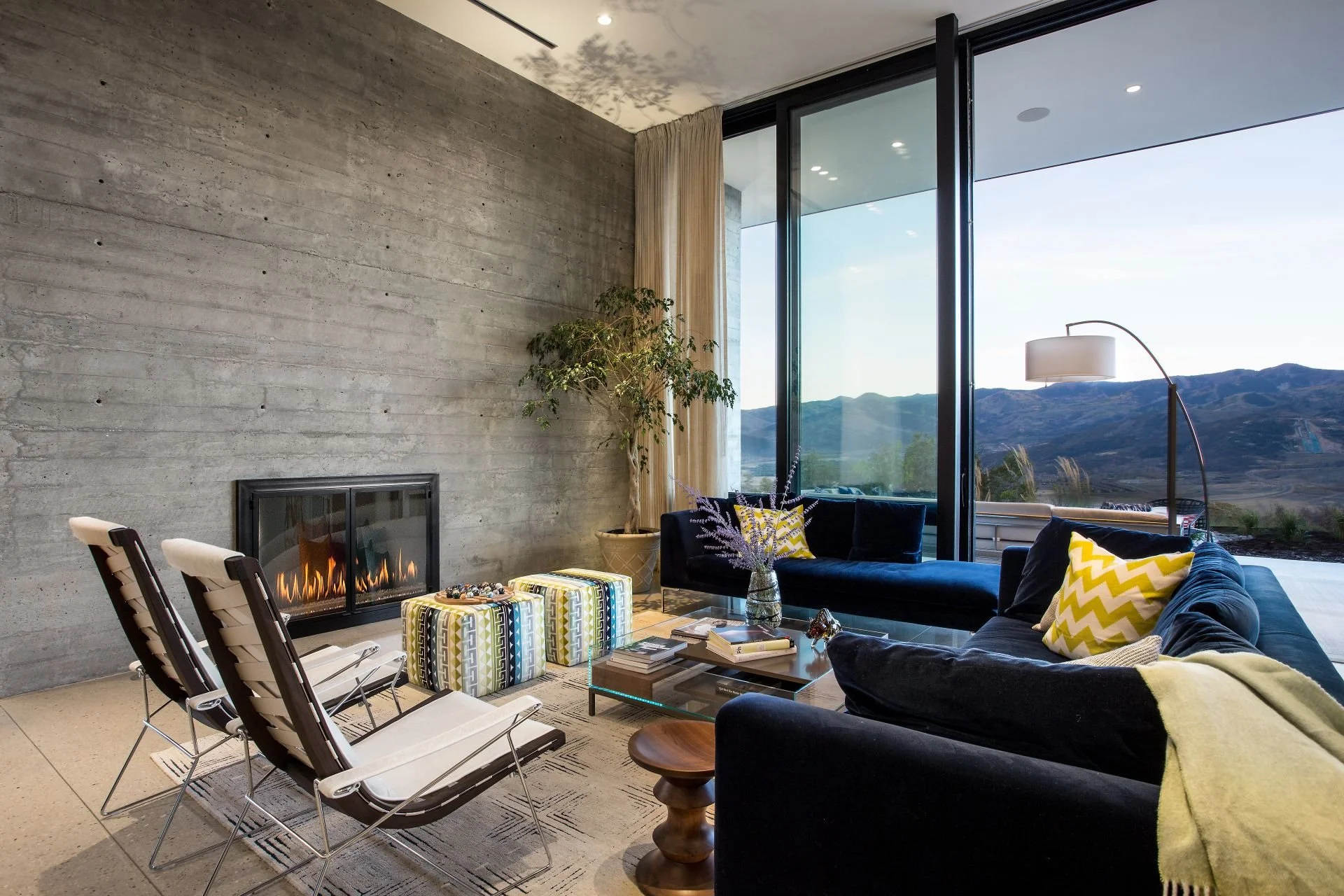
Architects Seth Striefel, Anne Mooney, and John Sparano worked to provide an efficient floor plan for the couple, which includes four bedrooms and two home offices. The architecture provides flexible spaces able to accommodate a crowd but also intimate spaces for the family. Key materials in the design include cedar wood, glass and board-formed concrete, which were inspired through a study of transparency, minimalism, and serenity. The home’s breathtaking views and seamless integration with the surrounding landscape are experienced through the expression and detail of materials. The massive 14-foot glass sliders provide uninterrupted exposure to far-reaching views including Park City Mountain Resort and the Utah Olympic Park ski jumps. The outdoors are accessed effortlessly through several terraces, including one from the main living/kitchen/dining area, the master bedroom and Ken’s office.
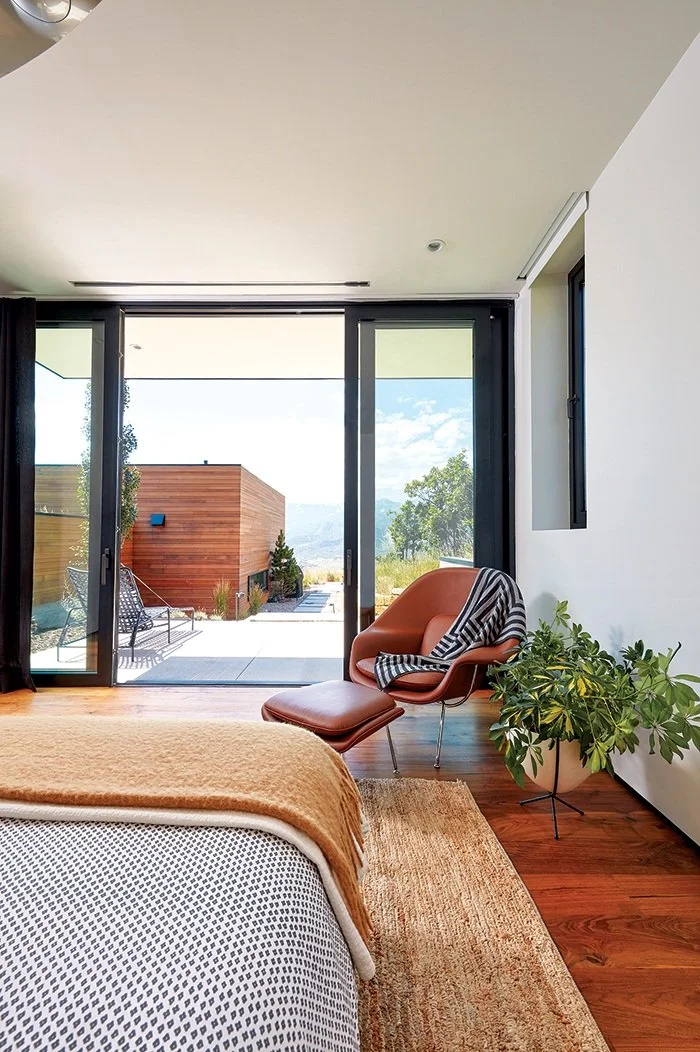
The home’s interiors are furnished with a blend of carefully selected modern pieces with treasured family antiques, and kept uncluttered for a minimalist vibe. Bedrooms are warmed by walnut floors and cozy textiles. Architect Anne Mooney, “One of the things I love about this project is that the architecture and interiors are speaking the same language. This was a great collaboration, even down to details, color schemes and artwork – all worked so perfectly with the architecture. Julie’s pallet came from nature, and our materiality did too.”
Sparano + Mooney Architecture enjoyed collaborating with the Chahine’s on this Park City residential project. Check out the full article by Chase Reynolds Ewald featured on the current cover of Mountain Living and/or on their website here. We look forward to showcasing more Mountain Modern architecture in Park City and other beautiful sites in the world!
FORT MOORE TIME CAPSULE
ARCHITECTS’ UPDATE: Fort Moore Memorial Time Capsule Discovery
AUGUST 24, 2018
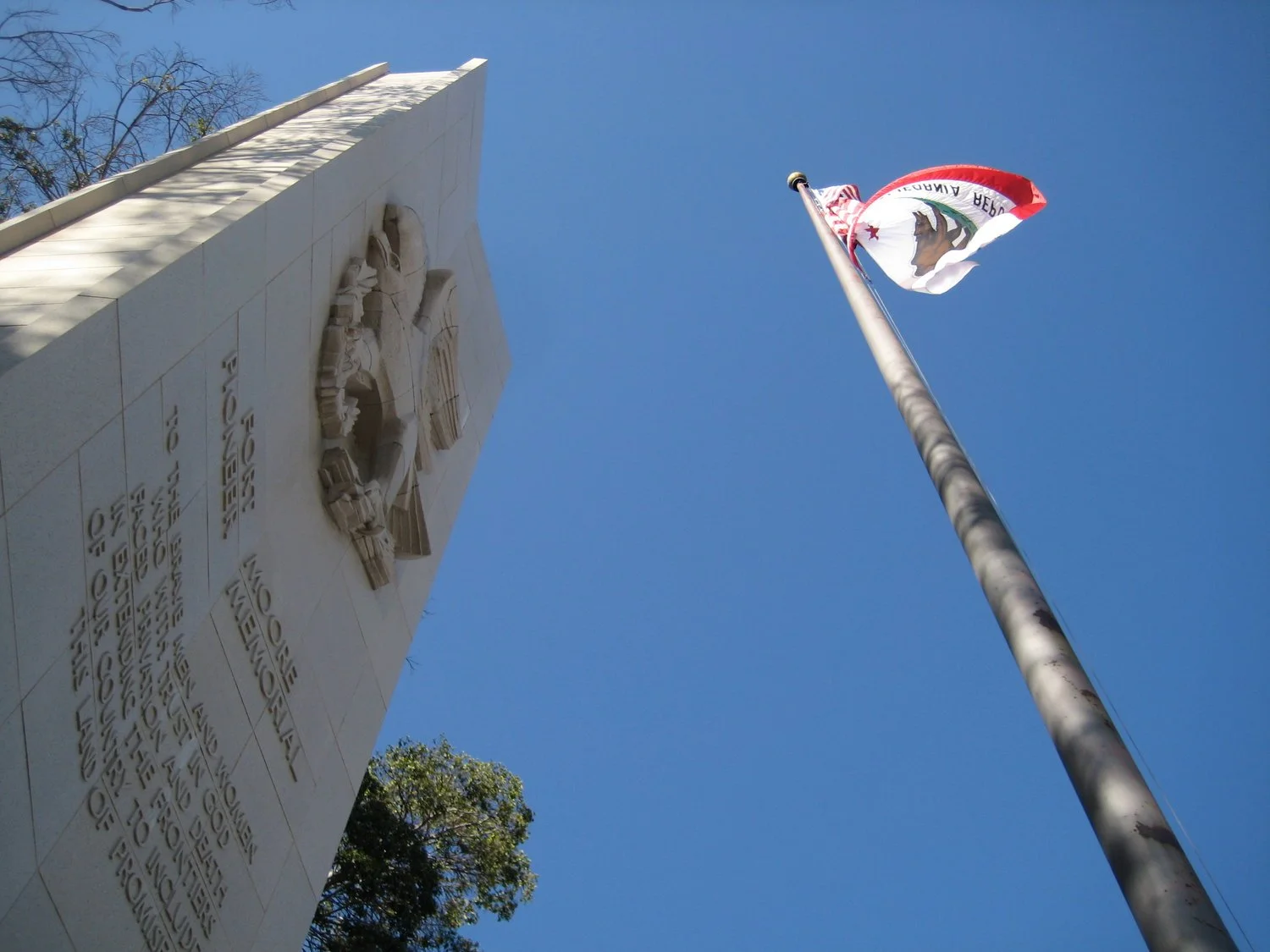
In July of 1957, residents of Los Angeles placed a time capsule in the Fort Moore Memorial monument. Almost 60 years later to the day, a time capsule was discovered in the flag pole base during the Fort Moore Memorial Restoration project the architects at Sparano + Mooney Architecture are currently working on.
A letter from the former president of San Francisco State College, Dr. Glenn Dumke, proposed a time capsule and a list of items to be included, but it was uncertain whether this was ever done. What a great surprise to discover the time capsule existed! Staff from the Department of Public Works and the Arts Commission found the time capsule. Art Conservator, Donna Williams, says it is unclear whether the items in the capsule are the items that were originally proposed.
The time capsule was made from several copper sheets, folded and soldered together to form a container. The materials and technique of making this container perfectly preserved all items, including photographs, documents, and a manuscript describing the memorial concept. Plans are in the works to digitize all items found in the time capsule for public viewing. Discussions are also underway to decide what to put into this generation’s time capsule, to be placed back in the same spot where the original one was found.
The Fort Moore Memorial in downtown Los Angeles, California marks the spot where residents first raised the American flag in 1847. Check out this link to the news story, and see if you can spot Sparano + Mooney Architecture Principal Ludwing Juarez and Associate Jorge Beltran in the video. What would you put in the time capsule for 2078 discovery?

VATICAN ENTRY TO VENICE BIENNALE
NEW VATICAN ENTRY TO THE ARCHITECTURE BIENNALE
AUGUST 01, 2018
Located on the quiet, secluded island of San Giorgio Maggiore lies the Vatican’s entry to this year’s Venice Architecture Biennale - bringing quite the transformation to the event. For one, this is the Vatican’s first entry into an architectural exhibition of this scale. Secondly, entries to the Architecture Biennale are usually models, renderings, and sketches of the building process by architects, while the Vatican’s entry is comprised of 10 built chapels. Professor Francesco Dal Co, the curator, was the driving force of the Vatican choice to pursue these built works as opposed to entering renderings. We hope architectural tourists reading this will have a chance to visit this year’s Biennale and see these spaces.
Professor Francesco Dal Co selected 12 contemporary architects from around the world that included 2 Pritzker Prize winners, Eduardo Souto de Mouro and Norman Foster, and invited them to submit designs for the chapels. The only bounds they were given to the architects is that the chapels have a pulpit and an altar, to represent the core of Christianity, which is “the word, and the bread and wine”. The architects were directed to the Swedish architect, Gunnar Aslpund’s “Woodland Chapel,” built almost a century ago, for their design inspiration. Professor Francesco Dal Co explains, “with this small masterpiece Asplund defined the chapel as a place of orientation, encounter and meditation, seemingly formed by chance or natural forces inside a vast forest, seen as the physical suggestion of the labyrinthine progress of life, the wandering of humankind as a prelude to the encounter.”
Aslpund’s “Woodland Chapel” drawings and model of the chapel is displayed at the entrance to the Vatican’s exhibit, in order to connect the viewer to the inspirational source guiding the architecture. The ties between this original work and the exhibition are carried over in the secluded nature of both and their distinction from everyday life. A visitor embarks on a pilgrimage of sorts, to even view these architectural installations. While chapels are usually placed in a center of civilization for the use of a community, these are placed in a secluded area, intertwined with nature, creating a compelling challenge for the architects.
The site, removed from the urban core, allows visitors to truly connect with nature. Cardinal Ravasi explanations a visit to the exhibit as, “a path for all who wish to rediscover beauty, silence, the interior and transcendent voice, the human fraternity of being together in the assembly of people, and the loneliness of the woodland where one can experience the rustle of nature which is like a cosmic temple.”
The variety of modern architectural style and interpretation of “chapel” is remarkable – ranging from Norman Foster’s skeletal wooden structure, to Francesco Cellini’s juncture of sleek, ceramic slabs. There is Terunobu Fujimori’s more traditional enclosed chapel, with seating and an illusion of the customary stained glass windows. While others are more interpretive, including Javier Corvalán Espinola’s chapel, a massive steel tripod apparatus, with a central hovering cross emitting a shadow cross on the ground. The most otherworldly chapel is Carla Juaçaba’s steel mirrored cross, which seemingly floats in mid-air. Cardinal Ravasi remarks, “These are true and proper temples in Christian worship, even if in a minor form compared with cathedrals, basilicas and churches.”
Although religious in context, this was not so much an attempt to spread the religiosity of chapels, as an attempt to bridge the gap between secularism and spirituality, between art and faith. A question remains as to whether this architecture will stay or go after the exhibition is over in November. There have already been requests to relocate them elsewhere, although Professor Dal Co would be happy to have them stay, suggesting they’d be a beacon of hospitality, an opportunity to share the peacefulness of the island to others, and benefit Venice’s economy. We find these structures an alluring ode to architecture’s ability to influence the meaning and purpose of faith.

THAYNES CANYON ON UTAH STYLE & DESIGN COVER
PARK CITY HOME BY SPARANO + MOONEY ARCHITECTURE FEATURED ON COVER OF UTAH STYLE & DESIGN / SUMMER HOUSE
JULY 05, 2018
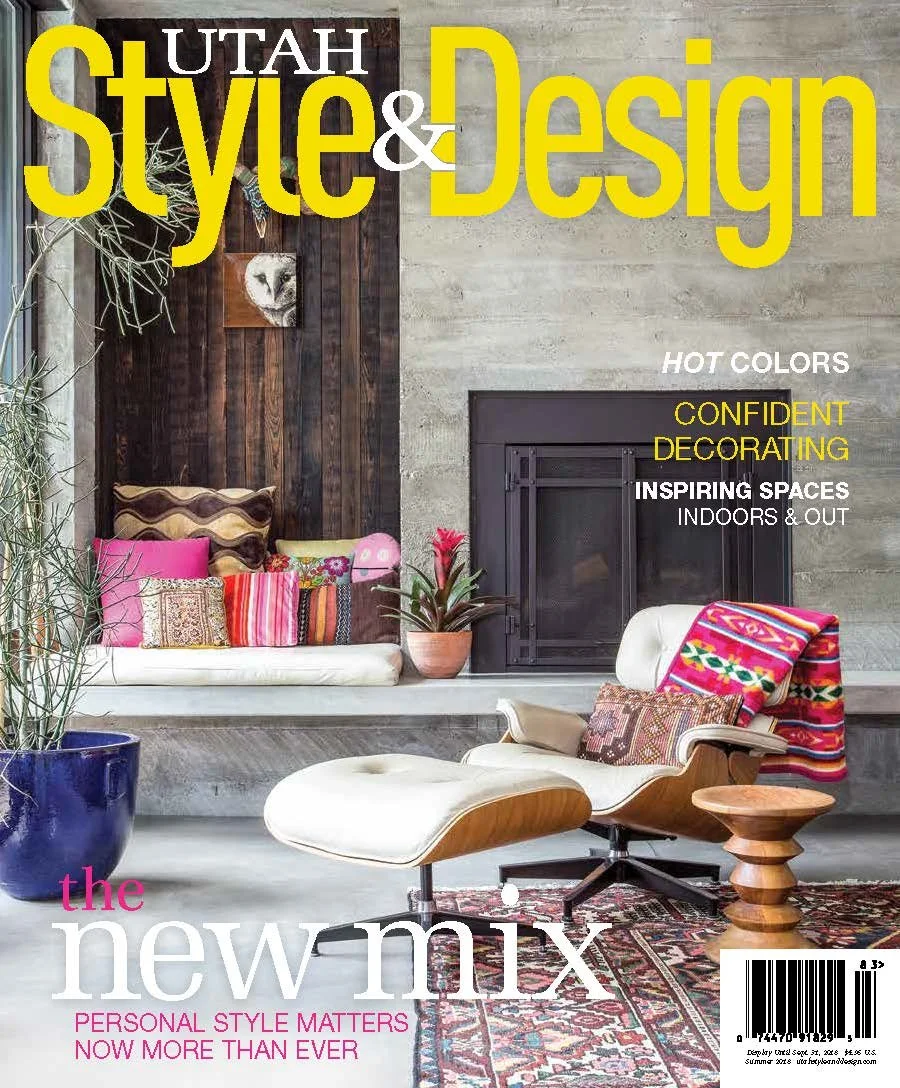
Have you picked up the latest issue of Utah Style & Design? If so, you may be joining us in our delight at seeing another one of our Park City houses land the cover! Sparano + Mooney is thrilled to once again be a part of this remarkable design and lifestyle magazine. The article entitled, “Bohemian Rhapsody”, written by Natalie Taylor and photographed by Scot Zimmerman, showcases this home design nestled at the base of Park City, “where breathtaking nature, expressive materials and eclectic elements drive the compelling design.” Characteristic to Utah Style & Design, the pages are filled with full-page colorful photos, including those of this Thaynes Canyon home’s architecture and interiors, which showcases the owner’s personal artwork and style.
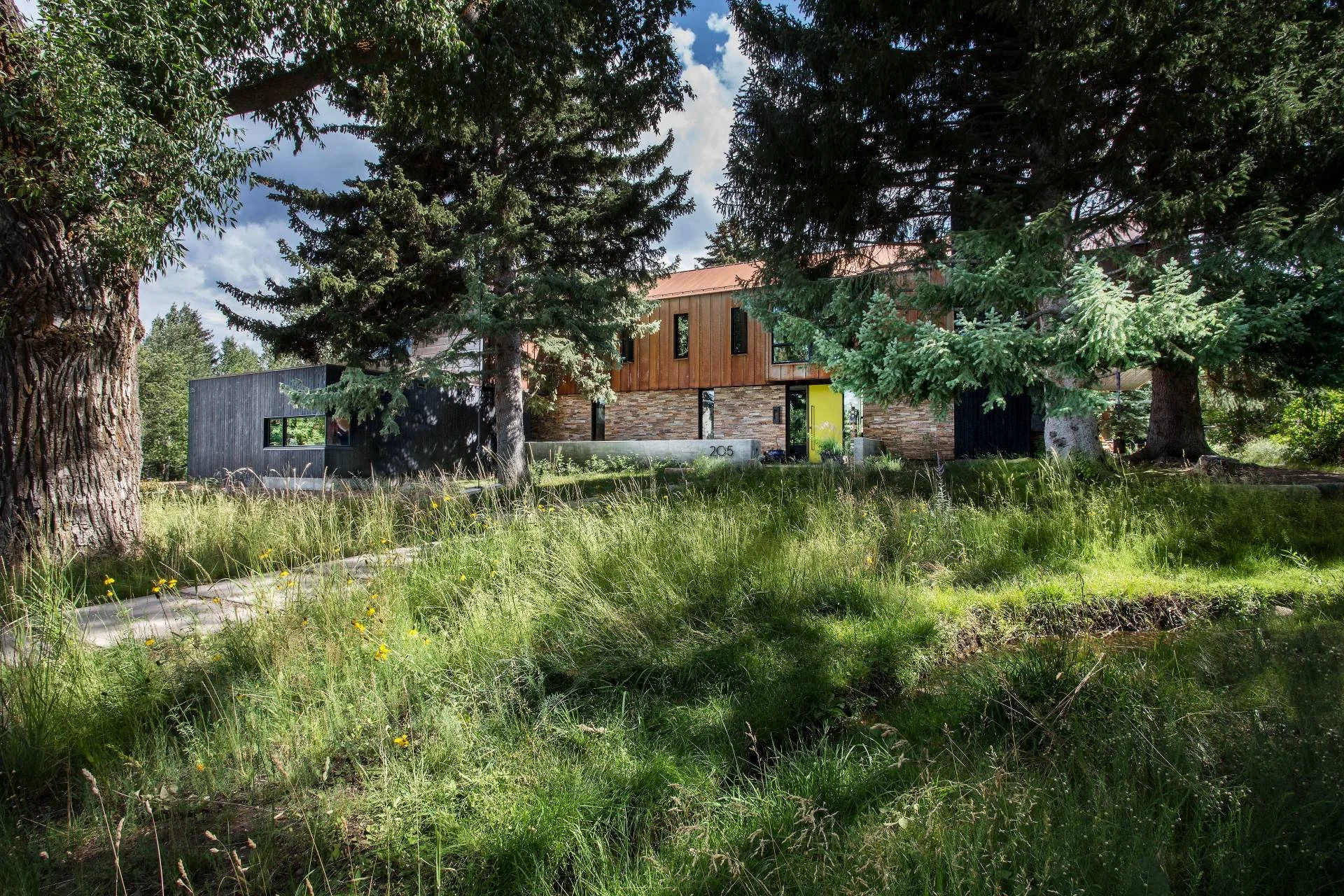
Owners Gwen and Patrick Reddish faced a difficult challenged when their previous 105-year old farmhouse situated on the land needed to be demolished. They wanted to keep their assortment of large trees when building a new home, and also wanted to incorporate elements of Scandinavian and European farmhouse style but in an updated, modern way. Sparano + Mooney Architecture was able to provide the architectural solution. By creating a long, narrow structure that “weaves in and out of the trees”, all trees remained untouched and a home emerged that “fit perfectly in the vernacular of the old farmstead site.” Elements from the owner’s original farmhouse were reused in order to maintain the feel of an old home - and preserve what was so loved!
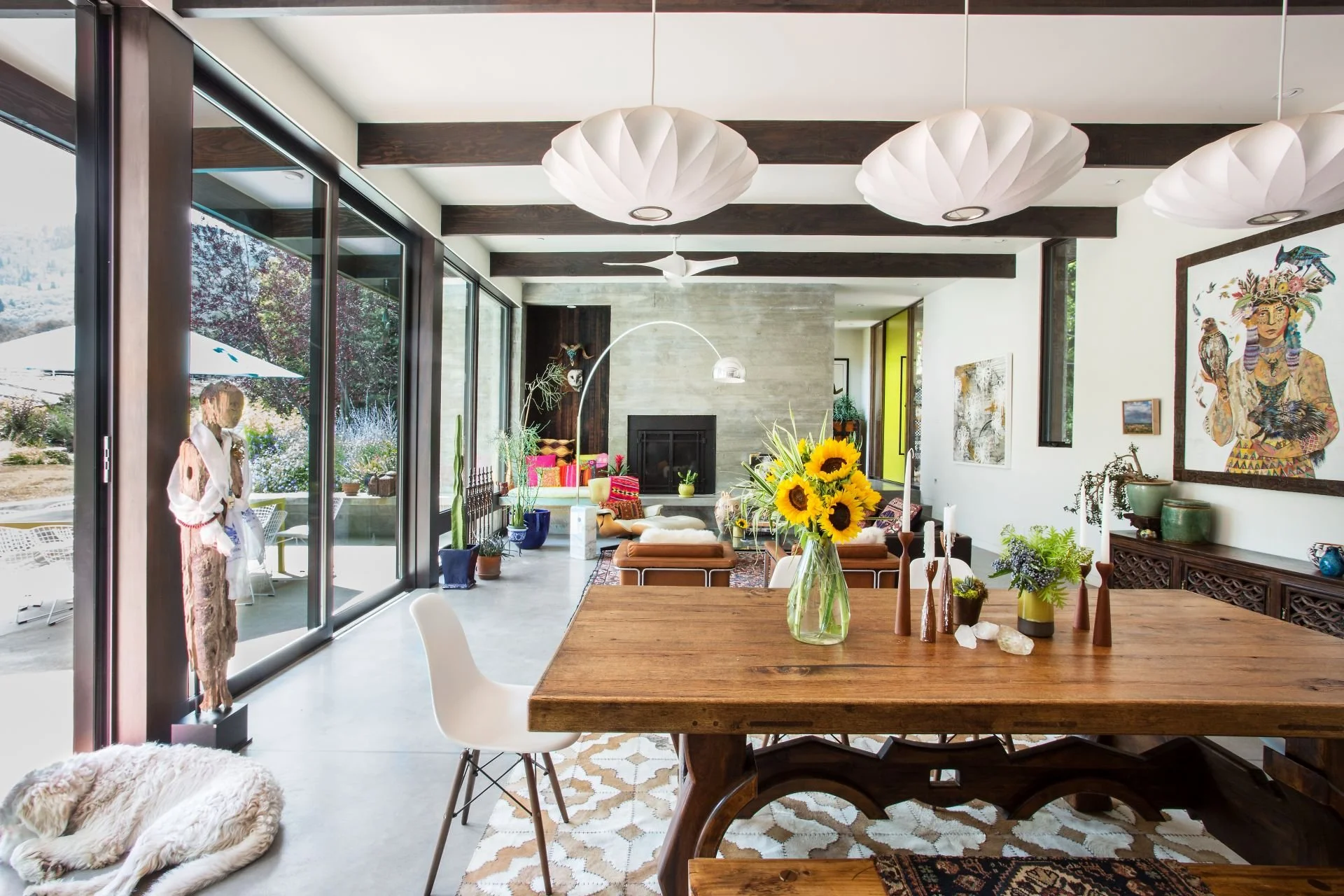
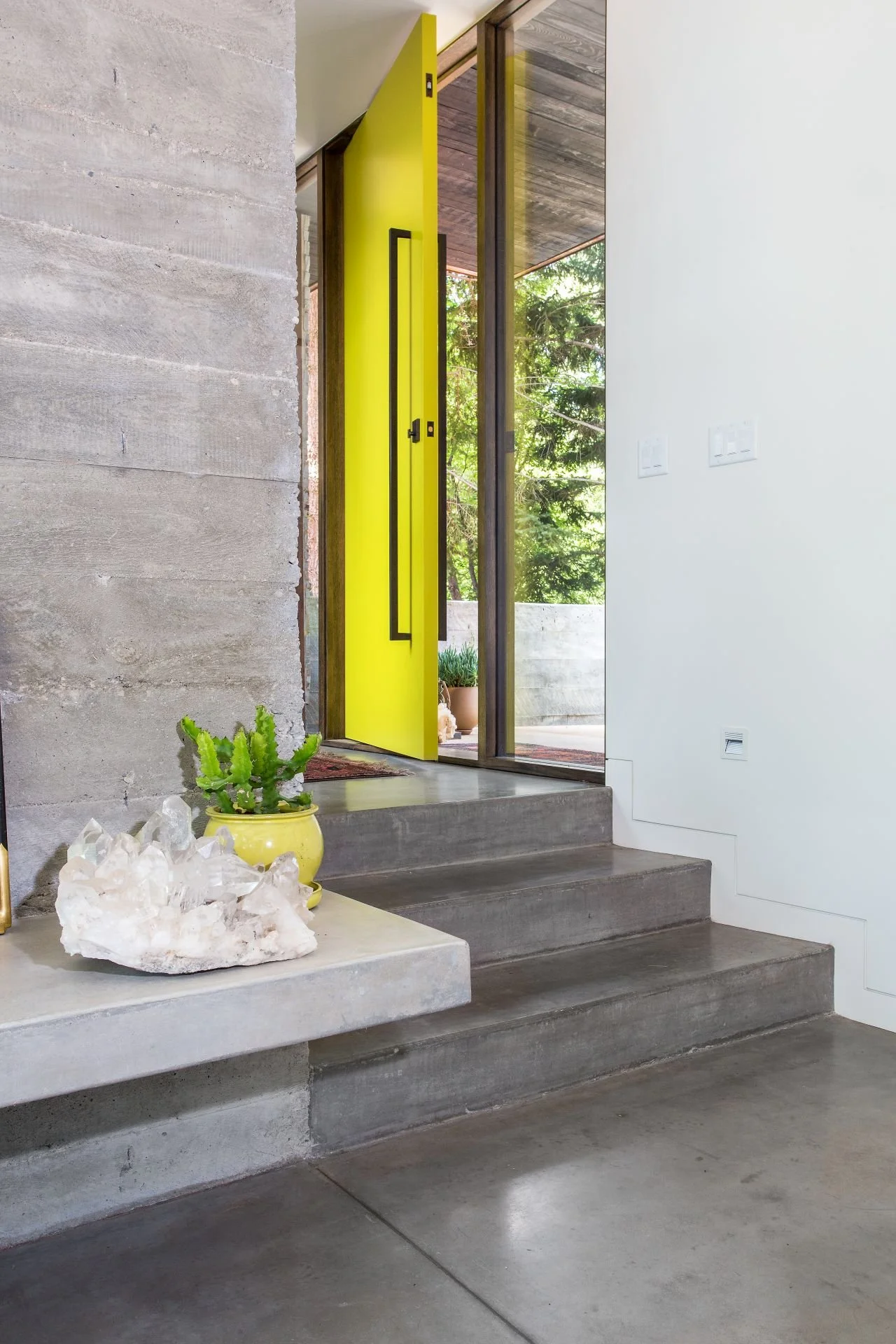
Being filled with and built of stone, and distressed wood and materials, the architecture easily blends in with the surrounding nature, and a home in Park City wouldn’t be complete without incorporating the surrounding views. This house was designed to “seamlessly reach into the environment at every turn” as large windows and double-height ceilings throughout the home continually draw the eye to the outside.
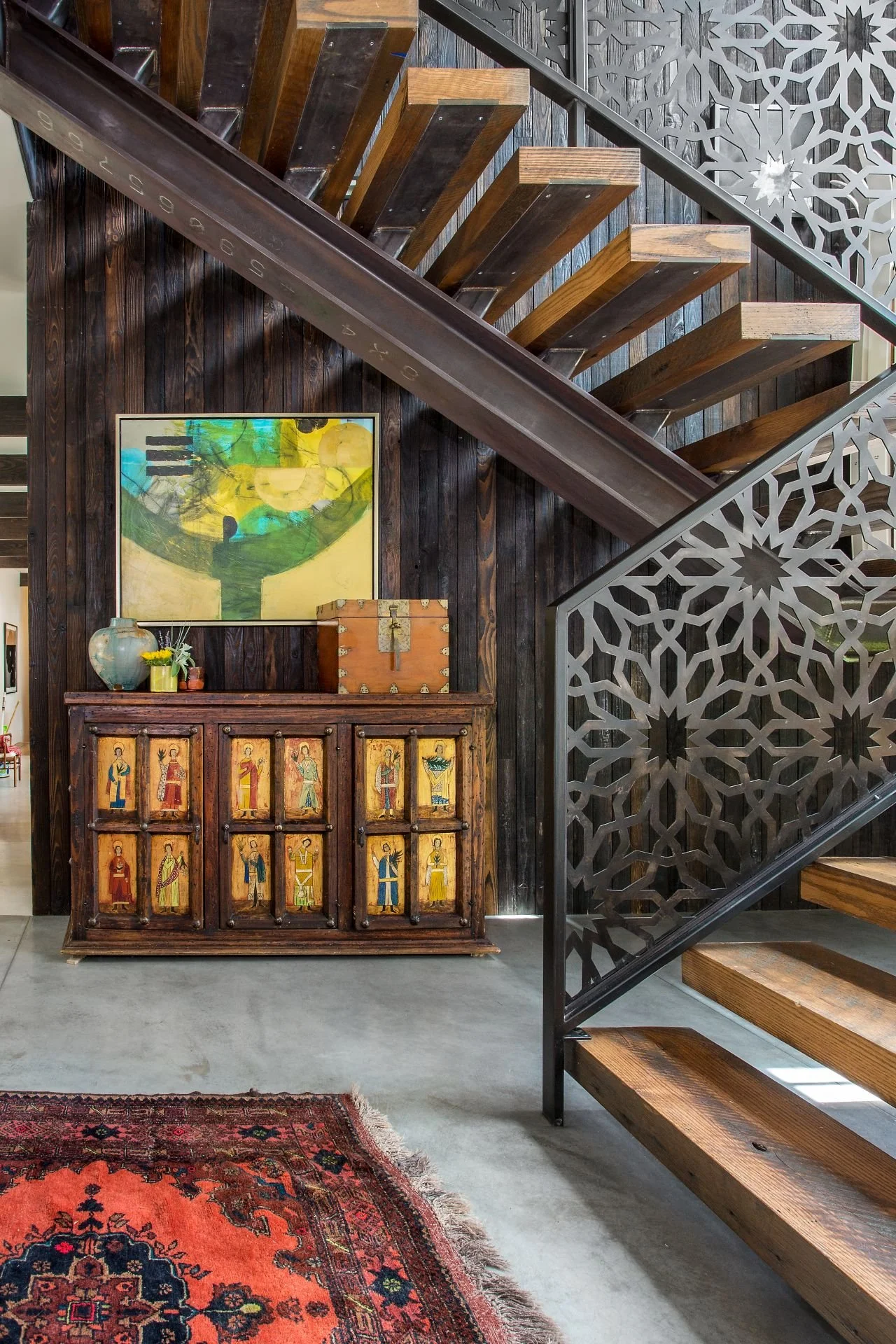
This new home made from repurposed materials - and filled with rich colorful art and textiles - make this a fabulous hidden architectural gem in the Park City countryside. Thank you Utah Style & Design for featuring this eclectically styled and colorful home with your readers. We were honored to be a part of the process as the architects!
CONSTRUCTION UPDATE
CONSTRUCTION UPDATE: New Mountain Architecture
JUNE 20, 2018
With an anticipated occupancy in the early fall; all exterior materials are nearing completion and the focus is shifting to interior finishes.
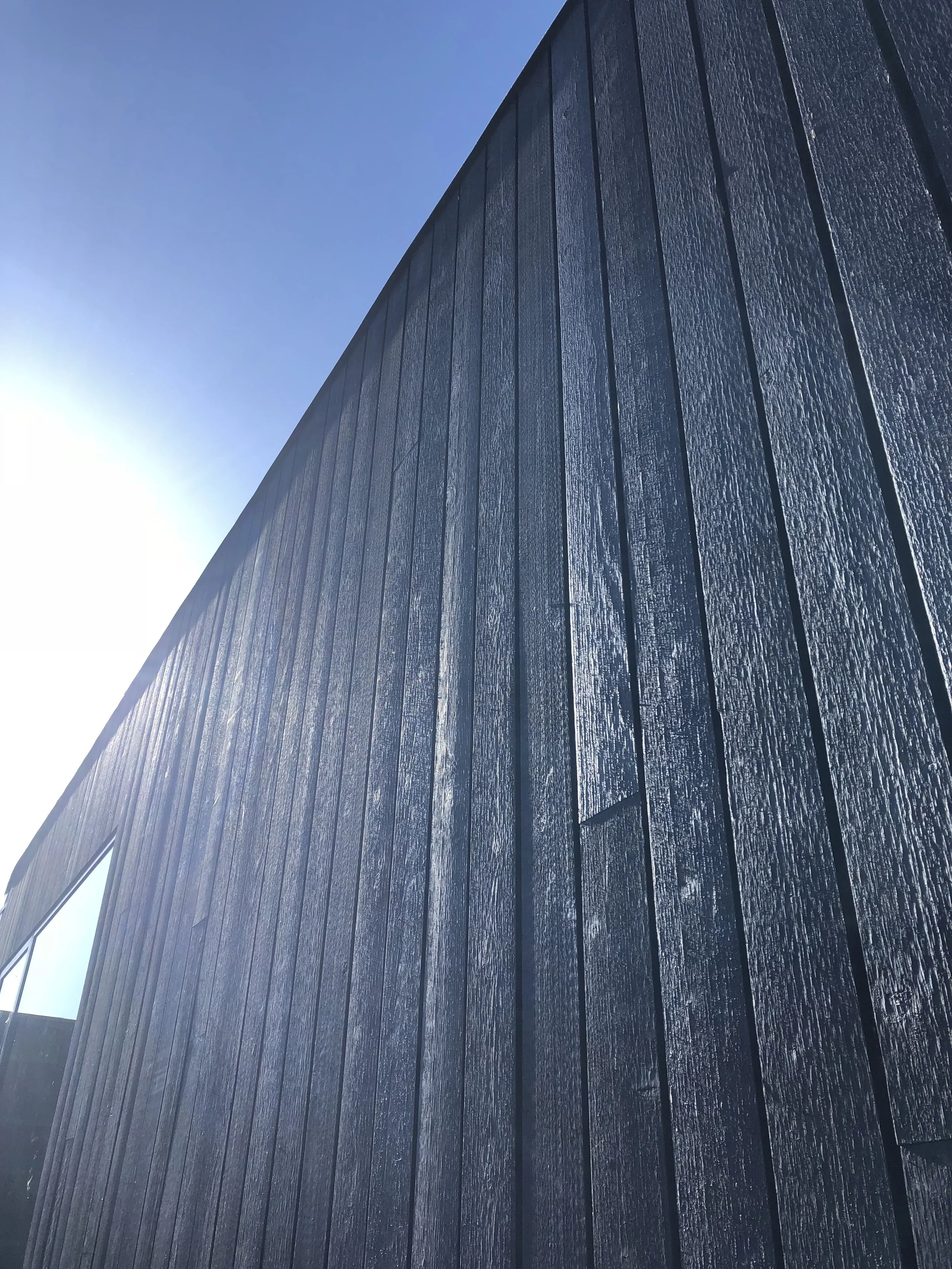
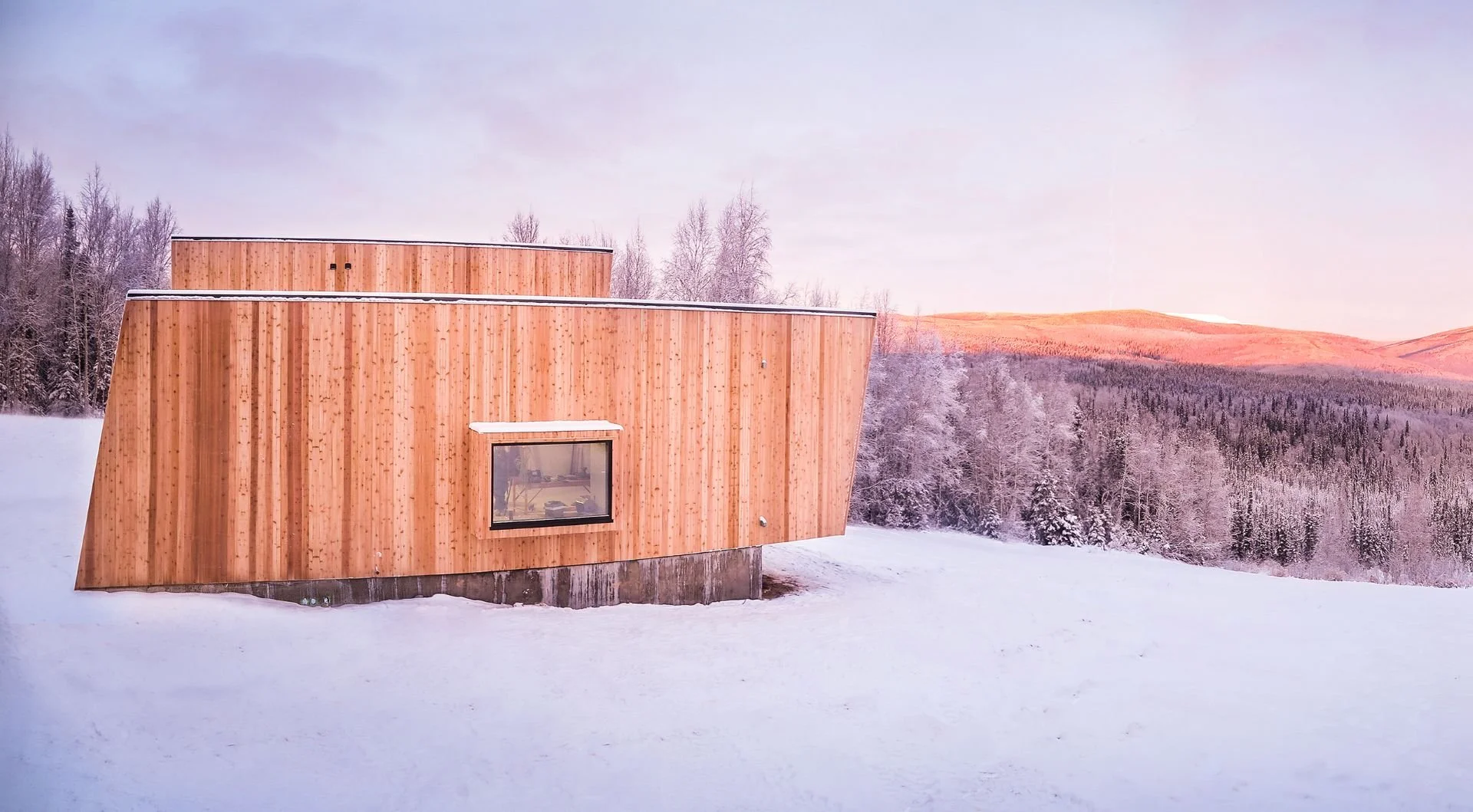
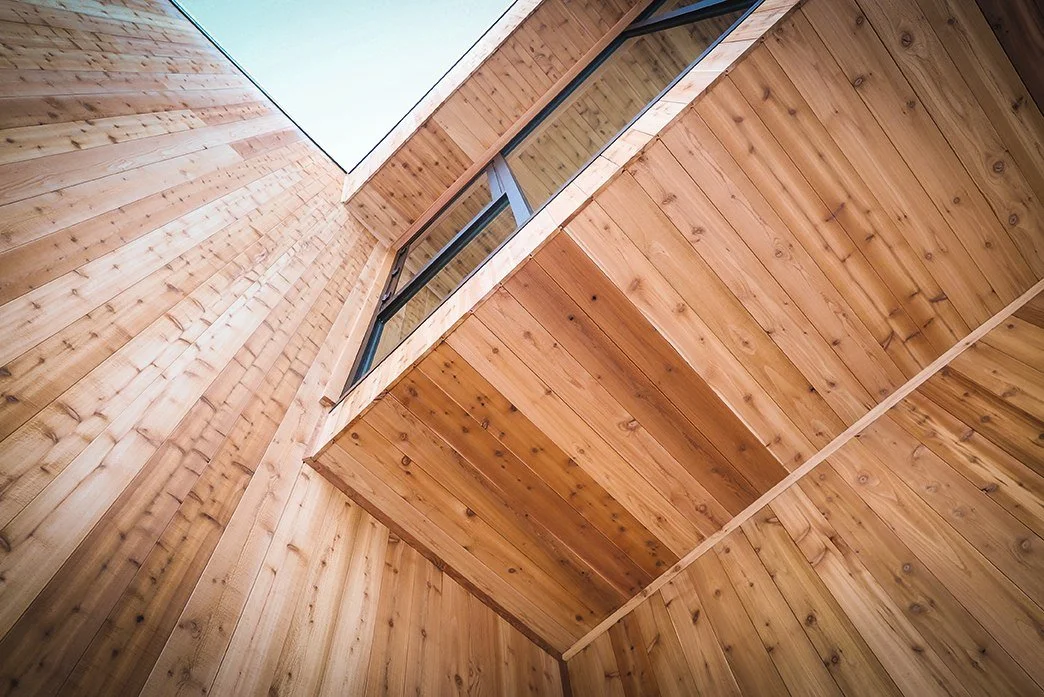
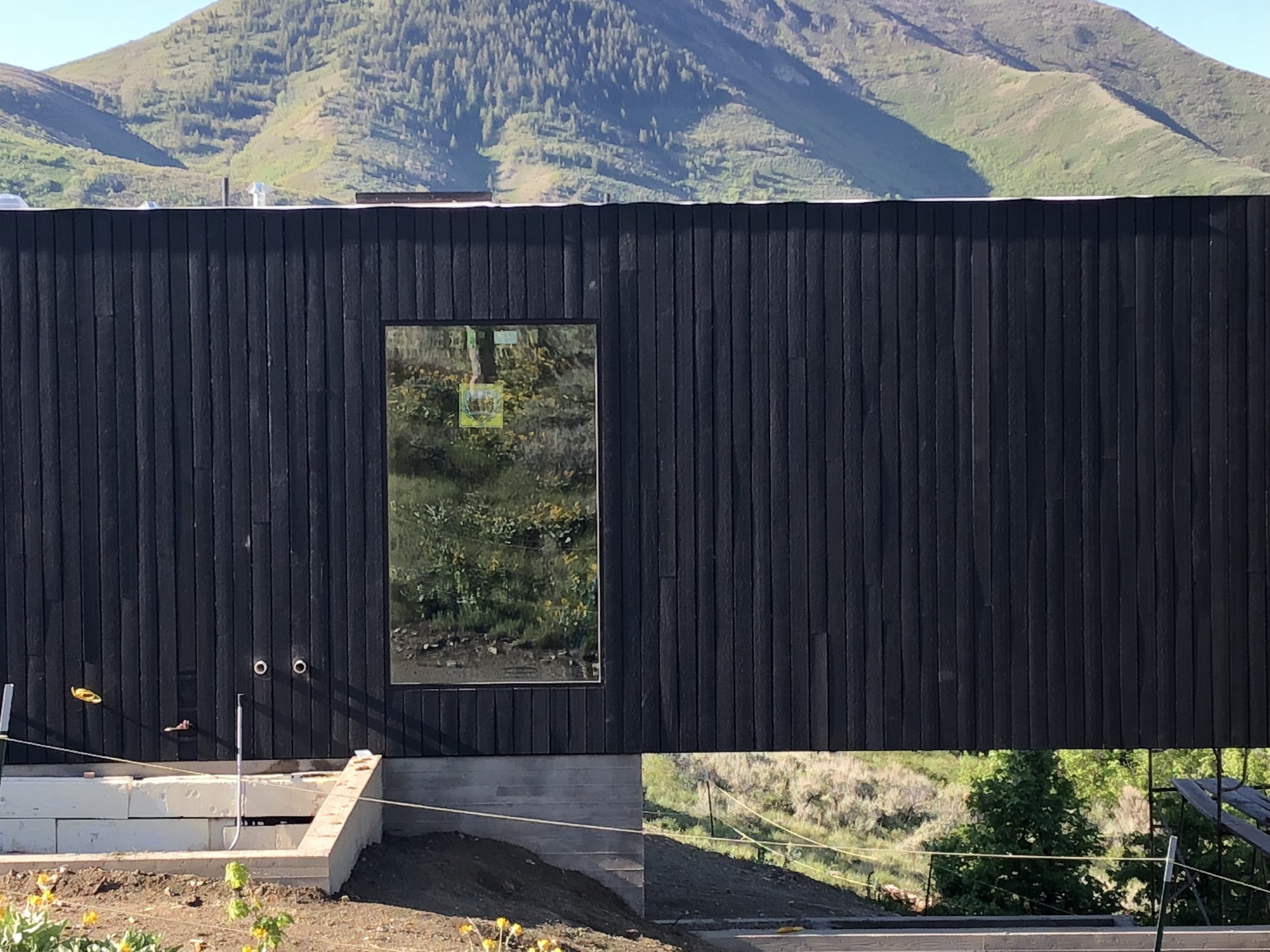
We are very pleased with how the exterior wood cladding is coming together on site and the relationship it has to the textural boards from concrete.
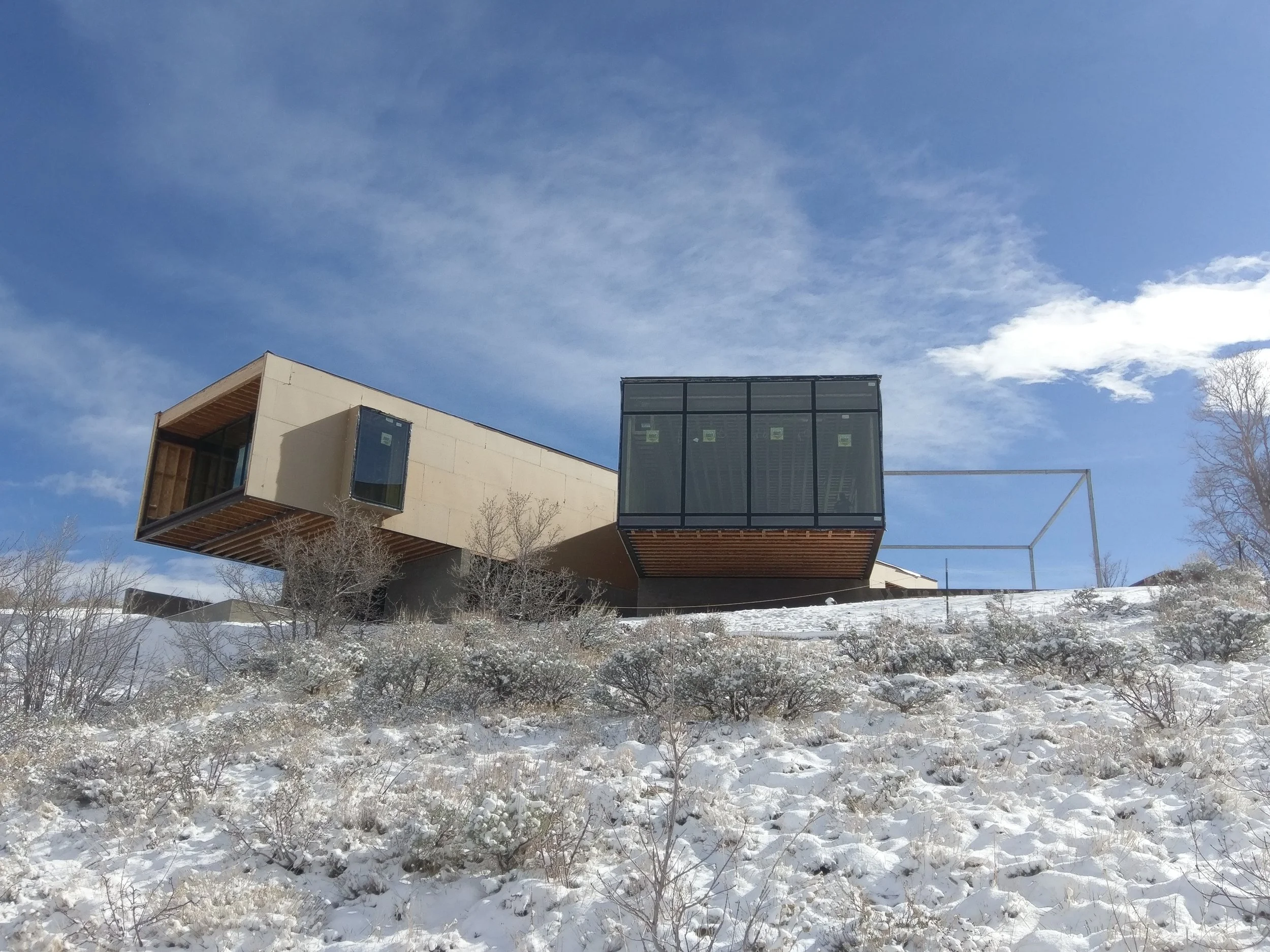
The interior cabinetry is currently in production and we look forward to seeing the relationship the refined white oak interiors will have in contrast to the rough sawn cedar clad exterior.
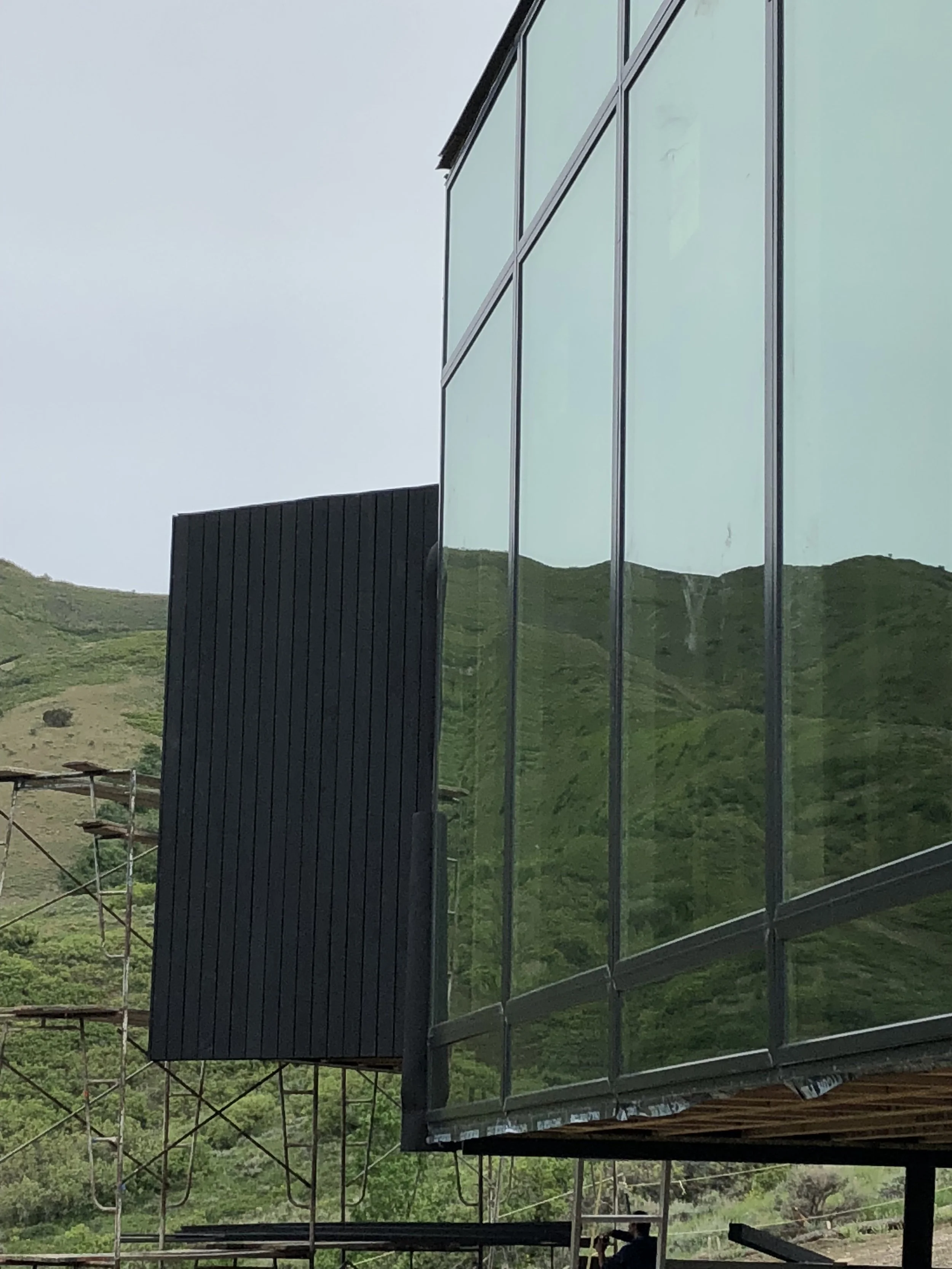
Next steps include the final finish layer of landscaping to bring the site back to its natural state and reinforce the home's relationship to this beautiful setting.
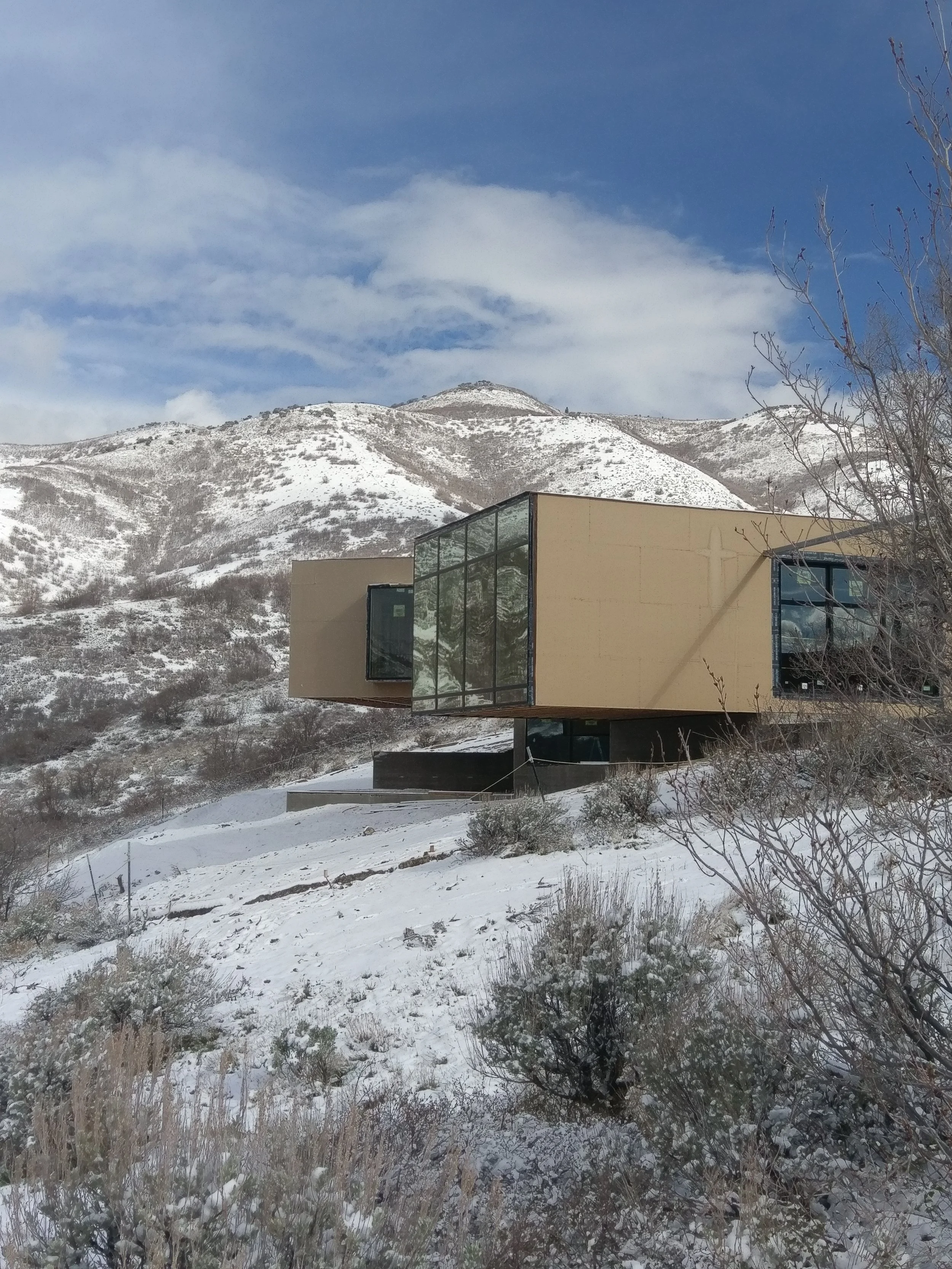
SPOTLIGHT: CAMILLE ERICKSON
AN ARTIST AMONG US: The Art + Paintings of Camille Erickson
MAY 15, 2018
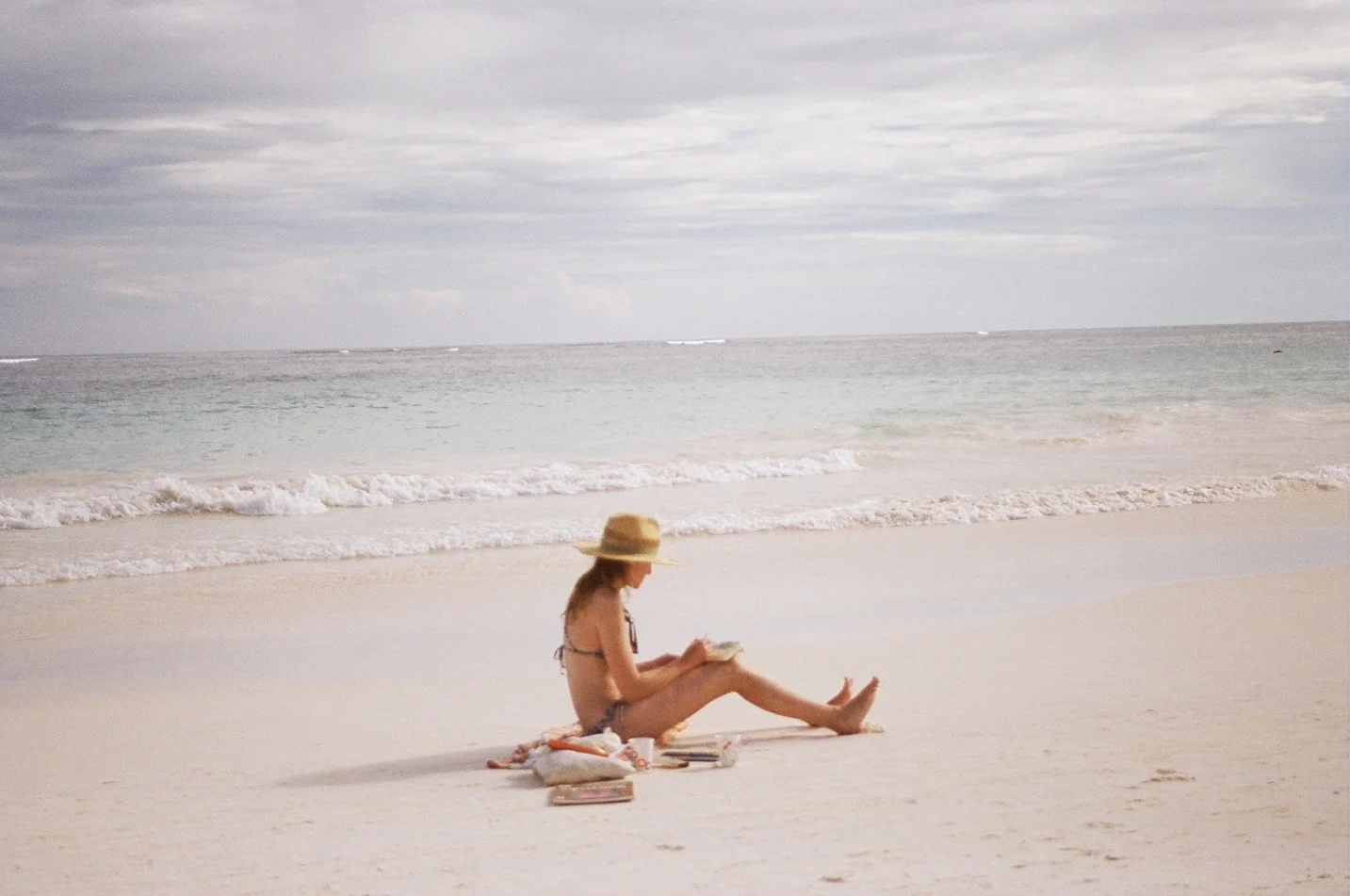
Without doubt, the Sparano + Mooney Architecture team are talented, driven, and creative. We work hard to deliver thoughtful design solutions to our clients, not to mention our commitment to an exceptional client experience and harnessing first-rate business acumen. Of course, our Salt Lake City and Los Angeles architects are highly skilled at turning numerous iterations of ideas and sketches into renders and plans. Putting pen, pencil and brush to paper is a key aspect of our practice and drawing skills are essential to the profession. But did you know that our team member Camille Erickson, head of Accounting and Human Resources, also produces beautiful paintings and is an enormously talented artist in her own right? We are astounded by Camille’s talent, and her ability to use both her left and right brain with equal flourish. We interviewed her to discover more about her work.
When did you first begin to draw/sketch and paint?
My mom is an artist and teacher and she had me drawing and painting as soon as I could hold a brush or pen in my hand. My first drawing that she kept is from under the age of 1. Although, I became very interested in art when I was in high school. I took classes in jewelry, drawing and painting and that is where I realized this was something I had a passion for. I then studied painting and drawing for my undergraduate degree, followed a number of years later by a master’s degree in accounting.
How did you learn to draw/sketch/paint?
I learned to draw and paint by watching my mom, taking classes, watching the great Bob Ross, and watching other family members of mine who are jewelers, cartoonists, and painters.
Did anyone in particular teach or inspire you to design your creations?
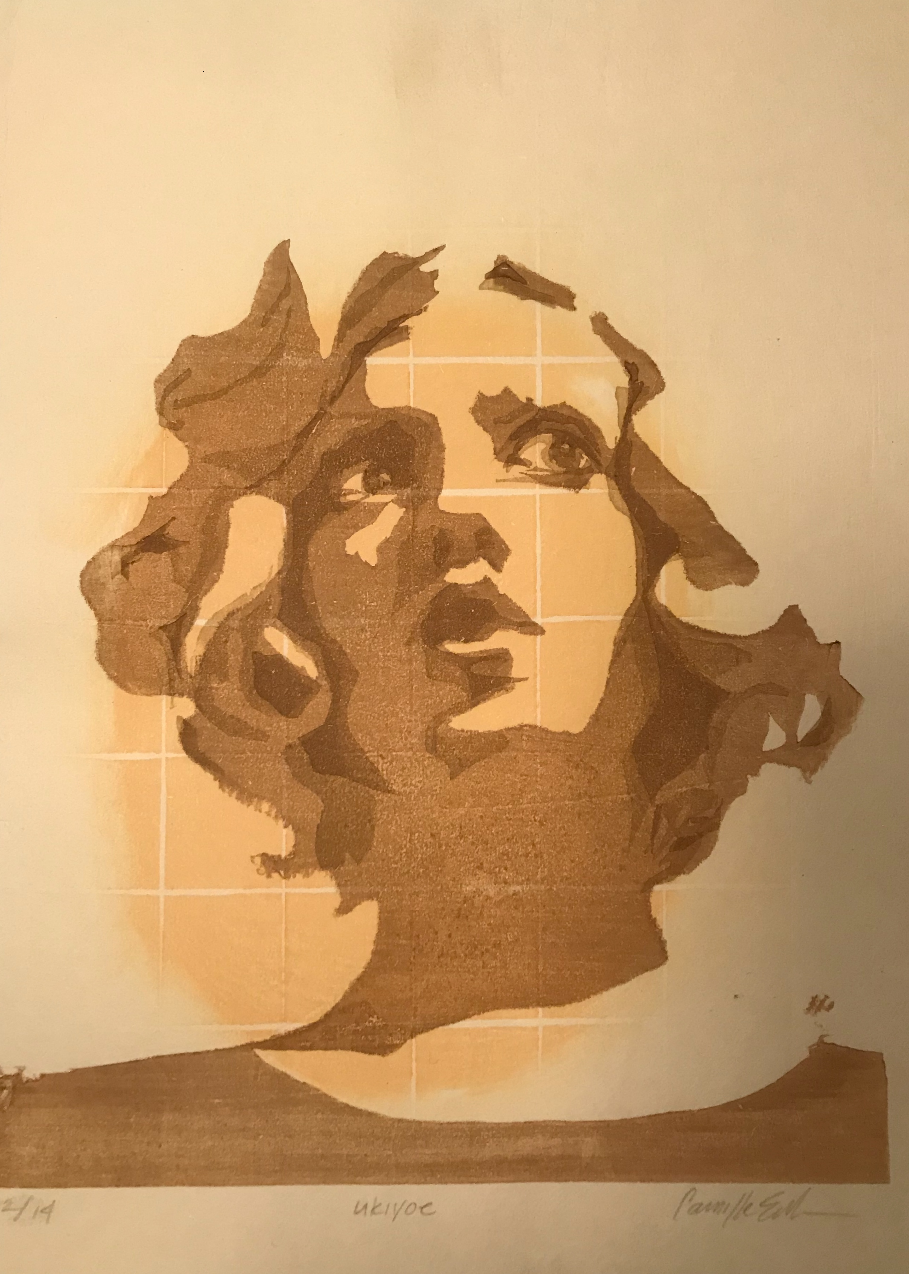
Besides the constant exposure to my mom, family members and the art galleries my mom took me to as a child, some great 20th century painters, Wayne Thiebaud, Chuck Close, and Edward Hopper, inspire me. I especially like Chuck Close’s prints and that got me interested in Japanese wood block printing (ukiyo-e) and etching. I learned this printing technique from a master Japanese printer at the Center for Book Arts in New York.
Do you still love painting as much as when you first began?
I do love painting even more than I did when I first began. I was just learning the mechanics of painting, how to mix color, how to prepare a canvas, and how to draw with paint. Now, when I see other people’s work I have more of an appreciation and love for what other artists create. I was at the Getty Museum with our office a few weeks ago and I saw these amazing paintings by Peter Rubens. I was particularly inspired by the under-painting/wash and detail in which he had painted the figures in a deep brown paint – they reminded me of a drawing. I see the world differently through the eyes of an artist and I love that art can evoke emotions.
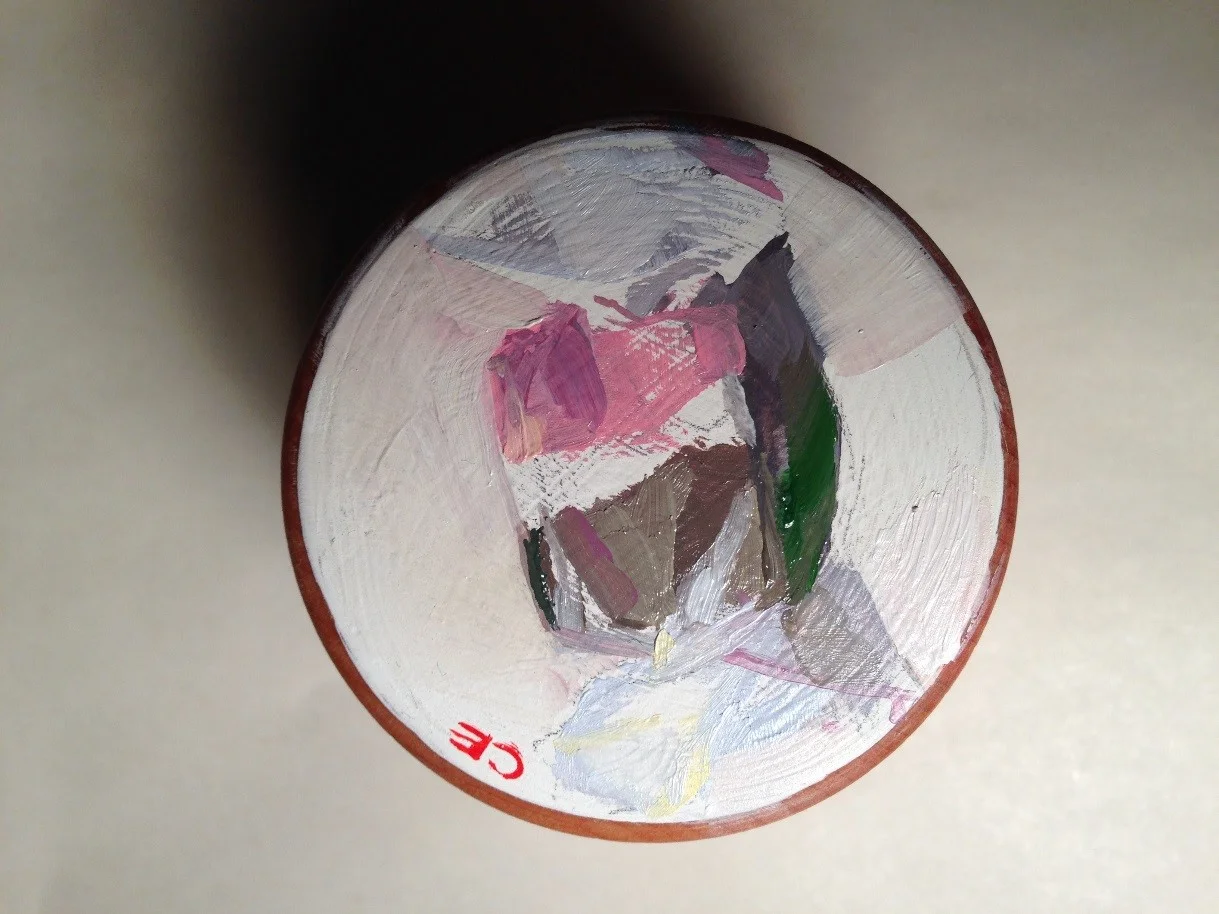
Camille Erickson, ‘Salt Box’
Why do you paint? What inspires you?
I am inspired to paint; make jewelry, ceramics, prints; or draw a simple sketch because I see something that I want to make or remember. I would say one of my biggest inspirations is light and how light interacts with the space around us. In school, I was trained in classical figure painting, drawing, and sculpting, although lately I am not focused on the figure as much.
How does painting influence your professional work?
Working in an architecture firm like Sparano + Mooney Architecture is truly the best of both worlds. Kind, interesting, artistic and creative people surround me all day, while I am doing accounting, and this reminds me of the importance of staying creative. It is inspirational to be surrounded by the building models and the creative process that these “ideas” originate from and that is truly amazing.
Have you ever exhibited your artwork?
Yes, I have exhibited my work over the years. In high school I was in a student show at the University of Utah’s Museum of Fine Art. I have also shown my work in Helper, Utah; The Arts Student’s League, New York; and the Utah Women’s Artist Exhibition, Utah.
What is your favorite subject matter?
That’s pretty tough to narrow it down to a single subject matter. By medium I could select it: for painting and drawing it is the human figure, with metalsmithing and sculpture I am drawn to functional objects, and with printmaking it is still life objects.
What is your favorite medium?
I paint in oil; however, these days my favorite medium is clay. I just started working with clay this past summer.
Camille Erickson, "ukiyo-e woodblock print"
Do you like talking about your artwork and talent or do you prefer to keep it private?
For many years, I didn’t like talking about it, and I think that has changed, as it has become a more direct part of my life. I am producing work every week and that makes me more interested in discussing it. For me, sharing it is the best way to get objective feedback and helps me to continue working.
When is your favorite time to draw/sketch/paint, and do you have a favorite place to draw?
My favorite place to work is any place that I can remove all other distractions and really focus. Sometimes, that is at home, other times my studio, or just sitting somewhere. I draw at home every night. Since my son entered the 1st grade he picks an image for me to draw on his lunch bag. We started this tradition almost three years ago. This has been one of the best ways for me to stay active with drawing. My high school art teacher Marjorie McClure required us to draw daily in a sketchbook. I remember, with such dread, having to produce those sketches and trying to find a subject matter to draw. I still have all of those sketchbooks and it is great to have them to look back to.

Camille Erickson, "Master Chief Lunch Bag"
How do you title your work?
I generally don’t title my work. Mostly because it is not something I feel I am particularly good at. I tend to use titles, like “figure drawing 1” or “painting of a pear.” I know that isn’t very creative and my husband, who is a writer, is always encouraging me to explore the titles a bit more. I agree with him that a good title can actually make a piece of art better.
Would you like to add any closing thoughts?
Thank you Mom for dragging me to the museums and libraries as a kid and exposing me to art. I’ll never forget going to my first nude figure drawing class with my mom when I was barely 16 years old. Or how she would have us look across a rainy day landscape and pick out the colors and brush strokes like it was a painting!
We are so grateful to count Camille as a member of the SMA team and can't wait to see what she creates next...

CHICAGO ARCHITECTURE BIENNALE
ART, ARCHITECTURE, HISTORY + IDENTITY: The Chicago Architecture Biennial
JANUARY 03, 2018
Chicago may be known as the Windy City, but for architecture aficionados, the metropolis is a veritable treasure trove of world-renowned architectural gems. From historic structures including Frank Lloyd Wright’s Robie House (1910), Mies van der Rohe’s Federal Center complex (1974), and Bertrand Goldberg’s Marina City (1964), to more recent structures such as Studio Gang’s Aqua (2009), Chicago boasts numerous architectural landmarks. Though our firm of Salt Lake City and Los Angeles architects are based in the American West, we nevertheless have closely followed the most recent incarnation of the Chicago Architecture Biennial, a showcase of over 140 architects and artists, exhibitions and events across the city, free and open to the public. Hurry! The events come to a close in early January, so if you find yourself in need of inspiration to start the new year, make haste to this cultural hub and take advantage of the truly breathtaking array of architectural wonders on offer.
The second Chicago Architecture Biennial (CAB) is the largest architecture and design exhibition in North America, and makes use of the city’s breathtaking backdrop as the gallery for internationally-acclaimed presentations “showcasing the transformative global impact of creativity and innovation in these fields”. Make New History is the theme of this year’s CAB: practitioners representing over 20 countries were invited by the CAB’s artistic directors Sharon Johnston and Mark Lee (of the firm JOHNSTONMARKLEE) to participate in this city-wide presentation of thought-provoking creations and explorations of urbanism, the evolution of community identity and the impact of looking to the past to inform the present.
This is a deeply evocative and moving exploration of architecture that travels well beyond traditional presentations of architectural discourse. We are particularly impressed with the CAB’s emphasis on narrative, cultural examination, and the advancement of architectural design within a framework of accumulated conventions. How do we, as modern practitioners, assert our own identity and create the “new” when we are undoubtedly indebted to precedent? Indeed, the CAB seeks to explore this dichotomy and to highlight the ways in which architects, artists and designers working today are shunning the need to create the unparalleled in favor of incorporating historical models into their work; in other words, “committed to progress, but always from within an architectural tradition,…producing innovative and subversive works grounded in the fundamentals of the discipline.”
With this powerful statement in mind, the overriding purpose of the CAB and Make New History is to invite members of the public and well-versed practitioners alike to explore the ways contemporary architecture has the ability to assert an historical impact globally, irrespective of site and geographical boundaries. Topics include Image, Material, Building, and Civic Histories, and highlight a myriad of creative methods of architectural expression, from drawings, experiential environments, and performances to books, films, design objects and academic analyses of architectural thought. These topics unite the shared interests, concerns and practices of architects, artists and critics who are helping to shape the future – and, therefore, the history – of the industry and field. As Mark Lee explains, “buildings are not always the end result…We think that producing ideas through different mediums – perhaps before one achieves the chance to build buildings, or maybe in lieu of that work – is relevant to the changing state of the discipline today.”
The main exhibition takes place in the Chicago Cultural Center, which Johnston and Lee have transformed into complex, intertwined corridors, galleries, arcades and salons dedicated to juxtapositions of past, present and future incarnations of architectural design. For example, an exhibition of innovative experiments in contemporary architectural photography, curated by Jesús Vasallo, is on display, as well as a reconsideration of the landmark 1922 Chicago Tribune Tower. Numerous satellite events at off-site locations include educational programs with the Chicago Architecture Foundation, and free tours of the Frank Lloyd Wright-designed SC Johnson headquarters. The platform offers a unique assemblage of exhibits, large-scale installations, and creative programming with which visitors are encouraged to actively engage and consider through a global, critical lens.
Presentations such as the Chicago Architecture Biennial are key to the advancement of our field. They help underscore disciplinary concerns, draw new audiences to architecture and aid in the development of new architectural identities and modes of expression. If you were able to take part in this year’s CAB, we’d love to hear your thoughts on the event, and hope to see you in the Windy City for the CAB’s next installment in 2019!

ADRIAN VILLAR ROJAS AT LA MOCA
ADRIAN VILLAR ROJAS AND SPARANO + MOONEY ARCHITECTURE CREATE “THEATER” AT MOCA
DECEMBER 11, 2017
Sparano + Mooney Architecture and our team of Los Angeles architects and designers have established a fantastic working relationship with The Geffen Contemporary at MOCA, and we were delighted when the institution approached us to provide architectural services and interior remodeling for their latest exhibition of cutting-edge contemporary art, titled Adrián Villar Rojas: The Theater of Disappearance. We have also collaborated with MOCA on acclaimed shows by Matthew Barney and of works from the 1990s at the museum, and were more than happy to partner on this occasion to bring Villar Rojas’ eclectic and boundary-defying art to The Geffen’s savvy audience.
For this show, Sparano + Mooney Architecture worked with Villar Rojas’ proposed layout for the exhibit, made modifications in order for it to comply with current codes, such as building and fire, and also collaborated with structural engineers to ensure columnar components of the space held up.
Adrián Villar Rojas (b.1980) is a South American artist whose work embodies the abstract, abject and ephemeral. His object-based “environments” and gallery-specific interventions exist in a liminal space void of typical past/present/future dichotomies. Food waste, raw meat, concrete, geological formations and flora and fauna are juxtaposed in his work, and the viewer is asked to contemplate at what stage a “work of art” is created. Is it when the items are conceived? Installed? When they are revealed to the first visitors? Or when they break down, morph and decay? These so-called “post-human” artworks – some of which are inert sculptures, some organic totems and manufactured fossils, some inorganic relics – certainly defy canonical, art historical categorization. And, perhaps that is Villar Rojas’ motive: to treat the exhibition space as an evolving realm that promotes decomposition and obsolescence of these alien art forms, and to comment critically on the commercial nature of the institutional art world. Though the work may be at times obscure, there is nevertheless a romanticized notion to his approach. Villar Rojas creates art that is at once otherworldly and visceral and in doing so, we are confronted with contemplating uncomfortable truths about our own material existence in time and space.
Villar Rojas’ approach to curating his work is unique, but is strikingly similar to how we approach our own work as contemporary architects and designers. Villar Rojas produces art that is uncompromisingly site-specific; he often spends a great deal of time in the spaces he will exhibit his work in order to understand the limits and potential of these architectural interiors, and to garner as much understanding of the social, cultural, geographical, and institutional contexts as possible. In this way, Villar Rojas is able to consider the “poetics of space” and how a venue’s structural setting deeply affects a visitor’s perception of his work. At Sparano + Mooney Architecture, we explore hyper-specific cultural cues culled from each project’s client, program and/or site. This research is used to provide the architectural order and transcend convention. We too seek to construct a more meaningful relationship between modern architecture and the experience of its inhabitants. Therefore, the underlying organization of our work is a deliberate choice to position people at dynamic centers of architecture and to let space and form unfold around a continuous path of travel. Though our fields are quite different, we feel an affinity to the approach used by Villar Rojas and are pleased to have been a part of this exhibition at The Geffen Contemporary at MOCA. We look forward to the next opportunity to collaborate with this awesome Los Angeles museum and cultural institution!
AMBER ROAD TREKKING CABINS
THE AMBER ROAD TREKKING CABINS: Architecture Competition Entry by Sparano + Mooney Architecture
NOVEMBER 06, 2017
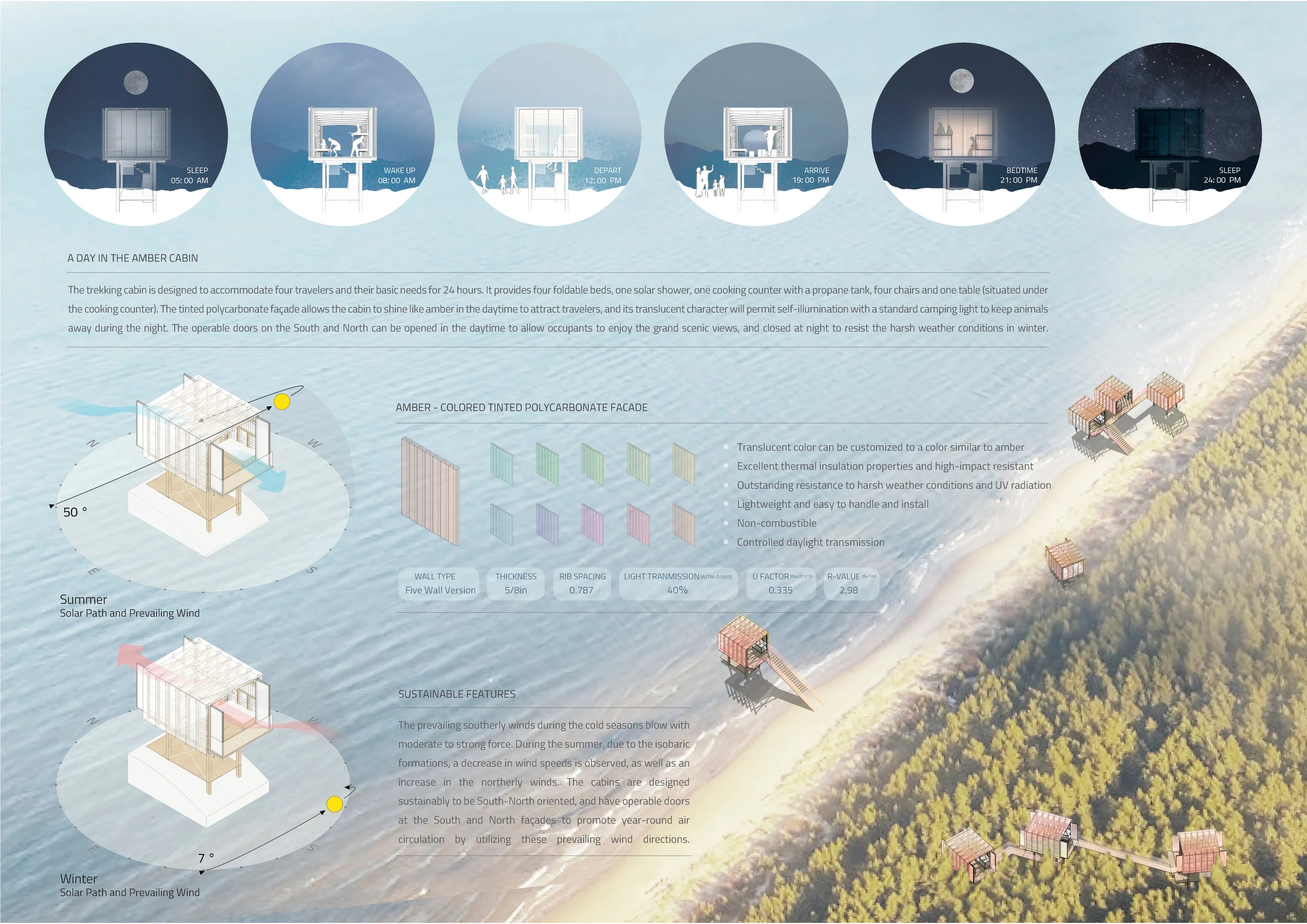
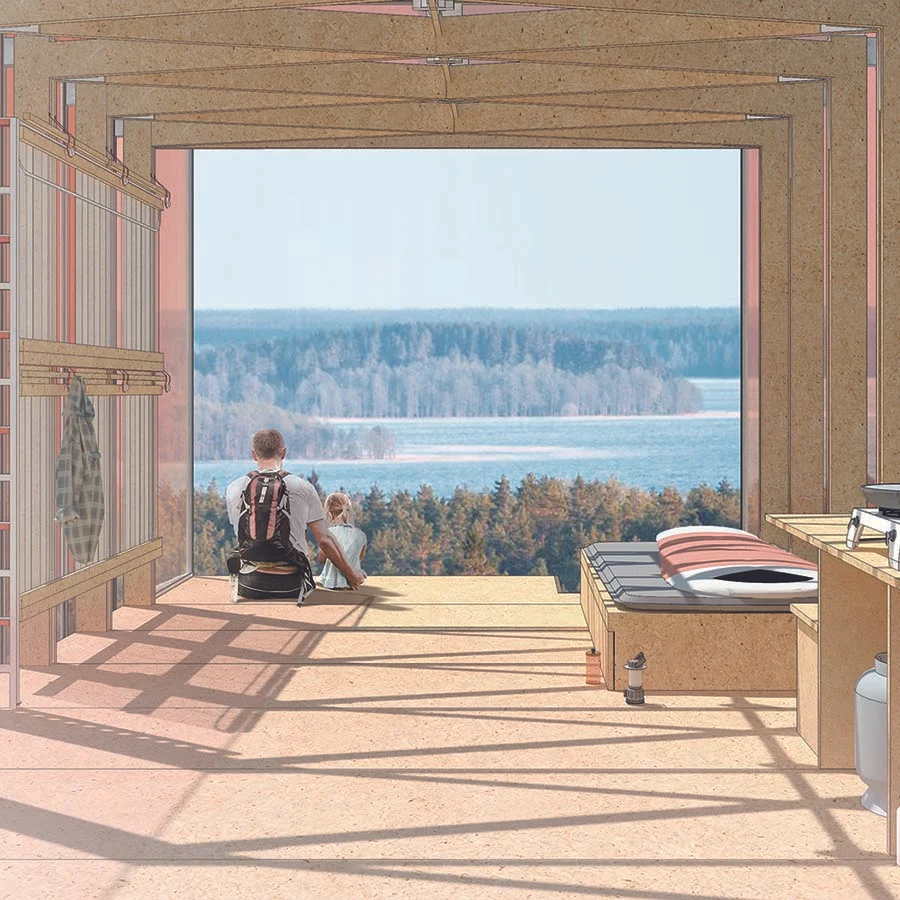
At Sparano + Mooney Architecture, we are always in search of creative outlets for our ideas and for new ways to innovate and promote sustainability in architectural practice. Submitting conceptual projects to architectural competitions is just one way that we attempt to advance our critical thinking, and our team of architects and designers recently put forth a tiny house proposal to the Amber Road Trekking Cabins architecture competition, organized by Bee Breeders in association with the Latvia Nature Conservation Agency, which calls for the design of several travelers’ cabins to be situated along the extensive and stunning Amber Road trekking path. The path will run along the beaches of the Baltic Sea, a remote treasure of natural beauty in Northern Europe renowned for the fragments of glowing amber that wash up on the region’s shores. Winning designs will be considered for construction as a means of boosting tourism to Latvia.
Sparano + Mooney Architecture’s entry was designed to accommodate four travelers and their basic micro-housing needs for 24 hours, to implement an amber-tinted polycarbonate façade for its aesthetic and technical characteristics, to harness the solar path and prevailing wind patterns for sustainability considerations, and to be constructed from prefabricated “flat pack” wooden structural components to minimize on-site construction and installation requirements. These variations make the cabins adaptable to most outdoor environments and weather conditions experienced along the trekking path throughout the year, meaning travelers to the area will be able to utilize the facilities on an extended basis and the Latvia Nature Conservation Agency can maximize its investment in this catalyst for economic and architectural development.
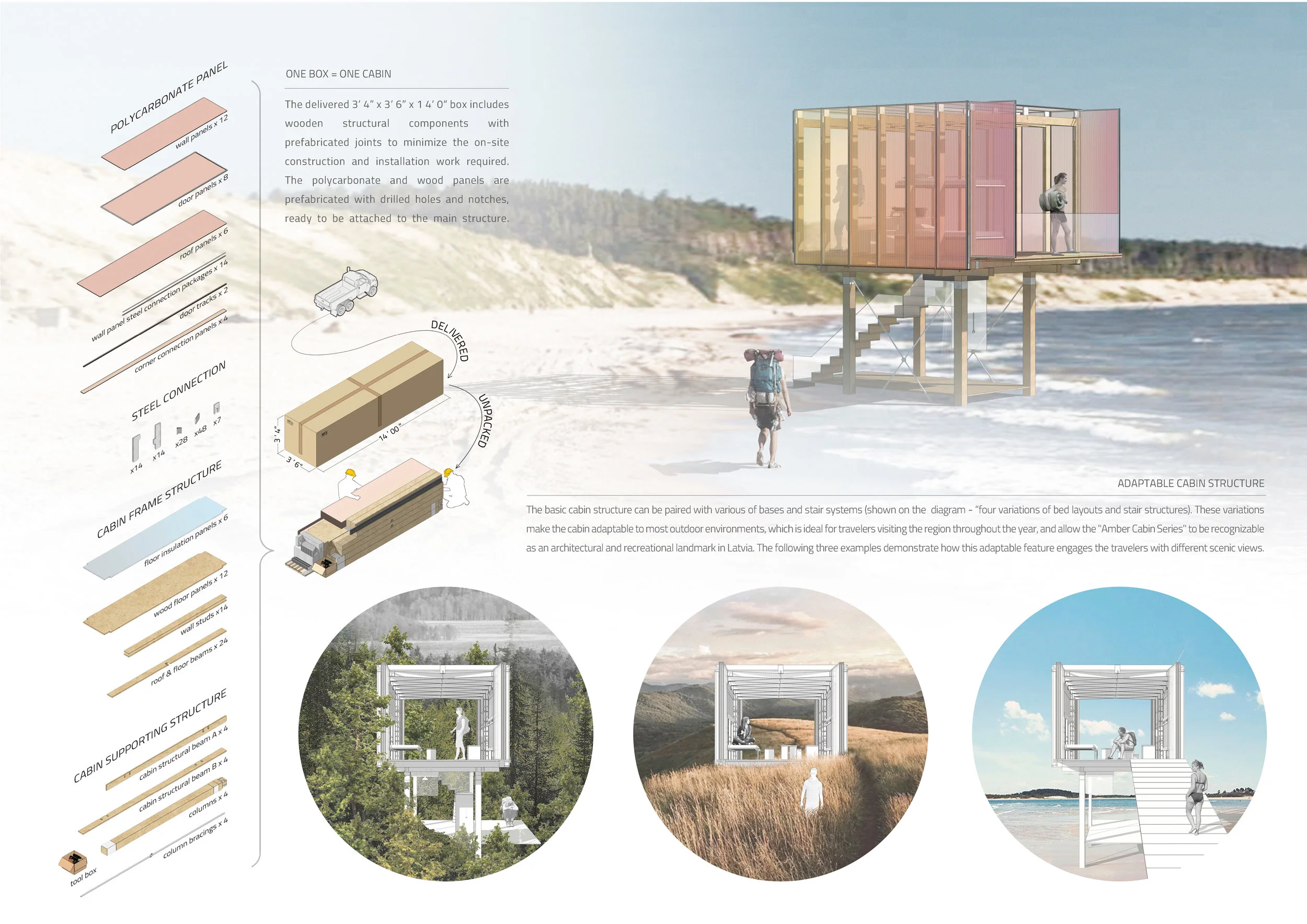
The Amber Road trekking path is planned to allow long-distance hikers the opportunity to traverse the country from the border with Lithuania to the border with Estonia. The total distance a trekker could hike would be 530 kilometers (approximately 330 miles), an arduous journey that would necessitate accommodations for the weary along the route. We took the opportunity to suggest structures that would both provide shelter and allow the occupants to indulge in the country’s scenic wonders. The competition brief stipulated that the architect’s designs be suitable for various terrain found along the route, and that they be constructed in a manner that would not disrupt the natural environment or interfere with the conservation and preservation of the landscape. Indeed, the competition organizers requested that the cabins pay homage to Latvia’s heritage and to have the potential to become cultural landmarks in their own right. Sparano + Mooney Architecture’s entry sees the translucent polycarbonate act as a colorful amber cladding covering the traditional Latvian timber structure. These tiny house cabins, scattered throughout the scenic landscape, will help travelers recollect and preserve their experiences here as amber-hued memories.
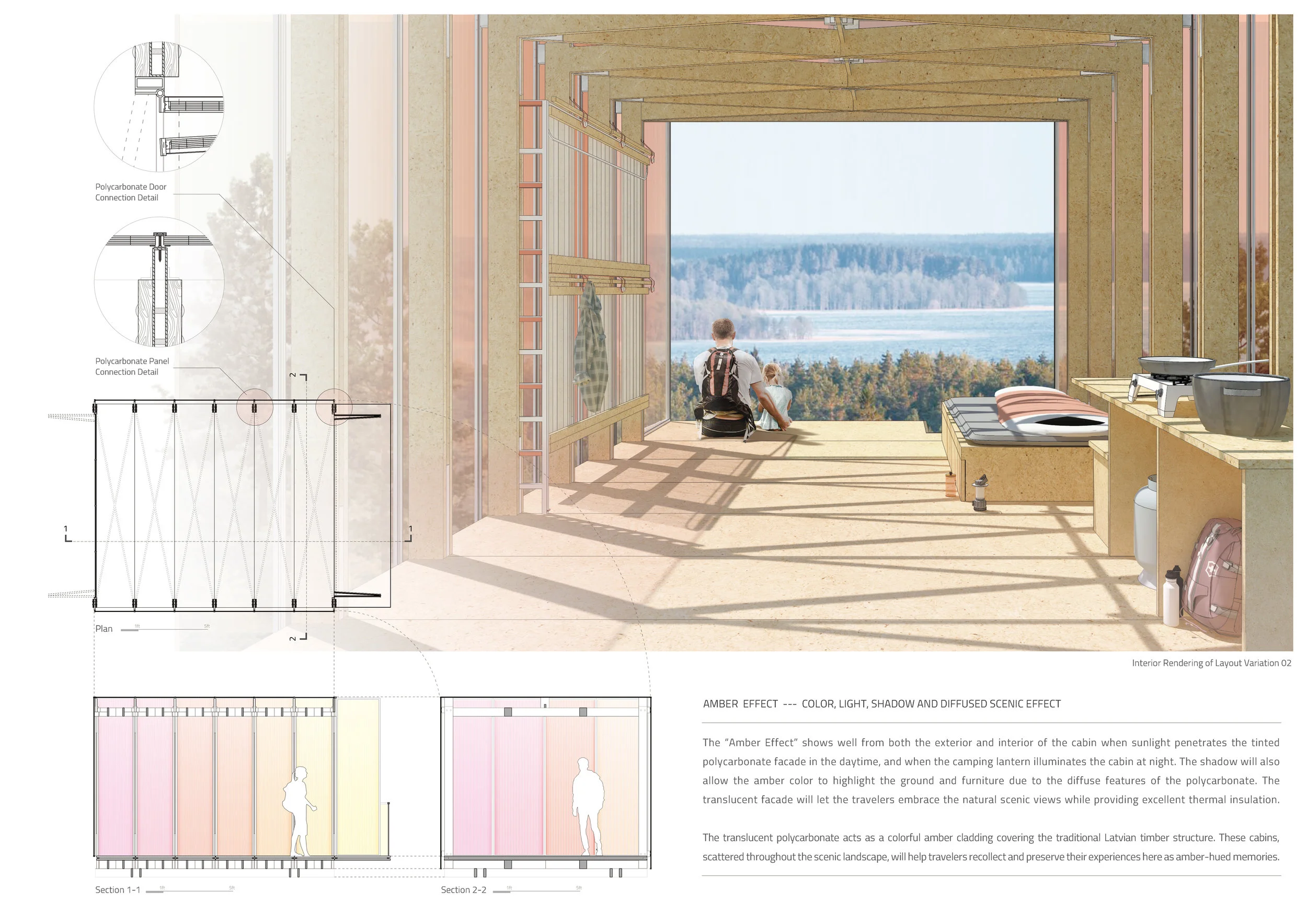
We are excited to have been able to submit our designs for this project, and should our proposal be successful, we would be honored to have our concept constructed in such a beautiful setting! Do you have an abstract idea you would like help exploring? From large projects to small, we are focused on delivering thoughtful, innovative, contemporary and sustainable design solutions in architecture to accommodate each client’s visionary, functional and budgetary requirements. We’d love to hear from you!

GLORIOUS GETTY
THE GLORIOUS GETTY: Art + Architecture
OCTOBER 23, 2017
Sparano + Mooney Architecture loves art and culture – and as contemporary architects in Los Angeles, we also adore examples of institutions in this great city that combine these passions and pursuits. Which is why we are crazy about the J. Paul Getty Museum at the Getty Center and the treasure trove it offers throughout its sprawling California campus. Housing an expansive collection of European paintings, drawings, sculpture, illuminated manuscripts, photography, textiles and decorative arts created from antiquity to the present, the museum serves diverse local and international audiences and continually offers groundbreaking exhibitions and programming to the public. The Getty Center’s overriding mission is to “inspire curiosity about, and enjoyment and understanding of, the visual arts by collecting, conserving, exhibiting and interpreting works of art of outstanding quality and historical importance”. Now that’s a mission we can support!
The history of the Getty Center is storied and speaks to the legacy and prolific collecting tendencies of its founder, oil tycoon, industrialist and businessman J. Paul Getty (b.1892 – d.1976), who believed that art could be a “civilizing” influence on society. Throughout his life, Getty worked to make art available to the public and to promote the educational benefits of cultural artifacts. In 1948, he donated a significant portion of his collection to the Los Angeles County Museum of Art; in 1953 he established the J. Paul Getty Trust, and the following year he opened the J. Paul Getty Museum in his Malibu ranch house (the site now serves a mission focused on antiquities). After his passing, the Trustees looked to build upon Getty’s unwavering dedication to the visual arts, expand the museum and its collections, and offer a broader range of programming, educational pursuits and scholarly research opportunities to the art world and members of the public alike. With this mission to hand, the Getty Villa was conceived and constructed and the Getty Conservation Institute, Getty Research Institute and Getty Foundation were created and constitute “the Getty”. In 1983, the Trust purchased the 110-acre hilltop site in the Santa Monica Mountains that would come to house the current site of the Getty Center, designed by architect Richard Meier. Incorporating lush gardens and celebrating the site’s rugged topography, the Center opened to great art – and architecture – acclaim in 1997. Today, the Getty is the world’s largest cultural and philanthropic visual arts institution.
The Getty Center, while focused primarily on promoting and exhibiting the visual arts, is nevertheless an all-encompassing cultural institution, offering performances, film screenings, talks and lectures, tours and family events for all to experience its architecture and cultural offerings. Research and conservation play a crucial role in the Center’s operations, and educational programs for audiences of all ages engage audiences through the rich resources at the Center and Villa. For example, the education department offers a session titled “Drawing from Antiquity”, in which informal drawing lessons are taught on the grounds and students can sketch from works of art, architecture, sculpture and the gardens of the Villa. The course sounds to us like the perfect way to spend an afternoon honing our foundational skills!
The exhibition program is wide-ranging and never fails to innovate. Recent exhibitions have included “Giovanni Bellini: Landscapes of Faith in Renaissance Venice”, “Happy Birthday, Mr. Hockney” and “The Metropolis in Latin America, 1830-1930”. We are also excited about a forthcoming exhibition (opening June 26-October 21, 2018) titled “Icons of Style: A Century of Fashion Photography 1911-2011”, featuring works by industry stalwarts such as Richard Avedon and Helmut Newton while also recognizing the talent of artists less well-documented, including Neal Barr, Hiro and Ray Kellman.
Whenever we have a spare minute in Los Angeles – and especially when we are seeking architectural and creative inspiration – we head to the Getty Center. We are in awe of its collections and the dedication of its professional staff in continuing the passion for art, architecture and culture that J. Paul Getty originally established. It would be a dream to collaborate with this venerable institution. We hope to see you wandering among the collections and bougainvillea soon!
DAINES CONCERT HALL AT USU
NOW OPEN: The Newel + Jean Daines Concert Hall and Daryl Chase Fine Arts Center at Utah State University!
OCTOBER 19, 2017
The Utah State University Caine College of the Arts and Daryl Chase Fine Arts Center celebrate a 50 year anniversary this October, and to mark the occasion, we are honored to announce that the Newel and Jean Daines Concert Hall will open its doors after undergoing an extensive renovation and addition! Sparano + Mooney Architecture was integral to the design of the new performing arts facility and we are beyond excited to see our team’s hard work and vision come to life.
We would like to extend our greatest appreciation to our team of consultants on the project – including Newson Brown Acoustics, Cache Landmark Engineering, Inc., Landmark Design, Inc., Calder Richards Consulting Engineers LLC, Van Boerum & Frank Associates, Spectrum Engineers and Gramoll Construction – and to Auerbach Pollock Friedlander, who played a tremendous part in realizing this wonderful facility. We are grateful for your support and are proud to have worked with such a dedicated group of professionals on the Daines Concert Hall and Fine Arts Complex renovation and addition!
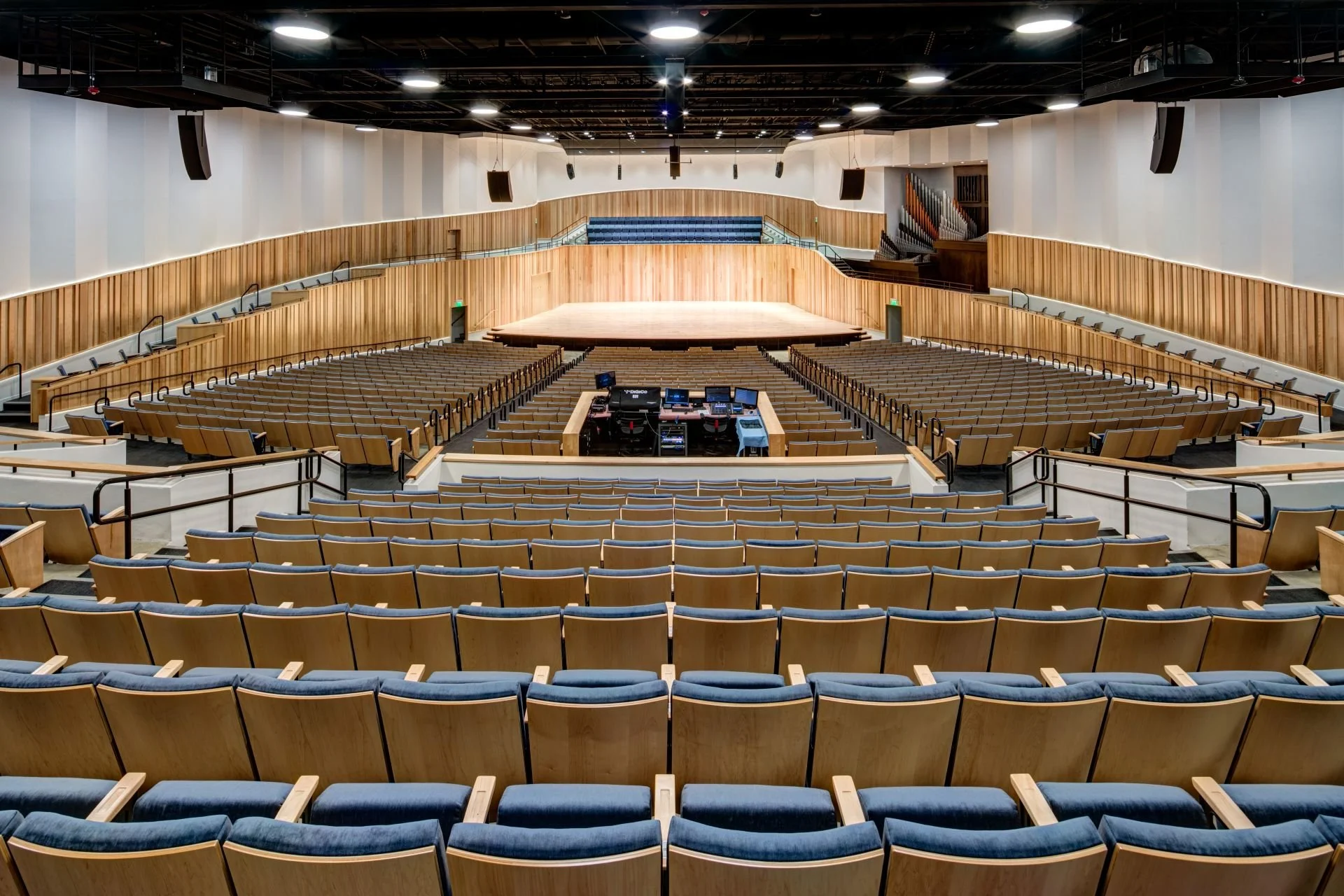
The Utah State University Fine Arts Complex Addition/Renovation consisted of adding an additional 15,000 SF of space on two sides of the complex and renovating 107,000 SF of space in the existing building. The crown jewel of the project is the renovation of the Daines Concert Hall (formerly the Kent Concert Hall). Upgrades include a new acoustical shell, acoustically reconfigured walls, removal of the existing ceiling, and upgraded theatrical audio and lighting equipment to enhance the acoustic performance of the venue for both performers and audience; all new theater seating; HVAC systems improvements to decrease ambient noise levels; addition of a fire sprinkler system; structural modifications to the ceiling to improve seismic stability; new catwalks and tension grid; addition of dressing room suites; and improved ADA access to the concert hall from the lobby and from the hall to the stage. With seating for 1,743, the Daines Concert Hall is a performance facility with secondary use for convocation, lectures and general assemblies.
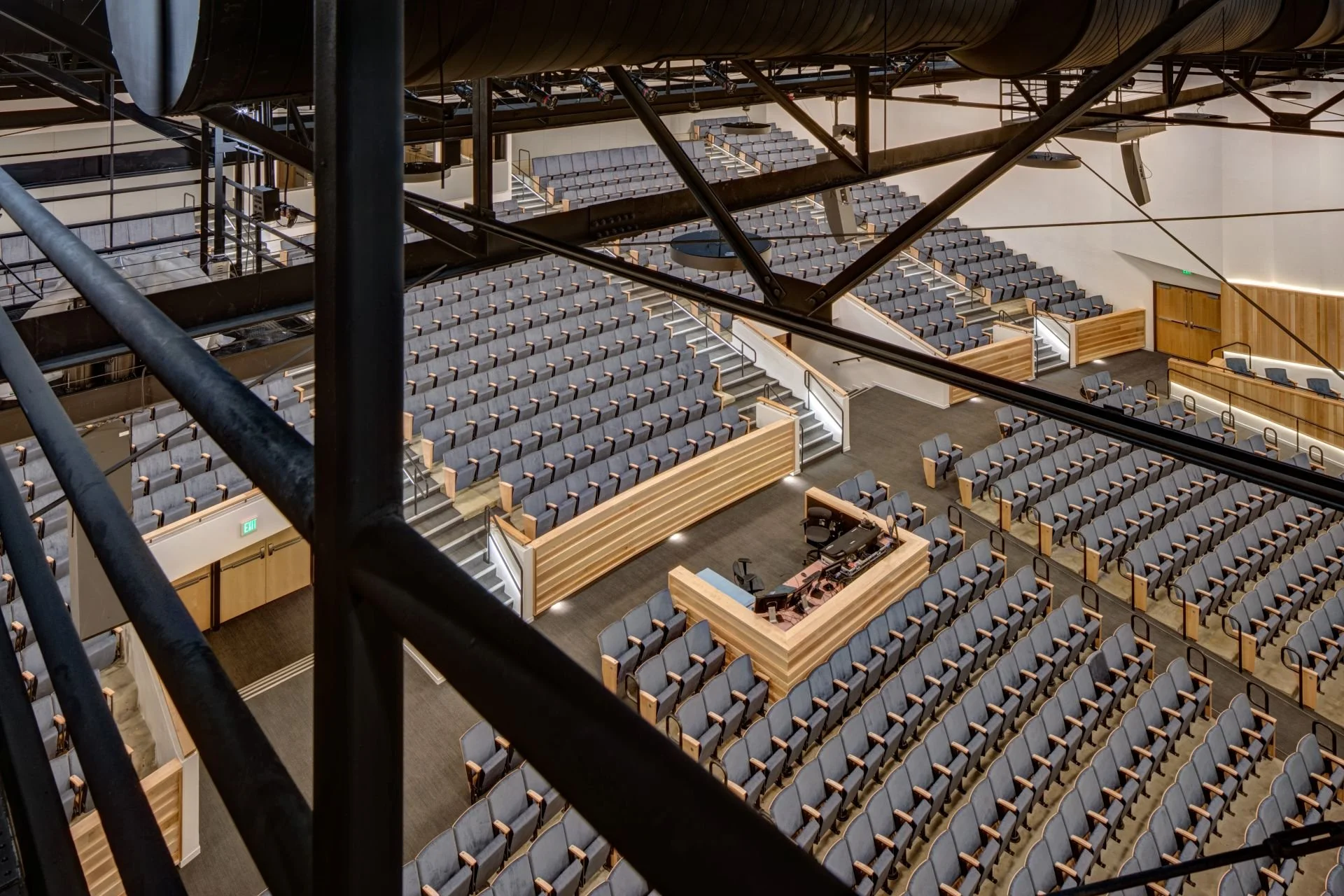
The renovation of the Daines Concert Hall also removed the old ceilings, proscenium arch, existing electrical, mechanical, audio visual systems and existing seating. It added a gallery to both sides of the house and behind the stage. The stage was extended forward by 15 FT. The acoustics for the concert hall were of utmost importance. The walls for the hall were carefully designed to optimally direct the sound into the space. The new acoustic design allows for the sound to envelop the listener no matter what seat they might be in. The new gallery levels curve behind the stage, and this aspect permits patrons of a choral and orchestra performance to be elevated above the stage, giving them a more intimate experience. In an orchestra-only performance this vantage allows the patron to sit in these elevated seats behind the stage, giving them a whole new perspective of the performance. The curving natural wood on the walls lends the hall a warm and inviting feeling. All new seating in the concert hall provides the patron a wonderfully comfortable experience.
The mechanical ductwork increased in size to slow down the air movement, making the building comfortable and quiet. The structure has been opened, especially above the stage, making it inviting and expansive. New cat-walk throughout the space allows those working behind the scenes easy access to almost every corner of the Daines Concert Hall.
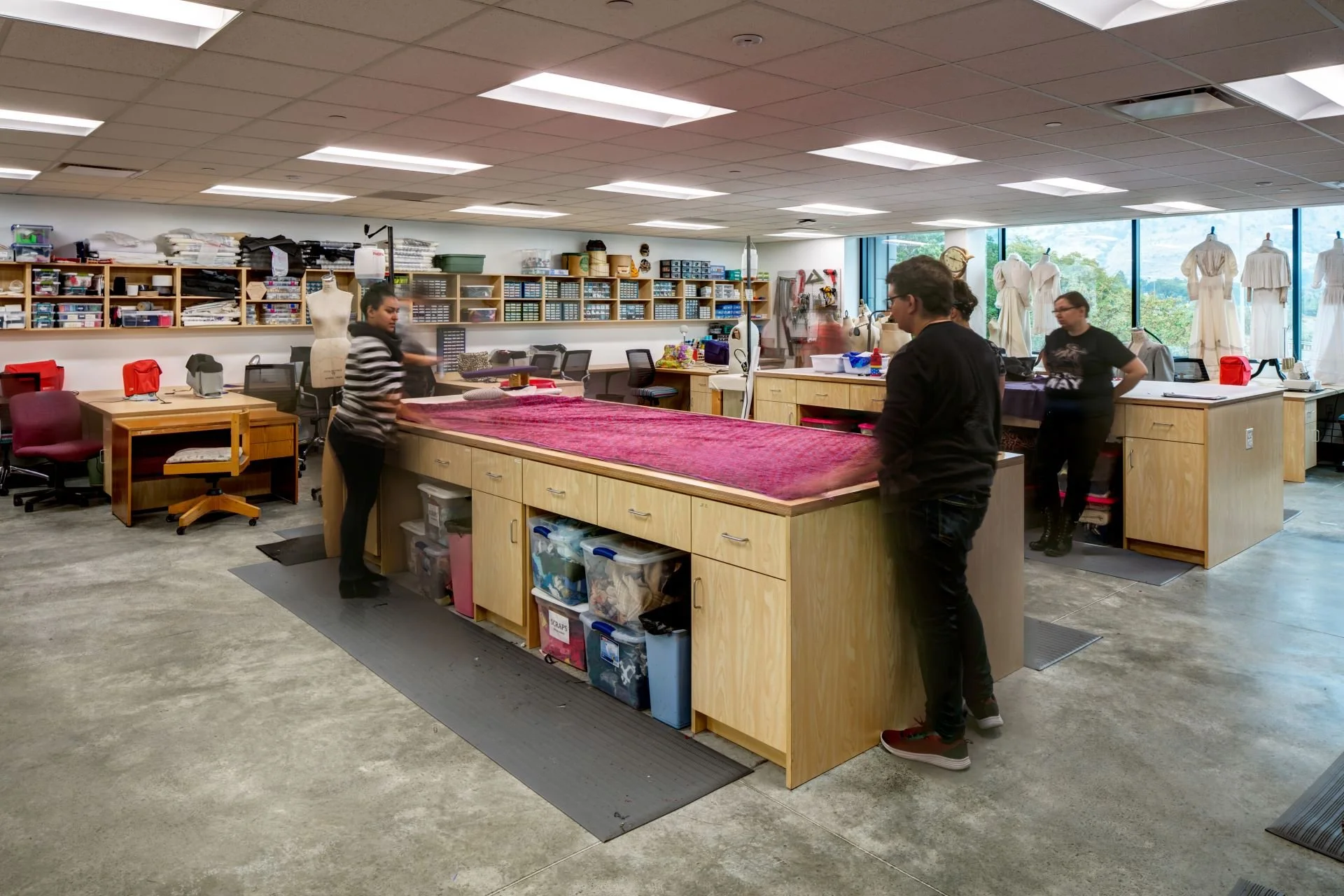
In addition to the Daines Concert Hall, the Fine Arts Center also saw the expansion and renovation of the Morgan Theatre Scene Shop and Costume Shop, which provides an additional 7,900 SF of space to accommodate design and construction of theatrical scenery and costumes. These improvements provide significant economic benefits for the Morgan Theatre due to expanded scheduling of the facility for its use as a rehearsal, performance, and teaching venue for Utah State University and the various theatrical groups that use the Theater. As part of the Fine Arts Center’s renovation, the Tippetts Exhibition Hall and Gallery has also been transformed and now shines as an example of a world-class exhibition space.
The Utah State University Fine Arts Complex Addition/Renovation results in an architectural landmark for both the Utah State University campus and Northern Utah, and our team is tremendously proud to have contributed to the institution’s cultural and educational landscape. We are grateful to have been a part of designing and realizing the Daines Concert Hall and the Fine Arts Center and look forward to another 50 years of arts and culture in the new facility!

EXHIBITION: DESIGN WEEK
ANNOUNCING DESIGN WEEK 2017 AND A SPARANO + MOONEY ARCHITECTURE EXHIBITION!
OCTOBER 12, 2017

Now in its seventh year, the 2017 edition of Design Week is opening from October 16th-21st and we can’t wait to take part in this city-wide cultural showcase! As Salt Lake City architects deeply committed to producing, experiencing and inspiring great design, we are excited to check out the creative smorgasbord that this artistic city has to offer during what is sure to be a stellar event. And, we hope to welcome you to our studio on Monday, October 16th from 5:00-6:30pm, for an exhibition of work by University of Utah School of Architecture students, taught by our own Anne Mooney!
Sparano + Mooney Architecture has participated almost every year with open studio tours, architect talks, exhibitions, installations and design award celebrations. This year is no exception, with Anne leading an exhibition of architecture and design work by her senior undergraduate students in the Sparano + Mooney Architecture gallery space. The students have explored a wide range of spiritual traditions and their expression of faith in space, light and form. Watercolor paintings of this research will be exhibited along with three-dimensional, mixed-media models of sacred space and architectural explorations of landscape, light and shadow.

Image of model courtesy of Utah architecture student, Betty Freer
The intent of Salt Lake Design Week is to bring creativity to the forefront and explore the city’s diverse and thriving design scene for a week-long event filled with collaboration and inspiration, and also seeks to raise awareness of the impact that all design – including architecture, product, interior, graphic, photography, digital, fashion, and advertising – has on our cities, its residents and visitors alike. Salt Lake Design Week assembles professionals, students, entrepreneurs, educators and community members to celebrate design in our vibrant metropolis. Significantly, since its inception seven years ago, Design Week has engaged over 50,000 people and continues to motivate critical thinking in its diverse participants.
In addition to our own presentation, this year a series workshops, lectures, business development sessions, film screenings, studio tours and exhibitions will encourage collaboration among Salt Lake’s numerous design cognoscenti, museums, architects, businesses and educational and cultural institutions. Through these platforms, Salt Lake Design Week will provide multiple forums for all to enjoy, glean inspiration, interact and grow creatively, and in doing so, initiate a stronger imaginative community. We love that!
A cross-section of events include: “Act Like You Know What You’re Doing”, a conversation with designer and photographer Josh Scheuerman about enacting change in our community and championing social advocacy (held at cityhomeCOLLECTIVE); “Salt Lake Furniture Design Show”, an evening presentation featuring ten pieces of exquisite furniture made by local professional builders and talented design students (held at Clubhouse SLC); and several studio tours which form an integral component of Salt Lake Design Week. Tour stops include Kilter Design, Contravent Creative, Underbelly Creative, Work Hive, and Dinng. These tours offer eye-opening insight into the creative processes honed by some of the city’s most notable design firms.
As part of Salt Lake Design Week, we invite you to visit the Design Arts ’17 Exhibition at the Rio Gallery, which features the award-winning LOOP Bench project designed by Sparano + Mooney Architecture. The exhibition closing reception and celebration will take place Friday, October 20th from 6-9pm. If we don’t have the chance to meet during Salt Lake Design Week, we’d love the opportunity to discuss our design philosophy and to create a unique work of architecture for your next cultural, civic, institutional or residential project in the American West!
Salt Lake Design Week is hosted by the Salt Lake City chapter of AIGA, the Professional Association for Design. For more information, and to purchase tickets to selected events, please visit the Salt Lake Design Week website. Design matters!
WABI-SABI CONSTRUCTION UPDATES
CONSTRUCTION UPDATES FROM THE WABI-SABI HOUSE
SEPTEMBER 28, 2017
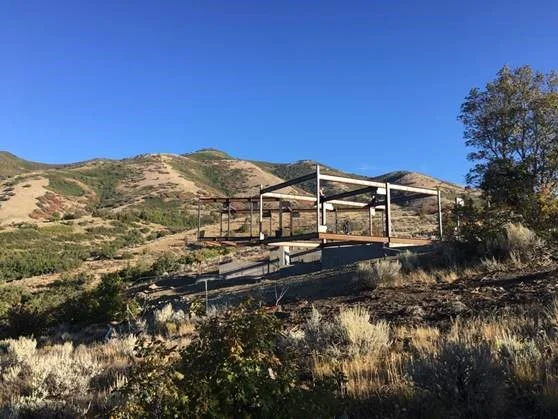
We are excited to report that construction is well underway on the Wabi-Sabi House in Emigration Canyon, Utah! Our Salt Lake City architects and designers have been hard at work in collaboration with our wonderful and inspirational clients, as well as our dedicated team of consultants – including Living Home Construction and Structural Design Studio – to make the dream of a tranquil, mountain modern home a reality.
Wabi-sabi is an ancient tenet of Japanese aesthetic culture. It is a philosophy of beauty that embraces the imperfect, the incomplete and the transient. Wabi-sabi architecture espouses simplicity and honesty in expression, those modest things in our world that express beauty as they weather and age. In conceiving this house and while walking the site, the work began to coalesce around an idea of textures, materials, and expressed joinery and connections.
This 4,000 square foot home, designed for a young family, celebrates a unique elevated Utah mountain site with a rare and direct connection to nature. The design was conceived as an expression of both static and dynamic elements, referencing the relationship of the mountain and the vegetation and wildlife on the site. The entry design is a perforated wall with segmented views of the site and surroundings. Upon passing into the architecture, the occupant is presented with a long corridor offering a path lit by a skylight running the full length of the volume and illuminating a textural wall, and is also presented with a framed view of the mountains to the west. As one progresses through the space, the shift in program is presented with the public volume in line directly with the canyon view. The architecture includes a basement level that incorporates a creative office space with a private outdoor patio. The living-room fireplace is mirrored by an outdoor fireplace and both create places for family and friends to gather.
Materials, including CorTen steel, were selected to reference the site and are crafted to express their constructed connections and detailing. This approach to materials extends to the selection of interior elements, fixtures and furnishings. The vegetated roof is planted with local grasses and serves to camouflage the home design into its context. The residence sits within its mountain site with minimal disturbance to the landscape, which is augmented with native and drought-tolerant plants and trees.
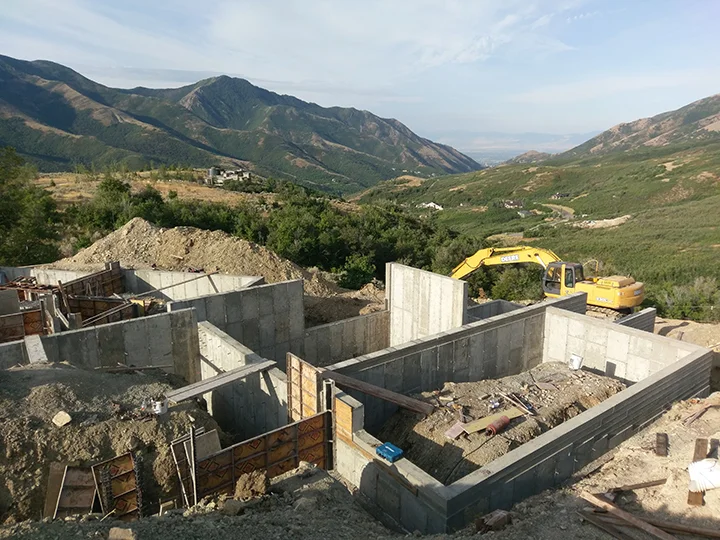
With excavation, concrete and sub-rough plumbing complete, the project is moving into framing with a critical stage – steel – currently in progress. We are very happy with how the texture and finish of the board-formed concrete has turned out, and look forward to seeing how this feature will relate to our exterior wood cladding finish in the coming months. The steel wall trusses require a few weeks of detailed site assembly and field welding. The project is now officially “out of the ground”, and one can begin to get a sense of form, scale and views that will be captured by the architecture on this spectacular mountain site in Utah.
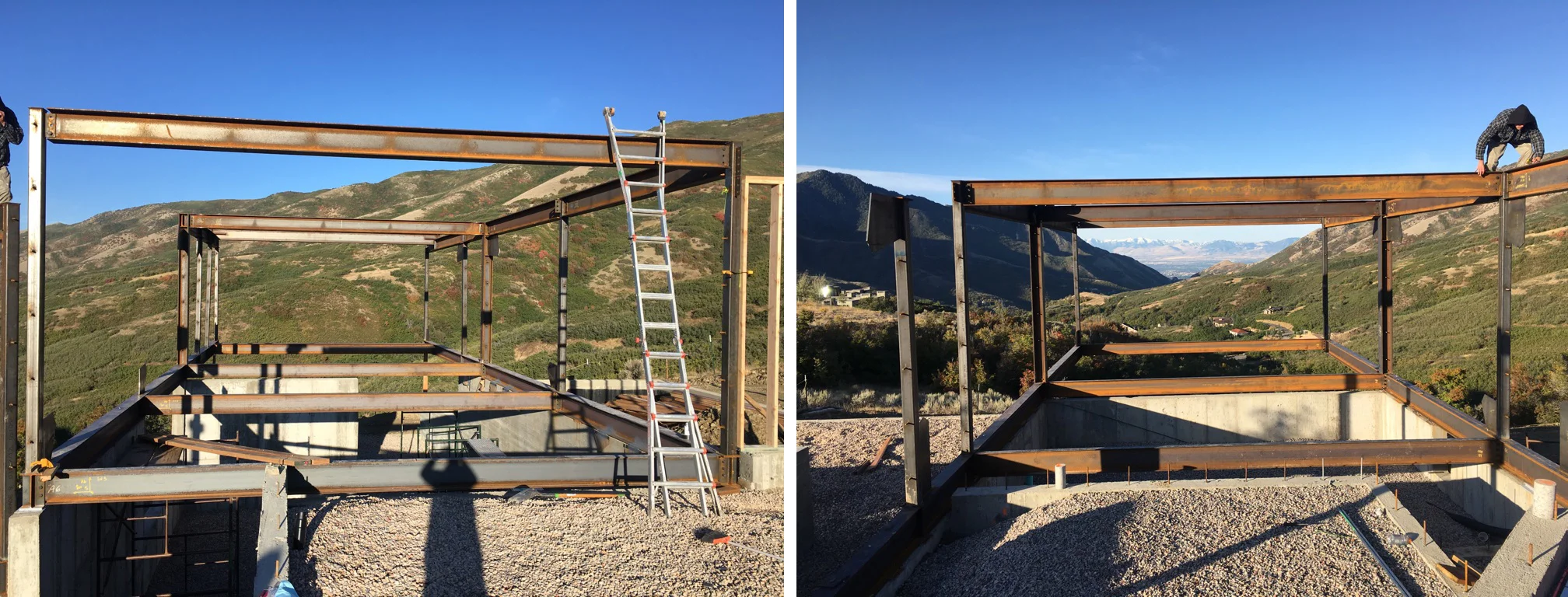
We look forward to bringing you more updates as the home’s construction progresses. The anticipated completion is July 2018 – watch this space! We are specialists in contemporary residential projects in the American West and would love to hear from you if you are interested in bringing your own vision of your dream home to life!

EXHIBITION: DESIGNARTS AT THE RIO
DESIGN ARTS ‘17 EXHIBITION AT THE RIO GALLERY
SEPTEMBER 18, 2017

Do you love arts, culture, design and architecture? Why not visit the Rio Gallery in downtown Salt Lake City, where our award-winning LOOP Bench is on display as part of the Design Arts '17 exhibition?
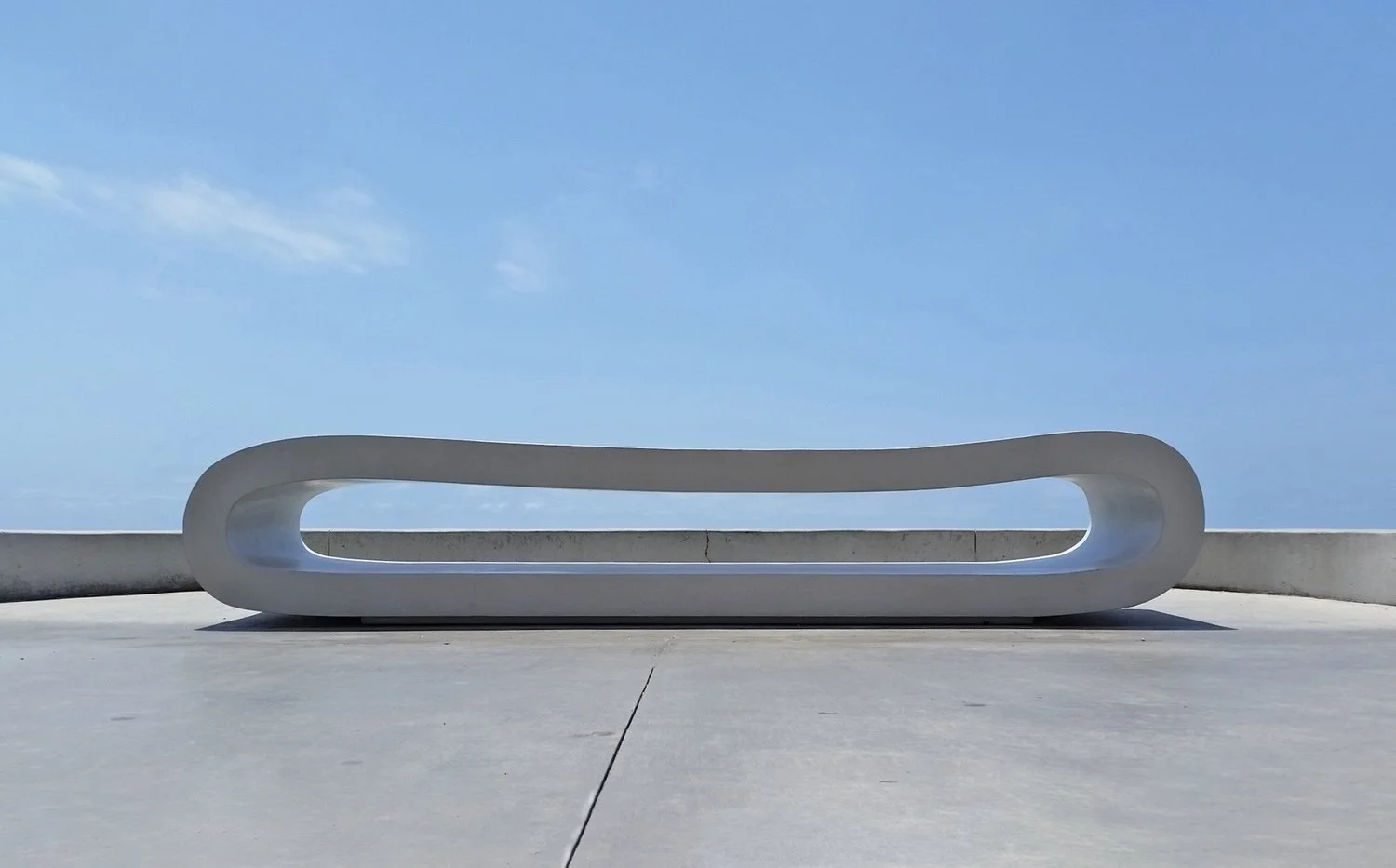
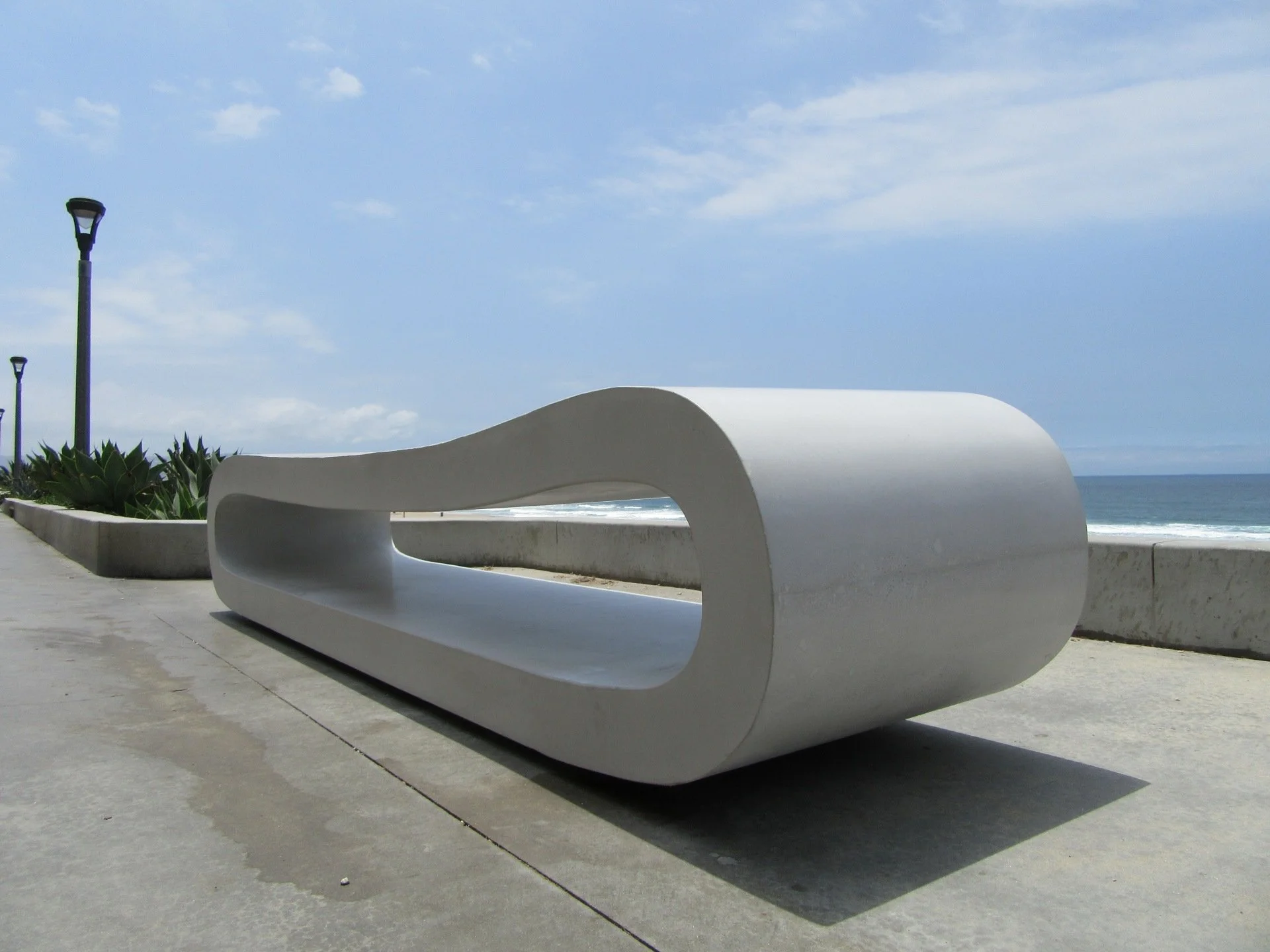
The Design Arts platform is an annual review dedicated to the promotion of excellence in the diverse fields of design in Utah. They strive to help community members see, experience, utilize and value the art of design that surrounds us. The LOOP Bench Project, which won a Design Arts '17 award for design excellence from the Utah Department of Heritage + Arts, Division of Arts + Museums, takes the native ocean flora along the Manhattan Beach, California, coastline as its point of departure. The bench is a simple, solid concrete “loop” derived from a section of slice of the basic tube structure of much of the sea flora studied. It is curved with a slight undulation in the long direction and square in the short direction with eased edges. It is constructed using a mold and cast with high strength, fiber-infused concrete with its overall dimension being approximately 2’ x 9’. The concrete is bright white, hand-toweled smooth with a power buffed, glossy finish on all surfaces. Working in collaboration with local Utah artisan, we developed a mold and a foam-and-wood positive so that future editions of the bench could easily be visualized and cast. The first bench was installed on the Manhattan Beach Strand this summer.
From now until October 20th, the Rio Gallery will display this year's best and brightest in architecture, industrial, product, information / media / graphic, and realized, conceptual, and prototype design as part of the Design Arts '17 exhibition. The closing reception, which is free and open to the public, will be held on Friday, October 20th from 6-9pm. We hope to see you there to celebrate this achievement and Salt Lake City design!
Rio Gallery, 300 S Rio Grande Street, Salt Lake City, UT 84102
LOOP BENCH
LOOP BENCH
AUGUST 07, 2017
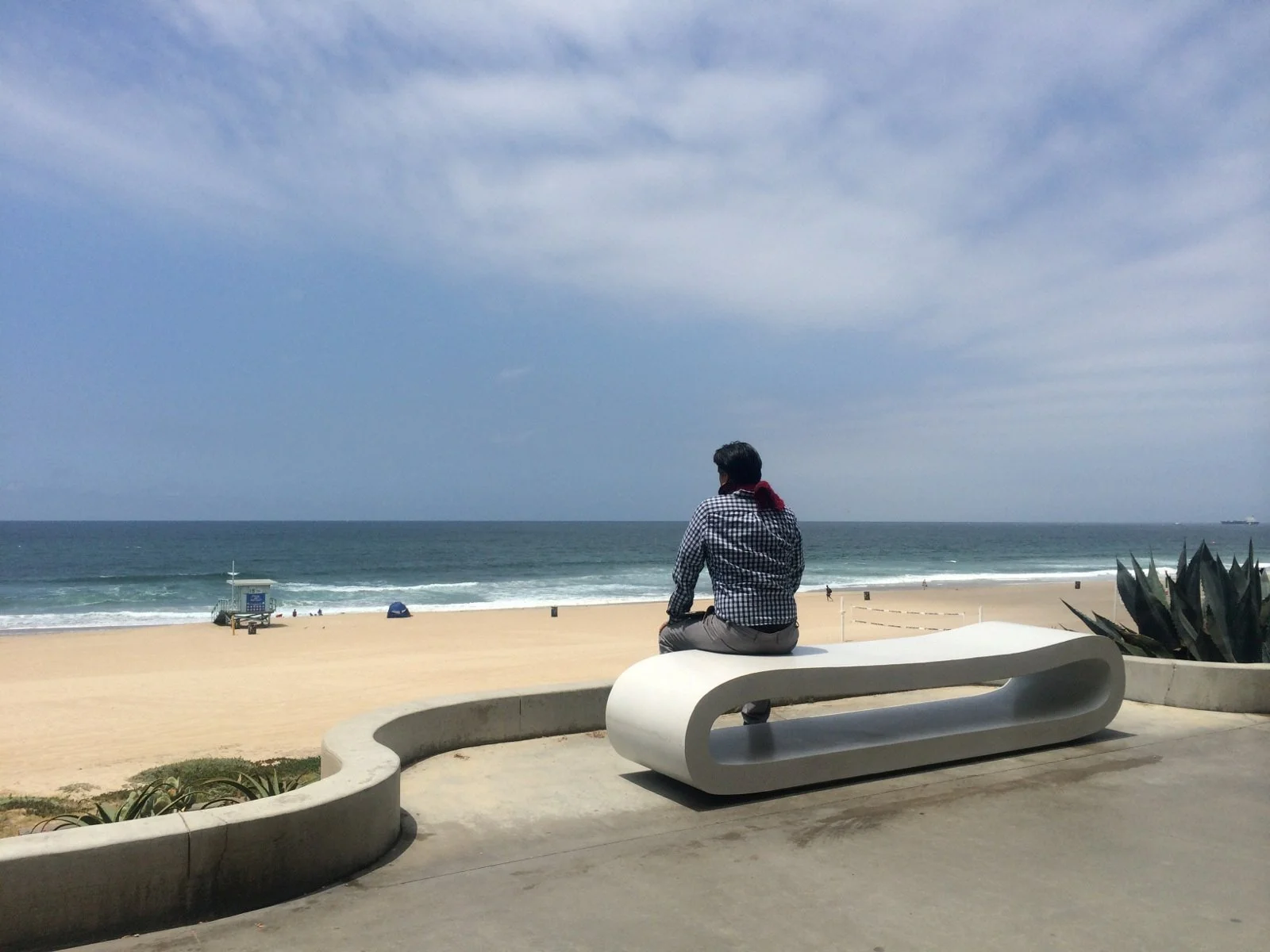
For Sparano + Mooney Architecture, great design at all scales is at the heart of our practice. We are urban architects based in Los Angeles and Salt Lake City. As you may know we are engaged in developing architecture, urban designs and products and deliver these thoughtful, innovative and contemporary designs to accommodate our client’s vision and lifestyle. Yes, we design large-scale buildings – museums, performing arts centers, recreation and aquatic centers, mountain-modern residences, and centers of worship – but we also apply our creativity to smaller scale manifestations of our architectural mindset and are eager to continue developing this facet of our practice. This is why we were thrilled when a client contacted us about our design competition winner, the Loop Bench, and commissioned us to produce one as a memorial for installation in a specially-selected spot along the beach strand in the City of Manhattan Beach, California.
Originally conceived for the City of Manhattan Beach Cultural Arts Division, our Loop Bench prototype takes the native ocean flora along the Manhattan Beach coastline as its point of departure. Our process for the design of this bench began with a survey of the natural jetsam and flotsam that presents itself on the shoreline of Manhattan Beach every day. This quotidian detritus revealed the presence of simple aquatic forms of “soft-shelled” sea life with many of the organisms having a hollow, tube-like architectural structure. Seaweed, kelp and other plant material were among the forms studied for the design.
The bench is a simple, solid concrete “loop” derived from a section or slice of the basic tube structure of much of the sea flora studied. It is curved with a slight undulation in the long direction and square in the short direction with eased edges. It is constructed using a mold and cast with high strength, fiber-infused concrete known as Organicrete®, which requires no metal reinforcement, with its overall dimension being approximately 2’ x 9’ and a weight of 1,600 lbs. The architects selected a bright white concrete, hand-toweled smooth with a power buffed, glossy finish on all surfaces. The bench structure sits on a deeply recessed, 1” high concrete plinth creating a visual separation from the sidewalk and a deep shadow line around the base of the bench. If desired, text can be etched into either the top or side of the concrete surfaces. The first bench that has been completed was installed for the aforementioned client on the Manhattan Beach Strand this summer.
We would be delighted to discuss a bespoke commission of the Loop Bench with you! It is designed to be situated outside, so would make an ideal and beautiful addition to any private project, and would be equally suited to a civic location such as a transportation hub, public park, or recreation center. Or, alternatively, there is no reason this sleek design object couldn’t also be placed inside as an objet d’art. We worked with Tyler Blaine of Modern Craftsman to help create this unique piece, and retain the mold for the work, meaning we are able to produce additional benches upon request.
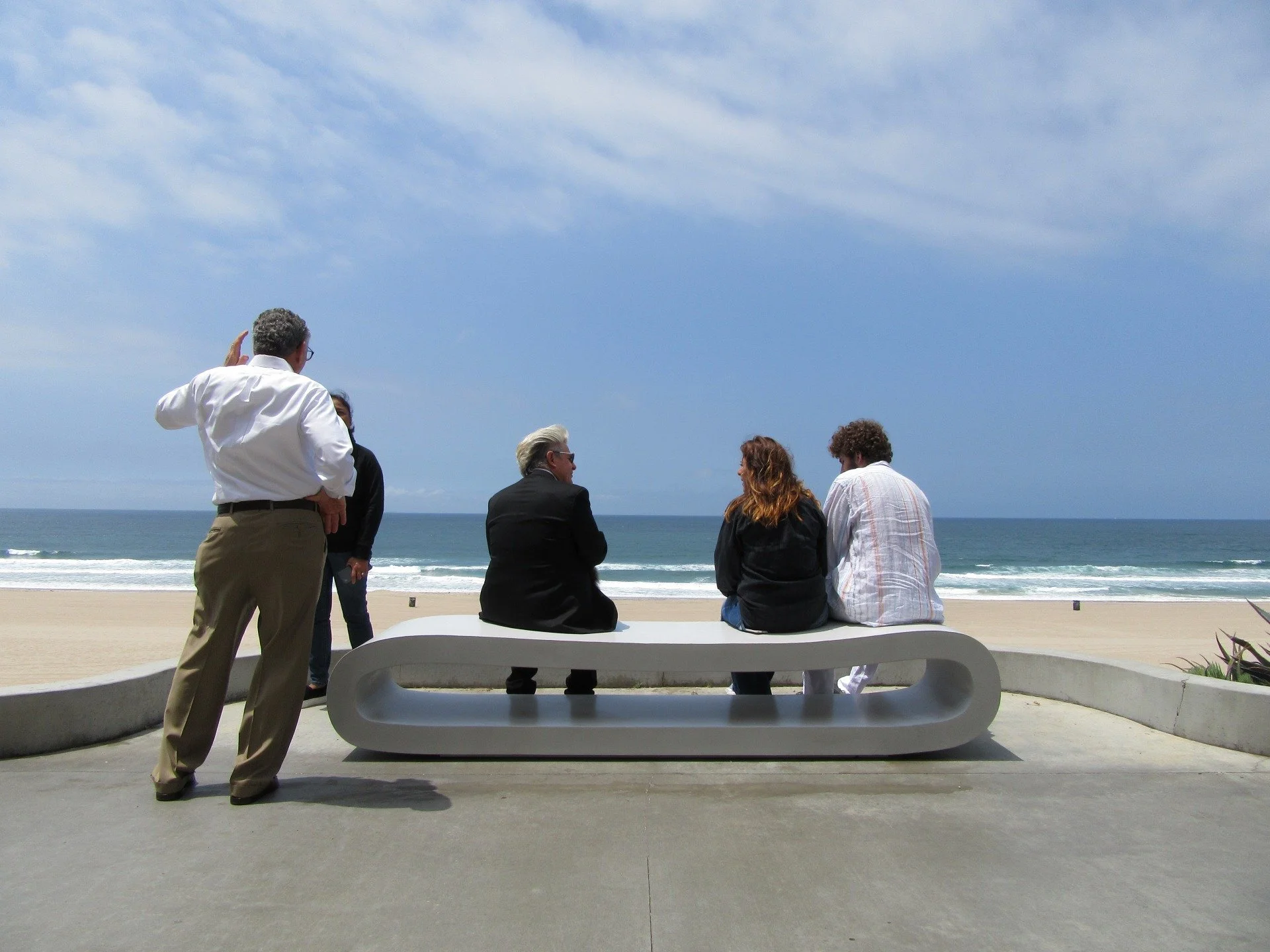
We are also delighted to announce that this newly constructed project has recently garnered a Design Arts 2017 Award! A juried exhibition of the work will be on display at the Rio Gallery between September 8 – October 20, 2017, with a closing reception and celebration on October 20 from 6-9pm to coincide with Salt Lake Gallery Stroll and Salt Lake Design Week. We hope to see you at the reception and look forward to discussing the award-winning Loop Bench with you then, or give us a call in the meantime if you’re interested in commissioning your own Loop Bench!